

Understanding the definition of a HIPAA breach is critical for anyone involved in healthcare. In 2025, it's defined as the unauthorized acquisition, access, use, or disclosure of protected health information that compromises its privacy and security. But here's the surprising part: not every incident involving PHI is considered a breach. In fact, over 80% of healthcare organizations reported at least one significant security incident involving PHI in recent years, highlighting the pervasive threat. The twist? Many scenarios that seem like breaches might be exempt if a thorough risk assessment shows a low probability of data compromise. This means navigating the complexities of HIPAA can be the difference between severe penalties and simply mitigating risk.
Table of Contents
- Understanding HIPAA Breach Definition
- Examples of Common Breaches
- Legal Implications of HIPAA Breach
- Breach Notification Rules & Strategies
Quick Summary
| Takeaway | Explanation |
|---|---|
| Understanding Breach Definition | A HIPAA breach is defined as the unauthorized acquisition, access, use, or disclosure of protected health information (PHI) that compromises its security or privacy. |
| Exceptions to Breach Definition | Covered entities can avoid breach classification if incidents fall under specific exceptions like unintentional access or good faith belief in non-retention, as long as the risk assessment shows low probability of compromise. |
| Role of Risk Assessment | Conduct thorough risk assessments after potential breaches to evaluate if PHI compromise is low; documentation is crucial for regulatory compliance. |
| Notification Requirements | Organizations must notify affected individuals within 60 days of discovering a breach, detailing the nature of the breach, types of PHI involved, and steps taken in response. |
| Legal and Business Implications | Breaches can lead to significant penalties, reputational damage, civil lawsuits, and increased compliance scrutiny, emphasizing the need for robust data protection measures. |
Understanding HIPAA Breach Definition
Navigating the complex world of healthcare information security requires a clear understanding of what constitutes a HIPAA breach. In 2025, a HIPAA breach is formally defined as the unauthorized acquisition, access, use, or disclosure of protected health information (PHI) in a manner not permitted by the HIPAA Privacy Rule, which compromises the security or privacy of the PHI, according to HIPAA Journal.

This definition forms the foundation for compliance efforts across healthcare organizations and their business associates. But what exactly does this mean in practical terms?
What Qualifies as a HIPAA Breach
A HIPAA breach occurs when protected health information is compromised through unauthorized exposure. However, not every disclosure of PHI qualifies as a breach. There are specific exceptions, including unintentional acquisition or access by workforce members acting under the authority of a covered entity, provided it doesn't result in further impermissible use or disclosure, as noted by Paubox.
Deven McGraw, former Deputy Director of the Health Information Privacy Division at the U.S. Department of Health & Human Services, emphasizes: "A HIPAA breach is not simply any impermissible use or disclosure of PHI; rather, it is an incident that fundamentally compromises the privacy or security of patient data."
The severity of healthcare data breaches is underscored by alarming statistics. According to IBM, the average cost of a healthcare data breach globally was $10.93 million in 2023, surpassing costs in any other industry.
Exceptions to the Breach Definition
Understanding what doesn't constitute a breach is equally important. The HIPAA Breach Notification Rule outlines three specific exceptions:
-
Unintentional acquisition, access, or use - When a person authorized to access PHI accidentally acquires, accesses, or uses protected information in good faith and within the scope of authority.
-
Inadvertent disclosure - When a person authorized to access PHI inadvertently discloses it to another authorized person at the same covered entity, business associate, or organized healthcare arrangement.
-
Good faith belief in non-retention - When the unauthorized person who received the information could not reasonably have retained it.
A common misconception is that any loss or exposure of PHI automatically constitutes a HIPAA breach requiring public notification. In reality, if the covered entity can demonstrate a low probability of PHI compromise via a documented risk assessment, the incident may not be legally considered a breach, according to Paubox.
The Role of Risk Assessment
Covered entities must conduct a thorough risk assessment after any potential breach to determine if the probability of PHI compromise is low, which may exempt certain incidents from being classified as breaches. This assessment considers factors such as:
- The nature and extent of the PHI involved
- The unauthorized person who used the PHI or to whom the disclosure was made
- Whether the PHI was actually acquired or viewed
- The extent to which risk has been mitigated
As healthcare data breach incidents continue to rise, with over 5,059 healthcare data breaches of 500 or more records reported between 2016 and 2023, understanding the precise definition of a HIPAA breach becomes increasingly crucial for protecting patient information and maintaining compliance with federal regulations.
Examples of Common Breaches
Understanding what constitutes a HIPAA breach becomes clearer when examining real-world scenarios. Healthcare organizations face numerous potential breach situations daily, ranging from sophisticated cyberattacks to simple human errors. Let's explore the most common types of HIPAA breaches encountered in healthcare settings.
Electronic Breaches
In today's digital healthcare environment, electronic breaches represent a significant threat to protected health information (PHI). These incidents often have the largest impact due to the volume of records that can be compromised simultaneously.
Ransomware attacks have become increasingly prevalent in healthcare. These malicious programs encrypt medical records and demand payment for their release. When ransomware compromises systems containing PHI, it's considered a breach because unauthorized individuals potentially gain access to protected information.
Phishing attacks represent another common electronic breach vector. Healthcare staff receive deceptive emails appearing to come from legitimate sources, tricking them into revealing credentials that grant hackers access to PHI. For example, a hospital employee might receive what appears to be an email from IT support requesting password verification, unwittingly providing system access to attackers.
According to the HIMSS Cybersecurity Survey, approximately 80% of healthcare organizations reported at least one significant security incident involving PHI over the past two years, highlighting the pervasiveness of electronic breaches.
Physical Breaches
Despite the digital transformation of healthcare, physical breaches remain common. These involve tangible PHI exposure or theft.
Lost or stolen devices containing unencrypted PHI represent a significant breach category. When a nurse's laptop containing patient records is stolen from their car, or a physician's smartphone with patient photos is left in a restaurant, these constitute HIPAA breaches if the devices lack proper encryption.
Improper disposal of physical records also leads to breaches. When patient files are discarded in regular trash instead of being shredded, or when old computers containing PHI are disposed of without proper data wiping, protected information becomes vulnerable to unauthorized access.
Office break-ins targeting medical facilities specifically for patient information represent another physical breach example. Thieves may seek records containing valuable information like Social Security numbers, addresses, and insurance details that can be used for identity theft or fraud.
Administrative Breaches
Administrative breaches often stem from procedural failures or human error rather than malicious intent.
Misdirected communications are among the most common administrative breaches. This occurs when patient information is sent to the wrong recipient - for example, faxing medical records to an incorrect number, emailing test results to the wrong patient, or mailing billing statements to outdated addresses.
James Brady, Chief Information Security Officer in the healthcare sector, notes: "The most common causes of HIPAA breaches today are hacking and IT incidents, followed by unauthorized access or disclosure by workforce members." This highlights the significant role that internal staff play in breach incidents.
Unauthorized access by employees represents another frequent administrative breach. This happens when healthcare workers access patient records out of curiosity rather than for treatment purposes - such as viewing records of celebrities, colleagues, neighbors, or family members without authorization.
Inadequate verification procedures can also lead to breaches. When staff release information over the phone without properly verifying the caller's identity, or when patient portals lack sufficient authentication measures, PHI may be disclosed to unauthorized individuals.
Social Media Breaches
A modern breach category involves social media platforms, where healthcare professionals may inadvertently or intentionally share PHI.
Posting patient photos without proper authorization constitutes a breach, even if identifying information isn't explicitly included. A seemingly innocent photo of a hospital ward might contain visible patient information on whiteboards or charts in the background.
Discussing specific patient cases, even without names, can constitute a breach if the details could reasonably lead to patient identification. For example, describing a unique injury or condition in a small community might make the patient identifiable.
Understanding these common breach scenarios helps healthcare organizations identify vulnerable areas in their operations and implement targeted safeguards to protect patient information from unauthorized disclosure or access. By recognizing these patterns, healthcare providers can develop more effective prevention strategies and response protocols.
Legal Implications of HIPAA Breach
When protected health information is compromised, healthcare organizations face significant legal consequences. Understanding these implications is crucial for covered entities and business associates to properly assess their compliance risks and develop appropriate safeguards.
Penalties and Enforcement Actions
The Office for Civil Rights (OCR) within the Department of Health and Human Services is responsible for enforcing HIPAA regulations. Violations can result in substantial financial penalties that vary based on the nature of the violation and the entity's level of culpability.
HIPAA violations are categorized into four tiers, each with increasing penalty ranges:
- Tier 1: Violations the entity was unaware of and could not have realistically avoided - $100-$50,000 per violation
- Tier 2: Violations that the entity should have been aware of but could not have avoided with reasonable care - $1,000-$50,000 per violation
- Tier 3: Violations due to willful neglect, corrected within 30 days - $10,000-$50,000 per violation
- Tier 4: Violations due to willful neglect, not corrected within 30 days - $50,000 per violation
For all tiers, annual caps apply to each violation category, but these can quickly accumulate to millions of dollars when multiple patients' records are affected or when violations persist over time. These penalties were established to reflect the serious nature of compromising sensitive health information.
In addition to financial penalties, covered entities found in violation of HIPAA may be required to implement corrective action plans (CAPs) under OCR supervision. These often require operational changes, additional staff training, and regular compliance reporting to federal authorities.
Notification Requirements
The HIPAA Breach Notification Rule establishes strict notification requirements following a breach of unsecured PHI. These requirements operate on three levels:
-
Individual Notification: Affected individuals must be notified by first-class mail (or email if preferred) within 60 days of breach discovery. Notifications must include a description of the breach, the types of information involved, steps individuals should take for protection, what the covered entity is doing to investigate and mitigate harm, and contact procedures for questions.
-
Media Notification: For breaches affecting more than 500 residents of a state or jurisdiction, covered entities must notify prominent media outlets serving that area within the same 60-day timeframe.
-
HHS Notification: All breaches must be reported to the Secretary of Health and Human Services. For breaches affecting 500 or more individuals, this notification must occur within 60 days. Smaller breaches can be reported annually.
Failure to provide these required notifications constitutes a separate HIPAA violation, potentially resulting in additional penalties beyond those related to the breach itself.
Civil Litigation
Beyond regulatory penalties, HIPAA breaches increasingly lead to civil lawsuits from affected patients. While HIPAA itself doesn't provide for a private right of action (meaning individuals can't sue directly for HIPAA violations), breaches often form the basis for other legal claims under state laws.
Common legal theories in these lawsuits include negligence, invasion of privacy, breach of contract, and violations of state-specific data breach and consumer protection laws. Many states have enacted their own data privacy laws that explicitly permit individual lawsuits.
Class action lawsuits are particularly concerning for organizations experiencing large-scale breaches. These cases can result in substantial settlements, covering damages for identity theft protection services, actual financial losses, emotional distress, and attorney fees.
Business Impact Beyond Penalties
The legal implications extend beyond immediate financial penalties. Healthcare organizations that experience breaches often face:
- Reputational damage affecting patient trust
- Business disruption during investigation and remediation
- Increased insurance premiums for cyber liability coverage
- Costs associated with breach notification and credit monitoring services
- Potential loss of business partnerships and contracts
Furthermore, organizations with repeated or severe violations may face additional scrutiny during future OCR audits, increasing their compliance burden for years following a breach incident.
State Law Considerations
Many states have enacted their own breach notification laws and data protection requirements that may be more stringent than HIPAA. This creates a complex compliance landscape where covered entities must adhere to both federal HIPAA requirements and applicable state laws.
In cases where state law imposes stricter notification timelines or broader definitions of protected information, organizations must follow these enhanced requirements. Some states also mandate specific security measures beyond HIPAA's requirements.
Understanding these legal implications emphasizes why healthcare organizations must take proactive measures to prevent breaches, maintain robust compliance programs, and develop comprehensive incident response plans. The costs of non-compliance far exceed the investments required for proper data protection.
Breach Notification Rules & Strategies

When a HIPAA breach occurs, covered entities and business associates must navigate complex notification requirements while minimizing harm to affected individuals. Understanding these rules and implementing effective response strategies is essential for regulatory compliance and maintaining patient trust.
Notification Timeframes and Requirements
The HIPAA Breach Notification Rule establishes specific timelines that organizations must follow after discovering a breach of unsecured protected health information (PHI).
For individual notifications, covered entities must notify affected patients without unreasonable delay and no later than 60 calendar days following breach discovery. These notifications must be sent by first-class mail to the last known address, or by email if the individual has agreed to electronic communications. In situations where contact information is outdated or unavailable for 10 or more individuals, alternative methods become necessary, such as posting notice on the entity's website or in major media.
When a breach affects 500 or more individuals, covered entities face additional notification requirements. They must notify prominent media outlets serving the affected state or jurisdiction and submit an electronic notice to the Secretary of Health and Human Services within the same 60-day window. For smaller breaches affecting fewer than 500 individuals, organizations may submit an annual report to HHS detailing all such breaches that occurred during the calendar year, due no later than 60 days after year-end.
Business associates have their own notification obligations. When they discover a breach, they must notify the relevant covered entity within 60 days, providing identification of each individual affected if known, or at minimum, sufficient information for the covered entity to fulfill its notification duties.
Content of Breach Notifications
The effectiveness of breach notifications depends largely on their content. HIPAA regulations specify that notifications must include:
-
A brief description of what happened, including the date of breach discovery and the date of the breach if known
-
A description of the types of unsecured PHI involved (such as name, Social Security number, diagnosis, etc.)
-
Steps individuals should take to protect themselves from potential harm
-
A description of what the covered entity is doing to investigate, mitigate harm, and prevent future breaches
-
Contact procedures for individuals to ask questions, including a toll-free telephone number, email address, website, or postal address
Well-crafted notifications strike a balance between transparency and reassurance, providing sufficient detail without causing unnecessary alarm.
Risk Assessment for Breach Determination
Not every security incident involving PHI requires notification. Organizations must conduct a thorough risk assessment to determine if an incident constitutes a reportable breach. This assessment examines four key factors:
-
The nature and extent of PHI involved, including types of identifiers and likelihood of re-identification
-
The unauthorized person who used the PHI or to whom the disclosure was made
-
Whether the PHI was actually acquired or viewed
-
The extent to which risk has been mitigated
If this assessment demonstrates a low probability that PHI has been compromised, the incident may not qualify as a breach requiring notification. However, the burden of proof rests with the covered entity, and documentation of this assessment is essential.
David Holtzman, a health information privacy compliance expert and former Senior Advisor at HHS Office for Civil Rights, emphasizes: "Risk assessments, which consider the nature and extent of PHI involved, the unauthorized person, and mitigation actions, are crucial to determine whether a HIPAA incident truly qualifies as a breach."
Effective Notification Strategies
Beyond meeting regulatory requirements, organizations should consider several strategic approaches to breach notification:
-
Clear, jargon-free communication: Using plain language helps ensure recipients understand what happened and what actions they should take.
-
Dedicated response resources: Establishing call centers, email inboxes, or webpage resources specifically for breach-related inquiries helps manage the increased volume of patient communications following a notification.
-
Appropriate tone: Notifications should acknowledge the seriousness of the situation while avoiding unnecessarily alarming language. Expressing appropriate concern while outlining concrete remediation steps helps maintain trust.
-
Consistent messaging: All stakeholders, from frontline staff to executives, should be prepared with consistent messaging about the breach to prevent conflicting information.
-
Tailored approach to special populations: Organizations should consider whether affected individuals include vulnerable populations (such as minors or those with limited English proficiency) who may need specialized notification approaches.
Documentation and Compliance Verification
Maintaining comprehensive documentation throughout the breach notification process is critical for demonstrating compliance during potential regulatory investigations. Organizations should retain records of:
- Initial breach discovery and investigation
- Risk assessment findings and methodology
- Notification timing and delivery methods
- Copies of all notifications sent
- Evidence of media notifications when applicable
- HHS submissions and confirmations
- Logs of patient inquiries and responses
This documentation serves as evidence of good-faith compliance efforts and can mitigate potential penalties if notification requirements were properly followed.
Effective breach notification requires balancing legal compliance with ethical responsibility to affected individuals. By developing clear notification protocols before a breach occurs, healthcare organizations can respond promptly and appropriately when patient data is compromised, maintaining trust while meeting regulatory obligations.
Frequently Asked Questions
What is the definition of a HIPAA breach in 2025?
A HIPAA breach in 2025 is defined as the unauthorized acquisition, access, use, or disclosure of protected health information (PHI) that compromises its privacy and security, according to the HIPAA Privacy Rule.
What are the exceptions to HIPAA breach classification?
Exceptions include unintentional acquisition by authorized individuals, inadvertent disclosures among authorized persons, and situations where the unauthorized recipient could not reasonably retain the PHI. If a thorough risk assessment shows a low probability of compromise, it may not be classified as a breach.
What role does risk assessment play in determining a HIPAA breach?
Risk assessment is essential in evaluating whether a potential breach poses a low probability of PHI compromise. This assessment considers the nature of the PHI involved, the unauthorized person’s access, and whether the PHI was actually acquired or viewed.
What are the potential penalties for HIPAA violations?
Penalties for HIPAA violations vary based on severity and intent, ranging from $100 to $50,000 per violation, with higher penalties for willful neglect. Organizations may also face corrective action plans, reputational damage, and civil lawsuits.
Streamline Your HIPAA Compliance Process with Skypher
Navigating the complexities of HIPAA compliance, especially with the ever-evolving definition of breaches, can be daunting. Many organizations struggle with efficiently managing security questionnaires and ensuring all aspects of their health data protection are up to par. As highlighted in our latest article, understanding the nuances of breach determination is vital to avoid hefty penalties and maintain trust in your organization. But what if you could turn this critical challenge into a streamlined process?
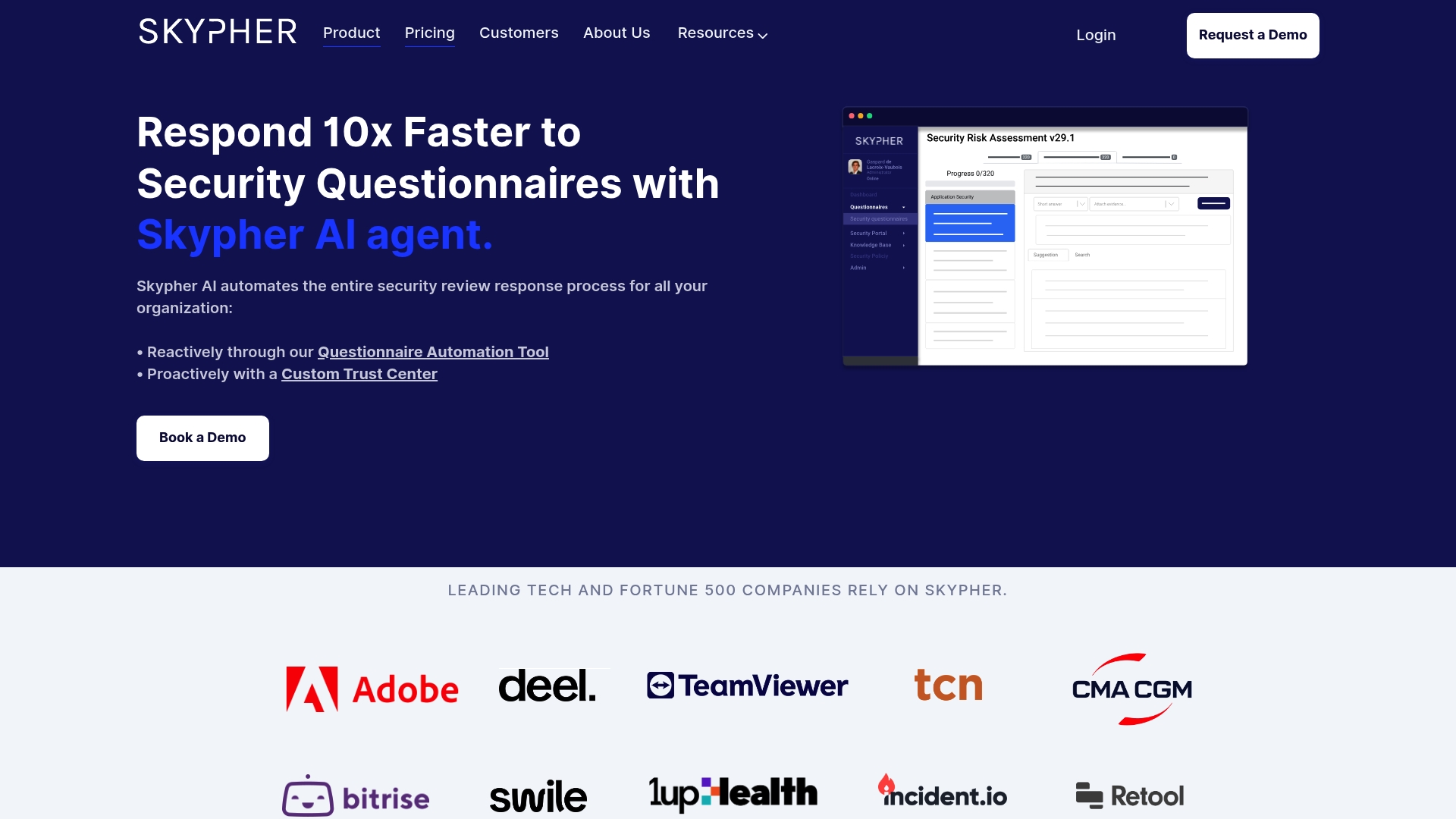
At Skypher, we understand the urgency and importance of managing security reviews effectively. Our AI-driven Questionnaire Automation Tool simplifies the completion of security questionnaires, significantly speeding up the process while ensuring higher accuracy. With real-time collaboration features and API integrations with over 40 third-party risk management platforms, you can focus on what really matters—protecting your data and building strong relationships with your clients.
Don’t wait until a breach incident puts your organization at risk! Experience the ease of automated compliance and take the first step towards enhancing your cybersecurity posture today. Visit https://skypher.co now to learn more and request a demo!