

Understanding the 3rd Party Vendors Meaning: Definitions & Key Concepts
A third party vendor is an external entity that provides goods, services, or expertise to your organization without being directly employed by your company. These external partnerships enable businesses to access specialized capabilities without developing them in-house.
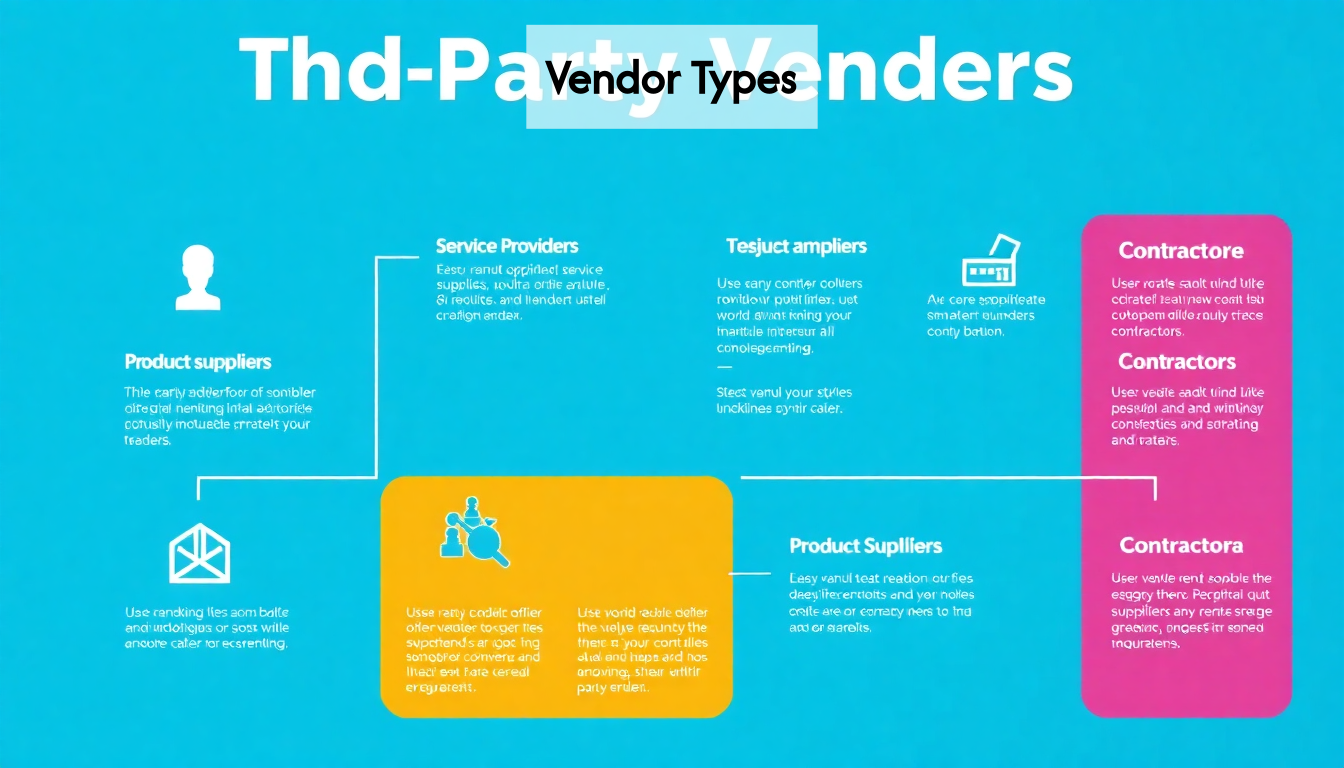
Third-party vendors typically fall into several categories:
- Service providers: Companies offering specialized business functions (IT support, payroll processing)
- Product suppliers: External manufacturers or distributors providing physical goods
- Software vendors: Companies offering technology solutions or platforms
- Consultants: External experts providing specialized knowledge
- Contractors: Individuals or companies performing specific, temporary functions
According to Deloitte's 2021 Global Outsourcing Survey, 70% of companies cite cost reduction as the primary reason for engaging third party suppliers, while 40% leverage these partnerships to access specialized capabilities unavailable internally.
The relationship between your organization and a 3rd party company is formalized through contracts that specify deliverables, timelines, compensation, and other terms. Understanding the precise meaning of third party vendor relationships is crucial as they directly impact your operations, compliance responsibilities, and risk exposure.
Key Takeaways
| Key Point | Details |
|---|---|
| Definition of 3rd Party Vendor | A third party vendor is an external entity providing goods, services, or expertise without being an employee. |
| Categories of 3rd Party Vendors | Includes service providers, product suppliers, software vendors, consultants, and contractors. |
| Primary Reasons for Engagement | 70% of companies engage third party suppliers for cost reduction and 40% for accessing specialized capabilities. |
| Importance of Contractual Agreements | These relationships are formalized through contracts detailing deliverables, timelines, and compensation, impacting operations and compliance. |
The Strategic Role of 3rd Party Vendors in Modern Business
Third party vendors have evolved from mere suppliers to strategic business partners integral to competitive advantage. Organizations leverage these relationships to enhance operational capabilities while focusing on core competencies.
Modern businesses rely on third-party suppliers for various strategic advantages:
- Resource optimization: Redirecting internal resources toward mission-critical operations
- Specialized expertise: Accessing niche knowledge without lengthy skill development
- Scalability: Rapidly adjusting capacity without infrastructure investment
- Innovation acceleration: Implementing cutting-edge solutions developed externally
- Global reach: Expanding into new markets through established local partners

A 2022 Gartner study revealed that companies with mature third party vendor management programs achieved 20% higher profitability compared to those with ad-hoc approaches to external partnerships.
Walmart exemplifies effective third-party vendor strategy, maintaining relationships with over 100,000 suppliers globally. This extensive network enables the retail giant to offer competitive pricing while minimizing inventory costs—proving that strategic third party vendor relationships directly impact bottom-line performance.
The definition of third party vendor success has expanded beyond cost savings to include innovation contribution, market access, and competitive differentiation.
Comparing 3rd Party Vendors to In-House Solutions: Critical Differences
When deciding between third-party vendors and in-house solutions, organizations must evaluate fundamental operational differences that impact resource allocation, control, and long-term strategy.
This comparison highlights key distinctions between external partnerships and internal development:
| Factor | 3rd Party Vendors | In-House Solutions |
|---|---|---|
| Initial Investment | Lower upfront costs | Higher initial capital expenditure |
| Time to Implementation | Typically faster | Often longer development cycles |
| Scalability | Flexible capacity adjustments | Limited by internal resources |
| Expertise | Immediate access to specialists | Requires recruitment or training |
| Control | Limited oversight of processes | Complete procedural control |
Amazon initially relied heavily on third-party suppliers for fulfillment services while building its internal logistics network. By 2022, the company had strategically shifted 72% of its shipping volume to its in-house delivery system while maintaining third party vendors for specialized or peak-season needs.
The decision between using a 3rd party company versus developing internal capabilities should align with core business priorities. Non-critical functions with established external providers often benefit from third-party vendor relationships, while strategic differentiators may warrant in-house investment despite higher initial costs.
How to Evaluate and Select the Right 3rd Party Vendors for Your Business
Selecting appropriate third party vendors requires a structured evaluation process that aligns external partnerships with organizational objectives while minimizing risks.
Follow these steps to identify and select optimal third-party suppliers:
- Define requirements clearly: Document specific deliverables, quality standards, timeline expectations, and budget constraints
- Research potential vendors: Identify providers with relevant experience in your industry and scale of operations
- Evaluate financial stability: Review financial statements, client retention rates, and business longevity indicators
- Assess security protocols: Verify data protection measures, compliance certifications, and breach response procedures
- Check references: Contact existing clients about reliability, communication quality, and issue resolution
- Compare proposals: Analyze offerings against standardized criteria including cost, capabilities, and terms
Netflix demonstrates effective third party vendor selection by maintaining rigorous technical standards for content delivery networks (CDNs). The company evaluates potential CDN partners based on performance metrics in specific geographic regions, resulting in 99.97% streaming reliability across their global user base.
The definition of third party vendor selection success should extend beyond immediate cost considerations to include reliability, scalability, cultural alignment, and long-term partnership potential. Document your evaluation criteria to maintain objectivity throughout the selection process.
Managing Risks & Ensuring Compliance with 3rd Party Vendors
Effective third party vendor relationships require robust risk management frameworks to protect your organization from operational, financial, and regulatory vulnerabilities that accompany external partnerships.
Implement these risk mitigation strategies when working with third-party suppliers:
- Comprehensive due diligence: Investigate regulatory history, litigation records, and compliance posture before engagement
- Detailed contracts: Specify performance metrics, liability allocation, termination conditions, and compliance requirements
- Regular audits: Conduct scheduled assessments of vendor operations against contractual obligations
- Contingency planning: Develop backup procedures for potential vendor disruptions or failures
- Compliance monitoring: Verify ongoing adherence to relevant regulations (GDPR, HIPAA, PCI-DSS, etc.)
According to a 2023 Ponemon Institute study, 59% of organizations experienced data breaches through third party vendors, with an average cost of $4.45 million per incident—13% higher than breaches originating internally.
Capital One's 2019 data breach illustrates these risks concretely. The financial institution suffered a breach affecting 100 million customers due to a vulnerability in Amazon Web Services configurations, demonstrating how third party vendor security gaps can directly impact your business. The incident resulted in $80 million in regulatory fines and a $190 million settlement.
Establishing clear governance structures that define roles, responsibilities, and escalation paths is essential for maintaining control over third party vendor relationships while ensuring compliance.
FAQs: Addressing Common Challenges and Concerns about 3rd Party Vendors
How do I maintain quality control when using third party vendors?
Establish clear performance metrics in your contracts and implement regular quality reviews. Document specific expectations regarding deliverables, response times, and quality standards. Companies like Apple maintain exceptional quality by requiring suppliers to meet precise specifications and conducting rigorous inspections—resulting in 99.8% component quality ratings across their supply chain.
What happens if a third party supplier fails to deliver?
Your contract should outline specific remedies including penalty clauses, service credits, and termination rights. Always maintain contingency plans that identify backup vendors or temporary in-house solutions for critical functions. Diversifying your vendor base for essential services reduces dependency risks.
How can I protect sensitive data shared with 3rd party companies?
Implement these data protection measures:
- Limit access to only what vendors absolutely need
- Require encryption for data at rest and in transit
- Include breach notification requirements in contracts
- Conduct security assessments before and during engagement
- Document data handling procedures and destruction protocols
What's the difference between a third party vendor and a business partner?
The key distinction lies in relationship structure. Third party vendors provide specific goods or services through formal, typically limited engagements. Business partners share mutual business objectives, risks, and rewards through deeper integration, often involving profit-sharing arrangements, co-development, or joint ventures.
Frequently Asked Questions
What is a third party vendor?
A third party vendor is an external entity that provides goods, services, or expertise to an organization without being directly employed by that company.
Why do businesses use third party vendors?
Businesses engage third party vendors primarily for cost reduction, access to specialized capabilities, and to enhance operational efficiency without the need for significant in-house development.
How can I ensure quality control with third party vendors?
To maintain quality control, establish clear performance metrics in contracts, conduct regular quality reviews, and set specific expectations for deliverables and standards.
What risks are associated with third party vendors?
Risks include operational failures, compliance issues, and data breaches. Organizations should implement robust risk management frameworks and regular audits to mitigate these risks.
Transform Your Vendor Relationships with Skypher's AI-Driven Solutions
Navigating the complexities of third-party vendor management can be challenging, especially when it comes to ensuring compliance, maintaining quality control, and safeguarding sensitive data—not to mention the significant resources needed to juggle these demands. As discussed in our guide, understanding the role of 3rd party vendors not only aids in scalability but also elevates your competitive edge.
But what if you could streamline the response process for security questionnaires and risk assessments, reducing your burden while enhancing collaboration across teams? Skypher's AI Questionnaire Automation Tool does just that! Say goodbye to long and tedious security reviews—our platform allows you to:
- Complete security reviews faster and with higher accuracy.
- Collaborate in real-time with your team, ensuring everyone is on the same page.
- Integrate seamlessly with over 40 third-party risk management platforms to create an efficient workflow.
Unlock the power of streamlined vendor management today! Explore how Skypher can elevate your operational productivity and cybersecurity posture at https://skypher.co. Don’t wait—discover the future of risk management with us now!