

HIPAA compliance is at the center of every healthcare organization's data security plan and for good reason. Most people expect strict rules about patient privacy, but few realize that even a small error can cost companies up to 1.5 million dollars in annual fines for repeated violations. What surprises most is that the hardest part of HIPAA compliance is not just the technology or paperwork, but actually rallying your whole team to handle sensitive data the right way every single day.
Table of Contents
- 1: Understand HIPAA Regulations and Framework
- 2: Identify Protected Health Information (PHI)
- 3: Conduct a Risk Analysis for Your Organization
- 4: Implement Administrative Safeguards
- 5: Establish Physical Safeguards Protocols
- 6: Set Up Technical Safeguards for Data Security
- 7: Train Employees on HIPAA Compliance Practices
Quick Summary
| Takeaway | Explanation |
|---|---|
| Understand HIPAA regulations comprehensively | Familiarize yourself with the Privacy, Security, and Breach Notification Rules to ensure proper PHI protection. |
| Identify all Protected Health Information | Recognize all data elements that constitute PHI, including identifiers and health status data. |
| Conduct regular risk assessments | Evaluate vulnerabilities and develop strategies to mitigate risks associated with PHI handling. |
| Implement strong administrative safeguards | Develop policies and procedures focusing on workforce training and access management for PHI protection. |
| Train all employees effectively | Provide continuous HIPAA training to ensure staff understands compliance requirements and incident response protocols. |
1: Understand HIPAA Regulations and Framework
Comprehending the Health Insurance Portability and Accountability Act (HIPAA) regulations is the foundational first step for organizations handling protected health information (PHI). HIPAA establishes critical privacy and security standards designed to safeguard sensitive patient data across healthcare systems, insurance providers, and related organizations.
The framework encompasses several key components that organizations must understand and implement. According to Health and Human Services, HIPAA consists of multiple rules with distinct requirements:
-
Privacy Rule: Establishes national standards for protecting individuals' medical records and personal health information
-
Security Rule: Specifies administrative, physical, and technical safeguards for electronic protected health information
-
Breach Notification Rule: Mandates reporting procedures when unauthorized data disclosure occurs
Companies must recognize that HIPAA compliance is not a one-time achievement but an ongoing process requiring continuous monitoring, assessment, and adaptation. Read our comprehensive guide on understanding the HIPAA Security Rule for businesses to gain deeper insights into these complex regulatory requirements.
Successful implementation demands a comprehensive understanding of how these regulations interact and impact your specific organizational context. Key stakeholders, including executives, IT professionals, compliance officers, and legal teams, must collaborate to develop a robust HIPAA compliance strategy that addresses all regulatory dimensions.
Critical considerations include identifying all systems processing PHI, implementing rigorous access controls, establishing clear documentation protocols, and creating systematic approaches for regular risk assessments and potential breach responses. Organizations must develop a proactive mindset that views HIPAA compliance as a strategic imperative rather than a mere checkbox exercise.
2: Identify Protected Health Information (PHI)
Identifying Protected Health Information (PHI) represents a critical initial step in developing a robust HIPAA compliance strategy. PHI encompasses any individually identifiable health information that can potentially reveal a patient's medical history, treatment details, or personal characteristics.
According to the Department of Health and Human Services, PHI includes a comprehensive range of data elements that must be carefully managed and protected:
-
Direct Identifiers: Names, addresses, social security numbers, telephone numbers, email addresses
-
Medical Record Numbers: Hospital identification codes, medical record numbers, health plan beneficiary numbers
-
Demographic Information: Birth dates, geographic identifiers, ages, gender, ethnicity
-
Health Status Data: Diagnostic information, treatment records, prescription details, laboratory results
Contextual understanding is paramount when classifying PHI. Organizations must recognize that certain data combinations, even when individually anonymized, can potentially reconstruct an individual's identity. Learn more about advanced PHI identification strategies in our comprehensive security guide.
Technological solutions play a crucial role in automated PHI detection. Advanced data mapping and classification tools can help organizations systematically scan digital environments, identifying and flagging potential PHI across databases, communication channels, and storage systems.
Beyond technological approaches, organizations must develop comprehensive training programs that educate employees about PHI recognition, handling protocols, and potential risks. Staff members at all levels need a clear understanding of what constitutes protected information and the critical importance of maintaining its confidentiality.
3: Conduct a Risk Analysis for Your Organization
Conducting a comprehensive risk analysis represents a foundational requirement for achieving HIPAA compliance. This systematic evaluation allows organizations to identify potential vulnerabilities in their information management processes and develop strategic mitigation strategies.
According to the National Institute of Standards and Technology, a thorough risk analysis must encompass multiple critical dimensions:
-
Asset Identification: Catalog all systems, networks, and devices that interact with protected health information
-
Potential Threat Assessment: Evaluate potential internal and external risks that could compromise data integrity
-
Vulnerability Evaluation: Analyze existing security controls and identify potential weak points in current infrastructure
Documentation is crucial during this process. Organizations must create detailed records of their risk assessment methodologies, findings, and corresponding remediation plans. Explore advanced risk management strategies in our comprehensive vendor risk assessment guide to enhance your organizational approach.
A robust risk analysis involves more than just technological assessment. It requires a holistic approach that considers human factors, technological infrastructure, and potential regulatory implications. Cybersecurity experts recommend conducting these analyses at least annually and whenever significant organizational changes occur.
Key considerations include assessing data transmission channels, evaluating access management protocols, and understanding potential breach scenarios. Organizations must develop a proactive stance that anticipates potential security challenges rather than simply reacting to incidents after they occur.
4: Implement Administrative Safeguards
Administrative safeguards form the critical foundation of an organization's HIPAA compliance strategy, focusing on the human and procedural aspects of protecting sensitive health information. These safeguards establish the comprehensive framework for managing and securing electronic protected health information (ePHI).
According to the Department of Health and Human Services, administrative safeguards encompass a wide range of organizational policies and procedures:
-
Security Management Processes: Implementing systematic approaches to identify and mitigate potential security risks
-
Workforce Management: Developing comprehensive training programs and access control mechanisms
-
Information Access Management: Establishing clear protocols for authorizing and monitoring data access
Key implementation strategies include developing a robust security management framework that addresses both technological and human elements. Learn more about developing comprehensive security strategies in our GRC analyst guide to enhance your organizational approach.
Organizations must create detailed documentation outlining security policies, including formal processes for employee training, security awareness programs, and incident response protocols. This documentation should clearly define roles and responsibilities, ensuring that every team member understands their part in maintaining HIPAA compliance.
Critical components of administrative safeguards include conducting regular security awareness training, implementing strong access control mechanisms, and developing a culture of continuous security improvement. This requires a proactive approach that goes beyond simple compliance checkboxes, instead fostering a comprehensive security mindset throughout the organization.
5: Establish Physical Safeguards Protocols
Physical safeguards represent a critical dimension of HIPAA compliance, addressing the tangible security measures that protect electronic and physical systems containing protected health information. These protocols ensure comprehensive protection beyond digital security mechanisms.
According to the National Institutes of Health, physical safeguards encompass multiple critical domains:
-
Facility Access Controls: Implementing restricted entry systems, visitor management protocols, and surveillance mechanisms
-
Workstation and Device Security: Establishing clear guidelines for device usage, storage, and protection
-
Media Management: Creating secure processes for handling, transporting, and destroying physical and electronic media containing sensitive information
Comprehensive physical security requires a multilayered approach that integrates technological solutions with robust procedural frameworks. Explore advanced vendor risk management strategies to enhance your physical security protocols.
Organizations must develop detailed documentation specifying exact protocols for managing physical access to areas housing sensitive information. This includes implementing systematic approaches for monitoring and controlling entry points, managing visitor access, and ensuring secure storage of devices and media containing protected health information.
Key considerations include developing clear procedures for device inventory, implementing secure disposal methods for physical documents and electronic media, and creating comprehensive tracking mechanisms for all systems and devices that interact with protected health information. The goal is to create a holistic security environment that minimizes potential unauthorized access or accidental exposure of sensitive data.
6: Set Up Technical Safeguards for Data Security
Technical safeguards represent the technological backbone of HIPAA compliance, focusing on the digital mechanisms that protect electronic protected health information (ePHI) from unauthorized access, transmission, and potential breaches.
According to the National Institute of Standards and Technology, technical safeguards must address several critical domains:
-
Access Control: Implementing robust user authentication mechanisms and systematic access management protocols
-
Transmission Security: Ensuring encrypted data transfers across all communication channels
-
Integrity Controls: Developing mechanisms to prevent unauthorized data modifications
Advanced technological protection requires a comprehensive approach that goes beyond basic security measures. Explore our comprehensive guide to vendor risk management for deeper insights into technical security strategies.
Organizations must implement multiple layers of technological defense, including strong encryption protocols for data at rest and in transit, multi-factor authentication systems, and sophisticated access tracking mechanisms. These technical safeguards should create a dynamic security environment that can adapt to evolving digital threats.
Key considerations include developing comprehensive audit logging systems, implementing real-time threat detection mechanisms, and creating systematic approaches for rapid incident response. The goal is to create a proactive technical infrastructure that not only protects sensitive health information but also provides transparent mechanisms for monitoring and responding to potential security events.
7: Train Employees on HIPAA Compliance Practices
Employee training represents the most critical and often most vulnerable component of HIPAA compliance. Human error remains a significant risk factor in potential data breaches, making comprehensive and ongoing educational programs essential for maintaining robust security protocols.
According to the Office for Civil Rights, effective HIPAA training must address multiple dimensions of organizational security:
-
Basic HIPAA Principles: Educating employees about fundamental privacy and security regulations
-
Specific Organizational Protocols: Detailing internal procedures for handling protected health information
-
Incident Response Mechanisms: Training staff on immediate actions required during potential security events
Continuous learning is fundamental to maintaining a strong compliance culture. Learn advanced strategies for developing comprehensive security awareness programs in our GRC analyst guide.
Organizations must develop multi-layered training approaches that combine formal instruction, interactive workshops, and periodic assessment mechanisms. This approach ensures that employees not only understand HIPAA requirements but can actively implement them in their daily workflows.
Key considerations include creating role-specific training modules, implementing regular refresher courses, and developing assessment mechanisms that validate employee understanding. The goal is to transform HIPAA compliance from a regulatory requirement into an ingrained organizational culture where every team member becomes an active participant in protecting sensitive health information.
Below is a comprehensive table summarizing the 7 key steps for achieving HIPAA compliance, including major actions and organizational benefits highlighted throughout the article.
| Step | Core Action/Focus | Key Benefit |
|---|---|---|
| Understand HIPAA Regulations & Framework | Learn Privacy, Security, and Breach Notification Rules; ongoing effort | Strong foundation for compliance and regulatory awareness |
| Identify Protected Health Information (PHI) | Detect all PHI elements, educate staff, and use data classification | Ensures all sensitive data is protected and properly managed |
| Conduct Risk Analysis | Regular assessment of vulnerabilities and documentation | Proactive risk mitigation for data handling and PHI security |
| Implement Administrative Safeguards | Policies, workforce training, and access management | Reduces human error, supports systematic HIPAA efforts |
| Establish Physical Safeguards Protocols | Secure access controls, device/media management, and facility security | Prevents unauthorized physical access or loss of PHI |
| Set Up Technical Safeguards | Encryption, access controls, integrity checks, and threat monitoring | Protects ePHI from cyber threats and unauthorized disclosures |
| Train Employees on HIPAA Practices | Continuous role-based HIPAA and incident response training | Builds a culture of compliance and reduces risk of breaches |
Streamline Your HIPAA Compliance and Reduce Your Risk
Struggling to keep up with HIPAA's evolving demands and the countless risk assessments discussed in this guide? Manual processes increase the risk of errors and slow down your compliance efforts. Skypher is designed to address pain points like complex security reviews, overwhelming volumes of vendor risk questionnaires, and the constant need to keep PHI secure across multiple systems and teams.
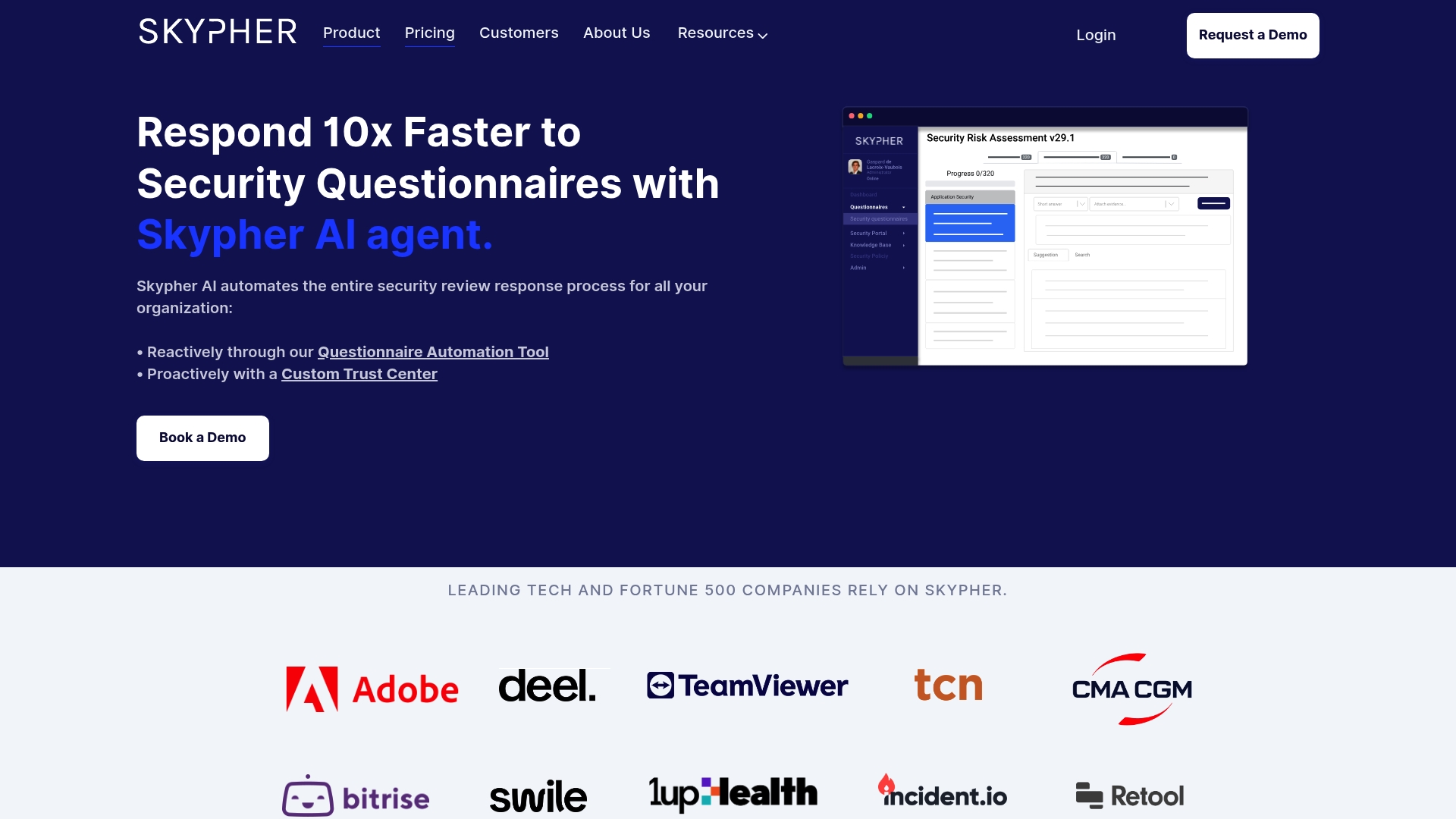
Start making HIPAA compliance stress-free and accurate. With Skypher, you can instantly automate security questionnaires, ensure consistent controls across all 7 checklist steps, and foster stronger team collaboration. Experience our AI Questionnaire Automation Tool and see how we help organizations like yours improve accuracy, speed, and trust. Ready to protect sensitive data while simplifying your HIPAA checklist? Visit Skypher now to schedule your personalized demo and discover a better way.
Frequently Asked Questions
What are the key components of HIPAA compliance?
The key components of HIPAA compliance include the Privacy Rule, Security Rule, and Breach Notification Rule. Understanding and implementing these components is crucial for organizations handling protected health information (PHI).
How do I identify Protected Health Information (PHI) in my organization?
PHI can include direct identifiers such as names and social security numbers, as well as medical records and demographic information. Organizations should conduct training and utilize technology to identify PHI effectively.
How often should a risk analysis be conducted for HIPAA compliance?
A risk analysis should be conducted at least annually and whenever significant organizational changes occur. This process helps identify vulnerabilities and develop strategies to mitigate risks to sensitive information.
What are administrative safeguards in HIPAA?
Administrative safeguards are policies and procedures designed to manage the security and protection of ePHI. This includes workforce training, security management, and information access management to ensure compliance with HIPAA regulations.