

Managing third-party relationships has become one of the most complex challenges for modern businesses. Nearly 63 percent of organizations have experienced a third-party incident that caused operational disruption or compliance risk. Most people think vendor management is just about signing contracts or checking up once in a while. The reality is that true risk mitigation starts with strategic partnership and continuous oversight long before any paperwork gets signed.
Table of Contents
- 1: Understand the Role of a 3rd Party Manager
- 2: Identify Key Risk Factors in 3rd Party Relations
- 3: Develop Comprehensive Onboarding Procedures
- 4: Establish Clear Communication Protocols
- 5: Monitor and Evaluate 3rd Party Performance
- 6: Implement Regular Compliance Checks
- 7: Foster Strong Relationships with 3rd Parties
Quick Summary
| Takeaway | Explanation |
|---|---|
| Understand third-party manager responsibilities | Third-party managers oversee vendor relations, ensuring alignment with strategic objectives and compliance requirements. |
| Identify key risk factors comprehensively | Organizations need to assess operational, cybersecurity, financial, and regulatory risks to mitigate potential vulnerabilities effectively. |
| Develop thorough onboarding procedures | Comprehensive onboarding minimizes risks and establishes clear expectations by assessing and documenting vendor credentials and capabilities. |
| Implement regular performance evaluations | Continuous monitoring of vendors through quantitative and qualitative metrics ensures adherence to agreements and fosters accountability. |
| Foster strong vendor relationships | Building transparent and collaborative partnerships encourages mutual success and problem-solving, enhancing overall vendor engagement. |
1: Understand the Role of a 3rd Party Manager
A 3rd party manager plays a critical role in mitigating organizational risks associated with external vendor relationships. These professionals are responsible for overseeing, evaluating, and managing interactions with third-party vendors, ensuring that external partnerships align with the company's strategic objectives, security standards, and regulatory compliance requirements.
The primary responsibilities of a 3rd party manager extend far beyond simple vendor selection. According to the FDIC's Risk Management Guidelines, they must systematically assess and monitor vendor performance, capabilities, and potential risks throughout the entire vendor lifecycle.
Key focus areas for a 3rd party manager include:
-
Comprehensive Vendor Assessment: Conducting thorough due diligence before establishing any third-party relationship
-
Continuous Risk Monitoring: Tracking vendor performance, security practices, and compliance status
-
Contract Management: Negotiating terms that protect organizational interests and establish clear accountability
-
Performance Evaluation: Regularly reviewing vendor contributions and measuring them against predefined metrics
Successful 3rd party managers understand that every external relationship represents a potential risk vector. They must develop robust frameworks that enable proactive risk identification, mitigation, and ongoing management. This involves creating standardized processes for vendor onboarding, performance tracking, and periodic reassessment.
Moreover, these professionals serve as critical intermediaries between internal stakeholders and external vendors. They translate complex organizational requirements into actionable vendor expectations, ensuring alignment between business objectives and vendor capabilities. Their strategic approach helps organizations maximize the value of third-party relationships while minimizing potential vulnerabilities.
By implementing rigorous screening protocols, maintaining transparent communication channels, and leveraging advanced risk assessment methodologies, 3rd party managers protect their organizations from potential financial, operational, and reputational risks associated with external partnerships.
2: Identify Key Risk Factors in 3rd Party Relations
Identifying key risk factors in third-party relations represents a complex and critical process for organizational risk management. Unlike simple vendor assessment, this approach requires comprehensive and strategic evaluation of potential vulnerabilities that could impact business operations, security, and compliance.
According to the National Institute of Standards and Technology, organizations must systematically analyze multiple dimensions of third-party relationships to effectively mitigate potential risks.
Critical risk factors organizations should evaluate include:
- Operational Risks: Potential disruptions to business continuity
- Cybersecurity Vulnerabilities: Exposure points in data sharing and system integration
- Compliance and Regulatory Risks: Potential violations of industry standards
- Financial Stability: Third party's economic health and sustainability
Comprehensive risk identification demands a multifaceted approach that goes beyond surface-level vendor assessments. This requires developing robust evaluation frameworks that consider both quantitative and qualitative risk indicators.
Organizations must conduct thorough due diligence by examining multiple risk dimensions. This includes analyzing the third party's historical performance, technological infrastructure, information security protocols, financial statements, and regulatory compliance record. A holistic risk assessment helps prevent potential breaches, operational disruptions, and reputational damage.
Technological integration presents another significant risk factor. When third-party systems connect with an organization's infrastructure, potential security vulnerabilities emerge. Detailed technical assessments must examine integration points, data exchange mechanisms, authentication protocols, and potential attack surfaces.
Financial and legal risks represent additional critical evaluation areas. Organizations need to assess the third party's financial stability, legal standing, contractual obligations, and potential litigation history. Understanding these factors helps predict potential future risks and prevents engaging with vendors who might pose significant long-term challenges.
Effective risk factor identification is not a one-time event but a continuous process requiring regular reassessment, monitoring, and adaptive strategies that evolve with changing business landscapes and emerging technological threats.
3: Develop Comprehensive Onboarding Procedures
Developing comprehensive onboarding procedures for third-party relationships represents a critical strategy for minimizing organizational risks and establishing clear expectations from the initial engagement. This process goes far beyond simple paperwork and requires a structured, strategic approach that integrates thorough assessment, documentation, and alignment of organizational objectives.
According to research from the University of Minnesota, effective onboarding should focus on multiple critical dimensions that ensure smooth integration and risk mitigation.
Key components of a robust third-party onboarding procedure include:
- Comprehensive Documentation: Collecting and verifying all legal, financial, and operational credentials
- Security Clearance: Conducting extensive background checks and risk assessments
- Contractual Alignment: Establishing clear performance expectations and compliance requirements
- Technology Integration: Defining precise access protocols and system interaction guidelines
Standardized onboarding frameworks provide organizations with a systematic method to evaluate and integrate third-party vendors. This approach allows for consistent risk assessment, reducing potential vulnerabilities that might emerge from inconsistent or ad-hoc vendor engagement processes.
The onboarding procedure must include detailed verification of the third party's operational capabilities, technological infrastructure, and compliance history. Organizations should develop comprehensive questionnaires and assessment tools that probe deep into the vendor's organizational structure, financial stability, security practices, and past performance records.
Technological integration represents another crucial aspect of the onboarding process. This involves establishing secure communication channels, defining precise access permissions, and creating robust authentication mechanisms that protect sensitive organizational data. Detailed technical assessments help prevent potential security breaches and ensure seamless system interactions.
Legal and compliance considerations must be meticulously addressed during the onboarding process. This includes drafting precise contractual agreements that outline performance expectations, liability clauses, data protection requirements, and potential termination conditions. Clear legal frameworks help prevent misunderstandings and provide solid recourse in case of vendor performance issues.
Ultimately, a well-designed onboarding procedure transforms third-party engagement from a potential risk into a strategic opportunity for organizational growth and collaboration.
4: Establish Clear Communication Protocols
Establishing clear communication protocols is fundamental to successful third-party management, creating a structured framework that prevents misunderstandings, reduces potential conflicts, and ensures transparent interactions between organizations and their external partners.
According to EDUCAUSE guidelines, effective communication protocols require comprehensive planning and strategic implementation across multiple organizational levels.
Critical elements of robust communication protocols include:
- Defined Communication Channels: Establishing primary and secondary communication methods
- Escalation Procedures: Creating clear pathways for addressing urgent issues
- Performance Reporting: Standardizing frequency and format of vendor performance updates
- Incident Notification: Developing precise mechanisms for reporting potential risks or breaches
Effective communication protocols transcend simple email exchanges or periodic meetings. They represent a systematic approach to information sharing that ensures all stakeholders have access to relevant, timely, and actionable insights about third-party relationships.
Organizations must develop comprehensive communication frameworks that specify exact reporting requirements, communication frequencies, and preferred communication technologies. This includes defining precise metrics for performance evaluation, establishing regular review meetings, and creating standardized reporting templates that capture critical performance indicators.
Technological integration plays a crucial role in modern communication protocols. Organizations should leverage secure communication platforms that enable real-time collaboration, document sharing, and transparent tracking of vendor interactions. These platforms must incorporate robust security measures to protect sensitive information while facilitating seamless communication.
Legal and compliance considerations must be explicitly addressed within communication protocols. This involves drafting clear guidelines about information sharing, confidentiality requirements, and data protection standards. Organizations need to establish explicit consent mechanisms and define the boundaries of permissible communication to prevent potential legal complications.
The most successful communication protocols are those that remain flexible yet structured, allowing for adaptive responses while maintaining consistent performance expectations. By creating a comprehensive communication framework, organizations can transform third-party relationships from potential sources of risk into strategic collaborative partnerships.
5: Monitor and Evaluate 3rd Party Performance
Monitoring and evaluating third-party performance represents a critical ongoing process that goes beyond periodic assessments, requiring organizations to develop sophisticated tracking mechanisms that provide real-time insights into vendor capabilities, risks, and strategic alignment.
According to research in healthcare management, continuous performance evaluation helps organizations maintain accountability and proactively address potential vulnerabilities.
Key performance monitoring strategies include:
- Quantitative Metrics: Tracking measurable performance indicators
- Qualitative Assessments: Evaluating vendor responsiveness and collaboration
- Compliance Verification: Ensuring ongoing adherence to contractual requirements
- Risk Assessment: Continuously identifying and mitigating potential vulnerabilities
Performance monitoring requires a multifaceted approach that combines data-driven analysis with strategic oversight. Organizations must develop comprehensive frameworks that enable continuous assessment of third-party vendors across multiple dimensions, including operational efficiency, security compliance, financial stability, and strategic alignment.
Technological tools play a crucial role in performance monitoring. Advanced analytics platforms can provide real-time dashboards that track key performance indicators, generate automated alerts for potential issues, and create comprehensive performance reports. These technologies enable organizations to move beyond reactive monitoring toward predictive and proactive vendor management.
Financial and operational risk assessments must be integrated into the performance evaluation process. This involves analyzing the third party's financial statements, reviewing their operational capabilities, and assessing their ability to meet contractual obligations. Regular financial health checks help prevent potential disruptions caused by vendor instability.
Cybersecurity and compliance represent critical components of performance monitoring. Organizations must implement rigorous security assessments that evaluate the third party's information protection protocols, data handling practices, and incident response capabilities. Continuous compliance monitoring helps prevent potential breaches and ensures alignment with industry standards.
Successful performance evaluation is not about punishment but about fostering continuous improvement. By providing constructive feedback, setting clear expectations, and creating collaborative improvement pathways, organizations can transform performance monitoring into a strategic partnership development tool.
6: Implement Regular Compliance Checks
Implementing regular compliance checks represents a critical strategy for organizations to mitigate risks and ensure third-party vendors consistently meet regulatory, operational, and contractual requirements. These systematic evaluations serve as proactive mechanisms to identify potential vulnerabilities before they escalate into significant organizational challenges.
According to the FDIC's Third-Party Risk Management Guide, comprehensive compliance checks are essential for maintaining robust vendor management practices.
Key components of effective compliance checks include:
- Regulatory Alignment: Verifying adherence to industry-specific standards
- Documentation Review: Examining comprehensive vendor documentation
- Performance Validation: Assessing vendor capabilities against predefined metrics
- Risk Assessment: Identifying potential compliance gaps and vulnerabilities
Comprehensive compliance checks demand a multifaceted approach that goes beyond superficial assessments. Organizations must develop sophisticated evaluation frameworks that incorporate both quantitative and qualitative analysis, ensuring a holistic understanding of vendor performance and potential risks.
Technological integration plays a crucial role in modern compliance monitoring. Advanced compliance management platforms enable real-time tracking of vendor activities, automated risk assessment, and generation of detailed compliance reports. These tools help organizations transition from reactive to predictive compliance management.
Legal and regulatory requirements must be meticulously examined during compliance checks. This involves detailed reviews of vendor contracts, verification of necessary certifications, and assessment of the vendor's ability to meet specific industry regulations. Organizations need to establish clear compliance benchmarks and create mechanisms for continuous monitoring and improvement.
Cybersecurity compliance represents a particularly critical aspect of these checks. Organizations must conduct thorough assessments of vendors' information security practices, data protection protocols, and incident response capabilities. This includes evaluating encryption standards, access controls, and potential vulnerabilities in technological infrastructure.
Successful compliance checks are not about punitive measures but about creating collaborative improvement pathways. By providing constructive feedback, offering support for addressing identified gaps, and maintaining transparent communication, organizations can transform compliance checks into opportunities for strengthening third-party relationships.
7: Foster Strong Relationships with 3rd Parties
Fostering strong relationships with third-party vendors transcends traditional transactional interactions, representing a strategic approach that transforms external partnerships into collaborative, mutually beneficial engagements. Successful relationship management requires a nuanced understanding of mutual goals, shared values, and long-term organizational objectives.
According to research from the National Institutes of Health, effective third-party relationships are built on foundational principles of trust, transparency, and strategic alignment.
Key strategies for developing robust third-party relationships include:
- Open Communication: Establishing transparent and consistent dialogue channels
- Mutual Goal Alignment: Identifying shared strategic objectives
- Performance Recognition: Acknowledging and rewarding vendor excellence
- Collaborative Problem Solving: Creating joint mechanisms for addressing challenges
Relationship building requires a proactive and holistic approach that extends beyond contractual obligations. Organizations must invest time and resources in understanding their third-party vendors' operational contexts, challenges, and aspirational goals.
Technological platforms can significantly enhance relationship management by providing collaborative tools that enable real-time communication, shared project management, and transparent performance tracking. These platforms create opportunities for more dynamic and responsive interactions between organizations and their third-party partners.
Professional development and knowledge sharing represent critical components of strong third-party relationships. Organizations should create opportunities for mutual learning, such as joint training sessions, collaborative workshops, and periodic strategic review meetings. These interactions help build mutual understanding and create opportunities for innovative problem-solving.
Economic and strategic incentives play a crucial role in relationship management. By developing fair compensation structures, offering long-term partnership opportunities, and creating clear pathways for vendor growth and development, organizations can motivate third-party vendors to maintain high performance standards and align closely with organizational objectives.
Ultimately, strong third-party relationships are not about control but about creating symbiotic partnerships where both parties benefit from mutual success, shared knowledge, and collaborative innovation.
Below is a comprehensive table summarizing the seven key strategies for effective third-party management discussed in this article. Use this overview to review the main steps, benefits, and outcomes essential for minimizing risks and maximizing value in third-party relationships.
| Strategy | Key Focus Areas | Benefits |
|---|---|---|
| Understand the Role of a 3rd Party Manager | Overseeing vendor lifecycle, risk monitoring, contract management | Alignment with goals, reduced compliance risk |
| Identify Key Risk Factors | Assessing operational, cybersecurity, compliance, and financial risks | Anticipates vulnerabilities, strengthens resilience |
| Develop Comprehensive Onboarding Procedures | Credential verification, security checks, contractual alignment, tech integration | Sets expectations, ensures security, smooth integration |
| Establish Clear Communication Protocols | Defined channels, reporting requirements, escalation and notification processes | Prevents misunderstandings, ensures timely response |
| Monitor and Evaluate 3rd Party Performance | Metrics tracking, qualitative reviews, compliance monitoring, risk assessment | Maintains accountability, proactivity in improvement |
| Implement Regular Compliance Checks | Regulatory alignment, documentation review, performance validation, risk identification | Sustains compliance, identifies issues early |
| Foster Strong Relationships with 3rd Parties | Transparent communication, goal alignment, performance recognition, joint problem-solving | Encourages collaboration, innovation, mutual success |
Cut Third-Party Risks With Smart Questionnaire Automation
Are you struggling to manage vendor relationships, keep up with compliance, and deliver faster performance reviews? This article proves how disjointed onboarding, manual risk assessments, and unclear communication create massive pressure on teams—especially when every third-party relationship could be a vulnerability. When your team is buried in repetitive security questionnaires or risk assessments, it stifles collaboration and creates bottlenecks that slow down business growth.
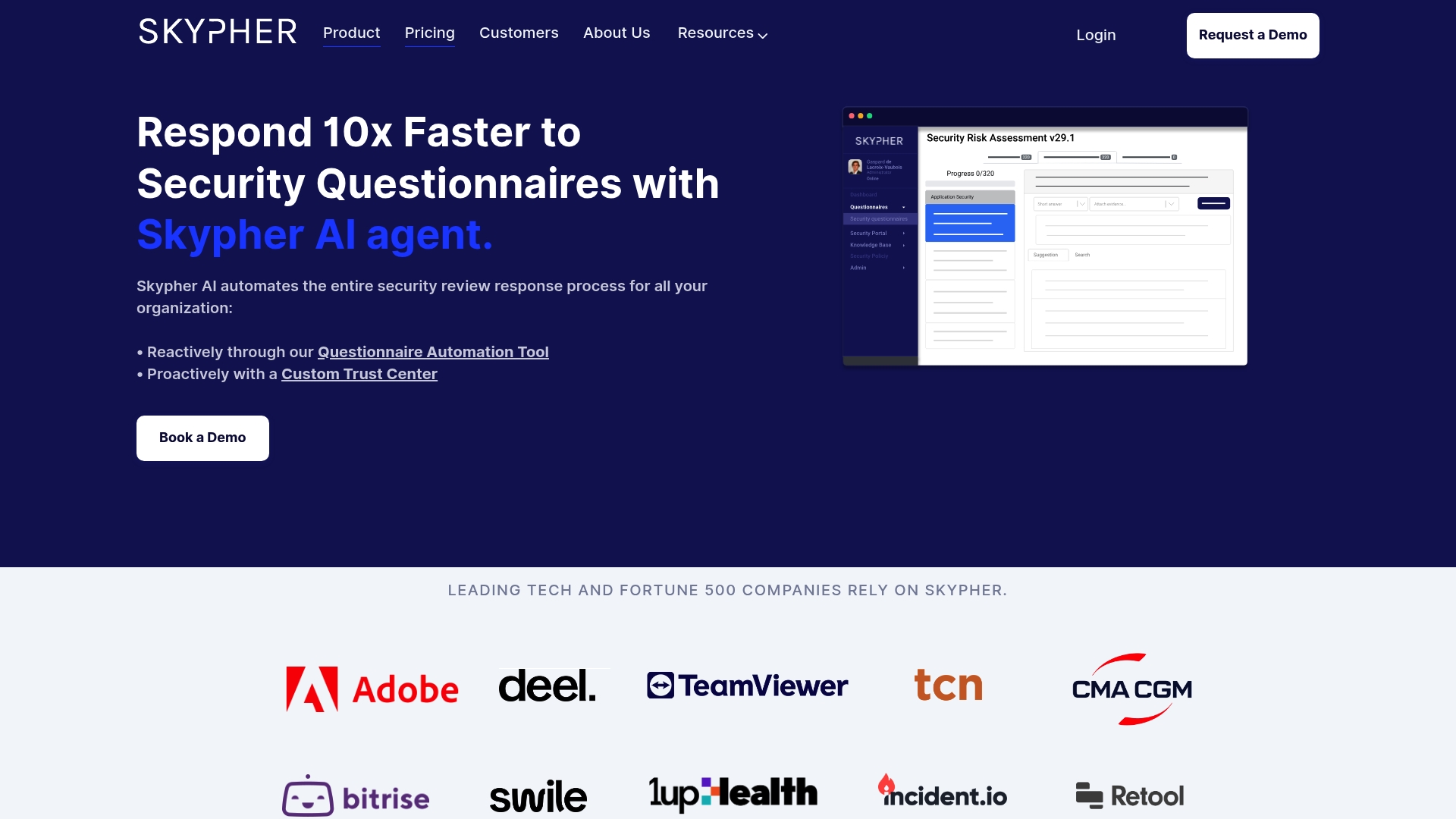
Get the power to streamline your entire third-party risk management process in one place with Skypher. Our AI-driven Questionnaire Automation Tool turns hours of manual work into minutes of effortless completion. You get real-time collaboration, integration with over 40 top platforms, and a customizable Trust Center to support proactive monitoring and faster onboarding. Stop letting manual tasks hold your team back. Visit Skypher’s homepage to experience automation that aligns perfectly with the strategies in this article. Try our platform today and see immediate gains in speed, accuracy, and security productivity.
Frequently Asked Questions
What is the role of a 3rd party manager?
A 3rd party manager is responsible for overseeing and managing relationships with external vendors, ensuring alignment with the company's strategic objectives, security standards, and regulatory compliance requirements.
How can organizations identify key risk factors in third-party relationships?
Organizations can identify key risk factors by conducting comprehensive assessments that include evaluating operational risks, cybersecurity vulnerabilities, compliance and regulatory risks, and the financial stability of the third party.
What are essential components of effective onboarding procedures for third-party vendors?
Essential components include comprehensive documentation verification, security clearance, contractual alignment with performance expectations, and defining technology integration protocols.
Why is continuous performance monitoring important in third-party management?
Continuous performance monitoring is important as it helps organizations maintain accountability, proactively identify vulnerabilities, ensure compliance, and enhance the overall value derived from vendor relationships.
Recommended
- Best Practices for Automating Your Security Questionnaires Response Process (3/3)
- The different formats & mistakes made when writing or answering security questionnaires
- Lalita Hardier - Saasy - Webflow HTML Website Template
- Best Practices for Automating Your Security Questionnaires Response Process (2/3)
- The Strategic Guide to Outsourcing Digital Marketing: More Growth, Less Grind | 12AM Agency
- Consulting Scheduling Strategies for IT Pros: USA & Canada 2025