

Cyberattacks are growing at an astonishing pace, with experts reporting that a new cyber threat emerges every 39 seconds. As hackers deploy increasingly advanced tactics, the traditional ways of protecting sensitive data often struggle to keep up. Artificial intelligence is now stepping up to fill this gap, offering organizations powerful tools that can spot threats in real time, adapt to new risks, and help keep digital defenses one step ahead.
Key Takeaways
| Point | Details |
|---|---|
| Proactive Defense | AI transforms cybersecurity from reactive to proactive by identifying threats before they escalate. |
| Enhanced Detection | AI-powered systems analyze massive datasets for faster, more accurate threat detection than traditional methods. |
| Operational Efficiency | Automation reduces false positives and manual workload, allowing teams to focus on strategic risk management. |
| Ethical Considerations | AI implementation raises concerns about algorithmic bias and accountability, necessitating careful governance and oversight. |
Table of Contents
- Defining AI in Cybersecurity Today
- How AI Transforms Cybersecurity Operations
- Real-World AI Applications in Security Automation
- Key Risks and Ethical Considerations
- Best Practices for Enterprise AI Security
Defining AI in Cybersecurity Today
Artificial Intelligence has transformed cybersecurity from a reactive defense mechanism into a proactive, intelligent shield against sophisticated digital threats. Machine learning algorithms now power advanced threat detection systems that can identify and neutralize potential security risks before they escalate. These intelligent systems analyze massive datasets, learning from historical attack patterns and recognizing anomalies with unprecedented speed and accuracy.

In practical terms, AI in cybersecurity operates through several critical mechanisms:
- Predictive threat intelligence: Analyzing historical data to forecast potential attack vectors
- Real-time anomaly detection: Identifying unusual network behaviors instantly
- Automated response protocols: Implementing immediate countermeasures against emerging threats
- Continuous learning systems: Adapting and improving defensive strategies with each interaction
The core strength of AI-powered cybersecurity lies in its ability to process and analyze information exponentially faster than human analysts. Traditional security approaches required manual intervention and post-incident analysis, whereas AI systems can scan millions of data points simultaneously, detecting subtle indicators of potential breaches within milliseconds. Learn more about our AI-powered security strategies that leverage these advanced computational capabilities.
As cyber threats become increasingly complex and dynamic, AI represents not just an enhancement but a fundamental reimagining of digital defense strategies. Organizations embracing AI-driven cybersecurity solutions can expect dramatically improved threat detection, reduced response times, and more resilient security infrastructures capable of adapting to the ever-evolving digital threat landscape.
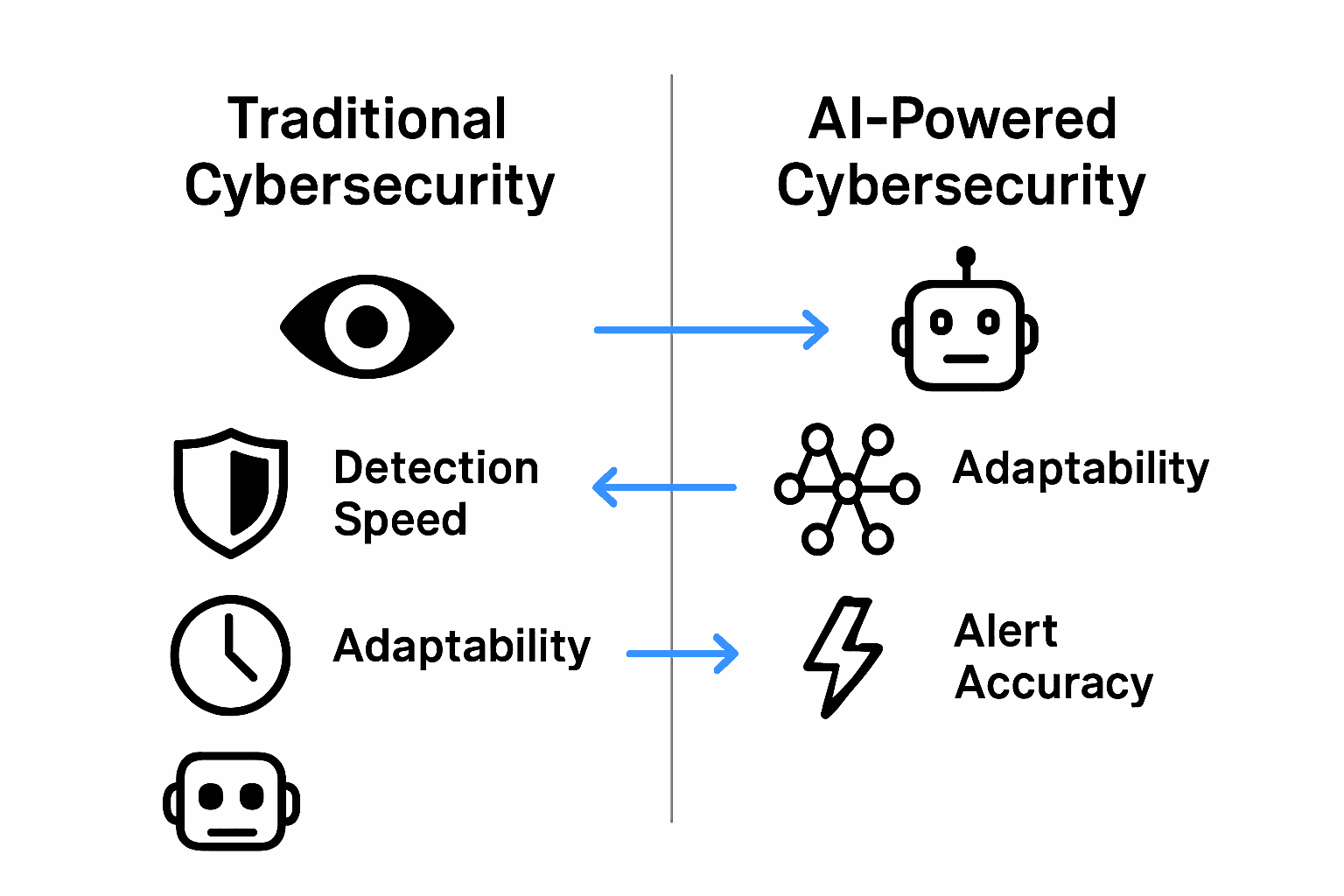
Here's how AI capabilities compare with traditional cybersecurity approaches:
| Capability | Traditional Security | AI-Powered Security |
|---|---|---|
| Threat Detection | Manual<br>Reactive | Automated<br>Proactive |
| Response Time | Minutes to hours | Milliseconds |
| Data Analysis Speed | Limited<br>Sample-based | Massive<br>Real-time |
| Alert Accuracy | Lower<br>Many false positives | Higher<br>Minimized noise |
| Adaptability | Static<br>Rule-based | Dynamic<br>Continuously learns |
How AI Transforms Cybersecurity Operations
Artificial Intelligence is revolutionizing cybersecurity operations by fundamentally reshaping how organizations detect, respond to, and prevent digital threats. Unlike traditional security models that rely heavily on human intervention, AI-powered systems can analyze complex network behaviors, predict potential vulnerabilities, and execute rapid defensive actions with unprecedented precision and speed.
Key transformative capabilities of AI in cybersecurity include:
- Predictive Risk Assessment: Analyzing historical data and current network patterns to forecast potential security breaches
- Automated Threat Hunting: Continuously scanning network infrastructures to identify and isolate potential security risks
- Dynamic Incident Response: Implementing real-time countermeasures without manual intervention
- Adaptive Learning Mechanisms: Constantly updating threat detection algorithms based on new attack vectors
The most significant operational transformation comes through intelligent automation. Traditional security teams spend countless hours manually investigating alerts, with studies suggesting that up to 70% of security alerts are false positives. AI drastically reduces this workload by filtering and prioritizing genuine threats, allowing cybersecurity professionals to focus on strategic risk management. Explore our AI-powered recommendation engine that demonstrates these advanced threat mitigation capabilities.
Moreover, AI enables a proactive rather than reactive security posture. By leveraging machine learning algorithms, organizations can now predict and prevent potential cyber incidents before they occur, effectively transforming cybersecurity from a defensive mechanism to a strategic, intelligence-driven discipline. This shift represents not just a technological upgrade, but a fundamental reimagining of digital defense strategies in an increasingly complex threat landscape.
Real-World AI Applications in Security Automation
Security automation represents a critical evolution in enterprise cybersecurity, with AI transforming traditional defensive approaches into intelligent, adaptive systems. Organizations are increasingly deploying AI-powered solutions that can autonomously detect, analyze, and respond to complex security challenges across multiple technological domains.
Practical AI applications in security automation span several key operational areas:
- Network Intrusion Detection: AI algorithms continuously monitor network traffic, identifying suspicious patterns and potential breach attempts in real-time
- Endpoint Protection: Intelligent systems analyze device behaviors to detect and prevent potential malware infections before they spread
- Vulnerability Management: Machine learning models predict and prioritize potential system weaknesses before attackers can exploit them
- Phishing and Social Engineering Defense: Advanced natural language processing techniques identify sophisticated email and communication-based threats
One significant breakthrough is the ability of AI systems to perform contextual threat analysis. Traditional security tools operate through rigid rule-based systems, whereas AI-driven platforms can understand nuanced behavioral contexts, distinguishing between legitimate user actions and potential security risks. Check out our guide on effective security questionnaire strategies to understand how intelligent systems assess risk profiles.
Moreover, AI-powered security automation dramatically reduces response times and operational overhead. By automating complex threat detection and response protocols, organizations can minimize human error, reduce security team workload, and create a more resilient digital infrastructure that adapts dynamically to emerging cyber threats. This represents a fundamental shift from reactive security models to proactive, intelligence-driven defense strategies that can anticipate and neutralize potential risks before they materialize.
Key Risks and Ethical Considerations
Artificial Intelligence in cybersecurity introduces complex ethical challenges that extend far beyond traditional technological implementations. As AI systems become increasingly sophisticated, organizations must carefully navigate the delicate balance between advanced security capabilities and fundamental ethical principles, ensuring that technological innovation does not compromise individual privacy or organizational integrity.
Key ethical risks and considerations include:
- Algorithmic Bias: AI systems can inadvertently perpetuate existing prejudices or create new forms of discriminatory decision-making
- Privacy Invasion: Advanced AI monitoring capabilities potentially compromise individual data protection rights
- Transparency Challenges: Complex machine learning models often operate as "black boxes", making their decision-making processes difficult to understand
- Accountability Gaps: Determining responsibility for AI-generated security decisions becomes increasingly complex
The potential for unintended consequences demands robust governance frameworks. Organizations must implement comprehensive oversight mechanisms that ensure AI systems operate within clearly defined ethical boundaries. Learn essential strategies for GRC analysts managing these challenges to maintain a balanced approach to technological innovation and ethical responsibility.
Moreover, the rapid evolution of AI necessitates continuous reassessment of ethical standards. Cybersecurity professionals must proactively develop adaptive ethical guidelines that can keep pace with technological advancements, balancing the immense potential of AI-driven security solutions with fundamental human rights and organizational values. This requires a multidisciplinary approach that integrates technical expertise, legal understanding, and philosophical considerations to create responsible, trustworthy AI systems.
Best Practices for Enterprise AI Security
Enterprise AI security demands a holistic, multilayered approach that goes beyond traditional cybersecurity strategies. Organizations must develop comprehensive frameworks that protect AI systems themselves, the data they process, and the broader technological ecosystem in which they operate. This requires a proactive, adaptive strategy that anticipates potential vulnerabilities and implements robust defensive mechanisms.
Critical best practices for securing AI infrastructure include:
- Continuous Model Validation: Regularly testing and auditing AI models for potential biases, vulnerabilities, and performance inconsistencies
- Data Encryption: Implementing end-to-end encryption for all training datasets and AI-generated information
- Access Control: Developing granular permission systems that limit AI system interactions based on least-privilege principles
- Adversarial Training: Deliberately introducing simulated attack scenarios to strengthen AI system resilience
- Comprehensive Monitoring: Creating real-time tracking mechanisms to detect unexpected AI behavioral patterns
Implementing these practices requires sophisticated governance frameworks. Security teams must develop cross-functional collaboration strategies that integrate machine learning experts, cybersecurity professionals, and ethical oversight committees. Explore our comprehensive approach to security questionnaire automation to understand how advanced organizations are implementing these complex integration strategies.
Ultimately, enterprise AI security is not a static destination but a continuous journey of adaptation and improvement. Organizations must foster a culture of perpetual learning, where AI security strategies evolve alongside technological advancements. This means investing in ongoing training, maintaining flexible architectural designs, and cultivating a proactive mindset that views security as a dynamic, integral component of AI innovation rather than a secondary consideration.
Elevate Your AI and Cybersecurity Strategy with Skypher
Enterprise security demands more than just reactive tools. As described throughout this article, handling modern cyber threats and compliance tasks like extensive security questionnaires can hold back your team's productivity and increase risk. Many organizations get overwhelmed by manual processes, slow reviews, and the never-ending complexity of cybersecurity documentation—especially when every minute counts. You want AI-powered efficiency, not more roadblocks.
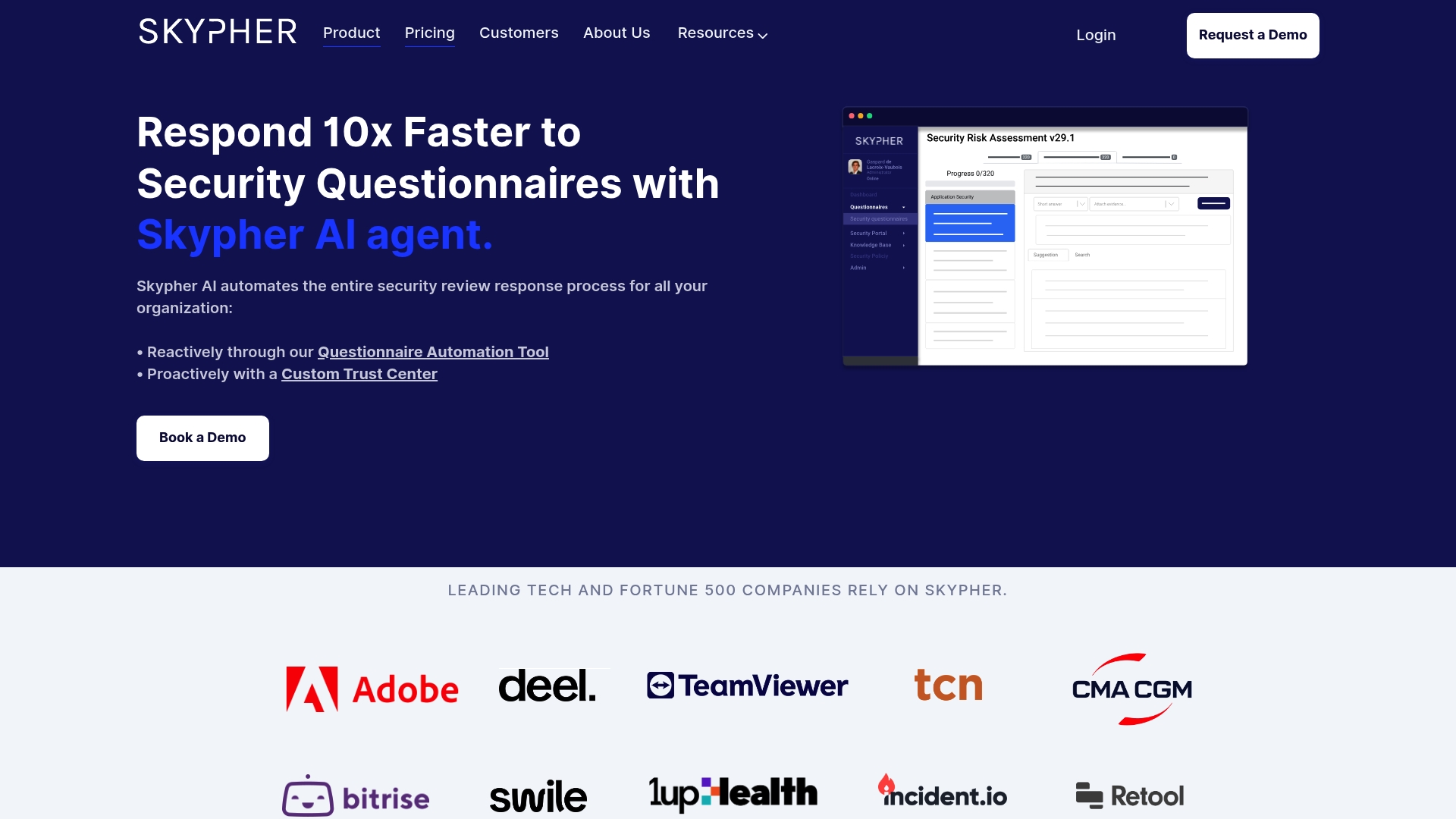
Now is your chance to streamline your entire security questionnaire process with Skypher. Our platform brings real AI automation to every step, so your organization can complete even 200 questions in under a minute. Instantly parse complex formats and collaborate across teams while our proprietary AI ensures accuracy and keeps you audit-ready. Use advanced integrations with tools like Slack, ServiceNow, Confluence, or Notion, and manage all your risk workflows in a secure, centralized hub. Discover how features like our AI-powered Recommendation Engine and customizable Trust Center help you move faster and boost client confidence. See why leading tech and finance teams trust Skypher to improve sales cycles and operational resilience. Ready to modernize your digital defense? Get started today and transform your enterprise security operations.
Frequently Asked Questions
What role does AI play in enhancing cybersecurity measures?
AI transforms cybersecurity by providing proactive threat detection, real-time anomaly detection, and automated response protocols, enabling organizations to preemptively address potential security risks.
How does AI improve threat detection compared to traditional methods?
AI-powered systems analyze vast amounts of data simultaneously, allowing for quicker detection of anomalous behaviors and reducing false positives compared to traditional manual methods.
What are some practical applications of AI in cybersecurity?
AI can be applied in areas like network intrusion detection, endpoint protection, vulnerability management, and defense against phishing attacks, allowing for rapid, automated responses to complex security challenges.
What ethical considerations should organizations keep in mind when implementing AI in cybersecurity?
Key ethical considerations include addressing algorithmic bias, ensuring privacy protection, maintaining transparency in AI decision-making processes, and establishing accountability for AI-generated actions.
Recommended
- Cybersecurity GRC: Essential Strategies for 2025 Success
- AI powered recommendation engine | Security Questionnaire Automation | Skypher
- Understanding GRC Cyber Security: Concepts and Importance
- 7 Essential Tips for Every GRC Analyst to Succeed
- The Impact of AI on SEO in 2025: Key Changes for Businesses