
The landscape of data security is constantly shifting, and SOC 2 compliance is now seen as a necessity rather than a luxury. It is not just a framework but a lifeline for service organizations safeguarding customer information. In fact, organizations that conduct thorough readiness assessments boost their audit results by an impressive 30 percent. But here’s the twist: many companies still approach compliance as a checklist rather than a strategic transformation. The real opportunity lies in using SOC 2 to fundamentally improve security practices, build trust, and enhance customer loyalty.
Table of Contents
Quick Summary
| Takeaway | Explanation |
|---|---|
| Understand the SOC 2 Framework | SOC 2 is a principles-based framework essential for service organizations to assess their information security measures based on five key trust principles: Security, Availability, Processing Integrity, Confidentiality, and Privacy. |
| Conduct a Readiness Assessment | Performing a thorough readiness assessment before seeking SOC 2 compliance helps identify security gaps and improves audit results by approximately 30%. |
| Implement and Document Security Controls | Develop comprehensive documentation of security policies and procedures alongside implementing robust controls to effectively manage identified risks. |
| Establish Continuous Monitoring | Continuous monitoring of security controls is necessary for SOC 2 compliance, as it reduces the time to identify and respond to incidents by 50%. |
| Prepare for Evolving Requirements | Stay informed about updates to the SOC 2 framework and proactively align your security practices with emerging requirements for stronger compliance and security posture. |
Understanding SOC 2 Framework
SOC 2 serves as the gold standard for data security among service organizations. Developed by the American Institute of Certified Public Accountants (AICPA), this framework evaluates how well companies safeguard customer data and manage sensitive information. But what exactly does SOC 2 entail, and why has it become so crucial for businesses operating in today's digital landscape?
What is SOC 2?
SOC 2, which stands for Service Organization Control 2, represents a comprehensive framework designed to assess an organization's information security measures based on five key trust principles. Unlike other compliance frameworks that follow rigid checklists, SOC 2 takes a principles-based approach, allowing organizations to implement controls that align with their specific business model and risk profile.
The SOC 2 framework is specifically developed for service providers storing customer data in the cloud. It helps these organizations demonstrate their commitment to protecting client information through rigorous security policies, procedures, and practices. When a company achieves SOC 2 compliance, it signals to clients and partners that the organization takes data security seriously.
According to the AICPA's guidelines, SOC 2 compliance is assessed through independent third-party audits using Trust Services Criteria. These audits examine whether an organization's systems are designed and operating effectively to protect customer data.
The Five Trust Principles
At the core of the SOC 2 framework are five trust principles that serve as the foundation for evaluating an organization's information security controls:
- Security - The foundational principle protecting against unauthorized access, focusing on system protection against potential data breaches and vulnerabilities
- Availability - Ensures systems operate and function as expected when needed by users
- Processing Integrity - Verifies that systems process data completely, accurately, and in a timely manner
- Confidentiality - Addresses how sensitive information is protected throughout its lifecycle
- Privacy - Focuses specifically on personal information and how it's collected, used, retained, and disclosed
While the Security principle is mandatory for all SOC 2 reports, organizations can choose which additional principles apply to their business operations. This flexibility allows companies to tailor their SOC 2 approach to their specific service offerings and customer requirements.
Types of SOC 2 Reports
When pursuing SOC 2 compliance, organizations must understand the distinction between the two types of SOC 2 reports:
SOC 2 Type 1 examines the design of security controls at a specific point in time. It answers the question: "Are the organization's security controls properly designed?"
SOC 2 Type 2 goes deeper by evaluating the operational effectiveness of those controls over an extended period, typically six months to a year. This report addresses: "Are the organization's security controls not only well-designed but also working effectively over time?"
Most organizations start with a Type 1 audit before progressing to a Type 2 assessment. The SOC 2 audit process requires organizations to implement and document numerous internal controls, such as access management and data protection, and provide evidence of these controls during a formal audit to obtain compliance attestation.
The Evolving SOC 2 Landscape
The SOC 2 framework continues to evolve to address emerging security threats and changing business environments. The AICPA periodically updates its SOC 2 guidance to provide clarifications and examples for implementing Trust Services Criteria. These updates don't change the criteria themselves but offer expanded points of focus to guide organizations in designing, operating, and describing their controls in conformity with SOC 2 standards.
Understanding the SOC 2 framework is the essential first step for organizations seeking to align their security practices with industry standards and customer expectations. By embracing SOC 2, companies demonstrate their commitment to protecting sensitive information and building trust with their clients.
How to Align SOC 2 Successfully
Successfully aligning with SOC 2 requirements isn't merely about checking boxes—it's about fundamentally transforming your organization's approach to security and risk management. Achieving SOC 2 compliance requires strategic planning, resource allocation, and ongoing commitment from leadership and staff alike. Let's explore a practical roadmap for successfully navigating this journey.
Start with a Comprehensive Readiness Assessment
Before diving into the compliance process, conduct a thorough readiness assessment to understand where your organization stands relative to SOC 2 requirements. This evaluation helps identify gaps in your current security posture and provides a clear picture of what needs improvement.
According to guidance from the American Institute of Certified Public Accountants (AICPA), organizations that conduct readiness assessments before attempting SOC 2 attestation see a 30% improvement in audit results. This significant improvement underscores the value of understanding your starting point before embarking on the compliance journey.
A proper readiness assessment should examine your existing policies, procedures, and technical controls against each applicable Trust Services Criterion. The goal is to identify gaps that need to be addressed before formal audit proceedings begin.
Document Your Security Policies and Procedures
Documentation forms the backbone of SOC 2 compliance. Develop comprehensive security policies and procedures that address each relevant trust principle. These documents should clearly outline how your organization approaches information security, including:
- Access control policies
- Risk assessment methodologies
- Incident response procedures
- Change management processes
- Employee onboarding and offboarding protocols
Your documentation should be detailed enough to guide employees but accessible enough that team members can understand and implement the policies. Remember that auditors will review these documents to verify that your security program exists not just on paper but in practice.
Implement Robust Controls
Based on your readiness assessment findings, implement technical and administrative controls to address identified gaps. These controls should align with the trust principles relevant to your organization and might include:
- Multi-factor authentication systems
- Encryption for data at rest and in transit
- Regular vulnerability scanning and penetration testing
- Continuous monitoring solutions
- Employee security awareness training
When implementing controls, focus on both effectiveness and efficiency. The goal is to mitigate risks while maintaining operational functionality. Select controls that provide meaningful security benefits without unnecessarily hampering business operations.
Establish Continuous Monitoring
SOC 2 compliance isn't a one-time achievement—it requires ongoing vigilance. Establish continuous monitoring processes to ensure controls remain effective over time. Organizations that implement continuous monitoring report a 50% reduction in time to identify and respond to security incidents, according to findings highlighted by the National Institute of Standards and Technology (NIST).
Regular monitoring allows you to:
- Detect security incidents promptly
- Identify control failures before they become audit findings
- Gather evidence of control effectiveness for audits
- Demonstrate your commitment to maintaining a secure environment
Prepare for Emerging Requirements
As technology evolves, so do compliance frameworks. In 2025, SOC 2 compliance will include new updates such as a Resilience criterion and enhanced controls for AI/ML systems and privacy protections. Organizations aligning with these updated requirements have reported 22% fewer breaches, 15% higher customer retention, and 18% faster audit cycles.
Stay informed about upcoming changes to the SOC 2 framework and proactively adjust your security program to address new requirements. This forward-thinking approach helps maintain continuous compliance and positions your organization as a security leader in your industry.
Foster a Security-Conscious Culture
Ultimately, successful SOC 2 alignment depends on people. Foster a security-conscious culture where every employee understands their role in maintaining compliance. Regular training sessions, clear communication about security policies, and leadership support all contribute to a strong security culture.
Encourage employees to report potential security issues and recognize those who demonstrate strong security practices. When security becomes part of your organizational DNA rather than an imposed requirement, maintaining SOC 2 compliance becomes more natural and sustainable.
By following these strategic steps—starting with a thorough readiness assessment, documenting policies, implementing controls, establishing continuous monitoring, preparing for emerging requirements, and fostering a security culture—organizations can successfully align with SOC 2 requirements and reap the benefits of improved security posture and increased client trust.
SOC 2 Audit & Certification Roadmap

Navigating the SOC 2 audit and certification process requires a structured approach with clearly defined milestones. Organizations that follow a systematic roadmap not only increase their chances of success but also optimize resources and minimize disruptions to business operations. Let's walk through the essential stages of this journey.
Phase 1: Audit Preparation and Scoping
The first step in your SOC 2 journey involves determining the scope of your audit. This crucial decision shapes everything that follows.
Start by identifying which trust principles apply to your business model and customer commitments. While the Security principle is mandatory, you'll need to decide whether Availability, Processing Integrity, Confidentiality, and Privacy are relevant to your operations and customer expectations.
Next, define the boundaries of your system. Clearly establish which products, services, locations, departments, and technologies will be included in the audit scope. This boundary definition helps focus your compliance efforts and prevents scope creep.
Finally, choose between a Type 1 or Type 2 audit. Remember that a Type 1 assessment examines your controls at a point in time, while a Type 2 evaluation tests their effectiveness over a period (typically 6-12 months). For organizations new to SOC 2, starting with Type 1 before progressing to Type 2 often makes strategic sense.
Phase 2: Documentation Development
Documentation forms the foundation of your SOC 2 audit. According to Sprinto, a comprehensive SOC 2 documentation package includes policies, procedures, management assertions, system descriptions, and a controls matrix that collectively demonstrate compliance with the Trust Services Criteria.
Develop clear, detailed policies that address each applicable trust principle. These policies should outline your organization's approach to information security, availability, processing integrity, confidentiality, and privacy as applicable.
The system description document deserves special attention. This narrative provides auditors with an understanding of your system components, boundaries, and how data flows through your environment. It should include information about infrastructure, software, people, procedures, and data that comprise your system.
One particularly critical document is the management assertion. As explained by Secureframe, this written claim describes how your company's system meets the selected Trust Services Criteria and forms the basis for the auditor's final opinion in the SOC 2 report.
Phase 3: Control Implementation and Testing
With documentation in place, the next phase focuses on implementing and testing controls. Map each control to the relevant trust criteria and establish processes for gathering evidence of control effectiveness.
Before the auditor arrives, conduct internal testing to verify that your controls work as intended. This internal validation helps identify and address weaknesses before the formal audit begins. Document the results of your testing as evidence of your due diligence.
For Type 2 audits, remember that controls must be in place and operating effectively throughout the entire observation period. Establish monitoring mechanisms to ensure continuous compliance during this time.
Phase 4: Auditor Selection and Engagement
Choosing the right auditor significantly impacts your SOC 2 experience. Look for a CPA firm with experience in your industry and the specific trust principles you've selected. Request proposals from multiple firms and evaluate them based on expertise, reputation, cost, and approach.
Once you've selected an auditor, work together to establish a clear timeline for the audit process. A well-defined schedule helps manage expectations and ensures that both your team and the auditors allocate appropriate resources.
Phase 5: Formal Audit and Reporting
During the formal audit, auditors will review your documentation, interview key personnel, observe processes, and test controls. Your team should be prepared to provide evidence promptly and address any questions that arise.
If the auditors identify gaps or deficiencies, develop remediation plans quickly. For Type 1 audits, you may need to address these issues before receiving your report. For Type 2 audits, these findings will be noted in the final report along with management's response.
According to SOC Reports, developing a well-structured SOC 2 compliance roadmap with clearly defined actions, assigned responsibilities, and set timelines ensures a systematic approach to preparing for and successfully completing the audit.
Phase 6: Post-Audit Activities
Receiving your SOC 2 report isn't the end of your compliance journey—it's a milestone in an ongoing process. Review the report thoroughly, including any exceptions or issues identified, and develop action plans to address them.
Implement a continuous monitoring program to maintain compliance between audits. Regular internal assessments help ensure that controls remain effective and evidence continues to be collected appropriately.
Finally, prepare for your next audit cycle. SOC 2 Type 2 reports typically require annual renewal, so begin planning for your next assessment well in advance of your report's expiration.
By following this structured roadmap and dedicating appropriate resources to each phase, organizations can navigate the SOC 2 audit process efficiently and achieve certification with minimal disruption to their operations.
Frequently Asked Questions
What is SOC 2 compliance, and why is it important?
SOC 2 compliance is a framework developed by the American Institute of Certified Public Accountants (AICPA) that evaluates how organizations secure customer data based on five trust principles. It is important because it helps build customer trust, demonstrates a commitment to data security, and is often required by clients in today's digital landscape.
What are the five trust principles of SOC 2?
The five trust principles of SOC 2 are Security, Availability, Processing Integrity, Confidentiality, and Privacy. These principles guide organizations in assessing their information security controls to protect customer data effectively.
How can a readiness assessment improve SOC 2 audit results?
Conducting a readiness assessment before the SOC 2 audit helps organizations identify security gaps and potential risks. This proactive approach can lead to an impressive 30% improvement in audit results, as it prepares the organization to address any weaknesses before the formal assessment.
What are the differences between SOC 2 Type 1 and Type 2 reports?
SOC 2 Type 1 reports assess the design of the organization's security controls at a specific point in time, while SOC 2 Type 2 reports evaluate the operational effectiveness of those controls over an extended period, usually 6 to 12 months. Most organizations start with a Type 1 audit before obtaining a Type 2 report.
Bridge the Gap to SOC 2 Compliance with Skypher
As you embark on your journey toward SOC 2 compliance, challenge yourself to rethink how your organization approaches security questionnaires. The evolving landscape requires more than a checklist—you need a partner that can streamline and enhance your security posture. With Skypher, you gain access to powerful AI-driven tools tailored specifically for automating the often cumbersome response process associated with security reviews.
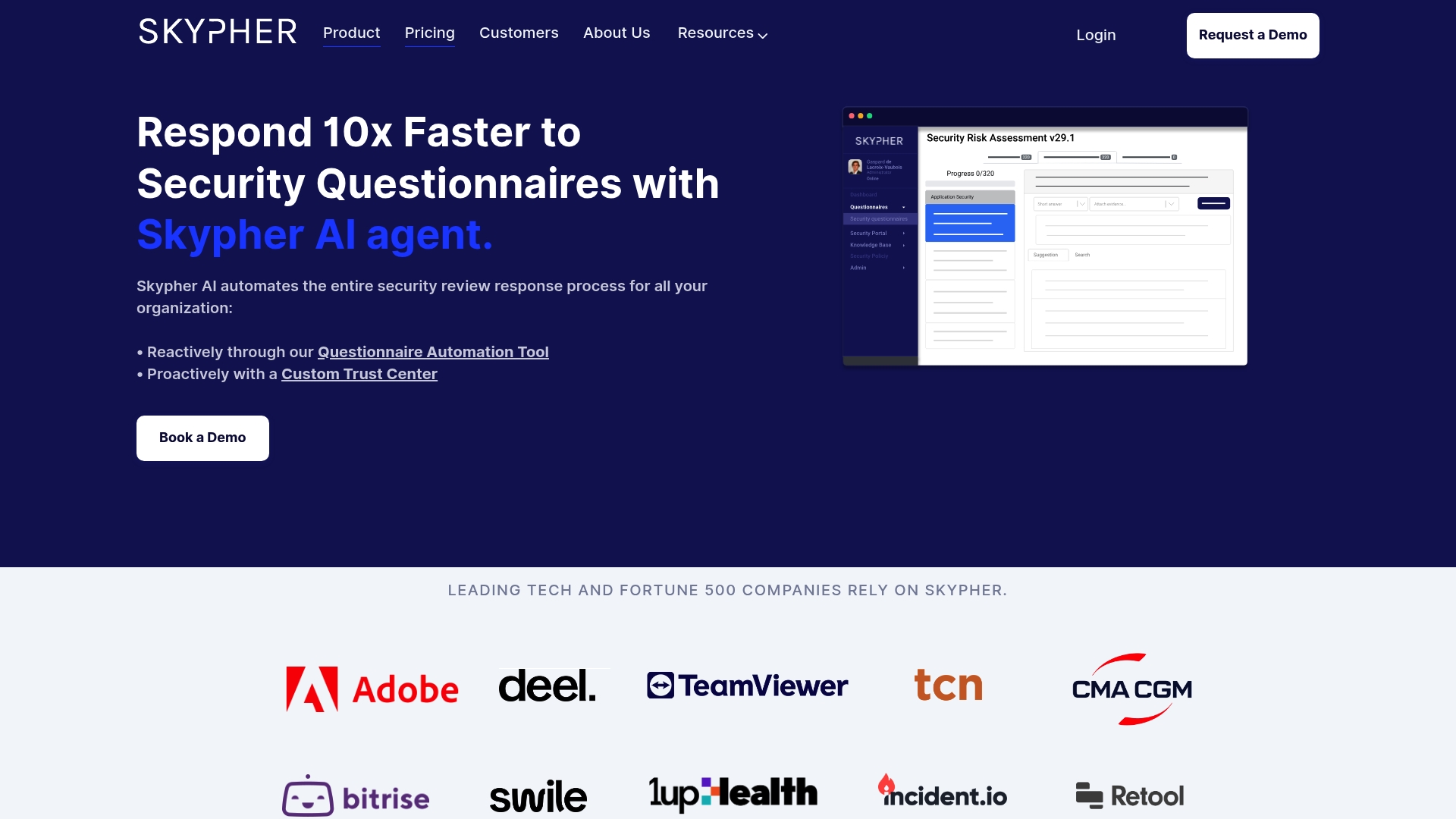
Transform the way you handle security questionnaires, achieving compliance and efficiency in one fell swoop. By utilizing our Questionnaire Automation Tool, you'll not only reduce the time spent on compliance tasks, but you'll also enhance communication and collaboration across your teams. Forget about tedious manual processes—Skypher integrates seamlessly with over 40 third-party risk management platforms, and our customizable Trust Center allows you to showcase your commitment to security effortlessly.
Ready to secure your future? Visit https://skypher.co today and witness how the right technology can revolutionize your pathway to SOC 2 compliance.