

Nearly 70 percent of organizations say automating compliance tasks helps them spot risks sooner and cut manual work. Facing complex rules and tighter oversight, companies need smarter ways to handle compliance without slowing their teams. By combining artificial intelligence and real-time monitoring, automation offers a faster path to accuracy, efficiency, and stronger risk management for any business managing today's mounting regulatory demands.
Table of Contents
- Defining Automation in Compliance Processes
- Types of Compliance Automation Solutions
- How Automation Transforms Compliance Workflows
- Key Benefits for Security and Risk Teams
- Potential Risks and Implementation Challenges
Key Takeaways
| Point | Details |
|---|---|
| Automation Enhances Efficiency | Compliance automation significantly improves operational efficiency by executing routine tasks with minimal human oversight, allowing professionals to focus on strategic decision-making. |
| Diverse Solutions for Regulation | Various compliance automation solutions, including RPA and AI-powered tools, provide tailored benefits that facilitate regulatory compliance across different industries. |
| Transformative Workflow Improvement | Automated compliance workflows enable real-time monitoring and dynamic risk assessment, fundamentally changing how organizations manage compliance risks. |
| Challenges in Implementation | Successful automation implementation requires addressing technical complexities, data quality concerns, and maintaining regulatory alignment to avoid compliance gaps. |
Defining Automation in Compliance Processes
Automation in compliance processes represents a transformative approach to managing regulatory requirements through advanced technological solutions. According to research from iaeme, compliance automation involves leveraging artificial intelligence and machine learning algorithms to execute routine compliance tasks with minimal human oversight, dramatically enhancing operational efficiency and reducing potential human error.
At its core, compliance automation streamlines complex regulatory workflows by implementing intelligent systems that can automatically detect, analyze, and respond to compliance-related challenges. As research from arxiv highlights, machine learning-based frameworks are particularly effective in addressing resource-intensive manual review processes and enabling faster risk identification across various business domains.
Key characteristics of effective compliance automation include:
- Intelligent task recognition: Ability to identify and categorize compliance-related activities
- Real-time monitoring: Continuous tracking of regulatory requirements and potential risks
- Adaptive learning: Systems that improve performance and accuracy over time
- Comprehensive reporting: Generating detailed compliance documentation with minimal manual intervention
The goal of automation in compliance is not to replace human judgment but to augment human capabilities.
 By handling repetitive, rule-based tasks, these intelligent systems free up compliance professionals to focus on strategic decision-making, complex problem-solving, and nuanced risk management. Understanding the GRC Framework: Key Concepts Explained provides deeper insights into how technology is reshaping governance, risk, and compliance strategies in modern enterprises.
Types of Compliance Automation Solutions
Compliance automation has evolved to encompass diverse technological solutions designed to streamline regulatory processes across different organizational contexts. According to research from arxiv, Robotic Process Automation (RPA) stands out as a critical approach that automates rule-based routine processes to significantly increase efficiency and reduce operational costs in compliance tasks.
Regulatory Technology (RegTech) represents another sophisticated category of compliance automation solutions. As highlighted by en, this innovative approach utilizes advanced information technology to enhance regulatory and compliance processes across various industries, transforming how organizations manage complex regulatory requirements.
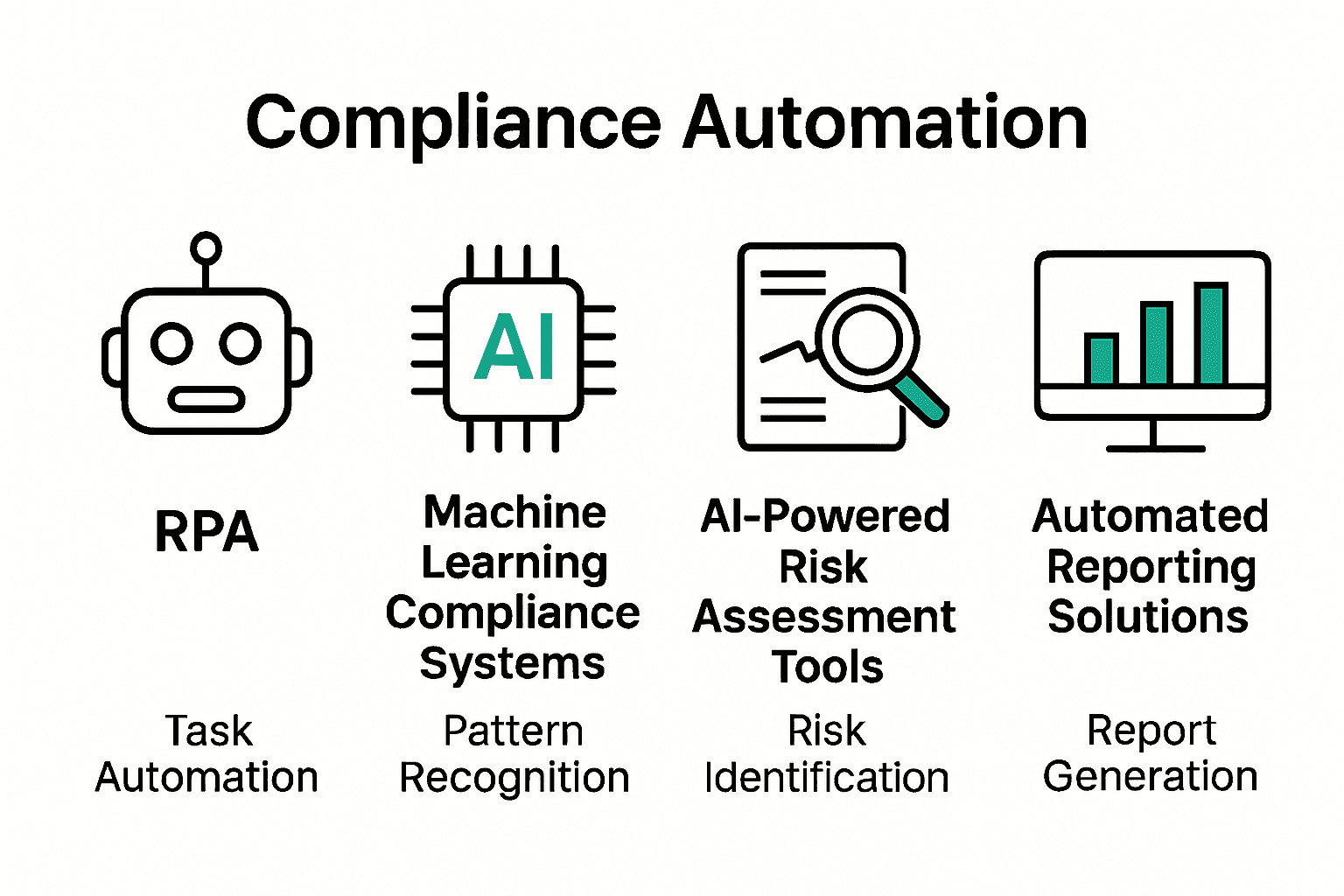
Key types of compliance automation solutions include:
Here's a comparison of major compliance automation solutions and their core benefits:
| Solution Type | Primary Function | Main Benefit |
|---|---|---|
| Robotic Process Automation (RPA) | Automates repetitive tasks | Reduces manual effort |
| Machine Learning Compliance Systems | Learns regulatory patterns | Improves accuracy over time |
| AI-Powered Risk Assessment Tools | Predicts and identifies risks | Accelerates risk detection |
| Automated Reporting Solutions | Generates compliance documentation | Streamlines reporting process |
- Robotic Process Automation (RPA): Automates repetitive, rule-based compliance activities
- Machine Learning Compliance Systems: Intelligent frameworks that adapt and learn from regulatory patterns
- AI-Powered Risk Assessment Tools: Advanced systems that predict and identify potential compliance risks
- Automated Reporting Solutions: Generate comprehensive compliance documentation with minimal human intervention
For organizations seeking to implement robust compliance strategies, understanding these technological solutions becomes crucial.
 Cybersecurity GRC: Essential Strategies for 2025 Success provides additional insights into how emerging technologies are reshaping governance, risk management, and compliance frameworks in modern enterprises.
How Automation Transforms Compliance Workflows
Modern compliance workflows are experiencing a radical transformation through advanced technological interventions. According to research from assets, automation now enables sophisticated capabilities such as extracting textual information from non-machine-readable documents, reviewing transaction activities, and analyzing source documentation with unprecedented precision, providing organizations with greater risk coverage and remarkable consistency in compliance practices.
The evolution of compliance automation goes beyond simple task replacement. en highlights how continuous auditing technologies are revolutionizing regulatory monitoring by performing auditing activities more frequently and automatically identifying exceptions and anomalies in complex workflow environments. This approach fundamentally shifts how organizations detect, respond to, and mitigate potential compliance risks.
Key transformative elements of automated compliance workflows include:
- Real-time Monitoring: Continuous tracking of regulatory changes and organizational activities
- Intelligent Exception Handling: Automated detection and flagging of potential compliance breaches
- Dynamic Risk Assessment: Adaptive systems that learn and predict potential compliance challenges
- Integrated Reporting: Seamless generation of comprehensive compliance documentation
7 Essential Tips for Every GRC Analyst to Succeed provides additional insights into how professionals can leverage these technological advancements to enhance their compliance strategies and operational effectiveness.
Key Benefits for Security and Risk Teams
Compliance automation delivers transformative advantages for security and risk management professionals. Research from arxiv reveals that implementing machine learning-based compliance automation can dramatically reduce process duration, improve accuracy, and significantly decrease manual effort, fundamentally enhancing overall security and risk management strategies.
The strategic impact of automation extends far beyond operational efficiency. According to assets, these technologies provide greater risk coverage and consistency, helping organizations identify meaningful patterns in transactional data and gaining unprecedented insight into complex compliance practices. This approach empowers security teams to move from reactive monitoring to proactive risk prevention.
Key benefits for security and risk teams include:
- Accelerated Risk Detection: Faster identification of potential compliance vulnerabilities
- Enhanced Accuracy: Reduction of human error in compliance processes
- Comprehensive Monitoring: Continuous tracking of regulatory changes and organizational risks
- Resource Optimization: Freeing skilled professionals to focus on strategic risk management
Understanding GRC Cyber Security: Concepts and Importance provides deeper insights into how modern security teams can leverage these technological advancements to build more resilient and adaptive risk management frameworks.
Potential Risks and Implementation Challenges
Implementing compliance automation is not without significant complexities. Research from arxiv reveals that AI-enabled automation for compliance checking presents critical challenges, particularly in ensuring completeness and accuracy of automated systems. These technological interventions require meticulous planning to prevent potential compliance gaps that could expose organizations to substantial regulatory risks.
Beyond technical considerations, automated systems introduce multifaceted challenges across organizational domains. According to en, automated decision-making systems encompass complex technical, legal, ethical, and societal implications that demand comprehensive strategic evaluation before implementation. Organizations must carefully navigate these intricate considerations to maintain regulatory integrity and operational effectiveness.
Key implementation challenges include:
- Technical Complexity: Integrating automation with existing technological infrastructure
- Data Quality Concerns: Ensuring accuracy and reliability of input data
- Skill Gap: Training personnel to effectively manage and oversee automated systems
- Regulatory Alignment: Maintaining compliance with evolving legal frameworks
- Algorithmic Bias: Preventing unintended discriminatory outcomes in automated processes
Comprehensive Guide to Third Party Vendor Risk Assessment offers additional insights into managing technological risks and developing robust implementation strategies for complex automated compliance frameworks.
Unlock Efficiency in Compliance with Skypher's Automation Solutions
The article highlights the critical challenges security and risk teams face with manual, time-consuming compliance processes and the demand for accuracy to reduce errors. Understanding terms like AI-powered risk assessment, automated reporting, and real-time monitoring underlines the need for a tool that accelerates compliance workflows and strengthens risk management. If you are overwhelmed by repetitive questionnaire tasks or struggling to keep pace with evolving regulatory requirements, Skypher offers a powerful, AI-driven platform designed specifically to tackle these pain points.
Our AI Questionnaire Automation Tool transforms the way medium to large organizations in tech and finance handle security questionnaires. With support for multiple formats, integrations with over 40 third-party risk management platforms, and intelligent features such as document vectorization and multilingual support, you can reduce manual effort while enhancing accuracy and collaboration. This leads to faster security reviews, improved operational productivity, and a reliable compliance posture.
Experience the difference Skypher can make by automating your compliance response process today. Visit Skypher to explore how our real-time collaboration capabilities and customizable Trust Center empower your teams to stay ahead in governance risk and compliance. Don’t let manual tasks hold back your security goals. Take the next step now and streamline your compliance journey with Skypher.
Frequently Asked Questions
What is compliance automation?
Compliance automation refers to the use of advanced technologies, such as artificial intelligence and machine learning, to streamline and manage regulatory requirements with minimal human oversight, enhancing operational efficiency and reducing human error.
How does automation improve compliance workflows?
Automation enhances compliance workflows by enabling real-time monitoring, intelligent exception handling, and integrated reporting, which allows organizations to detect and respond to compliance risks more efficiently and accurately.
What types of compliance automation solutions are available?
Key types of compliance automation solutions include Robotic Process Automation (RPA), Machine Learning Compliance Systems, AI-Powered Risk Assessment Tools, and Automated Reporting Solutions, each designed to address specific compliance tasks effectively.
What are the main benefits of implementing compliance automation?
The main benefits of compliance automation include accelerated risk detection, enhanced accuracy reducing human errors, comprehensive monitoring of regulatory changes, and optimized resource allocation for strategic risk management.
Recommended
- 7 Essential Tips for Every GRC Analyst to Succeed
- Cybersecurity GRC: Essential Strategies for 2025 Success
- Understanding the GRC Framework: Key Concepts Explained
- 7 Steps to Create a Complete SOC 2 Compliance Checklist
- Workplace Automation Tutorial: Streamline Your Business Today
- Master Automating Administrative Tasks for Efficiency|CS