

SOC2 compliance on AWS is more than just another checkbox for the security team. Companies that ignore it risk losing the largest growth segment in tech, as 75 percent of enterprises now require proof of compliance from cloud vendors before signing a deal. Yet, most businesses assume the heaviest lifting is all about passing an audit. That is only part of the story. The real difference lies in what happens after the certificate—the ongoing monitoring, the tricky technical pitfalls, and a whole-company shift in mindset. There are a few big surprises every AWS leader should expect.
Table of Contents
- Understanding AWS SOC2 and Why It Matters
- Core Steps to Achieve AWS SOC2 Compliance
- Best Practices And Tools For Ongoing SOC2 Success
- Common AWS SOC2 Challenges And How to Overcome Them
Quick Summary
| Takeaway | Explanation |
|---|---|
| Achieving AWS SOC2 Compliance Is Essential | AWS SOC2 compliance has evolved into a crucial requirement for organizations to demonstrate their commitment to security and data protection, particularly for SaaS companies seeking customer trust. |
| Implement a Strategic Approach with Trust Services Criteria | Identify and understand the applicable Trust Services Criteria (TSC) for your organization to develop a targeted compliance roadmap that addresses specific operational needs. |
| Continuous Monitoring is Key | Ongoing compliance demands the use of automated tools like AWS Security Hub and AWS Config for real-time monitoring, helping organizations stay ahead of potential vulnerabilities. |
| Cultural Commitment to Security | Foster a security-first organizational culture by training employees, developing comprehensive policies, and integrating compliance into daily processes for sustained SOC2 success. |
| Proactive Resource Management | Address resource and expertise limitations by investing in training, leveraging external help, and adopting automated compliance tools for effective compliance management. |
Understanding AWS SOC2 and Why It Matters
AWS SOC2 compliance represents a critical benchmark for organizations seeking to demonstrate robust security and data protection practices in the digital ecosystem. At its core, SOC2 (Service Organization Control 2) is a comprehensive security framework that validates an organization's commitment to protecting customer data and maintaining rigorous operational standards.
The Fundamental Architecture of SOC2 Compliance
SOC2 compliance is built on five core Trust Services Criteria (TSC), with Security being the mandatory foundational requirement. According to AICPA, organizations must address specific controls that demonstrate their ability to safeguard sensitive information effectively. The additional optional criteria include Availability, Processing Integrity, Confidentiality, and Privacy.
The framework encompasses 64 mandatory trust service criteria that organizations must systematically address. These criteria are not mere checkboxes but represent a holistic approach to information security. Companies must develop comprehensive policies, implement technical controls, and maintain consistent documentation that proves their commitment to protecting client data.
Strategic Importance for Modern Organizations
In 2025, AWS SOC2 compliance has transformed from a competitive advantage to an essential business requirement. For SaaS companies and technology providers, this certification serves as a critical trust signal to potential customers. Gartner Research indicates that enterprises are increasingly prioritizing vendors who can demonstrate rigorous security practices through recognized compliance frameworks.
The implications of SOC2 compliance extend beyond mere regulatory adherence. It represents a strategic commitment to:
- Data Protection: Implementing robust security mechanisms that prevent unauthorized access
- Risk Management: Proactively identifying and mitigating potential security vulnerabilities
- Customer Confidence: Providing transparent evidence of organizational security maturity
Navigating The Compliance Landscape
Achieving AWS SOC2 compliance requires a multifaceted approach. Organizations must invest in comprehensive security infrastructure, develop clear policies, and undergo thorough third-party audits. This process involves detailed assessments of an organization's systems, policies, and operational procedures.
The complexity of SOC2 compliance demands a strategic and methodical approach. Companies must not only implement technical controls but also cultivate a culture of security awareness. This means training employees, establishing clear security protocols, and maintaining continuous monitoring and improvement processes.
While the journey to SOC2 compliance can be challenging, the benefits far outweigh the initial investment. Organizations that successfully achieve and maintain this certification position themselves as trustworthy partners in an increasingly security-conscious market.
The evolving digital landscape makes SOC2 compliance not just a recommendation but a critical business imperative. By embracing these rigorous standards, organizations demonstrate their commitment to protecting the most valuable asset in the digital age: data security and customer trust.
Core Steps to Achieve AWS SOC2 Compliance
Achieving AWS SOC2 compliance requires a systematic and strategic approach that goes beyond simple technical configurations. Organizations must develop a comprehensive strategy that addresses both technical and operational requirements while leveraging AWS's robust security infrastructure.
Identifying Applicable Trust Services Criteria
The first critical step in AWS SOC2 compliance involves carefully selecting and understanding which Trust Services Criteria (TSC) apply to your specific organizational context. AWS Security Best Practices recommends conducting a thorough assessment to determine which of the five criteria are most relevant:
- Security: Always mandatory and foundational to the compliance process
- Availability: Critical for organizations with continuous service requirements
- Processing Integrity: Essential for businesses handling complex data transformations
- Confidentiality: Crucial for protecting sensitive information
- Privacy: Important for organizations managing personal or regulated data
This initial mapping process requires a deep understanding of your organization's operational model, data handling practices, and specific industry regulations. By precisely defining the applicable criteria, you create a targeted roadmap for compliance that minimizes unnecessary complexity.
Comprehensive Gap Analysis And Control Implementation
Once the applicable Trust Services Criteria are identified, organizations must conduct a rigorous gap analysis. According to NIST Cybersecurity Framework, this involves a detailed comparison between current AWS infrastructure and SOC2 requirements. Key activities include:
- Utilizing AWS native tools like Security Hub and AWS Config to identify potential misconfigurations
- Creating a comprehensive control matrix that aligns AWS services with specific SOC2 requirements
- Developing detailed policies and procedures that demonstrate consistent security practices

- Implementing technical controls that provide verifiable evidence of security effectiveness
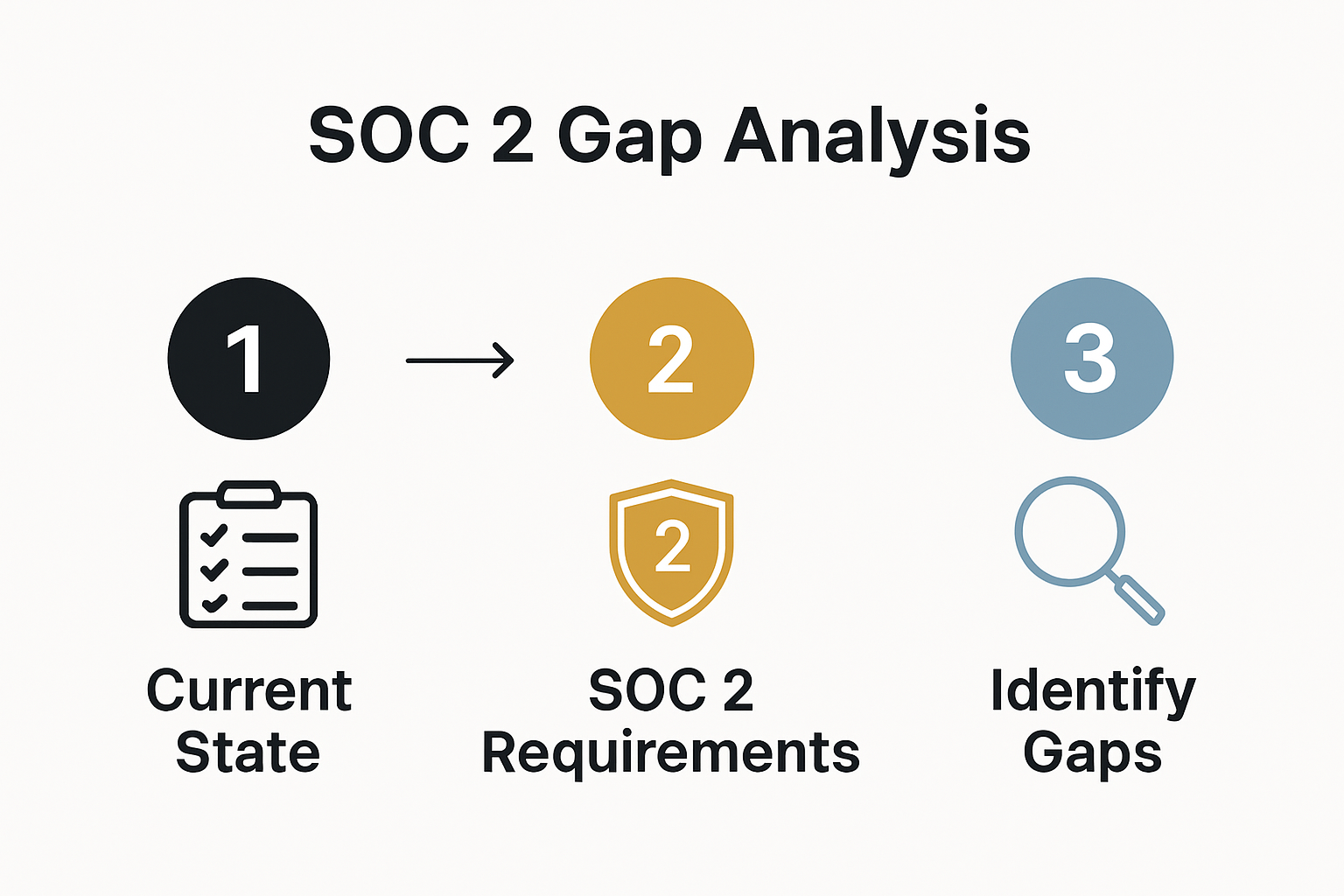
The gap analysis is not a one-time event but a continuous process of evaluation and improvement. Organizations must develop mechanisms for ongoing monitoring, regular assessments, and rapid remediation of identified vulnerabilities.
Preparing for Audit And Continuous Compliance
Successful AWS SOC2 compliance culminates in a thorough third-party audit. AICPA Guidelines emphasize the importance of meticulous documentation and evidence preparation. This involves:
- Collecting and organizing comprehensive documentation of security controls
- Maintaining detailed logs and records of security configurations
- Demonstrating consistent implementation of defined security policies
- Preparing internal teams for potential audit scenarios
Organizations must recognize that SOC2 compliance is not a destination but a continuous journey. The most successful approaches integrate compliance into the organizational culture, treating security as an ongoing commitment rather than a periodic checkbox exercise.
By following these strategic steps, organizations can transform AWS SOC2 compliance from a complex challenge into a powerful mechanism for building customer trust, enhancing operational security, and demonstrating organizational maturity in an increasingly demanding digital ecosystem.
Best Practices And Tools For Ongoing SOC2 Success
Maintaining AWS SOC2 compliance is a dynamic process that requires continuous monitoring, strategic tooling, and proactive security management. Organizations must develop a robust framework that goes beyond initial certification to ensure sustained compliance and security effectiveness.
Automated Monitoring And Compliance Tools
Effective SOC2 success hinges on leveraging advanced AWS tools and automated monitoring solutions. AWS Security Hub provides a comprehensive platform for continuous security assessment and compliance tracking. Key automated monitoring strategies include:
- Real-time Configuration Tracking: Using AWS Config to monitor and record configuration changes
- Automated Vulnerability Scanning: Implementing AWS Inspector for continuous security assessments
- Centralized Security Management: Utilizing AWS Security Hub to aggregate and prioritize security findings
According to Gartner Research, organizations that implement automated compliance monitoring reduce security risks by up to 60% compared to manual approaches. These tools enable real-time detection of potential vulnerabilities and immediate remediation strategies.
Comprehensive Security And Compliance Frameworks
Developing a robust security framework extends beyond technological solutions. NIST Cybersecurity Framework recommends a holistic approach that encompasses:
- Policy Development: Creating clear, comprehensive security policies
- Regular Risk Assessments: Conducting periodic comprehensive security evaluations
- Incident Response Planning: Establishing detailed protocols for potential security events
- Employee Training: Implementing continuous security awareness programs
Organizations must cultivate a security-first culture that integrates compliance into every operational aspect. This means moving beyond technical controls to create an environment where security is a shared responsibility across all team members.
Continuous Improvement And Audit Preparation
Ongoing SOC2 success requires a proactive and dynamic approach to security management. AWS Best Practices emphasize the importance of:
- Conducting regular penetration testing
- Performing vulnerability assessments
- Maintaining detailed documentation of security controls
- Implementing continuous monitoring mechanisms
Successful organizations treat SOC2 compliance as an ongoing journey rather than a one-time achievement. This means:
- Regularly updating security policies
- Adapting to emerging technological and regulatory changes
- Investing in advanced security training
- Maintaining a transparent approach to security management
Ultimately, successful SOC2 compliance is about creating a comprehensive security strategy that evolves with technological advancements and emerging threat landscapes. It requires commitment, continuous learning, and a proactive approach to protecting organizational and customer data.
Common AWS SOC2 Challenges And How to Overcome Them
Achieving and maintaining AWS SOC2 compliance presents organizations with a complex array of challenges that require strategic thinking and proactive management. Understanding these potential obstacles is crucial for developing robust compliance strategies that can withstand rigorous audit scrutiny.
Complexity Of Aws Environment Configuration
The intricate nature of AWS infrastructure introduces significant compliance challenges. AWS Architecture Center highlights that organizations frequently struggle with managing the vast array of services and their interconnected security configurations. Key configuration challenges include:
- Service Interdependencies: Complex interactions between multiple AWS services can create unexpected security vulnerabilities
- Rapid Service Evolution: Constant updates to AWS services require continuous compliance monitoring
- Granular Permission Management: Implementing precise access controls across diverse cloud environments
According to Gartner Research, misconfigurations in cloud environments can expose organizations to up to 75% of their potential security risks. Overcoming these challenges requires a systematic approach that involves:
- Implementing comprehensive cloud governance frameworks
- Developing detailed service mapping documentation
- Creating automated configuration validation processes
Continuous Compliance Monitoring
Maintaining persistent SOC2 compliance demands more than periodic assessments. NIST Cybersecurity Framework emphasizes the need for continuous monitoring and adaptive security strategies. Organizations face significant challenges in:
- Tracking constant configuration changes
- Identifying potential security drift
- Maintaining real-time compliance visibility
Effective strategies to address these challenges include:
- Utilizing AWS native tools like Security Hub and Config
- Implementing automated compliance checking mechanisms
- Developing robust incident response protocols
- Creating comprehensive logging and auditing systems
Resource Allocation And Expertise Constraints
One of the most critical challenges in AWS SOC2 compliance is managing resource constraints. Deloitte Insights notes that many organizations struggle with:
- Limited cybersecurity expertise
- Insufficient budget for comprehensive compliance programs
- Complex technical requirements
Successful organizations overcome these challenges by:
- Investing in continuous team training
- Leveraging external compliance expertise
- Developing clear, repeatable compliance processes
- Utilizing cost-effective automated compliance tools
The journey to AWS SOC2 compliance is not about achieving a static certification but creating a dynamic, adaptive security ecosystem. Organizations must view compliance as an ongoing process of continuous improvement, risk management, and strategic security development.
By anticipating potential challenges, developing comprehensive strategies, and maintaining a proactive approach, organizations can transform SOC2 compliance from a complex regulatory requirement into a strategic advantage that builds customer trust and demonstrates organizational maturity.
Frequently Asked Questions
What is AWS SOC2 compliance and why is it important?
AWS SOC2 compliance is a security framework that validates an organization's commitment to protecting customer data. It is crucial for securing contracts with enterprises, as 75% of them now require proof of compliance from cloud vendors.
How can organizations achieve AWS SOC2 compliance?
To achieve AWS SOC2 compliance, organizations need to identify applicable Trust Services Criteria, conduct a gap analysis, implement necessary controls, and prepare for a thorough audit while integrating continuous compliance monitoring into their operational practices.
What are some best practices for maintaining AWS SOC2 compliance?
Best practices include utilizing automated monitoring and compliance tools, developing comprehensive security policies, conducting regular risk assessments, and fostering a security-first culture within the organization to sustain compliance over time.
What challenges do companies face when seeking AWS SOC2 compliance?
Challenges include the complexity of AWS environment configurations, the need for continuous compliance monitoring, and resource constraints related to expertise and budget. Companies can overcome these by leveraging automated tools, investing in training, and developing clear compliance processes.
Navigating AWS SOC2 Compliance Just Got Easier with Skypher
Navigating the intricate landscape of AWS SOC2 compliance can feel overwhelming. The article highlights key challenges, like the complexity of AWS environment configurations and the need for continuous compliance monitoring. These are pain points many organizations face as they try to stay ahead and provide proof of their rigorous security measures, especially with 75% of enterprises requiring such proof before signing contracts. But what if there was a way to streamline this arduous process?
Skypher's AI Questionnaire Automation Tool is designed to eliminate the tedious back-and-forth typically associated with security questionnaires. With our advanced capabilities, you can:
- Automate responses to security reviews quickly and accurately
- Collaborate in real-time, ensuring your team's communication is seamless
- Integrate with over 40 third-party risk management platforms, making your compliance processes not only faster but also more reliable.
Don’t get bogged down by compliance challenges—empower your team today! Visit https://skypher.co to discover how we can help you enhance your cybersecurity posture while boosting operational efficiency. The time to act is now; start transforming your compliance workflow today!