

Security reviews and vendor assessments can stall even the fastest teams and slow down sales when every questionnaire or audit cycle feels like a marathon. Organizations are searching for new ways to answer security questions quickly, work together without extra headaches, and show customers the proof they need with less back and forth. Advances in automation and AI are changing how teams approach these tasks, offering smarter solutions to common pain points. Some tools promise instant answers and central repositories while others aim to make risk management seamless for large and complex vendor networks. The real question is which approach brings the most relief to overworked teams and helps close deals with more confidence. Surprising differences appear when you look under the hood at these platforms.
Table of Contents
Skypher AI

At a Glance
Skypher AI automates the entire security review response process, letting organizations answer security questionnaires up to 10x faster with AI-driven automation. It centralizes security content, accelerates sales cycles, and strengthens client trust by producing faster, more accurate responses. Known limitations—like limited public detail on specific integrations, customizable pricing, and sparse public detail on AI training or data privacy—are deliberate trade-offs for a flexible, enterprise-focused implementation model.
Core Features
Skypher’s core capability is its AI Questionnaire Automation Tool that autonomously fills security questionnaires and returns answers in one click or within two hours for more complex returns. The platform proactively and reactively manages security reviews, storing and connecting all security content in a single repository to eliminate duplicated effort. Its design is geared to speed sales cycles and improve client trust, while offering collaboration features and granular access controls so teams can work together without exposing sensitive data unnecessarily.
Pros
- Dramatically increases speed: Skypher enables teams to respond to security reviews up to 10x faster, shortening the time between request and delivery.
- Reduces team workload: By automating repetitive questionnaire tasks, it cuts the manual effort required from security and solutions teams.
- Improves accuracy through centralization: Storing all security content in one platform reduces inconsistent answers and leverages multiple data sources for better accuracy.
- Strengthens client relationships: Faster, consistent responses help sales and solutions teams close deals and build trust with prospective clients.
- Supports controlled collaboration: Granular access controls let cross-functional teams collaborate without risking unauthorized access to sensitive content.
Who It's For
Skypher is designed for medium and large organizations in the tech and enterprise sectors—particularly security, sales, and solutions engineering teams that face frequent security questionnaires. If your organization spends significant time on RFPs, security assessments, or pre-sales due diligence, Skypher’s automation and centralized knowledge base directly reduce cycle times and enable your specialists to focus on higher-value work.
Unique Value Proposition
Skypher’s unique strength is the combination of fast, autonomous AI responses and a single source of truth for security content. Rather than just templating answers, it proactively manages reviews and ties responses to a central repository so accuracy improves as teams use the product. That alignment between automation speed and centralized governance is a decisive advantage: you get faster answers without sacrificing consistency or oversight. For organizations that measure success by reduced time-to-close and fewer manual review hours, Skypher is purpose-built to deliver those outcomes.
Real World Use Case
A solutions engineering team used Skypher to slash the time needed to complete security questionnaires, enabling faster responses and more effective client engagements. The team moved from days of manual work to near-instant autonomous answers for routine questionnaires, while still handling bespoke items within the two-hour window.
Pricing
Custom quotes are available, with flexible pricing designed to suit companies of all sizes and enterprise needs.
Website: https://skypher.co
SafeBase
At a Glance
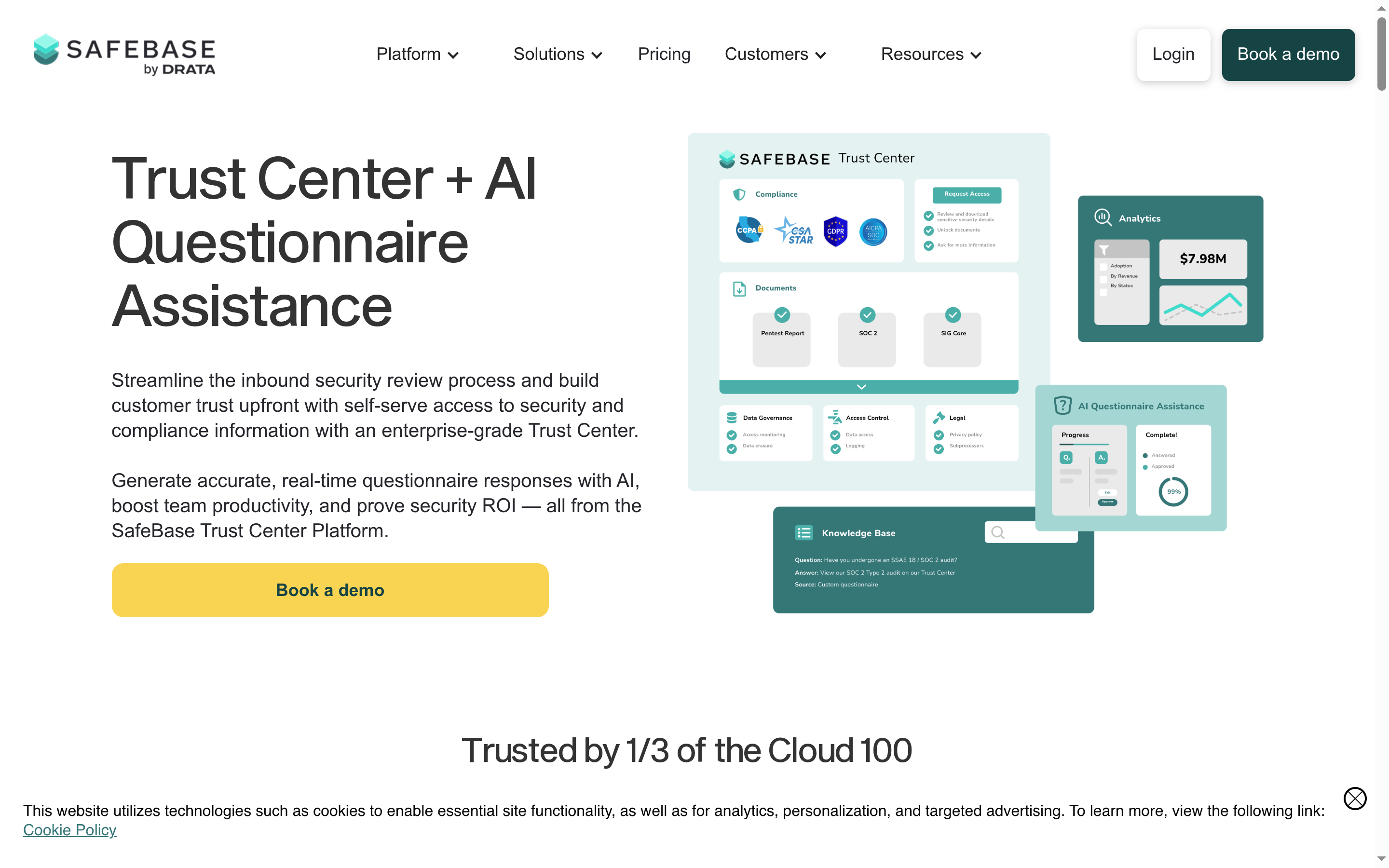
SafeBase is a trust-center-first platform designed to speed inbound security reviews and make security posture visible to buyers. It combines AI-powered questionnaire assistance with a self-serve, enterprise-grade trust center and analytics to drive faster sales cycles and reduce manual review overhead. In practice, teams report dramatic time savings—from typical 80% reductions in questionnaire work to customer examples showing 98% fewer inbound questionnaires after launch.
Core Features
SafeBase’s core capabilities center on creating a customer-facing hub for security and compliance information, paired with automation to answer questionnaires faster. Key features include an enterprise-grade trust center for self-serve access, AI questionnaire assistance that populates accurate, real-time responses, a custom rules engine with permission profiles, and advanced search. The platform also integrates with collaboration and sales tools such as Slack, Teams, Jira, Salesforce, HubSpot, and DocuSign, and provides analytics dashboards that quantify security-enabled revenue and buyer engagement.
Pros
- Reduces security questionnaire time significantly, often by 80% or more, which directly frees up engineering and security resources for higher-value work.
- Enhances customer trust through a scalable, customer-facing trust center that lets prospects self-serve security and compliance information.
- Automates security document management and sharing, saving time and reducing human error when distributing policies, attestations, and evidence.
- Provides robust integrations with common collaboration and sales systems so security workflows can slot into existing processes without double entry.
- Offers analytics dashboards that measure buyer engagement and the revenue impact of trust programs, giving quantifiable ROI for security initiatives.
Cons
- Pricing plans vary by feature and tier, which can make it difficult to pick the right package without a sales consultation.
- Some advanced capabilities—especially APIs and deep integrations—may require technical setup or vendor support, adding implementation overhead.
- Public information about specific pricing tiers and feature bundles is limited, so transparency requires contacting sales for exact costs.
Who It's For
SafeBase is best suited for security and compliance teams at SaaS, cloud, and technology companies that face frequent inbound questionnaire requests and need to scale trust without hiring more reviewers. If your sales cycle stalls on security reviews or your engineers spend hours answering the same questions, SafeBase is designed for you.
Unique Value Proposition
SafeBase’s unique value lies in pairing a polished, customer-facing trust center with AI-driven questionnaire automation and measurable analytics. That combination not only reduces review time but also creates a visible, reusable asset that accelerates deals and demonstrates security commitment to buyers.
Real World Use Case
A clear example: Crossbeam launched a trust center and cut inbound questionnaires by 98%. Similarly, Jamf used SafeBase’s AI assistance to reduce individual security review time from about three hours to roughly 15 minutes—turning a multi-hour task into a quick verification step.
Pricing
Pricing plans are available upon request, with packages built for scale including Foundation (free), Advanced, and Enterprise tiers; exact costs require contacting SafeBase sales.
Website: https://safebase.io
OneTrust
At a Glance
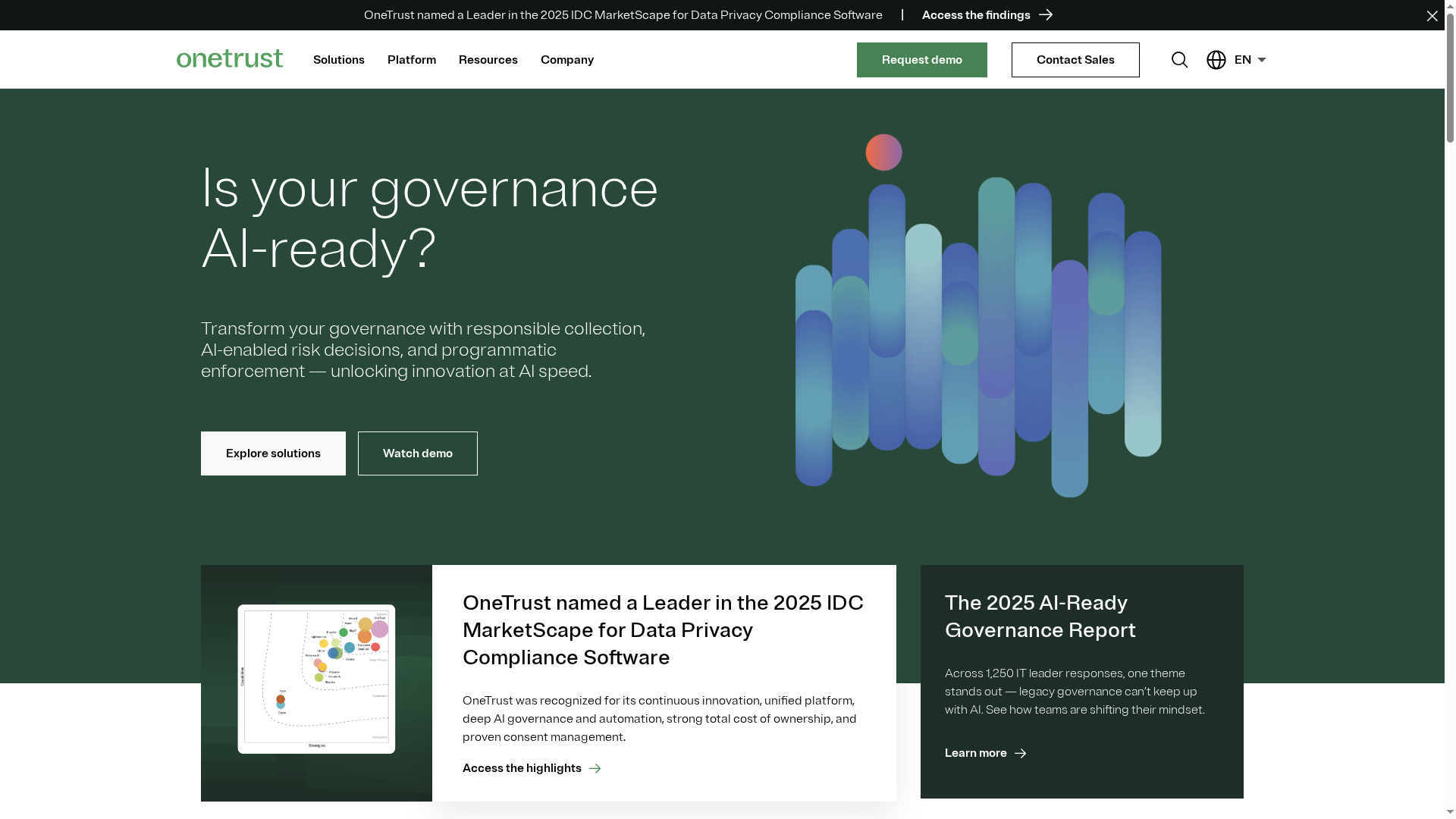
OneTrust is a market-leading GRC and privacy platform that combines data management, AI governance, and third-party risk capabilities into a single suite. Recognized in the 2025 IDC Marketscape and used by more than 14,000 active customers — including over 2,000 Fortune 100 companies — it’s built for scale and regulatory complexity. If you run risk, privacy, or AI governance programs at an enterprise scale, OneTrust delivers breadth and depth; smaller teams may find the scope more than they need.
Core Features
OneTrust provides a unified platform for data governance and privacy automation, with AI-enabled risk decisions and automated workflows to accelerate assessments. Key capabilities include consent and preference management, data use governance with real-time policy enforcement, and a full third-party risk management lifecycle covering onboarding, assessment, and continuous monitoring. The platform also includes AI governance tools to track models, document decisions, and improve transparency across AI projects.
Pros
- Market leadership and credibility: OneTrust is recognized as a leader in data privacy compliance, which reassures boards and auditors when you need demonstrable governance.
- Comprehensive, unified platform: The product consolidates privacy, AI governance, and third-party risk into one environment, reducing tool sprawl and improving cross-domain visibility.
- Strong automation and AI support: Automation and AI-enabled decisioning speed up assessments and reduce manual effort, helping you scale programs faster.
- Proven at enterprise scale: Serving thousands of customers including many Fortune 100 firms demonstrates the platform’s ability to handle complex, global deployments.
- Continuous innovation: Frequent enhancements mean the platform evolves with emerging regulatory and AI governance requirements.
Cons
- Pricing transparency is limited: Pricing is value-based and tied to meters such as users or data volume, so you’ll need to contact sales for a tailored quote.
- Platform complexity can be steep: The breadth of capabilities means significant onboarding and training may be required before your teams realize full value.
- Possibly overwhelming for smaller organizations: Organizations without dedicated privacy or GRC staff might find the full suite more expansive than necessary.
Who It's For
OneTrust is best suited for large enterprises and organizations that must manage regulatory privacy obligations, complex vendor ecosystems, and AI model governance across multiple jurisdictions. If your team needs an enterprise-grade, integrated approach to privacy, risk, and AI governance — and you have the resources to deploy and operate a broad platform — OneTrust is a strong candidate.
Unique Value Proposition
OneTrust’s unique value lies in combining mature privacy automation, third-party risk tooling, and AI governance within a single, scalable platform recognized by industry analysts. That consolidation reduces integration overhead and centralizes governance artifacts and policies across teams.
Real World Use Case
A multinational corporation uses OneTrust to automate GDPR compliance workflows, manage consumer consent across digital channels, provide oversight for AI models in production, and continuously monitor third-party vendors across regions — all from a centralized platform that feeds reporting to legal, privacy, and security stakeholders.
Pricing
Pricing is value-based and varies by solution and organization size, measured by metrics like users, data inventory, or data volume; customers should contact sales for customized quotes.
Website: https://onetrust.com
ProcessUnity
At a Glance
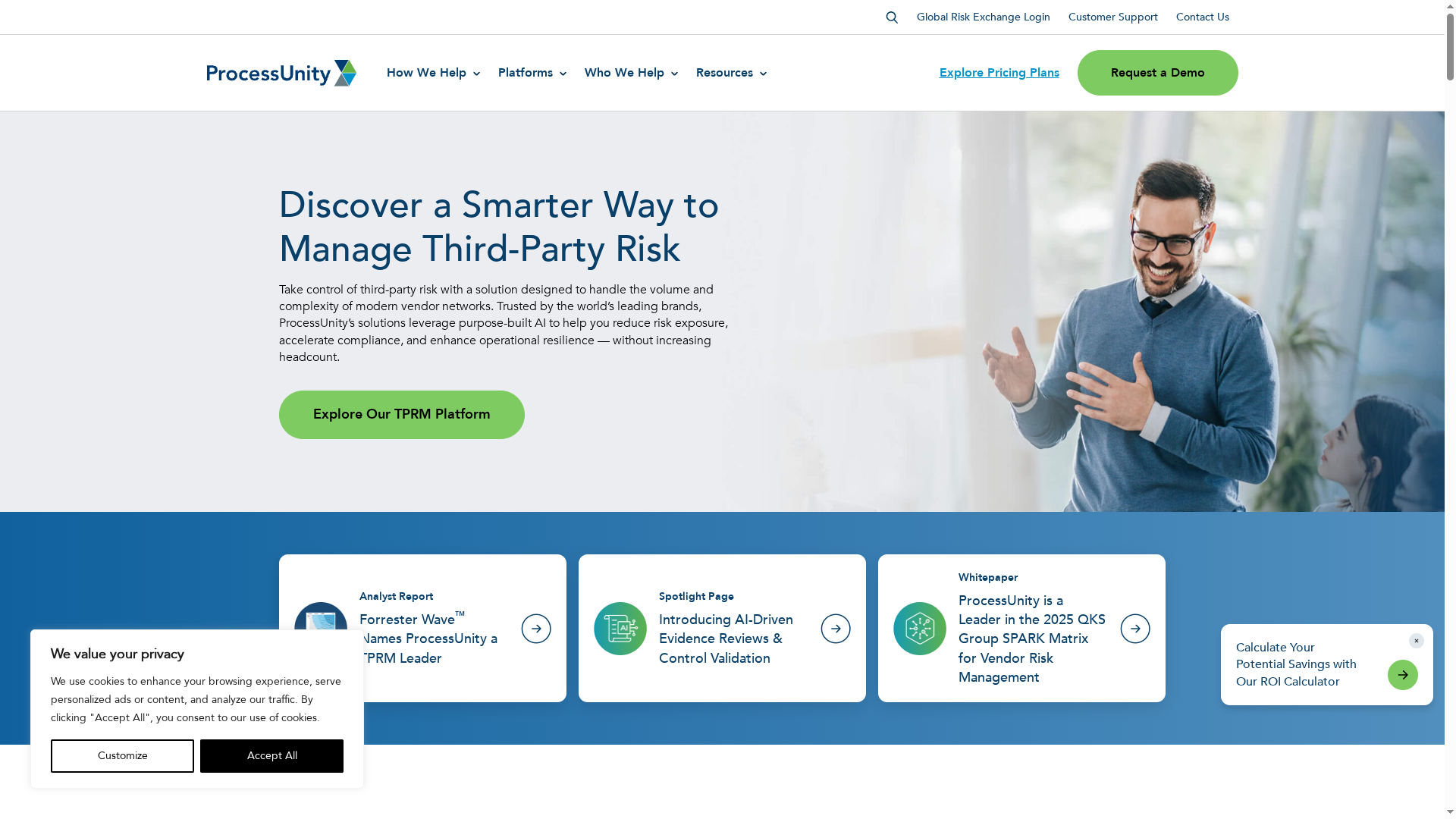
ProcessUnity is a purpose-built third-party risk management platform that focuses on scaling TPRM for complex vendor portfolios using AI-driven automation. It helps organizations reduce risk exposure, accelerate compliance, and manage vendor lifecycles without proportionally increasing headcount. Recognized in the 2025 QKS Group Spark Matrix, it blends evidence review, control validation, and workflow automation to move teams from backlog to continuous monitoring. Bottom line: it’s a strong enterprise-grade option for organizations that need breadth and automation in TPRM, though smaller teams may find setup and integration work intensive.
Core Features
ProcessUnity centers on automating the full vendor lifecycle: sourcing, onboarding, due diligence, continuous monitoring, and offboarding. Key capabilities include AI-driven evidence reviews and control validation to speed assessment cycles, automated workflows that eliminate manual handoffs, and a global risk exchange to extend coverage of third-party portfolios. The platform also offers vendor threat and vulnerability response and prioritization tools alongside a cybersecurity risk management module to track technical exposures. Together these features aim to shorten time-to-decision and convert static assessments into an operational, scalable program.
Pros
- Highly scalable and customizable solution: ProcessUnity can be configured to support large, complex vendor estates and diverse risk frameworks, which helps enterprises standardize program controls across business units.
- Strong support and guidance from the provider: Customers benefit from vendor-led onboarding and consultative support that helps accelerate deployment and adoption.
- User-friendly interface that enhances risk management: The interface is built to make assessments and reporting more accessible to non-technical stakeholders, reducing friction between risk, procurement, and business teams.
- Automates manual workflows, saving time and effort: Routine tasks like evidence collection, status tracking, and control validation are automated to free up analyst time for higher-value risk decisions.
- Recognized industry leadership and positive customer testimonials: External recognition and customer feedback reinforce the platform’s credibility and suitability for mature TPRM programs.
Cons
- Potential complexity for smaller organizations to implement: The platform’s configurability and enterprise focus can introduce setup overhead that smaller teams may struggle to justify or manage.
- Specific integration capabilities with existing systems not detailed: The available data does not list explicit connectors or integration patterns, leaving questions about how easily it will fit into a given tech stack.
- Pricing details are not explicitly provided: Lack of transparent pricing makes it harder for buyers to quickly assess total cost of ownership or perform side-by-side budgeting comparisons.
Who It's For
ProcessUnity is best suited for medium to large organizations with complex vendor networks, regulatory obligations, or existing risk programs that need to scale. If your team manages hundreds or thousands of vendors and requires end-to-end automation, this product targets that use case. Smaller organizations with limited internal resources should weigh implementation effort against expected gains.
Unique Value Proposition
ProcessUnity’s unique value lies in combining purpose-built TPRM automation with AI-driven evidence review and a global risk exchange, enabling organizations to move from manual, periodic assessments to continuous, prioritized risk management. That combination reduces cycle times while preserving auditability and control.
Real World Use Case
A large enterprise uses ProcessUnity to automate third-party risk assessments, accelerate vendor onboarding, and monitor cybersecurity risks in real time—leading to faster decision-making, reduced due diligence backlogs, and strengthened control posture.
Pricing
Pricing details are not specified on the website.
Website: https://processunity.com
ArcherIRM
At a Glance
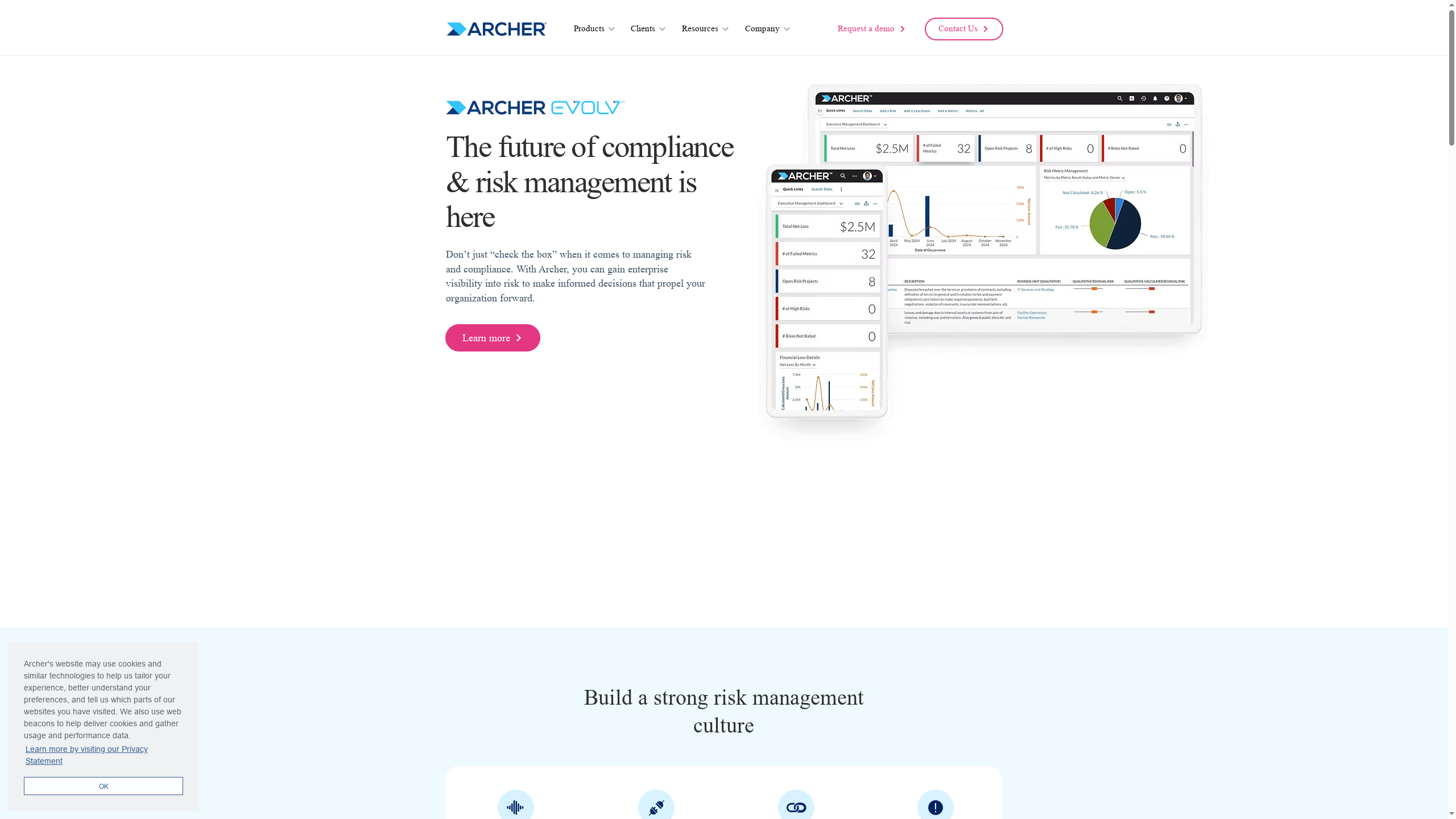
ArcherIRM is a mature enterprise-grade platform that helps organizations visualize, quantify, and control risk across IT, operational, third-party, and resilience domains. With over 20 years of market experience, it combines AI-driven insights with a broad compliance and audit feature set. If you need a single system to unify complex GRC workflows, ArcherIRM is a strong contender. Implementation can be involved, so plan resources accordingly.
Core Features
ArcherIRM offers AI-powered compliance and risk management, an integrated platform that spans enterprise, operational, IT, third-party, and resilience domains, plus regulatory and corporate compliance management. It includes audit management and process streamlining capabilities and provides ESG management and reporting tools. The platform emphasizes AI-driven insights and integration with existing business systems to surface trends and support decision-making at scale.
Pros
- Robust AI capabilities: ArcherIRM leverages AI to quantify risk and surface compliance gaps, helping you prioritize remediation in a data-driven way.
- Comprehensive, customizable platform: The solution supports multiple risk domains in a unified environment, which reduces tool fragmentation and simplifies reporting across functions.
- Market-recognized leadership: With two decades of development and market-driven insights, ArcherIRM benefits from mature feature sets and industry knowledge.
- Global and localized support: The platform’s design supports organizations worldwide and can be tailored with localized expertise and workflows.
- Process consolidation: ArcherIRM streamlines complex audit and compliance processes into a single system, lowering administrative overhead and improving visibility.
Cons
- Limited pricing transparency: The website does not provide specific pricing details, which makes vendor comparison and budget planning harder.
- Potentially complex implementation for smaller teams: Smaller or less mature risk programs may find deployment and configuration resource-intensive and may require external support.
- No explicit list of integration partners: While ArcherIRM highlights integration with business systems, the lack of named connectors or partner details can leave questions about out-of-the-box compatibility with your stack.
Who It's For
ArcherIRM suits medium to large enterprises and public sector organizations that manage complex, multi-domain risk landscapes and need a single system of record for GRC, audit, and ESG reporting. If your risk program spans multiple functions and you require AI-driven analysis to scale oversight, ArcherIRM is worth evaluating.
Unique Value Proposition
ArcherIRM’s unique value is its combination of long-standing GRC expertise with AI-enhanced analytics across a broad set of risk domains — from third-party oversight to ESG reporting. It aims to replace point solutions with a configurable, enterprise-grade platform that centralizes controls, compliance, and audit workflows.
Real World Use Case
A multinational corporation can deploy ArcherIRM to aggregate risk and compliance data from business units, run AI analytics to prioritize high-impact issues, streamline audit workflows, and generate ESG reports for stakeholders — all while integrating with existing enterprise systems for continuity.
Pricing
Not specified on the website.
Website: https://archerirm.com
Mitrathec Prevalent
At a Glance
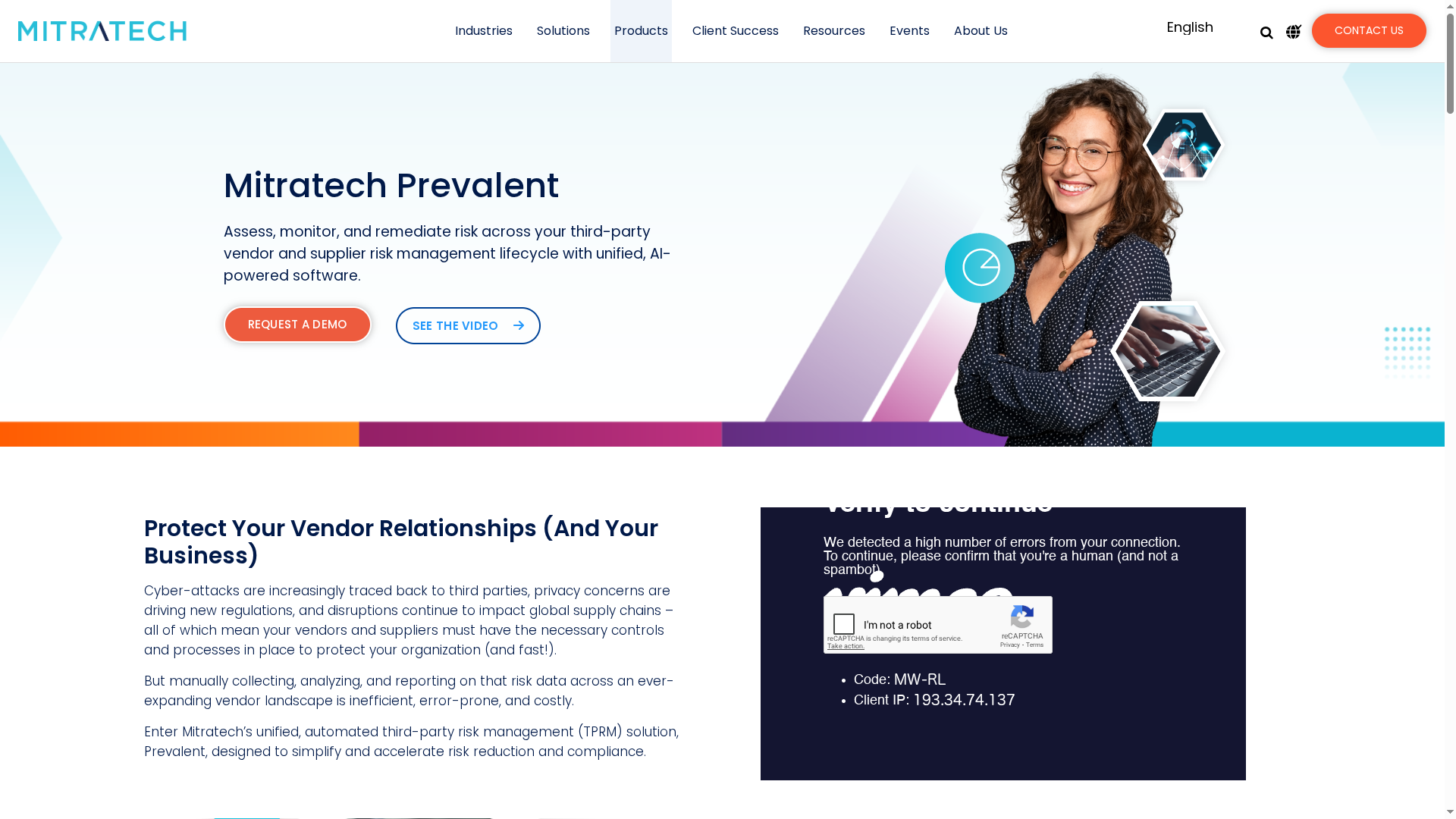
Mitrathec Prevalent is a unified, AI-powered platform designed to assess, monitor, and remediate third-party risk across the entire vendor lifecycle. It combines automated assessments, continuous monitoring, and vendor intelligence networks to help organizations scale third-party risk programs with confidence. The platform is powerful and comprehensive, but expect meaningful implementation effort for large, complex environments. Worth evaluating if you need automation and managed services to move from ad-hoc to programmatic TPRM.
Core Features
Mitrathec Prevalent centralizes a range of capabilities: automated, standardized risk assessments; continuous monitoring with remediation management; and vendor intelligence networks that deliver on-demand risk reports. It ingests multiple data points—cyber, reputational, financial, ESG, and regulatory—to produce richer risk profiles. The product also includes a library of 800+ assessment templates, AI-driven assessment automation, collaborative tools such as real-time messaging and vendor portals, and customizable dashboards and reports for actionable insights.
Pros
- Reduces manual effort through automation: The platform’s automated assessments and AI-driven templates cut the time teams spend building and scoring questionnaires, which lowers human error and speeds decision-making.
- Provides real-time visibility: Continuous monitoring updates vendor risk profiles as new signals appear, enabling faster response to changes in vendor posture.
- Combines broad intelligence signals: Integrating cyber, reputational, financial, ESG, and regulatory data gives a more complete view of third-party risk than single-signal tools.
- Supports collaboration with vendors: Built-in messaging and vendor portals make remediation conversations transparent and auditable, improving resolution times.
- Scales with managed services: The availability of vendor intelligence networks and expert managed services helps organizations grow programs without adding linear headcount.
Cons
- Potentially lengthy setup and integration time: Large organizations should anticipate a significant implementation window to connect data sources and tailor workflows.
- Complexity may require training: The platform’s depth and configurability can create a steep learning curve for teams without dedicated TPRM resources.
- Pricing not disclosed: With no public pricing, procurement teams will need to engage sales to understand total cost of ownership, which can slow vendor evaluation.
Who It's For
Mitrathec Prevalent is best suited for medium to large organizations with extensive vendor ecosystems and regulatory obligations. If your security, procurement, or GRC teams manage hundreds or thousands of suppliers and need to standardize assessments while maintaining continuous surveillance, this product is a strong fit.
Unique Value Proposition
Prevalent’s unique edge is the combination of AI automation, a vast template library, and vendor intelligence networks backed by managed services—so you get technology plus operational support. That mix helps teams shift from reactive checklists to continuous, intelligence-driven TPRM.
Real World Use Case
A multinational corporation deploys Mitrathec Prevalent to automate risk assessments for thousands of suppliers, unify signals from cyber, financial, and ESG feeds, and route critical remediation tasks through vendor portals—reducing issues that could disrupt supply chains.
Pricing
Pricing is not specified; interested organizations are encouraged to contact Mitrathec Prevalent for a tailored quote.
Website: https://prevalent.net
Security and Compliance Tools Comparison
This table provides a comprehensive overview of security and compliance tools, highlighting their features, benefits, drawbacks, and target users to help you make an informed decision.
| Product | Key Features | Pros | Cons | Pricing |
|---|---|---|---|---|
| Skypher AI | AI Questionnaire Automation, Centralized Security Content | Increases response speed up to 10x, reduces team workload, improves accuracy, strengthens client relationships | Limited public detail on integrations and AI/data privacy | Custom quotes |
| SafeBase | Trust Center, AI Questionnaire Assistance, Integrations with Sales Tools | Reduces questionnaire time by 80%, enhances customer trust, robust integrations, analytics dashboards | Varied pricing plans, advanced features may need technical setup | Contact for quote |
| OneTrust | Unified GRC and Privacy Platform, AI Governance, Risk Management | Market leader, comprehensive platform, scalable, continuous innovation | Limited pricing transparency, platform complexity, may be overwhelming for smaller teams | Contact for quote |
| ProcessUnity | Third-Party Risk Management, AI-Driven Automation, Vendor Lifecycle Management | Highly scalable, strong provider support, user-friendly, automates workflows | Potential complexity for small orgs, unspecified integration capabilities | Not specified |
| ArcherIRM | AI-Powered Risk Management, Compliance and Audit Integration | Robust AI capabilities, comprehensive platform, market-recognized leadership, global support | Limited pricing transparency, potentially complex implementation | Not specified |
| Mitrathec Prevalent | AI-Powered TPRM, Vendor Intelligence Networks, Continuous Monitoring | Reduces manual effort, real-time visibility, broad intelligence signals, supports collaboration | Potentially lengthy setup, complexity may require training, pricing not disclosed | Not specified |
Accelerate Your Third-Party Risk Management with AI-Powered Automation
The "Top 6 Best Third-Party Risk Management Tools 2025" article highlights key challenges organizations face when handling complex security questionnaires and managing vendor risk. Lengthy review cycles, repetitive manual work, and the need for accuracy and collaboration can slow down sales and compliance processes. These pain points call for a solution that simplifies questionnaire responses while integrating seamlessly with existing risk management workflows.
Skypher answers this call by offering an AI Questionnaire Automation Tool designed to reduce response times by up to 10 times, helping medium to large organizations in tech and finance close deals faster without sacrificing accuracy or security. With support for over 30 API integrations to popular TPRM platforms like OneTrust and ServiceNow, plus collaboration tools such as Slack and Microsoft Teams, Skypher makes it easy to centralize your security content and manage reviews efficiently. Our platform handles even the toughest questionnaires in under a minute, so your teams can focus on high-value tasks rather than repetitive data entry.
Ready to transform your security review process and build stronger client trust? Discover the benefits of AI-driven automation by visiting Skypher’s homepage to learn more about our AI Questionnaire Automation Tool and explore how our custom Trust Center can streamline collaboration across your organization.
Experience faster, smarter third-party risk management today with Skypher. Visit https://skypher.co to get started and see how you can close security reviews faster while improving accuracy and teamwork.
Frequently Asked Questions
What are third-party risk management tools?
Third-party risk management tools are software solutions designed to help organizations assess, monitor, and mitigate risks associated with external vendors and service providers. Evaluate key features like automated assessments and continuous monitoring to streamline your vendor management processes.
How can third-party risk management tools benefit my organization?
These tools can dramatically reduce the time spent on vendor assessments, enhance compliance with regulations, and improve overall risk visibility. Implementing a tool can decrease manual effort by 80% or more, allowing your team to focus on higher-value tasks.
What features should I look for in third-party risk management tools?
Focus on features like automated risk assessments, continuous monitoring, and seamless integrations with existing systems. Prioritize tools that also provide robust reporting and analytics capabilities to enhance your decision-making processes.
How long does it typically take to implement third-party risk management tools?
Implementation time can vary based on the complexity of your organization and the tool itself, but expect it to take anywhere from 30 to 90 days. Be prepared to allocate resources to customize workflows and integrate data sources for optimal performance.
Can third-party risk management tools help with compliance requirements?
Yes, many third-party risk management tools are specifically designed to assist with compliance by automating evidence collection and documentation. Choose a tool that integrates regulatory frameworks relevant to your industry to enhance your compliance efforts.