

Compliance automation is transforming how businesses navigate today's complex regulatory landscape. Organizations can reduce compliance processing time by up to 80 percent with the right automation tools. But here’s the surprising part: most companies still rely on outdated manual processes that create more headaches than solutions. This stark contrast highlights the urgency for companies to embrace this technology and revolutionize their compliance strategies.
Table of Contents
- Understanding Compliance Automation Basics
- Benefits of Automated Compliance Processes
- Implementing Compliance Automation Steps
- Overcoming Compliance Automation Challenges
Quick Summary
| Takeaway | Explanation |
|---|---|
| Automate to Improve Efficiency | Compliance automation significantly reduces time and resources required for compliance tasks, allowing teams to focus on strategic activities. |
| Shift to Proactive Risk Management | By utilizing advanced technologies like AI and machine learning, organizations can identify potential compliance issues before they escalate, enhancing risk management capabilities. |
| Continuous Compliance Monitoring is Key | Transitioning from periodic audits to continuous monitoring allows organizations to detect compliance deviations in real-time, reducing exposure to risks. |
| Select Tools with Integration in Mind | Choosing automation tools that integrate well with existing systems is crucial to avoid data silos and ensure effective compliance management. |
| Plan for Training and Change Management | Comprehensive training and change management processes are essential to ensure user adoption and maximize the benefits of compliance automation. |
Understanding Compliance Automation Basics

In today's complex regulatory environment, organizations face unprecedented pressure to maintain compliance with a growing web of requirements. Compliance automation represents the systematic use of technology to streamline, standardize, and enforce compliance processes that traditionally required manual oversight and intervention.
What Is Compliance Automation?
Compliance automation refers to the use of specialized software and technological solutions to automatically handle compliance-related tasks, monitoring, and reporting. Rather than relying on labor-intensive manual processes, organizations implement systems that can continuously verify adherence to regulatory requirements, internal policies, and industry standards.
At its core, compliance automation transforms static, periodic compliance activities into dynamic, ongoing processes that provide real-time visibility. This shift fundamentally changes how organizations approach their compliance obligations, moving from reactive firefighting to proactive risk management.
According to Lumen Alta, modern compliance automation systems employ advanced technologies such as artificial intelligence, machine learning, and even blockchain to identify potential risks proactively, maintain data integrity through unalterable records, and provide real-time monitoring that quickly alerts organizations to compliance issues.
Key Components of Compliance Automation
Effective compliance automation solutions typically include several essential components that work together to create a comprehensive compliance management system:
-
Centralized Documentation Repository - Automated systems consolidate compliance documentation, policies, and procedures in a single, searchable location, ensuring consistency and accessibility
-
Continuous Monitoring - Rather than point-in-time assessments, automation enables ongoing surveillance of systems, configurations, and user behaviors to detect compliance deviations
-
Automated Workflows - Predefined processes guide compliance activities, approvals, and remediation steps, ensuring standardized approaches to compliance management
-
Regulatory Change Tracking - Advanced solutions automatically monitor for changes in applicable regulations and standards, alerting organizations to new requirements
-
Real-Time Reporting - Automated dashboards and reporting tools provide instant visibility into compliance status across the organization
These components work together to create what compliance professionals often call a "continuous compliance" environment—where meeting requirements becomes an integrated part of daily operations rather than a separate, burdensome activity.
The Evolution From Reactive to Proactive Compliance
Traditionally, many organizations have approached compliance as a periodic exercise centered around upcoming audits or assessments. This reactive stance often resulted in resource-intensive "compliance sprints" that disrupted normal operations and created stress throughout the organization.
With compliance automation, the paradigm shifts dramatically. Cloud Security Alliance notes that organizations are increasingly moving from reactive audit responses to a proactive security approach, embedding compliance into agile processes that enable faster outcomes and better governance.
This evolution represents more than just technological advancement—it's a fundamental change in how organizations conceptualize compliance itself. Rather than viewing compliance as a hurdle to overcome, automation helps transform it into an integrated business function that adds value through risk reduction and operational efficiency.
Standards Supported by Automation
Modern compliance automation tools are capable of supporting adherence to numerous regulatory frameworks and standards simultaneously. Common frameworks addressed by these solutions include SOC 2, PCI DSS, ISO 27001, GDPR, HIPAA, and industry-specific requirements.
The versatility of compliance automation is particularly valuable for organizations operating in multiple jurisdictions or industries, as they can configure a single platform to address diverse compliance requirements without duplicating efforts across separate systems.
By understanding these fundamental aspects of compliance automation, organizations can begin to envision how such systems might transform their approach to regulatory and internal compliance requirements—moving from burdensome, periodic exercises to streamlined, continuous processes that enhance security posture while reducing manual workload.
Benefits of Automated Compliance Processes
Implementing automated compliance processes delivers substantial benefits that extend far beyond simply checking regulatory boxes. Organizations that embrace compliance automation gain competitive advantages through improved efficiency, reduced risk, and enhanced operational performance.
Dramatic Time and Resource Savings
One of the most immediate benefits of compliance automation is the significant reduction in time and resources required to maintain regulatory compliance. Manual compliance processes typically involve teams of people gathering evidence, reviewing configurations, completing paperwork, and preparing for audits—activities that can consume thousands of work hours annually.
Automated systems eliminate many routine administrative tasks associated with compliance work. According to Scytale, compliance automation solutions remove mundane administrative tasks from employees' plates, allowing skilled professionals to focus on more strategic activities that require human judgment and expertise.
This time reclamation translates directly to cost savings, as organizations can either redirect staff to higher-value activities or maintain compliance with smaller teams. For many organizations, this efficiency gain alone justifies the investment in automation technology.
Enhanced Accuracy and Consistency
Human error represents one of the greatest threats to effective compliance management. Even diligent professionals make mistakes when manually collecting data, interpreting requirements, or applying controls across different systems.
Automated compliance tools execute the same checks consistently every time, eliminating the variability that comes with human performance. This consistency ensures that compliance assessments reflect actual conditions rather than being influenced by factors like reviewer fatigue, time constraints, or inconsistent interpretations.
The resulting improvement in accuracy provides greater confidence in compliance status reports and reduces the risk of overlooking critical issues that could lead to violations, breaches, or penalties.
Continuous Compliance Monitoring
Traditional compliance approaches often rely on point-in-time assessments that provide only periodic snapshots of compliance status. Between these assessments, non-compliant conditions may develop and persist for extended periods, creating risk exposure.
Compliance automation enables continuous monitoring of systems, applications, and processes to verify ongoing adherence to requirements. As CyberArrow notes, this continuous verification significantly reduces risks by providing visibility into systems and processes in real-time rather than waiting for scheduled assessments.
The shift from periodic to continuous compliance represents a fundamental improvement in risk management capability, as it dramatically reduces the window of exposure between when a compliance issue develops and when it's detected and addressed.
Proactive Risk Management
Perhaps the most valuable benefit of compliance automation is the shift from reactive to proactive risk management. Traditional compliance approaches often focus on detecting and correcting issues after they occur. In contrast, automated solutions can identify potential compliance issues before they manifest as actual violations or security incidents.
Modern compliance automation solutions incorporate sophisticated technologies that detect patterns and anomalies that might indicate emerging compliance concerns. Lumen Alta highlights how artificial intelligence and machine learning capabilities in compliance tools can identify risks more quickly than traditional methods, enabling faster response to potential issues.
This predictive capability allows organizations to address compliance gaps before they result in regulatory violations, security breaches, or operational disruptions—a significant advantage in today's complex risk landscape.
Improved Scalability
As organizations grow, expand into new markets, or face evolving regulatory requirements, the compliance burden typically increases. Manual compliance processes often buckle under this increased pressure, leading to delays, oversights, or the need for substantial staff expansion.
Automated compliance solutions scale much more effectively, accommodating growing compliance requirements without proportional increases in staffing or resources. This scalability is increasingly important as regulatory demands become more complex and numerous.
The ability to customize frameworks efficiently allows compliance efforts to scale across different departments, making automation particularly valuable for organizations experiencing growth or facing an expanding regulatory landscape.
Enhanced Reporting and Visibility
Comprehensive visibility across compliance requirements has traditionally been difficult to achieve, especially for organizations subject to multiple regulatory frameworks. Compliance automation platforms consolidate this information, providing centralized dashboards that display compliance status across the organization.
This consolidated view supports better decision-making by making compliance data accessible to stakeholders at all levels. Executives gain the high-level overview needed for strategic planning, while operational teams receive the detailed information required for day-to-day compliance management.
By delivering these significant benefits, compliance automation transforms what was once viewed as a necessary cost center into a strategic business function that enhances operational effectiveness while reducing risk.
Implementing Compliance Automation Steps
Transitioning from manual compliance processes to automated solutions requires careful planning and execution. Organizations that follow a structured approach to implementation are more likely to achieve successful outcomes and realize the full benefits of their automation investments.
Assessing Current Compliance State
Before implementing any automation solution, organizations must thoroughly understand their current compliance landscape. This initial assessment provides the foundation for all subsequent implementation activities.
Begin by documenting all applicable regulatory requirements, industry standards, and internal policies that affect your organization. This inventory should be comprehensive, covering regulations like GDPR, HIPAA, PCI DSS, SOC 2, and any industry-specific mandates relevant to your operations.
Next, evaluate existing compliance processes, identifying pain points, inefficiencies, and areas of high risk or frequent non-compliance. This assessment should also include an inventory of tools and systems currently used for compliance management.
According to Sprinto, a thorough requirements gathering process should include reviewing current policies and controls for gaps before attempting to integrate existing systems into an automation solution. This foundational work ensures that your automation efforts address actual needs rather than simply digitizing flawed processes.
Setting Clear Objectives
Successful compliance automation implementations are driven by well-defined objectives that align with broader organizational goals. These objectives provide direction for the project and criteria for measuring success.
CyberSierra emphasizes the importance of clearly defining objectives such as reducing compliance processing time, minimizing errors, or improving reporting capabilities. Without these specific targets, automation projects risk becoming technology implementations without meaningful business impact.
When setting objectives, consider both quantitative metrics (like time savings or error reduction percentages) and qualitative improvements (such as enhanced decision-making capability or improved stakeholder confidence). These objectives should be documented and shared with all stakeholders to ensure alignment throughout the implementation process.
Selecting Appropriate Automation Tools
With clear objectives established, the next step involves selecting automation tools that meet your organization's specific needs. The compliance automation marketplace offers numerous solutions with varying capabilities, integration options, and price points.
When evaluating potential tools, prioritize those that integrate well with your existing technology stack. As Legit Security notes, selecting strategic tools for automation should emphasize integration with current systems to avoid creating isolated compliance silos.
Other important selection criteria include:
- Coverage of specific compliance frameworks relevant to your organization
- Scalability to accommodate growth and evolving regulatory requirements
- Customization capabilities to address unique organizational needs
- User experience and accessibility for stakeholders with varying technical expertise
- Vendor stability, support options, and ongoing development roadmap
Most organizations benefit from arranging demonstrations and proof-of-concept trials before making final selection decisions. These hands-on evaluations help ensure the chosen solution will meet practical requirements beyond marketing claims.
Mapping Compliance Processes and Assigning Responsibilities
Successful automation implementation requires detailed mapping of compliance processes and clear assignment of responsibilities. This step transforms high-level objectives into specific, actionable workflows.
Create detailed process maps that document each step in your compliance workflows, identifying which steps will be automated, which will remain manual, and how they interconnect. These maps should include decision points, data flows, and integration touchpoints with other systems.
As Legit Security recommends, mapping out processes and assigning responsibilities to specific team members is essential for accountability and ensuring that each aspect of compliance has clear ownership.
Developing an Implementation Timeline
Compliance automation typically cannot be implemented all at once. A phased approach with a realistic timeline helps manage resources effectively and allows for adjustments based on early learnings.
CyberSierra suggests developing a detailed timeline for each automation process step, breaking the process into manageable tasks that can be completed sequentially or in parallel as appropriate.
A well-structured implementation timeline typically includes:
- Initial setup and configuration phase
- Integration with existing systems and data sources
- Testing and validation periods
- Phased rollout to different departments or compliance domains
- Training sessions for various user groups
- Assessment checkpoints to evaluate progress and make adjustments
Training and Change Management
Even the most sophisticated automation solution will fall short of expectations if users don't understand how to use it effectively. Comprehensive training and change management are essential components of successful implementation.
Develop training materials and sessions tailored to different user groups, from compliance specialists who will use the system daily to executives who need to understand reporting capabilities. These training resources should be accessible on-demand to support ongoing learning and new user onboarding.
Sprinto emphasizes that a tactical implementation plan must include employee training and change management to ensure adoption. Resistance to new systems often stems from insufficient understanding of benefits or concerns about changing established workflows.
Risk Identification and Mitigation
Implementation of compliance automation carries its own risks that must be proactively identified and addressed. These risks might include data migration errors, integration failures, or disruption to ongoing compliance activities during the transition.
CyberSierra recommends proactively identifying risks with specific mitigation strategies as part of the implementation planning process. This risk management approach helps prevent implementation challenges from undermining the very compliance posture the automation is meant to strengthen.
By following these structured implementation steps, organizations can navigate the transition to automated compliance processes more smoothly, reducing disruption while accelerating the realization of benefits.
Overcoming Compliance Automation Challenges

While compliance automation offers significant benefits, implementing these systems successfully requires navigating several common challenges. Organizations that anticipate and address these obstacles proactively are more likely to achieve their automation objectives without costly setbacks or delays.
Integration with Legacy Systems
One of the most persistent challenges in compliance automation is integrating new solutions with existing legacy systems. Many organizations rely on older technologies that lack modern APIs or integration capabilities, creating potential data silos that undermine automation efforts.
To overcome this challenge, consider these approaches:
- Implement middleware solutions specifically designed to connect legacy systems with modern applications
- Develop custom APIs where standard integration methods aren't available
- Consider phased replacement of legacy systems that present insurmountable integration barriers
- Utilize robotic process automation (RPA) to bridge gaps between systems without invasive changes
Even with advanced tools, integration remains a significant hurdle. According to Lucinity, only 27% of financial institutions have fully integrated AI governance frameworks, highlighting the persistent integration challenges that organizations face when implementing compliance automation.
Navigating Regulatory Complexity
Organizations often operate across multiple jurisdictions with varying, sometimes conflicting, regulatory requirements. This complexity makes it difficult to configure automation systems to address all applicable regulations simultaneously.
The regulatory landscape varies dramatically by region. As Lucinity notes, requirements such as the U.S. Bank Secrecy Act, EU GDPR, and local regulations in Asia create significant obstacles to implementing unified compliance automation solutions. Organizations need systems tailored for transparency and accountability in different jurisdictions.
Successful organizations address this challenge by:
- Creating regulatory requirement maps that identify overlaps and conflicts
- Configuring rules engines with jurisdiction-specific logic
- Implementing regular regulatory update processes to maintain alignment with changing requirements
- Engaging legal experts to validate automation logic for regulatory accuracy
Data Quality and Accessibility Issues
Compliance automation depends on high-quality, accessible data. Many organizations struggle with fragmented data sources, inconsistent data formats, and questionable data quality, all of which can undermine automation effectiveness.
To address data-related challenges:
- Conduct thorough data quality assessments before automation implementation
- Develop data cleansing and standardization processes for critical compliance information
- Implement data governance frameworks to maintain quality over time
- Consider master data management solutions for organizations with particularly complex data environments
Without addressing foundational data issues, even the most sophisticated automation tools will struggle to deliver accurate compliance insights.
Reducing Overreliance on Manual Processes
Many organizations have deeply entrenched manual compliance processes that have evolved over years or decades. Transitioning from these established workflows to automated approaches often encounters resistance from both process owners and executives comfortable with existing methods.
Lucinity points out that manual compliance processes are time-consuming and error-prone, but AI-powered workflow automation (including RPA, IPA, and NLP) can significantly reduce reliance on manual review, streamlining investigations and reporting in regulated industries.
To facilitate this transition:
- Document the errors, inconsistencies, and inefficiencies in current manual processes
- Implement change management programs that address psychological barriers to adoption
- Provide robust training that builds confidence in automated systems
- Consider phased implementations that demonstrate value before full-scale deployment
Managing Costs and Resource Constraints
Compliance automation initiatives often compete with other strategic priorities for limited organizational resources. Building a compelling business case and managing implementation costs effectively are crucial for securing and maintaining necessary support.
To address resource constraints:
- Develop detailed return-on-investment analyses that quantify both direct and indirect benefits
- Consider cloud-based solutions that reduce upfront capital expenditures
- Implement in phases, using early wins to justify continued investment
- Explore vendor financing or subscription models that align costs with realized benefits
Remember that compliance automation costs extend beyond software licenses to include implementation services, integration work, training, and ongoing maintenance.
Balancing Automation and Human Oversight
Effective compliance management requires balancing automation efficiency with appropriate human oversight. Organizations that over-automate risk creating "black box" compliance processes that lack necessary judgment and accountability.
To strike the right balance:
- Clearly identify which decisions require human review versus which can be fully automated
- Implement exception handling processes for scenarios that fall outside normal parameters
- Design systems with appropriate audit trails and explainability features
- Ensure compliance staff develop new skills focused on exception handling and pattern recognition rather than routine processing
By thoughtfully addressing these common challenges, organizations can implement compliance automation solutions that deliver sustained value while avoiding costly pitfalls and implementation failures. The most successful compliance automation initiatives anticipate these obstacles and incorporate specific strategies to overcome them from the earliest planning stages.
Frequently Asked Questions
What is compliance automation?
Compliance automation refers to the use of specialized software and technology to automatically manage tasks, monitoring, and reporting related to compliance. It transforms traditional manual processes into continuous, real-time compliance oversight.
How does compliance automation improve efficiency?
Compliance automation significantly reduces the time and resources required to maintain regulatory compliance. By automating routine tasks, organizations can free up skilled professionals to focus on strategic activities, increasing overall operational efficiency.
What are the benefits of implementing compliance automation?
The benefits of compliance automation include dramatic time and resource savings, enhanced accuracy and consistency, continuous compliance monitoring, proactive risk management, improved scalability, and better reporting and visibility across compliance processes.
What challenges might organizations face when adopting compliance automation?
Common challenges include integration with legacy systems, navigating complex regulatory requirements, ensuring data quality and accessibility, managing costs, and balancing the need for automation with appropriate human oversight.
Transform Your Compliance Process with Skypher
In the rapidly evolving world of compliance automation, businesses face increasing pressure to streamline their processes and shift from reactive to proactive risk management. The pain points identified in achieving this goal—such as navigating complex regulatory landscapes and ensuring continuous compliance monitoring—can feel overwhelming. You may find yourself burdened by outdated manual procedures while striving for efficiency.
That's where Skypher steps in. Our powerful AI Questionnaire Automation Tool allows organizations like yours to complete security reviews faster and with remarkable accuracy.
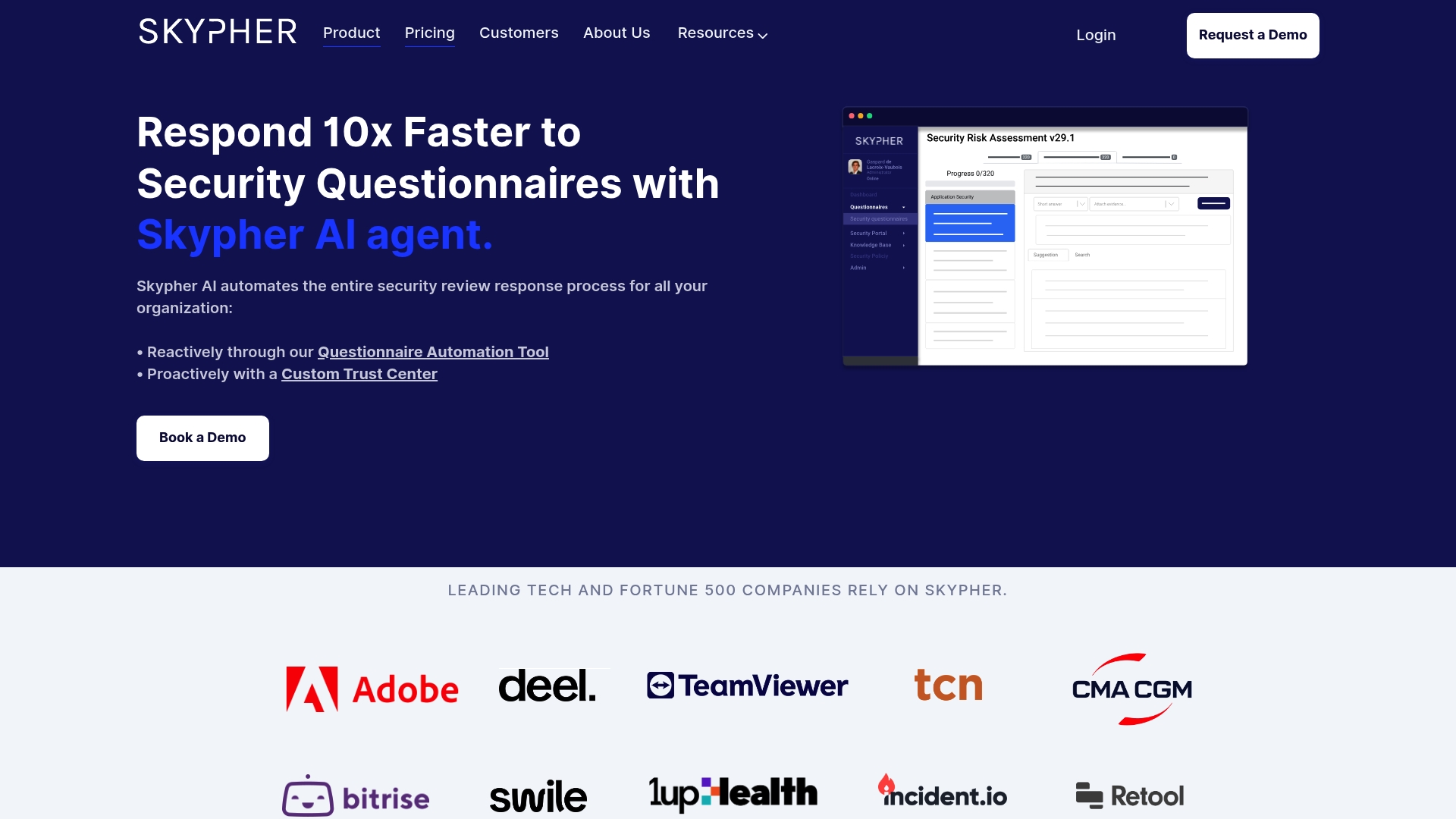
Imagine shifting from countless hours of tedious paperwork to real-time collaboration across your team, all while integrating seamlessly with over 40 third-party risk management platforms. Skypher not only enhances your compliance posture but also boosts operational productivity, freeing you to focus on what truly matters—growing your business.
Don't let compliance hurdles hold you back! Now is the perfect time to explore how Skypher can transform your compliance strategy. Visit skypher.co today and take the first step toward a more efficient, integrated compliance process!