
Risk management used to be all about ticking boxes and dodging fines. New research shows more than 60 percent of organizations now see compliance as a strategic core of their entire risk plan. Most people still think compliance is just a headache and paperwork. Here is the truth. Companies that treat compliance as a living culture find themselves leaps ahead when the next big risk appears.
Table of Contents
- Role of Compliance in Modern Risk Management
- Strategic Alignment of Compliance and Risk Management
- Building a Compliance-Driven Risk Management Culture
- Comprehensive Compliance Program Implementation
- Key Strategies for Effective Compliance
- Comprehensive Training and Awareness Programs
- Standardized Risk Management Frameworks
- Stakeholder Engagement and Collaborative Compliance
- Common Compliance Risks and How to Address Them
- Identifying Systemic Compliance Vulnerabilities
- Embedding Compliance into Organizational Operations
- Risk Management and Standardized Frameworks
- Building a Strong Compliance Culture in Your Organization
- Leadership's Critical Role in Compliance Culture
- Embedding Compliance into Organizational DNA
- Fostering Open Communication and Accountability
Quick Summary
| Takeaway | Explanation |
|---|---|
| Compliance as a Core Strategy | Compliance should be integrated deeply into risk management frameworks, moving from a peripheral function to a strategic imperative that anticipates and addresses potential risks proactively. |
| Comprehensive Training is Essential | Organizations must create multifaceted training programs that engage employees through various learning modalities to transform compliance into a practical, lived experience. |
| Leadership Commitment is Crucial | Building a strong compliance culture starts with leadership that demonstrates ethical behavior and sets clear expectations, fostering an environment of trust and accountability. |
| Continuous Monitoring and Risk Assessment | It's imperative to implement dynamic tracking, systematic risk assessment processes, and regular audits to identify and mitigate compliance vulnerabilities effectively. |
| Open Communication Encourages Reporting | Establishing safe, confidential reporting channels protects whistleblowers and promotes a culture where employees feel comfortable raising compliance concerns without fear of retaliation. |
Role of Compliance in Modern Risk Management
Complex organizations today recognize compliance as a fundamental pillar of effective risk management. The evolving business environment demands a sophisticated approach that integrates compliance strategies deeply into organizational risk frameworks.
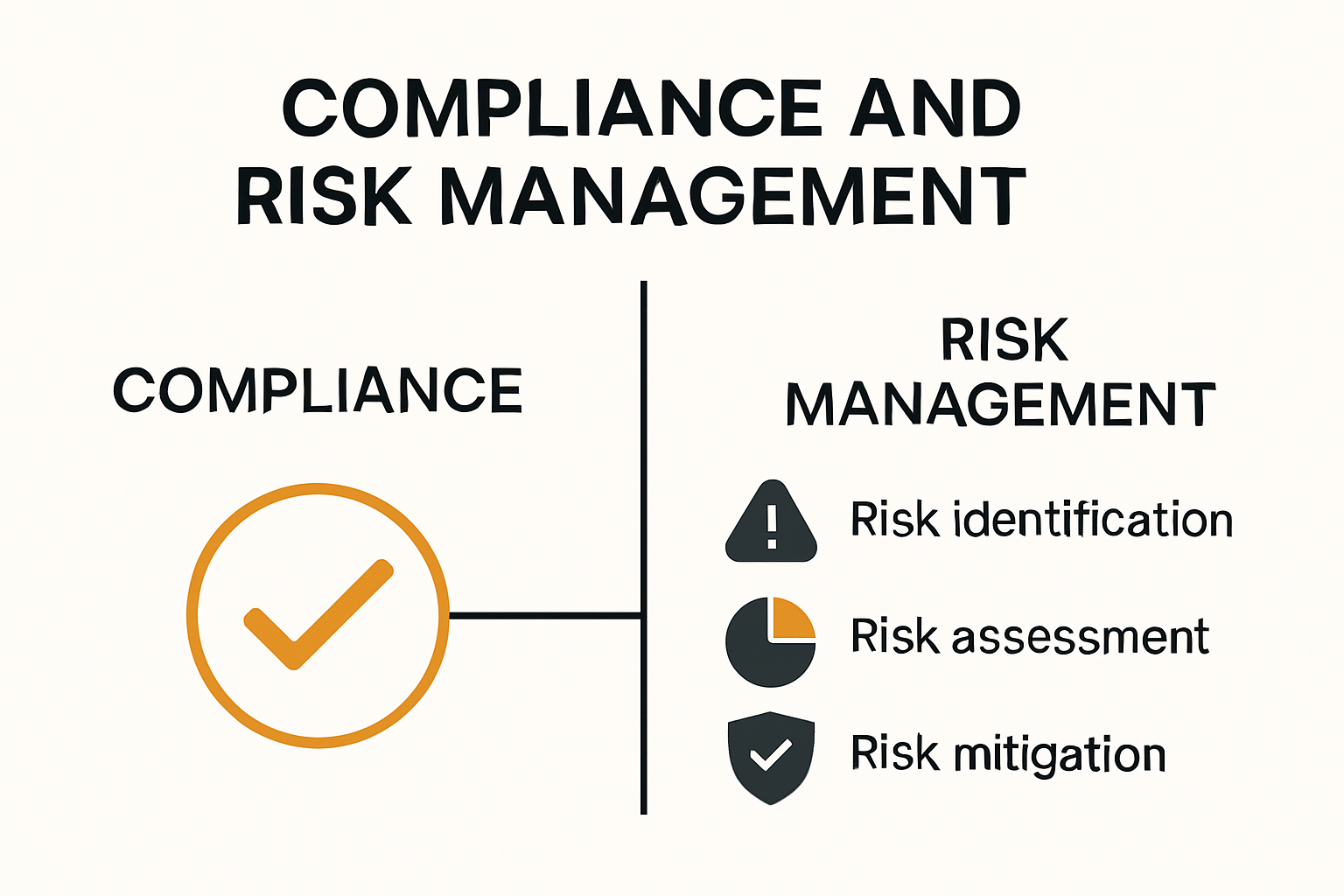
Strategic Alignment of Compliance and Risk Management
Compliance in risk management is no longer a peripheral function but a core strategic imperative. According to Rutgers University's Corporate Legal and Governance research, the compliance function acts as a critical participant in enterprise risk management, responsible for daily management of ethics and standards programs.
Organizations must develop comprehensive frameworks that proactively identify, assess, and mitigate potential compliance risks. This involves creating robust systems that continuously monitor regulatory changes, evaluate internal processes, and implement preventative control mechanisms. The goal is not just avoiding penalties but establishing a proactive culture of risk awareness and ethical conduct.
Building a Compliance-Driven Risk Management Culture
Successful compliance risk management starts with leadership commitment. Federal Reserve guidance emphasizes that board members and senior management must drive a comprehensive compliance culture throughout the organization. This means creating an environment where employees feel empowered to raise concerns, design effective controls, and understand the importance of regulatory adherence.
Key elements of a robust compliance risk management approach include:
- Cultural Integration: Embedding compliance principles into everyday business operations
- Risk Assessment: Developing systematic processes to identify and mitigate potential compliance risks
- Continuous Monitoring: Implementing dynamic tracking and reporting mechanisms
Comprehensive Compliance Program Implementation
An effective compliance and ethics program requires a multifaceted approach. Harvard Corporate Governance research outlines critical components that organizations must consider:
- Establishing tailored policies and procedures
- Providing role-specific compliance training
- Creating clear escalation and investigation protocols
- Conducting regular root cause analysis
- Committing to continuous program improvement
By treating compliance as an integrated risk management strategy, organizations can transform potential regulatory challenges into opportunities for enhanced operational excellence and stakeholder trust. The future of risk management lies not in reactive measures, but in creating proactive, adaptive compliance frameworks that anticipate and address potential risks before they materialize.
Key Strategies for Effective Compliance
Navigating the complex landscape of regulatory requirements demands strategic and comprehensive approaches to compliance management. Organizations must develop robust methodologies that go beyond simple checklist adherence and transform compliance into a dynamic, integrated business function.
Comprehensive Training and Awareness Programs
OpenStax's research on information systems highlights the critical importance of employee education in compliance risk management. Effective strategies include developing multifaceted training approaches that engage employees across different learning modalities.
Key training methodologies include:
- E-learning Courses: Interactive digital modules that provide flexible, self-paced learning
- Live Workshops: Hands-on sessions that allow for direct interaction and real-world scenario exploration
- Certification Programs: Structured learning paths that validate employee understanding of compliance protocols
- Regular Communication: Newsletters and updates that keep compliance topics fresh and relevant
By creating a comprehensive training ecosystem, organizations can transform compliance from a theoretical concept to a practical, lived experience for employees.

Standardized Risk Management Frameworks
ISO 31000, an international standard for risk management, provides a structured approach to identifying, analyzing, and mitigating organizational risks. This framework offers organizations a systematic methodology for integrating risk management into core business activities.
Key components of a standardized risk management framework include:
- Establishing consistent risk assessment methodologies
- Creating clear communication protocols for risk identification
- Developing adaptive monitoring systems
- Implementing responsive risk treatment strategies
Stakeholder Engagement and Collaborative Compliance
KirkpatrickPrice's compliance research emphasizes the significance of inclusive risk management strategies. Effective compliance is not a siloed function but a collaborative effort that requires input from diverse organizational stakeholders.
Strategic stakeholder engagement involves:
- Soliciting perspectives from managers across different departments
- Creating transparent communication channels
- Developing cross-functional compliance teams
- Establishing mechanisms for continuous feedback and improvement
Successful compliance strategies recognize that risk management is a collective responsibility. By fostering a culture of shared accountability, organizations can create more resilient and adaptive compliance frameworks that respond dynamically to evolving regulatory landscapes.
Common Compliance Risks and How to Address Them
Companies face increasingly complex compliance challenges that require strategic and proactive management. Understanding potential risks and developing comprehensive mitigation strategies is crucial for maintaining organizational integrity and avoiding potential legal and financial repercussions.
Identifying Systemic Compliance Vulnerabilities
OpenStax research on information systems highlights the importance of comprehensive employee education in managing enterprise risks. Identifying systemic compliance vulnerabilities requires a multifaceted approach that goes beyond traditional risk assessment methods.
Key areas of potential compliance risks include:
- Data Privacy Breaches: Unauthorized access or mishandling of sensitive information
- Regulatory Non-Compliance: Failure to meet industry-specific legal requirements
- Financial Reporting Irregularities: Inaccurate or misleading financial documentation
- Ethical Misconduct: Violations of organizational code of conduct
Effective risk identification involves continuous monitoring, regular audits, and creating transparent reporting mechanisms that allow early detection of potential compliance issues.
Below is a summary table highlighting common compliance risks and corresponding recommended mitigation strategies as discussed in the section above.
| Compliance Risk | Description | Recommended Mitigation |
|---|---|---|
| Data Privacy Breaches | Unauthorized access/mishandling of information | Continuous monitoring, robust IT controls |
| Regulatory Non-Compliance | Failure to meet legal/industry regulations | Keep abreast of laws, regular internal audits |
| Financial Reporting Irregularities | Inaccurate/misleading financial documentation | Systematic reviews, staff financial training |
| Ethical Misconduct | Violations of code of conduct | Role-based training, confidential reporting |
Embedding Compliance into Organizational Operations
ECRI's compliance research emphasizes the critical importance of integrating compliance thinking into daily business operations. This approach transforms compliance from a reactive checklist to a proactive organizational culture.
Strategies for embedding compliance include:
- Developing clear and accessible policy documentation
- Creating cross-functional compliance teams
- Implementing robust internal communication channels
- Establishing accountability mechanisms at all organizational levels
Risk Management and Standardized Frameworks
ISO 31000 provides a structured approach to managing organizational risks. This international standard offers a comprehensive methodology for integrating risk management into decision-making processes across all levels of an organization.
Key components of an effective risk management framework include:
- Clarifying roles and responsibilities for risk management
- Developing shared risk assessment methodologies
- Creating adaptive decision-making processes
- Continuously improving risk management strategies
By adopting a holistic approach to compliance risk management, organizations can transform potential vulnerabilities into opportunities for improving operational excellence. The goal is not merely to avoid penalties but to create a resilient, ethical, and adaptable organizational culture that anticipates and addresses potential compliance challenges proactively.
Building a Strong Compliance Culture in Your Organization
Creating a robust compliance culture requires more than implementing rules and regulations. It demands a holistic approach that integrates ethical behavior, organizational values, and proactive risk management into every aspect of business operations.
Leadership's Critical Role in Compliance Culture
OECD's global compliance research emphasizes that building a strong compliance culture starts with visible and committed leadership. Executives and senior management must not only establish clear expectations but also consistently demonstrate ethical behavior and compliance principles through their actions.
Key leadership strategies include:
- Tone from the Top: Consistently communicating the importance of compliance
- Leading by Example: Demonstrating ethical decision-making in daily operations
- Transparent Communication: Openly discussing compliance expectations and challenges
- Resource Allocation: Investing in compliance training and infrastructure
When leadership genuinely prioritizes compliance, employees are more likely to internalize these values and incorporate them into their daily work practices.
The table below summarizes key leadership strategies and their impacts as detailed in the section above.
| Leadership Strategy | Impact on Compliance Culture |
|---|---|
| Tone from the Top | Fosters organization-wide awareness and importance of compliance |
| Leading by Example | Encourages ethical decision-making at all levels |
| Transparent Communication | Builds trust and opens dialogue on compliance challenges |
| Resource Allocation | Ensures proper tools and training to support compliance goals |
Embedding Compliance into Organizational DNA
Transforming compliance from a mandatory requirement to an integral part of organizational culture requires a comprehensive and strategic approach. This means moving beyond traditional training programs and creating an environment where ethical behavior is naturally encouraged and expected.
Effective strategies for embedding compliance include:
- Integrating compliance considerations into performance evaluations
- Developing clear and accessible reporting mechanisms for potential violations
- Creating recognition programs that reward ethical behavior
- Implementing continuous learning opportunities focused on compliance awareness
Fostering Open Communication and Accountability
A strong compliance culture thrives on open communication and a non-punitive approach to reporting potential issues. Organizations must create safe spaces where employees feel comfortable raising concerns without fear of retaliation.
Key elements of fostering an open compliance environment include:
- Establishing confidential reporting channels
- Protecting whistleblowers from potential negative consequences
- Conducting regular, transparent investigations of reported concerns
- Providing feedback on the outcomes of compliance-related reports
Building a compliance culture is an ongoing process that requires continuous commitment, adaptation, and genuine organizational investment. By creating an environment that values ethical behavior, transparency, and collective responsibility, organizations can develop a sustainable approach to compliance that goes far beyond mere regulatory adherence.
The most successful compliance cultures are those that view ethical behavior not as a constraint but as a fundamental competitive advantage that drives innovation, trust, and long-term organizational success.
Frequently Asked Questions
What is the role of compliance in modern risk management?
Compliance plays a crucial role in modern risk management by integrating compliance strategies into the organizational risk framework, ensuring that potential risks are proactively identified, assessed, and mitigated.
How can organizations build a compliance-driven risk management culture?
Organizations can build a compliance-driven culture by ensuring leadership commitment, embedding compliance principles into daily operations, and fostering an environment that encourages employees to raise concerns about compliance issues.
What are key strategies for effective compliance management?
Key strategies include implementing comprehensive training and awareness programs, establishing standardized risk management frameworks, and engaging stakeholders across the organization to collaborate on compliance initiatives.
What are common compliance risks organizations face?
Common compliance risks include data privacy breaches, regulatory non-compliance, financial reporting irregularities, and ethical misconduct. Addressing these risks requires continuous monitoring, regular audits, and effective communication channels.
Turn Compliance Challenges Into Growth With Skypher
Are you tired of compliance feeling like an ongoing struggle instead of a competitive advantage? If your team is overwhelmed by security questionnaires and the pressure to maintain a strong compliance culture, you are not alone. Managing risk, safeguarding sensitive data, and fostering organization-wide accountability are more complex than ever. Skypher helps leaders move from ticking boxes to building a resilient, proactive compliance process—just like the article describes.
Let Skypher automate your security questionnaire response and streamline your collaboration across departments. Experience faster POCs, fewer errors, and real-time integrations with the tools you already use. See how our AI Questionnaire Automation Tool empowers your organization to manage risk smarter and build trust with every review. Visit Skypher now and discover how you can transform compliance into an engine for growth today.