

More than 80 percent of American tech and finance firms face growing pressure to automate security questionnaire responses. For compliance officers and solution engineers, manual reporting drains resources and increases error risk, especially as regulations shift globally. Efficient compliance platforms now offer advanced automation, helping teams respond faster, reduce mistakes, and maintain strong collaborative standards across American and international operations.
Table of Contents
- Defining Compliance Platforms and Their Role
- Key Types of Compliance Platforms Today
- Core Features Powering Compliance Automation
- Legal Standards and Regulatory Alignment
- Risk, Integration, and Mistakes to Avoid
Key Takeaways
| Point | Details |
|---|---|
| Importance of Compliance Platforms | Compliance platforms automate regulatory management and streamline adherence to policies, reducing manual efforts and improving transparency. |
| Integration and Scalability | Choose compliance solutions that integrate well with existing systems and offer scalability to adapt to evolving regulatory standards. |
| Risk Awareness | Be aware of integration challenges and data silo risks during implementation to ensure smooth operation and compliance coverage. |
| Continuous Compliance Strategy | Develop a proactive compliance strategy that includes ongoing monitoring and updates to address changing legal requirements. |
Defining Compliance Platforms and Their Role
Compliance platforms represent sophisticated technological solutions designed to help organizations systematically manage regulatory requirements and internal policy adherence. At their core, these systems automate the complex processes of monitoring, documenting, and enforcing compliance across multiple operational domains. Advanced compliance automation platforms integrate seamlessly with existing technological infrastructure, enabling real-time risk detection and comprehensive governance.
The fundamental purpose of these platforms extends beyond simple rule enforcement. They serve as centralized management systems that consolidate policy controls, streamline audit procedures, and provide continuous monitoring across diverse regulatory landscapes. Organizations can leverage these platforms to reduce manual administrative work, minimize potential compliance violations, and create transparent, auditable processes that demonstrate proactive risk management.
Key components of comprehensive compliance platforms typically include robust features such as automated policy mapping, continuous risk assessment, real-time monitoring, and integrated reporting mechanisms. These systems are particularly crucial in heavily regulated industries like finance, healthcare, and technology, where regulatory requirements can be intricate and rapidly evolving. Compliance management systems help organizations not just meet current standards, but anticipate and adapt to emerging regulatory challenges.
Pro tip: Implement a compliance platform with strong integration capabilities to ensure seamless communication between different organizational systems and minimize potential compliance gaps.
Key Types of Compliance Platforms Today
In the evolving landscape of regulatory management, organizations rely on diverse compliance management tools to navigate complex legal and operational requirements. These platforms are strategically designed to address specific organizational needs across different industries, with each type focusing on unique aspects of regulatory adherence and risk mitigation.
The primary categories of compliance platforms include Governance, Risk, and Compliance (GRC) Platforms, which provide comprehensive oversight of organizational policies and regulatory requirements. Risk Management Systems focus specifically on identifying, assessing, and mitigating potential risks across operational domains. Audit Management Software enables organizations to streamline documentation, track compliance activities, and prepare for internal and external audits with greater efficiency. Ethics Reporting Tools represent another critical category, allowing companies to establish confidential reporting mechanisms and foster a culture of transparency and ethical behavior.
Each type of compliance platform serves a distinct purpose, ranging from financial regulation tracking in banking to data protection monitoring in technology sectors. Industry-specific platforms are increasingly sophisticated, offering tailored solutions that address nuanced regulatory challenges. For instance, healthcare organizations might prioritize platforms that ensure patient data privacy, while manufacturing firms might focus on safety and environmental compliance tracking. These specialized systems integrate advanced technologies like artificial intelligence and machine learning to provide predictive analytics and real-time monitoring capabilities.
Here's a comparison of key compliance platform types and their primary business focus:
| Platform Type | Main Focus | Typical Use Case |
|---|---|---|
| GRC Platforms | Policy and regulatory control | Enterprise-wide compliance management |
| Risk Management Systems | Risk assessment and mitigation | Financial, operational, and cyber risks |
| Audit Management Tools | Streamlined audit documentation | Internal/external audit preparation |
| Ethics Reporting Tools | Confidential incident reporting | Fostering ethical company culture |
Pro tip: Select a compliance platform that not only meets your current regulatory requirements but also offers scalable features that can adapt to emerging industry standards and technological changes.
Core Features Powering Compliance Automation
Compliance automation platforms leverage advanced technologies to transform how organizations manage regulatory requirements. Core features of these platforms include sophisticated rule-based compliance checks, real-time monitoring capabilities, and automatic risk detection mechanisms that dramatically reduce manual oversight and potential human error.
The fundamental technological capabilities driving these platforms encompass several critical components. Automated Risk Detection systematically identifies potential compliance vulnerabilities across organizational systems, flagging issues before they escalate. Real-Time Monitoring enables continuous tracking of regulatory adherence, providing instant alerts when potential violations emerge. Centralized Policy Management allows organizations to create, implement, and track comprehensive compliance frameworks across multiple departments and operational domains. Additionally, Audit Trail Generation creates detailed documentation of all compliance activities, ensuring transparent and verifiable record-keeping that can withstand rigorous external scrutiny.

Advanced compliance platforms integrate powerful analytics and machine learning technologies to provide predictive insights and proactive risk management. These systems go beyond simple rule enforcement, offering sophisticated capabilities like anomaly detection, predictive compliance modeling, and intelligent recommendations for mitigating potential regulatory risks. By leveraging data from multiple sources and applying advanced algorithmic analysis, these platforms enable organizations to move from reactive compliance management to a more strategic, anticipatory approach that can adapt to rapidly changing regulatory landscapes.
Pro tip: When selecting a compliance automation platform, prioritize solutions that offer seamless integration with your existing technological infrastructure and demonstrate robust scalability for future regulatory challenges.
Legal Standards and Regulatory Alignment
Regulatory compliance software serves as a critical mechanism for organizations to navigate the complex landscape of legal standards across multiple jurisdictions and industries. These platforms are designed to address a diverse range of regulatory requirements, including federal, state, and international laws that govern data privacy, security, accessibility, and ethical business practices.
The primary legal frameworks that compliance platforms must address include comprehensive regulations such as General Data Protection Regulation (GDPR), Health Insurance Portability and Accountability Act (HIPAA), Sarbanes-Oxley Act (SOX), and Americans with Disabilities Act (ADA). Each of these regulations imposes specific requirements on organizations, mandating robust mechanisms for data protection, financial transparency, healthcare information security, and accessibility standards. Compliance platforms provide sophisticated tools that enable organizations to map their internal policies against these complex legal requirements, automatically identifying potential gaps and recommending corrective actions.
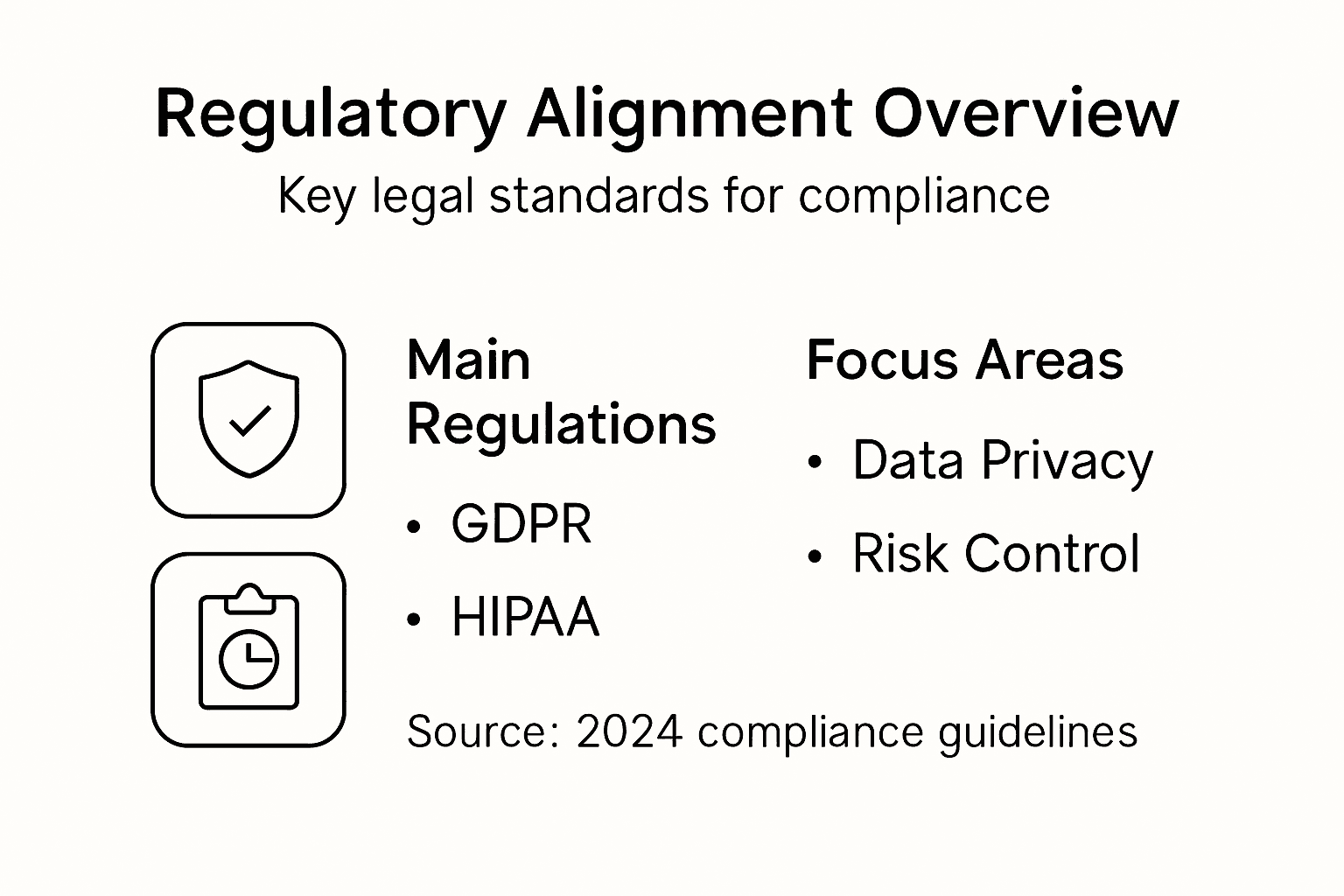
The table below summarizes major regulatory frameworks and the compliance areas they address:
| Regulation | Compliance Area | Key Requirement |
|---|---|---|
| GDPR | Data privacy and protection | Data handling and user consent |
| HIPAA | Healthcare information | Patient data security and privacy |
| SOX | Financial disclosure | Transparent financial reporting |
| ADA | Accessibility | Equal access to digital services |
Navigating the intricate world of regulatory compliance demands more than just understanding individual legal frameworks. Modern compliance platforms integrate advanced technologies that enable continuous monitoring, real-time updates, and predictive risk assessment. These systems can track evolving legal landscapes, automatically update compliance workflows, and provide comprehensive documentation that demonstrates an organization's proactive approach to meeting regulatory obligations. By leveraging machine learning and artificial intelligence, these platforms can anticipate potential compliance challenges and provide strategic recommendations for maintaining legal alignment across rapidly changing regulatory environments.
Pro tip: Develop a comprehensive compliance strategy that views legal alignment as an ongoing process, not a one-time achievement, and invest in platforms that offer flexible, adaptive compliance management capabilities.
Risk, Integration, and Mistakes to Avoid
Compliance platform deployment involves navigating a complex landscape of technological, procedural, and organizational challenges. Understanding potential risks and integration pitfalls is crucial for organizations seeking to implement robust compliance management systems that effectively protect their operational integrity and regulatory standing.
The most critical risks in compliance platform implementation center around three primary domains: technological infrastructure, organizational processes, and cultural adaptation. Data Silo Risks emerge when compliance platforms cannot effectively communicate across different systems, creating fragmented and potentially inconsistent compliance environments. Integration Challenges frequently arise from incompatible legacy systems, which can prevent seamless information flow and compromise the platform's effectiveness. Regulatory Coverage Gaps represent another significant risk, where organizations might inadvertently overlook specific compliance requirements due to incomplete platform configurations or inadequate mapping of legal standards.
Successful compliance platform implementation demands a holistic approach that transcends mere technological solutions. Organizations must invest in comprehensive change management strategies, ensuring that employees understand the platform's purpose and are equipped to utilize its features effectively. This involves thorough training programs, clear communication about new processes, and creating a culture of continuous compliance awareness. Technical teams must conduct rigorous compatibility assessments, stress-test integration capabilities, and develop flexible implementation strategies that can adapt to evolving regulatory landscapes and organizational needs.
Pro tip: Conduct a comprehensive pre-implementation audit that maps your existing technological ecosystem, identifies potential integration challenges, and develops a phased rollout strategy to minimize operational disruptions.
Accelerate Compliance and Security Questionnaire Responses with Skypher
The article highlights the crucial role compliance platforms play in streamlining security and trust while managing complex regulatory requirements. However, challenges such as fragmented systems, integration risks, and manual overhead often slow down compliance processes and increase the risk of errors. Skypher addresses these pain points by automating your security questionnaire responses with AI-powered precision, real-time collaboration tools, and seamless integration with over 40 third-party risk management platforms.
Experience a powerful solution designed specifically for medium and large organizations in the tech and finance sectors that require speed, accuracy, and transparency. With features like the AI Questionnaire Automation Tool, Custom Trust Center, and extensive API integrations including ServiceNow, your teams can reduce the time spent on compliance tasks drastically and strengthen client trust in a competitive market.

Boost your compliance efficiency now by visiting Skypher's platform. Discover how advanced automation and collaboration can help you overcome the evolving demands of compliance while enhancing operational productivity.
Frequently Asked Questions
What are compliance platforms?
Compliance platforms are technological solutions that help organizations manage regulatory requirements and internal policy adherence through automation, monitoring, and documentation.
What are the key features of compliance automation platforms?
Key features include automated risk detection, real-time monitoring, centralized policy management, and audit trail generation for comprehensive compliance management.
How do compliance platforms help in risk management?
Compliance platforms systematically identify and assess compliance vulnerabilities, allowing organizations to mitigate potential risks and improve operational integrity.
What are the different types of compliance platforms?
Types of compliance platforms include Governance, Risk, and Compliance (GRC) platforms, Risk Management Systems, Audit Management Software, and Ethics Reporting Tools, each addressing specific regulatory needs.