
The landscape of business today is more complex than ever. Organizations lose an estimated 45% of incident costs when compliance and risk management are not integrated. But here's the kicker: many companies still treat these critical areas as separate entities, missing out on a powerful synergy. Instead of merely checking boxes to meet regulations, organizations can thrive by weaving compliance and risk management into a cohesive strategy that anticipates threats before they become costly problems.
Table of Contents
- Compliance and Risk Management: The Basics
- Compliance and Risk Management: What's Different?
- Why Compliance and Risk Management Together Works
- Building a Strong Compliance and Risk Program
Quick Summary
| Takeaway | Explanation |
|---|---|
| Compliance focuses on regulatory adherence | Compliance management is centered around meeting external rules and requirements set by regulatory bodies, ensuring legal adherence. |
| Risk management takes a proactive approach | Risk management identifies and mitigates potential threats before they materialize, providing a broader view beyond just compliance. |
| Integration enhances organizational resilience | Combining compliance and risk management creates a robust framework that improves decision-making, reduces costs, and fosters organizational agility. |
| Technology is critical for effective strategies | Leveraging advanced technologies and analytics enables organizations to monitor risks in real-time and automate compliance tracking, enhancing overall effectiveness. |
| Cultural transformation is essential | Developing a culture of compliance and risk awareness throughout the organization ensures that all employees understand their role in managing risks, promoting a collaborative approach.  |
Compliance and Risk Management: The Basics
Navigating the complex world of business requires a strategic approach to protecting organizational interests. Compliance and risk management represent two critical pillars that help companies maintain operational integrity, protect assets, and ensure sustainable growth.
Understanding the Core Concepts
At its core, compliance and risk management is about creating a proactive framework that identifies, assesses, and mitigates potential challenges before they become critical problems. Gartner research reveals that organizations with integrated compliance and risk management programs can reduce incident costs by up to 45%.Compliance management focuses on meeting specific regulatory requirements and external standards. It's essentially about following the rules set by government agencies, industry regulators, and internal policies. Risk management, in contrast, takes a broader view. It involves identifying potential threats that could impact an organization's objectives, whether those threats are financial, operational, strategic, or reputational.
Key Components of an Effective Approach
Successful compliance and risk management requires a comprehensive strategy that encompasses several critical elements:
- Comprehensive Assessment: Thoroughly evaluating potential risks across all organizational levels
- Proactive Monitoring: Implementing continuous tracking and reporting mechanisms
- Strategic Planning: Developing robust mitigation strategies for identified risks
The relationship between compliance and risk management is symbiotic. While compliance ensures adherence to external requirements, risk management provides a forward-looking approach to protecting the organization's interests. Research from Deloitte suggests that integrated risk and compliance management can significantly enhance an organization's resilience and strategic decision-making.
Practical Implementation Strategies
Implementing an effective compliance and risk management program requires more than just creating policies. It demands a cultural shift that embeds risk awareness and regulatory compliance into every aspect of organizational operations. This means training employees, establishing clear reporting mechanisms, and creating a transparent environment where potential issues can be identified and addressed quickly.
Organizations must invest in robust technologies and tools that enable real-time monitoring, risk assessment, and compliance tracking. According to McKinsey, companies that leverage advanced analytics and integrated risk management platforms can more effectively predict and mitigate potential challenges.
Ultimately, compliance and risk management is not about eliminating all risks but about understanding, managing, and strategically navigating them. It's a dynamic process that requires continuous adaptation, learning, and improvement. By developing a holistic approach that balances regulatory requirements with strategic risk assessment, organizations can create a resilient framework that supports long-term success and sustainable growth.
Compliance and Risk Management: What's Different?
While compliance and risk management are often discussed together, they represent distinct yet interconnected approaches to organizational protection and strategic planning. Understanding their unique characteristics is crucial for developing a comprehensive organizational strategy.
Fundamental Distinctions in Purpose and Approach
Compliance management operates within a prescriptive framework, primarily focused on meeting external regulatory requirements and established standards. It's essentially about following the rules set by government agencies, industry regulators, and internal policies. According to Deloitte, compliance is fundamentally reactive, ensuring an organization adheres to predefined legal and regulatory guidelines.
In contrast, risk management takes a more predictive and proactive approach. Research from McKinsey indicates that risk management involves identifying, assessing, and strategically mitigating potential threats across financial, operational, strategic, and reputational domains. It's forward-looking, anticipating potential challenges before they materialize.
Scope and Operational Differences
The operational scope of compliance and risk management reveals significant differences:
-
Compliance Management:
- Focuses on meeting specific, predefined regulatory requirements
- Primarily defensive and reactive in nature
- Centered on maintaining legal and regulatory adherence
-
Risk Management:
- Encompasses a broader, more holistic view of organizational challenges
- Proactively identifies and mitigates potential threats
- Considers both internal and external risk sources
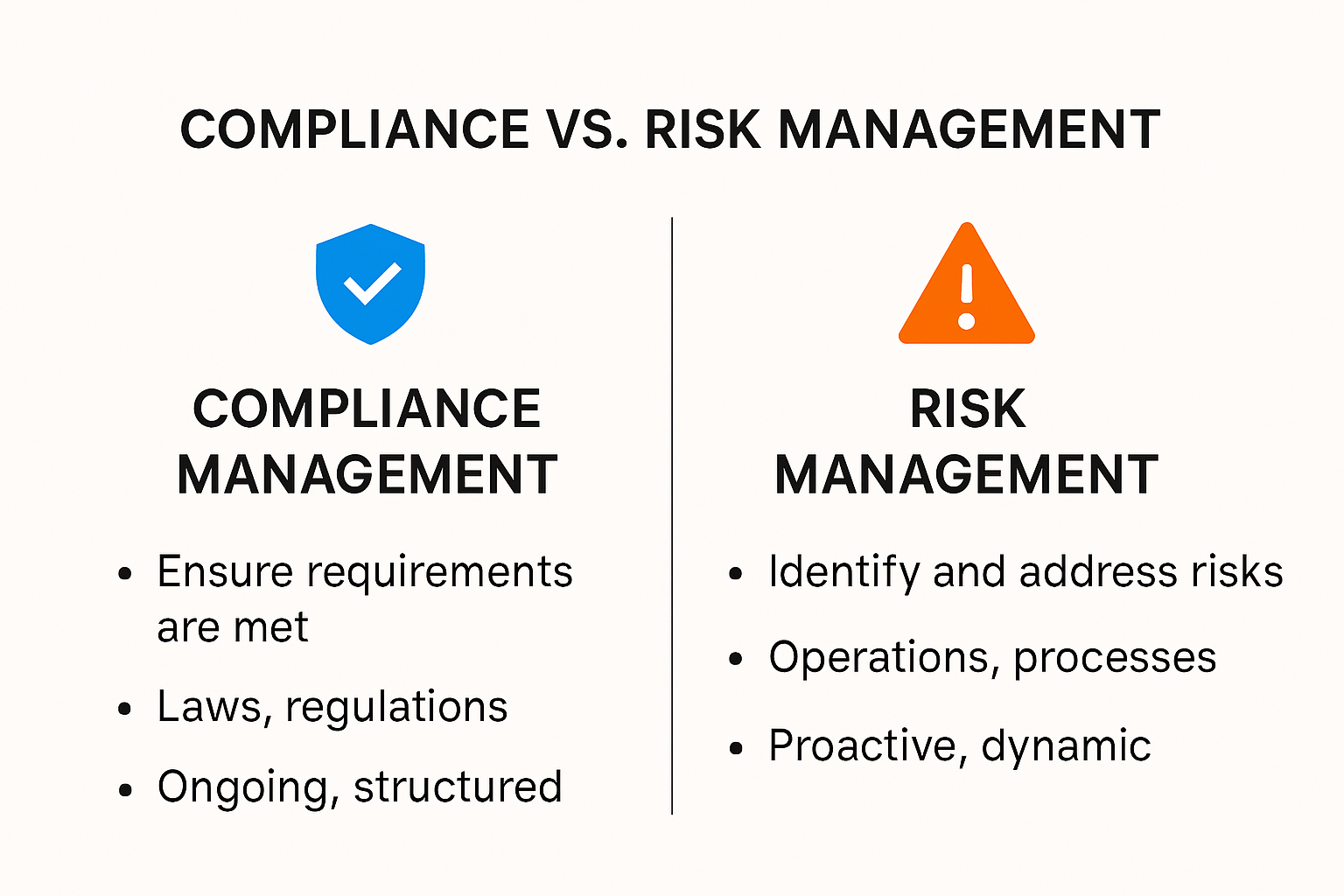 Gartner research highlights that while compliance ensures an organization meets existing standards, risk management aims to create strategic resilience by anticipating and preparing for potential future challenges.
Strategic Integration and Complementary Roles
Despite their differences, compliance and risk management are not competing strategies but complementary approaches. Effective organizations recognize that these disciplines work best when integrated. A study by PwC found that companies successfully integrating compliance and risk management approaches can reduce potential incident costs by up to 40% and improve overall organizational agility.
The key is to view compliance as a minimum standard and risk management as a strategic tool for continuous improvement. Compliance provides the foundational framework of rules and regulations, while risk management offers the dynamic strategy for navigating complex business environments.
Organizations that understand and leverage the unique strengths of both compliance and risk management can create a more robust, adaptive, and resilient operational strategy. By treating these approaches as complementary rather than competing methodologies, businesses can build a more comprehensive approach to organizational governance and strategic planning.
Why Compliance and Risk Management Together Works
Integrating compliance and risk management is not just a strategic choice—it's a critical business imperative that transforms organizational resilience and strategic decision-making. When these two disciplines work in concert, businesses can create a more robust, adaptive, and proactive approach to managing organizational challenges.
The Power of Integrated Strategies
PwC research reveals that 73% of organizations are now integrating their compliance and risk management functions to improve overall operational effectiveness. This integration enables companies to move beyond siloed approaches, creating a more holistic framework for identifying, assessing, and mitigating potential threats.
The synergy between compliance and risk management creates a comprehensive protective strategy. Compliance provides the foundational framework of regulatory requirements, while risk management adds a dynamic, forward-looking perspective. Together, they create a more nuanced understanding of organizational vulnerabilities and opportunities.
Tangible Benefits of Integration
Organizations that successfully integrate compliance and risk management experience multiple strategic advantages:
- Enhanced Decision-Making: Access to more comprehensive, real-time insights about potential risks and compliance challenges
- Cost Efficiency: Reducing redundant processes and streamlining resource allocation
- Proactive Risk Mitigation: Identifying and addressing potential issues before they become critical problems
Gartner research indicates that integrated approaches can reduce incident costs by up to 45%. This significant reduction comes from improved visibility, more accurate risk assessments, and a more coordinated response mechanism.
Creating a Unified Governance Framework
Successful integration requires more than just combining departments. It demands a cultural shift that embeds both compliance awareness and risk intelligence into every level of the organization. McKinsey studies suggest that this approach transforms risk from a potential liability into a strategic asset.
By developing a unified governance framework, organizations can:
- Create more transparent reporting mechanisms
- Improve cross-functional communication
- Develop more agile and responsive strategic planning
- Enhance overall organizational resilience
The most successful companies view compliance and risk management not as separate functions, but as interconnected components of a comprehensive organizational strategy. This approach allows businesses to not just meet regulatory requirements, but to anticipate and navigate complex business challenges proactively.
Ultimately, integrating compliance and risk management is about creating a more intelligent, adaptive organization. It's a strategic approach that transforms potential vulnerabilities into opportunities for growth, innovation, and sustainable success. By breaking down traditional silos and creating a more holistic view of organizational challenges, companies can build a more robust, resilient, and forward-thinking business model.
Building a Strong Compliance and Risk Program
Creating a robust compliance and risk management program requires strategic planning, organizational commitment, and a comprehensive approach that goes beyond mere regulatory checkboxes. Successful programs integrate multiple disciplines, technologies, and cultural elements to create a holistic risk management ecosystem.
Foundational Elements of an Effective Program
Deloitte research emphasizes that effective compliance and risk programs start with establishing clear governance structures. This means defining explicit roles, responsibilities, and accountability mechanisms across all organizational levels.
Key foundational elements include:
- Establishing a dedicated risk and compliance leadership team
- Developing comprehensive policy frameworks
- Creating transparent reporting mechanisms
- Implementing robust monitoring and assessment tools
Organizations must view compliance and risk management not as administrative burdens, but as strategic opportunities for enhancing organizational resilience and performance.
Technology and Data-Driven Approaches
Gartner studies indicate that advanced technological solutions are critical for modern compliance and risk management programs. Organizations should invest in integrated platforms that enable:
- Real-time risk monitoring and assessment
- Advanced analytics for predictive risk identification
- Automated compliance tracking and reporting
- Centralized data management and documentation
Modern risk management technologies leverage artificial intelligence and machine learning to provide more nuanced, predictive insights. These tools can help organizations move from reactive compliance approaches to proactive risk strategies.
Cultural Implementation and Continuous Learning
Building a strong compliance and risk program extends far beyond technological solutions. McKinsey research emphasizes the critical importance of organizational culture in successful risk management.
Key cultural implementation strategies include:
- Regular training and education programs
- Encouraging open communication about potential risks
- Creating incentive structures that reward proactive risk management
- Developing a company-wide risk awareness mindset
Successful programs foster an environment where employees at all levels understand their role in managing organizational risks. This means transforming risk management from a top-down directive to a collaborative, organization-wide commitment.
Ultimately, building a strong compliance and risk program is an ongoing journey of continuous improvement. Organizations must remain adaptable, continuously reassessing their strategies in response to changing regulatory landscapes, technological advancements, and emerging business challenges. By combining technological sophistication, clear governance, and a robust cultural framework, companies can develop resilient, dynamic compliance and risk management programs that protect and propel their business forward.
Frequently Asked Questions
What is the difference between compliance and risk management?
Compliance focuses on adhering to regulatory requirements and established standards, while risk management takes a proactive approach to identify and mitigate potential threats to organizational objectives.
Why is it important to integrate compliance and risk management?
Integrating compliance and risk management enhances organizational resilience, reduces costs by up to 45%, and improves decision-making by providing a comprehensive view of risks and regulatory challenges.
How can organizations implement a strong compliance and risk management program?
Organizations can implement a strong program by establishing clear governance structures, utilizing advanced technologies for monitoring and assessment, and fostering a culture of continuous learning and risk awareness.
What are the benefits of combining compliance and risk management strategies?
The benefits of combining these strategies include enhanced decision-making, cost efficiency through streamlined processes, proactive risk mitigation, and improved organizational agility.
Transform Compliance Challenges into Effortless Solutions with Skypher
Navigating the complexities of compliance and risk management is no small feat, especially when regulations are constantly evolving and the stakes are high. As highlighted in the article, organizations miss out on 45% of cost savings when compliance and risk management strategies are siloed. Do you find yourself mired in the tedious process of responding to security questionnaires? How about the frustration of missed deadlines and inaccurate submissions?
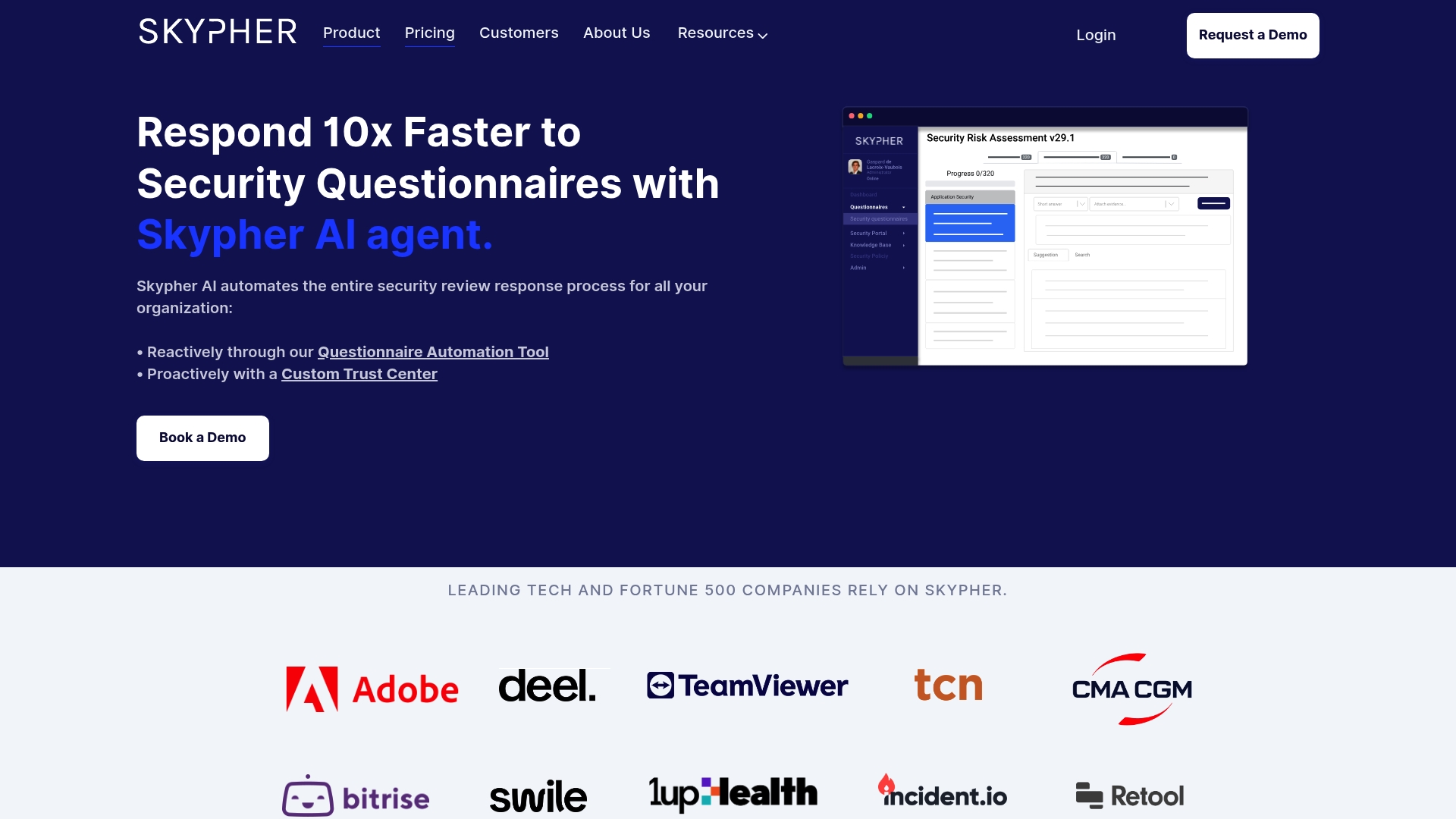
Fear not—Skypher is here to revolutionize your approach! Our AI-driven Questionnaire Automation Tool streamlines and accelerates the response process, empowering teams to complete security reviews faster and with unmatched accuracy. Imagine transforming your compliance efforts into a seamless experience with features like real-time collaboration, customizable Trust Centers, and integration with over 40 third-party risk management platforms. It's time to elevate your organization's cybersecurity posture while enhancing operational productivity.
Don't let compliance challenges weigh you down! Visit Skypher today and discover how we can help you integrate compliance and risk management into a cohesive strategy. Act now to streamline your processes and enhance client trust—your operational efficiency awaits!