
Compliance and risk management might sound like old news for corporate leaders, but this year the pressure is on in ways few expect. Over 82 percent of organizations have felt the impact of third party risks in the past year alone. Surprising, right? Most people think cutting edge technology is the solution, but simply investing in new tools is far from enough. Companies that turn compliance and risk into strategic assets, blending AI insights with a culture of constant learning, are quietly outpacing their competition and are far more resilient to what's coming next.
Table of Contents
- Understanding Compliance & Risk Management Basics
- Key Differences and How They Interact
- Steps to Build an Effective Compliance & Risk Program
- Trends Shaping Compliance & Risk Management in 2025
Quick Summary
| Takeaway | Explanation |
|---|---|
| Holistic Integration of Compliance and Risk Management | Organizations should integrate compliance and risk management into a unified governance framework, allowing for more effective protection and strategic planning against potential threats. |
| Emphasis on Technological Adaptation | The adoption of advanced analytics, AI, and real-time monitoring is vital for transitioning from reactive to predictive risk management, enhancing the organization's ability to identify vulnerabilities. |
| Cultural Awareness and Training | Building an organizational culture that promotes proactive compliance behavior through continuous training and communication is essential for fostering risk awareness at all levels. |
| Continuous Improvement and Flexibility | Organizations must regularly reassess their compliance and risk frameworks, developing agile protocols that can adapt quickly to changing regulatory environments and emerging challenges. |
| Focus on Third-Party Risks | Given the growing complexity of global supply chains, enhancing third-party risk management has become a critical priority for organizations to maintain operational resilience and prevent disruptions. |
Understanding Compliance & Risk Management Basics
Compliance and risk management represent the critical foundation of organizational resilience in an increasingly complex business environment. These interconnected disciplines protect companies from potential legal, financial, and operational threats while ensuring sustainable growth and strategic stability.
The Core Principles of Compliance & Risk Management
At its essence, compliance and risk management is about systematic identification, assessment, and mitigation of potential organizational vulnerabilities. According to PwC's Global Compliance Survey 2025, 64% of organizations recognize that improved visibility of risks is a key strategic advantage. This means proactively understanding potential challenges before they become critical problems.
The fundamental framework involves three primary components: risk identification, risk evaluation, and risk response. Organizations must develop a comprehensive approach that goes beyond mere regulatory checkbox activities. This requires creating a robust internal culture where risk awareness becomes embedded in every operational decision.
Emerging Technological Implications
KPMG's regulatory insights highlight that companies are expected to enhance risk controls, particularly in emerging technological domains like cybersecurity, information protection, and artificial intelligence. These areas demand sophisticated, adaptive strategies that can quickly respond to evolving regulatory expectations.
Technological advancements are transforming how organizations approach compliance and risk management. Advanced analytics, machine learning algorithms, and real time monitoring systems are becoming essential tools. They enable businesses to transition from reactive risk management to predictive and preventative approaches.
Strategic Implementation Strategies
Successful compliance and risk management is not about creating restrictive processes but developing intelligent, flexible frameworks. Key implementation strategies include:
- Cultural Integration: Embedding risk awareness throughout organizational hierarchy
- Continuous Learning: Regular training and update mechanisms for compliance protocols
- Technology Adoption: Leveraging AI and automation for more efficient risk tracking
By treating compliance and risk management as strategic business functions rather than administrative burdens, organizations can transform potential challenges into competitive advantages. The goal is creating an adaptive ecosystem that balances regulatory adherence with innovative potential.

The future of compliance and risk management lies in developing holistic, technology enabled approaches that are responsive, intelligent, and aligned with broader organizational objectives. Companies that master this balance will be best positioned to navigate the complex global business landscape of 2025 and beyond.
Key Differences and How They Interact
Compliance and risk management are two critical yet distinct organizational functions that work together to protect businesses from potential threats and ensure operational integrity. While often discussed interchangeably, these disciplines have unique characteristics and complementary roles in modern organizational strategy.
Defining the Distinct Roles
Compliance focuses on adherence to external regulations, internal policies, and established legal standards. It is fundamentally about meeting specific requirements set by regulatory bodies, industry standards, and organizational guidelines. According to KPMG's 2025 regulatory outlook, organizations are increasingly facing complex regulatory landscapes that demand precise and coordinated compliance strategies.
Risk management, by contrast, is a broader strategic function that identifies, evaluates, and mitigates potential threats that could impact organizational objectives. This function goes beyond regulatory checkboxes to proactively assess potential vulnerabilities across financial, operational, technological, and strategic domains.
Interconnected Strategic Approaches
PwC's Global Compliance Survey 2025 reveals that 64% of organizations recognize the critical importance of integrating compliance and risk management activities. This integration allows for a more holistic approach to organizational protection and strategic planning.
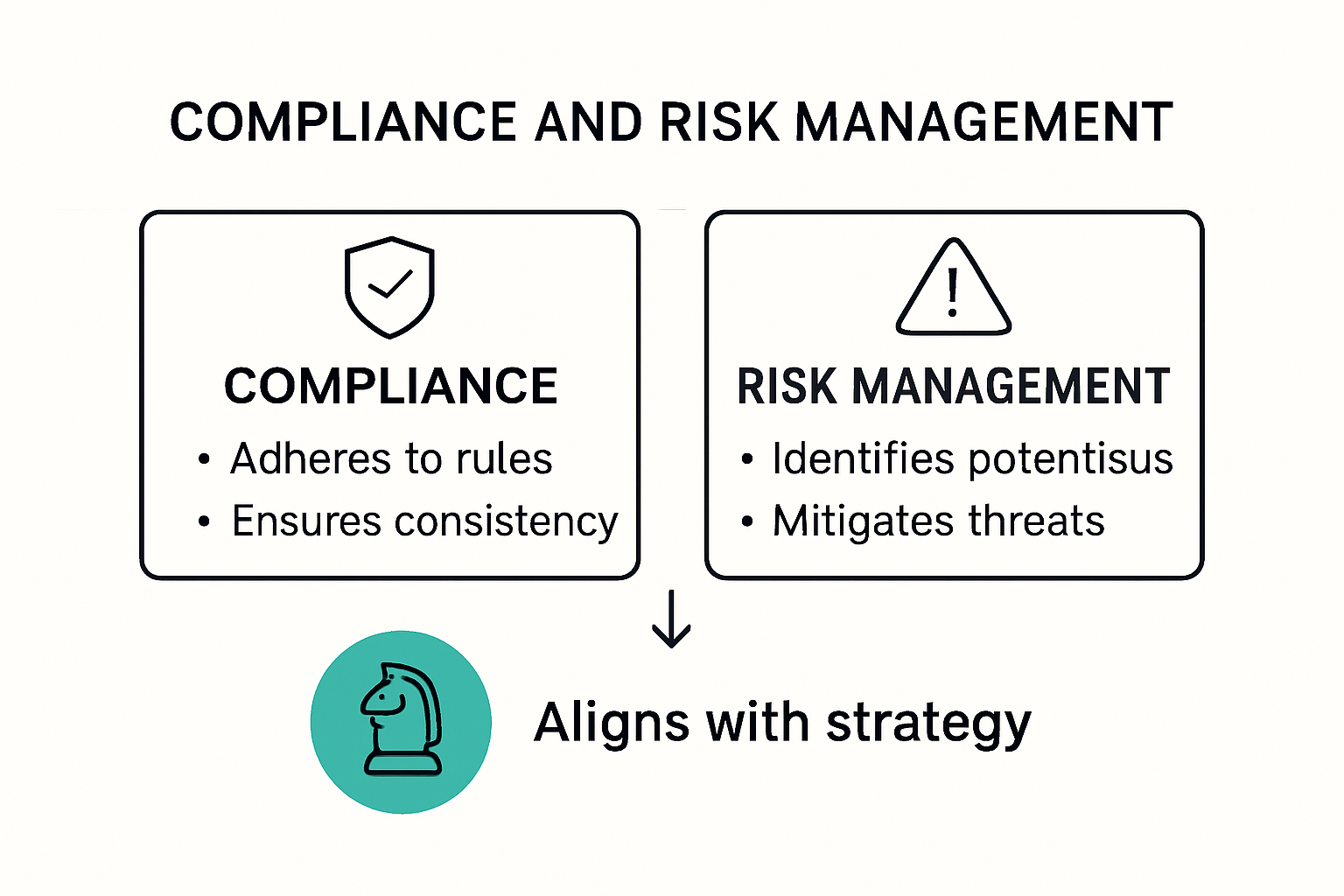
The interaction between compliance and risk management can be visualized as a symbiotic relationship. Compliance provides the structured framework of rules and standards, while risk management offers the adaptive strategies to navigate potential challenges. Together, they create a comprehensive approach to organizational governance that balances regulatory adherence with strategic flexibility.
Practical Implementation Strategies
Effective integration of compliance and risk management requires a multifaceted approach:
- Unified Governance: Developing cross functional teams that bridge compliance and risk management departments
- Technology Integration: Implementing advanced analytics and AI tools that provide comprehensive monitoring and predictive insights
- Continuous Communication: Establishing robust communication channels that enable real time information sharing and collaborative problem solving
Organizations must move beyond viewing compliance and risk management as separate silos. The most successful approaches treat these functions as interconnected components of a comprehensive organizational strategy. This means creating flexible frameworks that can quickly adapt to changing regulatory environments while proactively identifying and mitigating potential risks.
By understanding the nuanced differences and strategic interactions between compliance and risk management, businesses can develop more resilient, adaptive, and forward thinking approaches to organizational governance. The goal is not just to meet current standards but to create a dynamic ecosystem that anticipates and responds to emerging challenges with precision and strategic insight.
Steps to Build an Effective Compliance & Risk Program
Building a robust compliance and risk management program requires strategic planning, organizational commitment, and a comprehensive approach that goes beyond traditional checklist methodologies. Successful programs integrate multiple dimensions of organizational governance to create resilient and adaptive frameworks.
Foundational Assessment and Strategic Planning
KPMG's 2025 regulatory outlook emphasizes that companies must enhance risk controls in critical technological domains like cybersecurity and artificial intelligence. This demands a thorough initial assessment that maps existing organizational capabilities, identifies potential vulnerabilities, and establishes clear strategic objectives.
The assessment phase involves comprehensive auditing of current compliance processes, technology infrastructure, and organizational culture. Key elements include evaluating existing risk management tools, reviewing historical compliance data, and understanding industry specific regulatory requirements. Organizations must create a detailed baseline that provides insights into current performance and potential improvement areas.
Technology and Cultural Integration
PwC's Global Compliance Survey 2025 reveals that 64% of organizations recognize improved risk visibility as a critical strategic advantage. This requires implementing advanced technological solutions and fostering a culture of proactive risk awareness.
Technology integration involves deploying sophisticated monitoring systems, AI driven analytics, and real time reporting mechanisms. These tools enable organizations to transition from reactive to predictive risk management approaches. Simultaneously, cultural integration demands developing comprehensive training programs, establishing clear communication channels, and creating incentive structures that reward proactive compliance behavior.
Continuous Improvement and Adaptive Frameworks
An effective compliance and risk program is not static but continuously evolving. Successful strategies include:
- Regular Reassessment: Conducting periodic comprehensive reviews of compliance frameworks
- Stakeholder Engagement: Involving multiple organizational levels in risk identification and mitigation
- Flexible Response Mechanisms: Developing agile protocols that can quickly adapt to changing regulatory environments
Organizations must view compliance and risk management as dynamic, interconnected systems rather than isolated functions. This means creating feedback loops that allow continuous learning, rapid response to emerging challenges, and strategic alignment with broader organizational objectives.
The most successful compliance and risk programs are those that transform traditional defensive approaches into strategic competitive advantages. By developing intelligent, technology enabled frameworks that balance regulatory adherence with innovative potential, businesses can turn potential vulnerabilities into opportunities for growth and differentiation.
Ultimately, building an effective compliance and risk program requires a holistic approach that integrates technological sophistication, cultural awareness, and strategic thinking. Organizations that master this complex balance will be best positioned to navigate the increasingly complex global business landscape of 2025 and beyond.
Trends Shaping Compliance & Risk Management in 2025
The landscape of compliance and risk management is rapidly evolving, driven by technological advancements, regulatory complexities, and unprecedented global challenges. Organizations must navigate an increasingly intricate environment that demands agility, intelligence, and strategic foresight.
Technological Transformation and AI Integration
Gartner's 2025 Compliance Trends Report highlights the critical role of artificial intelligence and advanced technologies in reshaping risk management strategies. AI and machine learning are no longer optional but essential tools for organizations seeking to enhance their compliance capabilities.
Advanced predictive analytics enable businesses to move beyond reactive risk management. These technologies can identify potential vulnerabilities before they become critical issues, providing real time insights and enabling proactive decision making. Machine learning algorithms can analyze massive datasets, detecting subtle patterns and potential risks that traditional methods might overlook.
Third Party Risk and Operational Resilience
Gartner's research reveals that improving third party risk management is now the top priority for compliance leaders, with over 82% of organizations having faced consequences from third party risks in the past year. This trend underscores the growing complexity of global supply chains and interconnected business ecosystems.
Operational resilience has become a critical focus, requiring organizations to develop comprehensive strategies that address potential disruptions across their entire operational network. This involves not just identifying risks but creating adaptive frameworks that can quickly respond and recover from unexpected challenges.
Regulatory Complexity and Strategic Adaptation
Diligent's Regulatory Roundup emphasizes the increasing complexity of regulations that threaten operational resilience and competitive positioning. Organizations must develop more sophisticated approaches to regulatory compliance that go beyond traditional checkbox methodologies.
Key strategic adaptation strategies include:
- Integrated Compliance Frameworks: Developing holistic approaches that connect compliance across different organizational domains
- Continuous Learning Systems: Creating adaptive mechanisms that can quickly incorporate new regulatory requirements
- Technology Enabled Monitoring: Implementing advanced surveillance and reporting tools
The most successful organizations will be those that view compliance and risk management not as restrictive obligations but as strategic opportunities for innovation and competitive differentiation. By embracing technological solutions, developing adaptive strategies, and maintaining a proactive approach, businesses can transform potential regulatory challenges into sources of organizational strength.
As we move through 2025, the convergence of technological innovation, regulatory complexity, and global uncertainty will continue to reshape the compliance and risk management landscape. Organizations that can effectively navigate these trends will be best positioned to thrive in an increasingly dynamic and unpredictable business environment.
Frequently Asked Questions
What is the importance of compliance and risk management in 2025?
Compliance and risk management are essential for protecting organizations from legal, financial, and operational threats, ensuring sustainable growth amidst increasing complexity in the business environment.
How can organizations integrate compliance and risk management effectively?
Organizations can achieve effective integration by developing unified governance frameworks, employing advanced technology for monitoring, and fostering a culture of continuous communication and training.
What role does technology play in compliance and risk management for 2025?
Technology, particularly AI and advanced analytics, is vital for transitioning from reactive to predictive risk management, enhancing visibility, and enabling organizations to identify vulnerabilities proactively.
Why is focusing on third-party risk management crucial for organizations?
With over 82% of organizations experiencing third-party risks recently, enhancing third-party risk management is essential for maintaining operational resilience and preventing disruptions in complex supply chains.
Ready to Turn Compliance Challenges Into Your Competitive Edge?
Compliance and risk management in 2025 means navigating constant change, complex third-party risks, and a flood of regulatory demands. If your teams feel overwhelmed by security questionnaires and you are struggling to achieve both resilience and speed, you are not alone. As highlighted in this article, embedding technology and real-time collaboration is now essential for true operational resilience. Manual processes create delays and introduce unnecessary risk—especially for tech and finance leaders who need to move fast and build trust with every customer.
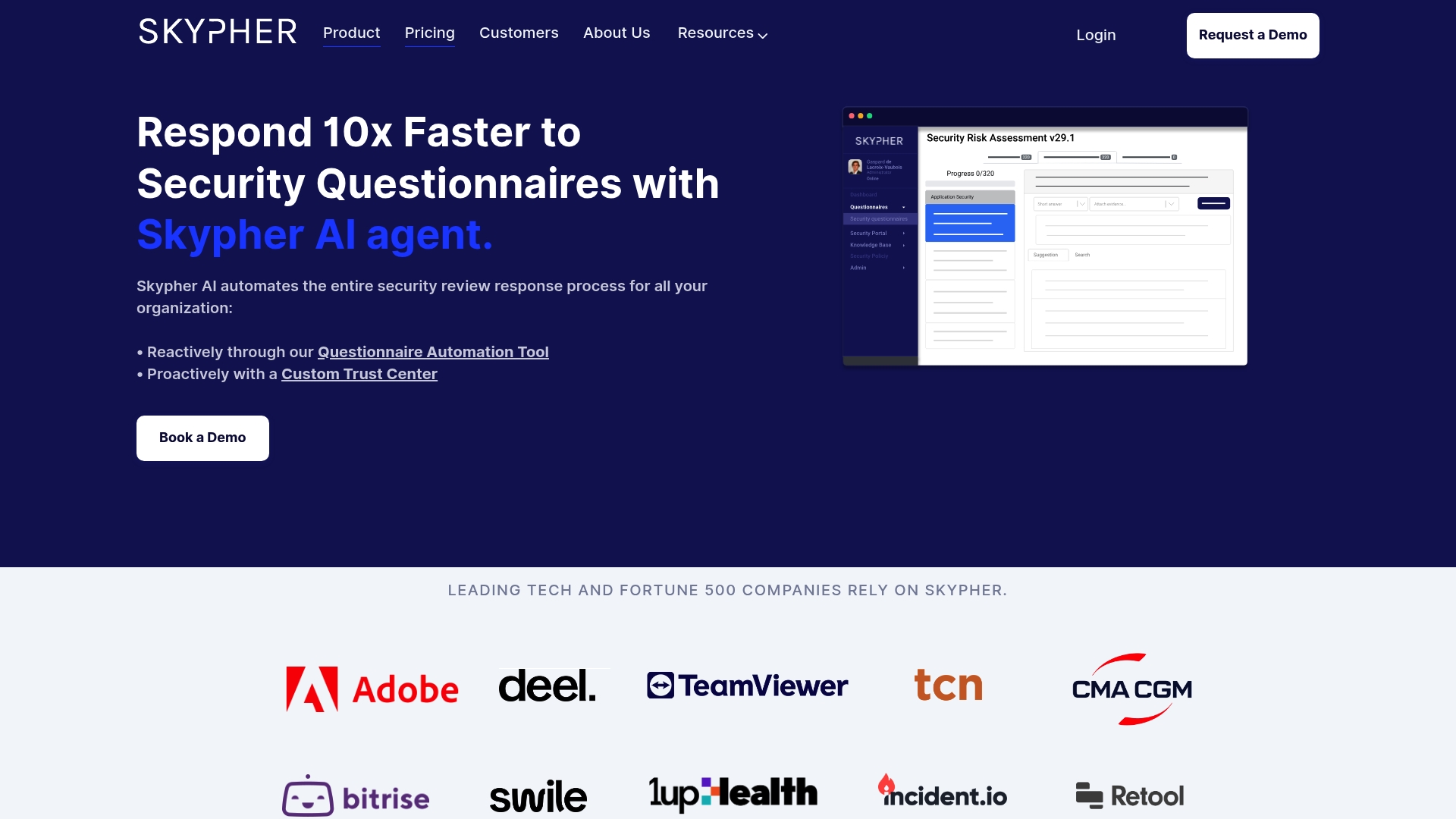
Stop letting inefficiency slow you down. Make compliance a strategic win by automating tedious security reviews with AI. Skypher empowers your teams to answer security questionnaires quickly and accurately, integrates with your existing risk management platforms, and keeps your sales pipeline moving. Boost visibility, collaboration, and trust starting today. Visit Skypher’s homepage to see how our questionnaire automation can transform your compliance workflow now.