
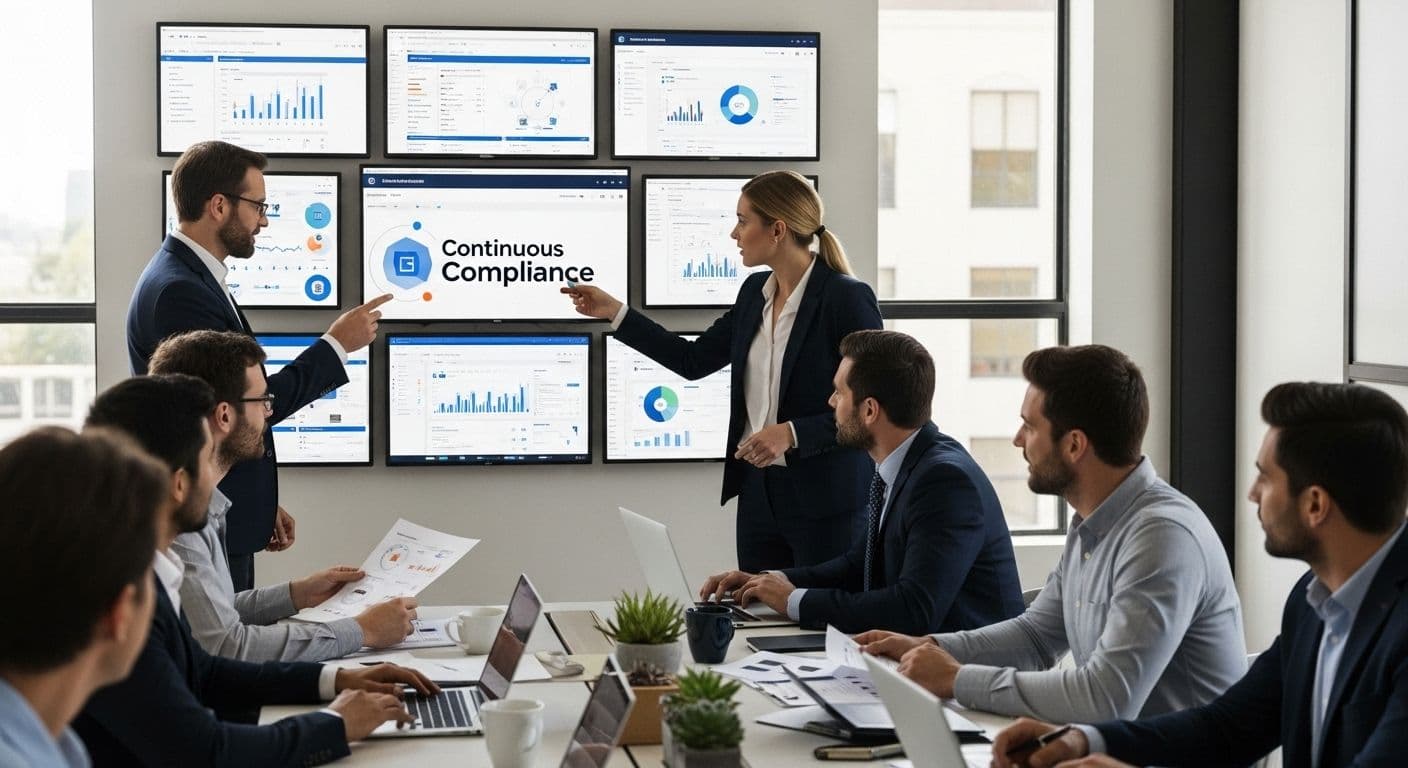
B2B software teams are dealing with more regulations and threats than ever. Even now, 60 percent of GRC professionals are still stuck using spreadsheets to manage compliance, which slows everyone down and creates extra risk. Most people expect compliance to be a repetitive, time-consuming headache, but there’s a way to ditch slow audits and actually make risk management a real-time, everyday part of your company’s DNA.
Table of Contents
- Understanding Continuous Compliance in Software
- Key Benefits for CISOs and GRC Leaders
- Steps to Implement Continuous Compliance Successfully
- Overcoming Common Challenges in B2B Environments
Quick Summary
| Takeaway | Explanation |
|---|---|
| Implement Real-Time Monitoring | Continuous compliance requires ongoing system evaluations to ensure adherence to regulations in real time. |
| Embed Compliance in Development | Incorporate compliance checks into the development process to streamline compliance management and enhance security. |
| Invest in Comprehensive Training | Provide role-specific training to cultivate a culture of compliance awareness among all team members. |
| Utilize Automated Assessment Tools | Leverage technology to automate compliance checks, reducing manual intervention and improving accuracy. |
| Foster Cross-Department Collaboration | Encourage collaboration between compliance, security, and development teams to overcome challenges and improve compliance posture. |
Understanding Continuous Compliance in Software
Continuous compliance represents a critical evolution in how B2B software teams approach regulatory requirements and security management. Unlike traditional compliance models that rely on periodic assessments, continuous compliance creates a dynamic, real-time approach to maintaining regulatory standards and security protocols.
The Core Principles of Continuous Compliance
Continuous compliance is fundamentally about creating an adaptive, proactive framework for managing regulatory requirements. According to the National Institute of Standards and Technology, this approach involves ongoing monitoring and assessment of software systems to ensure consistent adherence to established security and regulatory standards.
The key characteristics of continuous compliance include:
- Real-time Monitoring: Constant evaluation of systems, configurations, and controls to detect potential compliance deviations instantly
- Automated Assessment: Leveraging technological tools to perform consistent, objective compliance checks without manual intervention
- Integrated Verification: Embedding compliance checks directly into development and operational workflows
Technological Drivers of Continuous Compliance
The emergence of continuous compliance is deeply rooted in technological advancements and changing regulatory landscapes. Research from the National Institutes of Health highlights the 'Shift-Left Security' movement, which emphasizes integrating compliance and security considerations earlier in the software development process.
Modern software teams are increasingly adopting approaches that transform compliance from a periodic checkbox exercise into an ongoing, integrated practice. This shift is driven by several critical factors:
To help readers quickly understand the main drivers behind the shift to continuous compliance in software development, the table below summarizes the technological and organizational factors outlined in the article.
| Driver | Description |
|---|---|
| Regulatory Complexity | Increasingly complex regulatory requirements necessitate dynamic compliance approaches |
| Cybersecurity Threats | Growing threats require more proactive and real-time compliance measures |
| Faster Development Cycles | Agile development demands compliance processes that keep pace with rapid software changes |
| Transparency Demands | Stakeholders and customers expect demonstrable, transparent security and compliance practices |
| Technological Advancements | New tools and automation enable continuous monitoring and integrated compliance checks |
- Increasing complexity of regulatory requirements
- Growing cybersecurity threats
- Need for faster, more agile software development cycles
- Demand for transparent and demonstrable security practices
Strategic Implications for B2B Software Teams
Implementing continuous compliance requires a fundamental reimagining of how organizations approach regulatory adherence. It demands not just technological solutions, but also cultural transformations within software development teams. Software engineers, security professionals, and compliance officers must collaborate closely, breaking down traditional silos and creating more integrated, responsive compliance strategies.
The ultimate goal of continuous compliance is not merely meeting regulatory requirements, but creating a robust, resilient software ecosystem that can adapt quickly to emerging threats and changing regulatory landscapes. By embedding compliance checks into every stage of software development and operations, organizations can build systems that are inherently more secure, transparent, and trustworthy.
Key Benefits for CISOs and GRC Leaders
CISOs and GRC leaders face increasingly complex challenges in maintaining robust security and compliance frameworks. Continuous compliance emerges as a strategic solution that transforms traditional risk management approaches, offering significant advantages for organizational governance and security oversight.
Enhanced Risk Management and Visibility
According to the NIST Special Publication, continuous compliance provides unprecedented visibility into an organization's security posture. This approach enables CISOs to move beyond periodic assessments, creating a real-time monitoring ecosystem that identifies potential vulnerabilities and compliance gaps instantaneously.
Key risk management benefits include:
- Proactive Threat Detection: Immediate identification of potential security risks before they escalate
- Comprehensive Control Monitoring: Continuous tracking of security controls across multiple systems and platforms
- Dynamic Risk Assessment: Real-time updates to risk profiles based on current system configurations
Streamlining Audit and Compliance Processes
The SANS Institute research highlights how continuous compliance dramatically transforms audit experiences for GRC leaders. Traditional audit processes often consume significant organizational resources, creating substantial administrative burdens. Continuous compliance revolutionizes this approach by providing automated, ongoing documentation and verification.
Organizations implementing continuous compliance can expect:
- Reduced audit preparation time
- More accurate and consistent compliance documentation
- Minimized manual intervention in compliance tracking
- Faster response to potential regulatory changes
Strategic Organizational Transformation
Beyond immediate technical benefits, continuous compliance represents a fundamental shift in organizational approach to security and regulatory management. CISOs and GRC leaders can leverage this approach to learn more about navigating security challenges and create more resilient, adaptive security frameworks.
This strategic approach enables organizations to:
- Align security practices with business objectives
- Create a culture of ongoing compliance and risk awareness
- Develop more agile and responsive governance models
- Demonstrate commitment to robust security practices to stakeholders
Continuous compliance is not merely a technological solution but a comprehensive strategy that empowers CISOs and GRC leaders to transform how organizations approach risk management, compliance, and security governance. By embracing this approach, leaders can create more transparent, efficient, and proactive security ecosystems that adapt quickly to emerging challenges and regulatory requirements.

Steps to Implement Continuous Compliance Successfully
Implementing continuous compliance requires a strategic, comprehensive approach that goes beyond traditional compliance methodologies. Software teams must carefully design and execute a multifaceted strategy to create an effective, sustainable continuous compliance framework.
Establishing a Robust Compliance Infrastructure
According to the National Institute of Standards and Technology, building a successful continuous compliance program starts with creating a solid technological and organizational infrastructure. This foundation involves integrating automated compliance checks, developing comprehensive risk assessment protocols, and establishing clear governance mechanisms.
Key components of a robust compliance infrastructure include:
- Automated Monitoring Systems: Implementing real-time tracking tools that can detect compliance deviations instantly
- Comprehensive Policy Documentation: Creating clear, detailed policies that outline compliance expectations and procedures
- Technology Integration: Selecting and implementing tools that support seamless compliance monitoring across different systems
Developing Comprehensive Training and Cultural Alignment
Successful continuous compliance is not just about technology but also about organizational culture. Teams must invest in comprehensive training programs that help employees understand the importance of ongoing compliance and their role in maintaining regulatory standards.
Effective training strategies involve:
- Role-specific compliance education
- Regular workshops on emerging regulatory requirements
- Creating a culture of transparency and accountability
- Developing clear communication channels for reporting potential compliance issues
Implementing Continuous Improvement Mechanisms
Continuous compliance is an evolving process that requires ongoing refinement. Organizations must explore advanced strategies for managing security challenges and create mechanisms for continuous learning and adaptation.
Key improvement strategies include:
- Periodic comprehensive risk assessments
- Regular review and update of compliance policies
- Conducting post-incident analysis to identify potential improvements
- Staying updated with emerging regulatory requirements and technological advancements
Successful continuous compliance implementation demands a holistic approach that balances technological solutions, organizational culture, and strategic planning. By creating a flexible, adaptive framework, software teams can transform compliance from a periodic obligation into a dynamic, integral part of their operational strategy.
The following table organizes key steps for successfully implementing continuous compliance, providing a concise overview of the foundational components, training initiatives, and improvement mechanisms detailed in the article.
| Implementation Step | Description |
|---|---|
| Automated Monitoring Systems | Deploy real-time tracking tools to instantly detect compliance deviations |
| Comprehensive Policy Documentation | Develop clear and detailed policies that establish standards and processes |
| Technology Integration | Select and implement suitable tools for seamless cross-system compliance monitoring |
| Role-Specific Training | Provide education tailored to employees' functions to ensure understanding of compliance responsibilities |
| Culture of Transparency and Accountability | Foster open communication and shared ownership of compliance throughout the organization |
| Continuous Policy Review and Assessment | Regularly update policies and perform risk assessments to adapt to changing requirements |
| Post-Incident Analysis | Analyze incidents to identify gaps and inform future improvements |
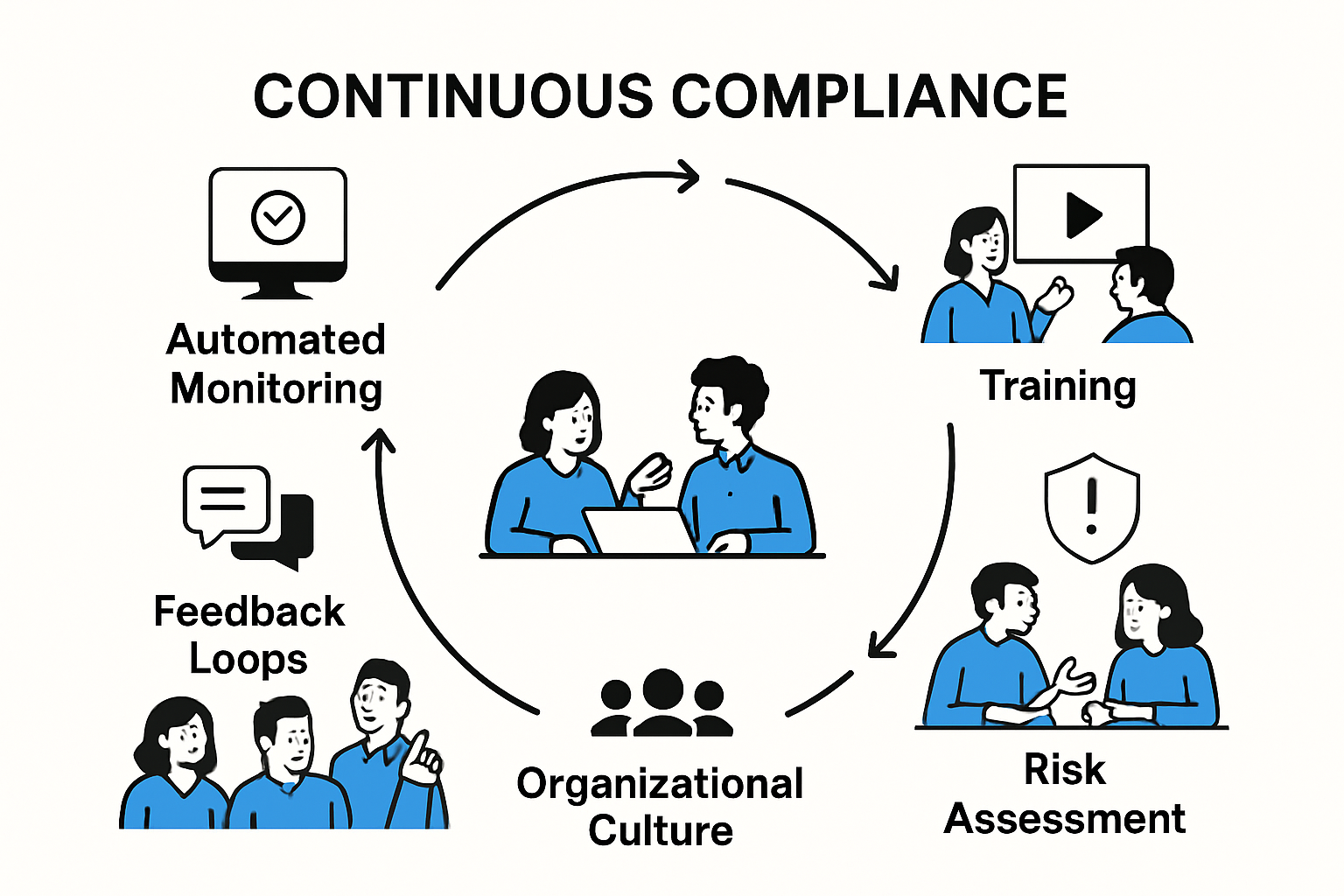
The ultimate goal is to develop a proactive compliance ecosystem that not only meets current regulatory requirements but anticipates and adapts to future challenges. This approach enables organizations to maintain high security standards, reduce risks, and demonstrate a commitment to responsible, transparent business practices.
Overcoming Common Challenges in B2B Environments
Continuous compliance in B2B software environments presents unique challenges that require strategic approaches and innovative solutions. Understanding these obstacles is crucial for organizations seeking to develop robust, adaptive compliance frameworks.
Resource Allocation and Strategic Planning
According to research from Marsh McLennan Agency, 60% of GRC professionals still manage compliance manually using spreadsheets, highlighting significant inefficiencies in current approaches. This manual management creates substantial organizational risks and prevents teams from implementing truly dynamic compliance strategies.
Key challenges in resource allocation include:
- Limited Compliance Expertise: Shortage of specialized personnel who understand both technological and regulatory requirements
- Budget Constraints: Difficulty in securing adequate funding for comprehensive compliance technologies
- Time-Intensive Processes: Manual verification and documentation consuming excessive organizational resources
Technological Integration and Coordination
An industrial case study revealed critical coordination challenges between verification and development teams. Successful continuous compliance demands seamless technological integration and cross-functional collaboration.
Strategies for effective technological coordination involve:
- Developing standardized communication protocols
- Creating unified compliance management platforms
- Implementing cross-functional training programs
- Establishing clear accountability mechanisms
Cultural and Organizational Transformation
Continuous compliance is not merely a technological challenge but a fundamental organizational shift. Teams must explore strategies for improving collaboration and create a culture that views compliance as a strategic advantage rather than an administrative burden.
Critical cultural transformation elements include:
- Promoting compliance as a shared organizational responsibility
- Developing transparent communication channels
- Encouraging proactive risk identification
- Rewarding compliance-oriented behaviors
Successful B2B continuous compliance requires a holistic approach that balances technological capabilities, organizational culture, and strategic planning. By recognizing and systematically addressing common challenges, software teams can transform compliance from a reactive obligation into a proactive strategic capability.
The most effective organizations will view continuous compliance not as a constraint but as an opportunity to demonstrate reliability, build trust with stakeholders, and create competitive differentiation in increasingly complex regulatory environments.
Frequently Asked Questions
What is continuous compliance in B2B software teams?
Continuous compliance is a proactive approach to managing regulatory requirements and security, which involves ongoing monitoring and assessment of software systems to ensure adherence to established standards in real-time, rather than relying on periodic checks.
What are the core principles of continuous compliance?
The core principles of continuous compliance include real-time monitoring, automated assessment using technology, and integrated verification processes embedded within development and operational workflows.
How can my organization implement continuous compliance successfully?
To implement continuous compliance successfully, organizations should establish a robust compliance infrastructure, develop comprehensive training programs for team members, and implement mechanisms for continuous improvement to adapt to evolving regulatory requirements and threats.
What are the key benefits of continuous compliance for CISOs and GRC leaders?
Key benefits of continuous compliance include enhanced risk management and visibility, streamlined audit and compliance processes, and enabling strategic organizational transformation to better align security practices with business objectives.
Transform Compliance Headaches into Seamless Workflows
Are you tired of slow audits, endless spreadsheets, and repetitive compliance tasks? The struggle to keep pace with ever-changing regulations and real-time monitoring can drain resources and put your team on edge. This article explains how continuous compliance brings risk management into daily routines, but even the best strategies need the right tools. With so much on the line, your organization deserves a platform that automates manual steps and empowers smarter, faster responses.
Move beyond theory and experience real-time compliance in action with Skypher. Our platform cuts through inefficiencies by automating security questionnaires, enabling AI-powered collaboration, and integrating with over forty third-party platforms. Ready to take control and make compliance your competitive edge? Try Skypher's AI Questionnaire Automation Tool today and see how continuous compliance becomes simple, powerful, and pain-free.
Recommended
- The Case for Security Questionnaire Automation
- Increasing company efficiency: boosting collaboration with widespread adoption
- The different formats & mistakes made when writing or answering security questionnaires
- Best Practices for Automating Your Security Questionnaires Response Process (1/3)
- Understanding monday.com’s Data Protection and Compliance (GDPR, SOC 2, and More) - Solution for Guru
- Document Version Control for Businesses in 2025: Best Practices and Adobe Solutions - Mapsoft