

Managing security questionnaires often feels like a drain on both time and resources, especially for American, European, and British tech and finance leaders. The distinction between cyber security and information security is crucial for ensuring compliance and safeguarding sensitive assets. This article clarifies these roles and offers clear guidance for automating questionnaire processes, helping CISOs and GRC professionals simplify requirements and support stronger organizational productivity.
Table of Contents
- Cyber Security and Information Security Defined
- Core Types and Key Distinctions
- How Security Works: Processes and Tools
- Compliance Requirements for Tech and Finance
- Risks, Liabilities, and Costly Mistakes
Key Takeaways
| Point | Details |
|---|---|
| Distinction Between Cyber Security and Information Security | Cyber Security focuses on protecting digital infrastructure, while Information Security encompasses all forms of information protection. |
| Core Security Principles | Information Security is guided by confidentiality, integrity, and availability, ensuring comprehensive protection across information formats. |
| Importance of Compliance | Organizations must adhere to evolving compliance regulations, which require continuous risk assessments and transparent reporting protocols. |
| Proactive Risk Management | Understanding and mitigating risks is essential; organizations should focus on robust frameworks to anticipate vulnerabilities and minimize potential damage. |
Cyber Security and Information Security Defined
Cyber security and information security are foundational concepts for protecting organizational data and technology infrastructure. While often used interchangeably, these terms represent distinct but interconnected approaches to safeguarding digital and physical information assets.
Cyber Security focuses specifically on defending computer systems, networks, and digital platforms from malicious online threats. Cybersecurity protection strategies encompass preventing unauthorized access, mitigating potential cyber attacks, and ensuring digital ecosystem integrity.
By contrast, Information Security represents a broader discipline that protects all forms of information - digital, physical, and intellectual. Information security professionals aim to maintain three core principles:
- Confidentiality: Restricting information access to authorized personnel
- Integrity: Ensuring data remains unaltered and trustworthy
- Availability: Guaranteeing authorized users can access required information when needed
The relationship between these domains is hierarchical: cyber security operates as a specialized subset within the more comprehensive information security framework. While cyber security addresses digital threats in networked environments, information security provides holistic protection across multiple information formats and transmission channels.
Here's a concise comparison of cyber security and information security roles and organizational impact:
| Aspect | Cyber Security | Information Security |
|---|---|---|
| Main Focus | Digital infrastructure | All information assets |
| Key Professionals | Cybersecurity engineers and analysts | InfoSec managers and compliance teams |
| Typical Tools | Firewalls, IDS, encryption | Access controls, data loss prevention |
| Business Impact | Prevents digital breaches and downtime | Safeguards reputation and compliance |
Key Distinctions:
- Scope of Protection
- Types of Threats Managed
- Technological versus Comprehensive Approach
Cyber security protects digital systems, while information security protects the entire information ecosystem - both digital and physical.
Pro tip: Develop a comprehensive security strategy that integrates both cyber and information security principles to create a robust, multi-layered protection approach.
Core Types and Key Distinctions
Cyber Security and Information Security represent complex domains with nuanced differences in scope, approach, and protection strategies. Understanding their core types and distinctions is crucial for developing comprehensive organizational security frameworks.

Cybersecurity research highlights reveal distinct characteristics that differentiate these two critical security disciplines. Cyber security primarily concentrates on defending digital infrastructure, while information security adopts a more holistic approach to protecting data across all potential transmission channels.
Core Types of Cyber Security:
- Network Security: Protecting computer networks from unauthorized access
- Application Security: Securing software and application-level vulnerabilities
- Cloud Security: Safeguarding cloud-based systems and data storage
- Endpoint Security: Protecting individual devices like computers and mobile phones
Core Types of Information Security:
- Physical Security: Protecting physical storage and access to information
- Personnel Security: Managing human-related information risks
- Data Protection: Ensuring confidentiality, integrity, and availability of information
- Compliance Security: Adhering to regulatory requirements and standards
While cyber security addresses digital threats, information security provides comprehensive protection across multiple information environments and transmission channels.
The fundamental distinction lies in their scope and approach. Cybersecurity infrastructure protection focuses specifically on electronic communication systems, whereas information security encompasses a broader spectrum of protection techniques that extend beyond digital platforms.
Key Comparative Aspects:
- Digital vs. Comprehensive Protection
- Technology-Specific vs. Holistic Approach
- Immediate Threat Mitigation vs. Long-Term Information Preservation
Pro tip: Develop an integrated security strategy that combines both cyber and information security principles to create a robust, multi-layered defense mechanism.
How Security Works: Processes and Tools
Security processes and tools form the critical infrastructure that protects organizations from evolving digital threats. These comprehensive mechanisms work together to create multilayered defense strategies that anticipate, detect, and respond to potential security vulnerabilities.
Cybersecurity fundamentals encompass a strategic approach involving several key components designed to protect digital assets and maintain organizational integrity. The process begins with comprehensive threat modeling, which helps identify potential risks and vulnerabilities across technological ecosystems.
Key Security Processes:
- Risk Assessment: Systematically evaluating potential security threats
- Access Control: Managing user permissions and authentication
- Continuous Monitoring: Real-time tracking of system activities
- Incident Response: Structured approach to managing security breaches
- Vulnerability Management: Identifying and addressing system weaknesses
Essential Security Tools:
- Firewalls: Network traffic filtering and protection
- Intrusion Detection Systems: Identifying suspicious network activities
- Encryption Technologies: Protecting data confidentiality
- Multi-Factor Authentication: Enhanced user verification
- Security Information and Event Management (SIEM): Comprehensive threat tracking
Security is not a product, but a continuous process of identifying, preventing, and responding to potential threats.
The implementation of security processes requires a holistic approach. Information security protocols demand rigorous training, clear policies, and adaptive technological solutions that can respond quickly to emerging challenges.
Implementation Stages:
- Comprehensive Risk Analysis
- Strategic Tool Selection
- Policy Development
- Continuous Training
- Regular System Evaluation
Pro tip: Develop a dynamic security strategy that balances technological tools with human expertise, ensuring continuous adaptation to emerging threat landscapes.
Compliance Requirements for Tech and Finance
Compliance in technology and finance sectors represents a complex landscape of regulatory requirements designed to protect organizational and client interests. These stringent standards demand comprehensive strategies that address cybersecurity, data protection, and risk management across multiple dimensions.
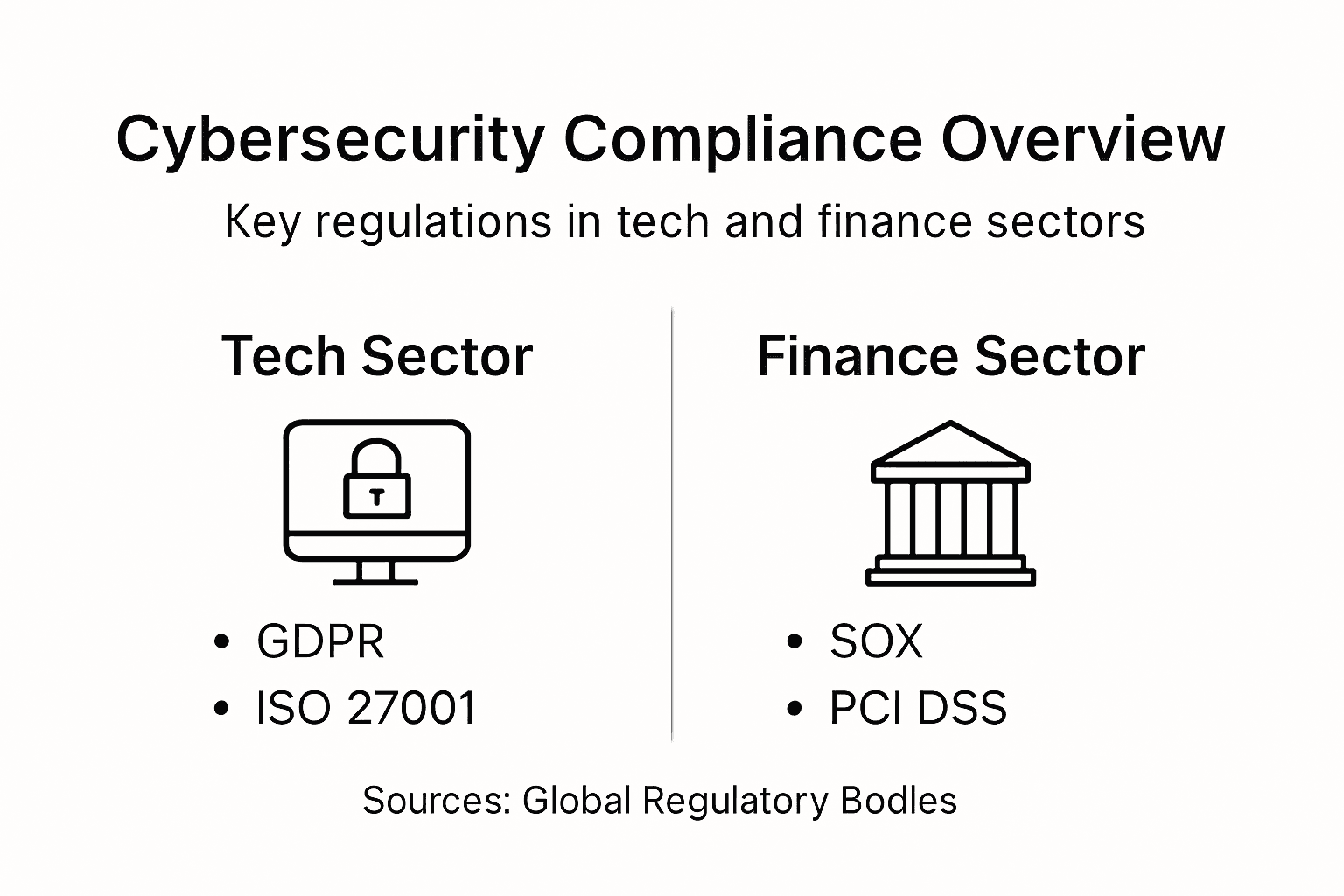
Cybersecurity frameworks provide essential guidelines for organizations navigating intricate regulatory environments. These frameworks establish critical standards for risk management, identity protection, and comprehensive security controls that help businesses maintain regulatory alignment and operational integrity.
Key Compliance Domains:
- Data Privacy Regulations: GDPR, CCPA, HIPAA
- Financial Reporting Standards: SOX, SEC Guidelines
- Cybersecurity Frameworks: NIST, ISO 27001
- Industry-Specific Requirements: PCI DSS for Payment Systems
- International Compliance Standards: GDPR, CCPA
Critical Compliance Components:
- Comprehensive risk assessment protocols
- Regular security vulnerability evaluations
- Transparent incident reporting mechanisms
- Robust access control systems
- Continuous employee security training
Compliance is not a one-time achievement but a continuous journey of adaptation and vigilance.
Public companies face additional scrutiny, with regulatory disclosure mandates requiring transparent reporting of cybersecurity risks and governance strategies. These requirements emphasize board-level oversight and management accountability in addressing potential technological vulnerabilities.
A quick reference comparing compliance frameworks for tech and finance sectors:
| Compliance Area | Technology Sector Example | Finance Sector Example |
|---|---|---|
| Data Privacy | GDPR, CCPA | HIPAA, GLBA |
| Security Standards | NIST, ISO 27001 | SOX, SEC Guidelines |
| Payment Systems | PCI DSS | PCI DSS |
| Reporting Mandates | Annual risk audits | SEC cyber risk disclosure |
| Employee Training | Regular cybersecurity modules | Compliance workshops |
Compliance Implementation Stages:
- Comprehensive Risk Assessment
- Framework Selection
- Control Implementation
- Continuous Monitoring
- Regular Reporting and Auditing
Pro tip: Develop a proactive compliance strategy that integrates technological solutions with human expertise, ensuring dynamic and responsive risk management.
Risks, Liabilities, and Costly Mistakes
In the complex world of cybersecurity, understanding potential risks and their associated liabilities is crucial for organizational survival. The financial and reputational consequences of security failures can be devastating, making proactive risk management a strategic imperative for technology and finance leaders.
Cyber risk management strategies require comprehensive approaches that extend beyond traditional defensive mechanisms. Organizations must develop robust frameworks that anticipate, identify, and mitigate potential vulnerabilities before they transform into catastrophic breaches.
Primary Risk Categories:
- Operational Risks: System disruptions and productivity losses
- Financial Risks: Direct monetary damages and regulatory penalties
- Reputational Risks: Client trust erosion and brand damage
- Legal Risks: Potential lawsuits and compliance violations
- Technological Risks: Infrastructure and system vulnerabilities
Most Costly Cybersecurity Mistakes:
- Inadequate employee security training
- Outdated security infrastructure
- Poor access management protocols
- Delayed incident response strategies
- Insufficient data encryption practices
Cybersecurity is not about preventing all risks, but about managing and minimizing potential damage.
Public and private organizations face increasingly complex risk management challenges that demand sophisticated, dynamic approaches. The potential financial impact of a significant data breach can range from hundreds of thousands to millions of dollars, depending on the organization's size and industry.
Risk Mitigation Stages:
- Comprehensive Vulnerability Assessment
- Threat Landscape Analysis
- Strategic Control Implementation
- Continuous Monitoring
- Adaptive Response Planning
Pro tip: Develop a holistic risk management strategy that integrates technological solutions, human expertise, and continuous learning to create a resilient organizational defense mechanism.
Enhance Your Cybersecurity and Information Security Efforts with Skypher
Managing complex security questionnaires is a critical challenge for GRC leaders aiming to maintain robust cyber and information security frameworks. This article highlights the need for comprehensive risk assessment, streamlined compliance, and seamless collaboration to protect digital and physical data assets. Skypher offers a powerful SaaS platform designed specifically to automate and accelerate security questionnaire responses across tech and finance sectors where precision and speed are vital.

With Skypher's AI Questionnaire Automation Tool, you can complete hundreds of security questions in under a minute while ensuring high accuracy. The platform integrates effortlessly with over 40 third-party risk management systems like OneTrust and ServiceNow, and supports real-time collaboration via Slack and MS Teams. Skypher also empowers organizations to centralize controls in a customizable Trust Center to promote transparency and strengthen trust. Explore how to transform your security review process today by visiting Skypher. Optimize your compliance and enhance cybersecurity readiness now with AI-Driven Automation and Collaborative Real-Time Integration. Don’t let tedious questionnaires slow your progress—take control of your security workflows with Skypher.
Frequently Asked Questions
What is the difference between cyber security and information security?
Cyber security specifically focuses on protecting digital systems and networks from online threats, while information security encompasses a broader scope that includes protecting all forms of information, both digital and physical.
What are the key principles of information security?
The three core principles of information security are confidentiality (limiting access to authorized personnel), integrity (ensuring data is trustworthy and unaltered), and availability (ensuring authorized users can access information when needed).
What are essential tools used in cyber security?
Key tools in cyber security include firewalls, intrusion detection systems (IDS), encryption technologies, multi-factor authentication, and security information and event management (SIEM) systems.
How can organizations ensure compliance with cybersecurity regulations?
Organizations can ensure compliance by conducting comprehensive risk assessments, implementing security controls, continuously monitoring systems, maintaining transparent reporting mechanisms, and providing regular employee training.
Recommended
- Understanding GRC Cyber Security: Concepts and Importance
- Cybersecurity GRC: Essential Strategies for 2025 Success
- 7 Essential Tips for Every GRC Analyst to Succeed
- GRC Risk Compliance: Powering Modern Enterprise Trust
- Complete Guide to Cybersecurity Basics for Small Business | Ibrandmedia
- Why Your Business Needs a Cybersecurity Plan | Capital For Business
- GDPR Compliance in Testing: Practical Guide for Marketers 2025