

Cyber threats are evolving fast, yet less than half of organizations feel confident in their ability to manage digital risks. Companies large and small face increasing pressure to protect sensitive data while navigating complex industry regulations. Understanding what a cybersecurity framework is—and how it empowers businesses to stay ahead of threats—gives your organization a clear path toward stronger digital defense and peace of mind.
Table of Contents
- Defining a Cybersecurity Framework and Its Purpose
- Types of Cybersecurity Frameworks Explained
- Core Components and Implementation Processes
- Benefits and Industry Use Cases for Organizations
- Risks, Challenges, and Compliance Considerations
Key Takeaways
| Point | Details |
|---|---|
| Cybersecurity Framework Importance | Frameworks provide a strategic roadmap for managing digital security risks, integrating security into organizational processes. |
| Types of Frameworks | Different frameworks, such as NIST and ISO/IEC 27001, address unique organizational needs and regulatory requirements. |
| Implementation Challenges | Organizations face challenges such as high costs and complex integration when adopting cybersecurity frameworks. |
| Strategic Benefits | Effective frameworks enhance risk management, compliance, and alignment between technology and business objectives. |
Defining a Cybersecurity Framework and Its Purpose
A cybersecurity framework is a comprehensive strategic blueprint that organizations use to systematically manage and mitigate digital security risks. According to NIST, these guidelines provide a structured approach to assessing and improving an organization's ability to prevent, detect, and respond to potential cybersecurity threats.
At its core, a cybersecurity framework serves as a strategic roadmap that helps businesses align their technology infrastructure with robust security practices. Think of it like a detailed navigation system for digital defense – outlining specific processes, protocols, and best practices that protect critical information assets. Secure by Design principles further emphasize integrating security measures directly into system architecture, ensuring protection isn't an afterthought but a fundamental design consideration.
Key objectives of a cybersecurity framework typically include:
- Establishing clear security standards and expectations
- Providing a common language for discussing cybersecurity risks
- Creating consistent approaches to identifying and managing digital vulnerabilities
- Enabling proactive risk management strategies
- Supporting compliance with industry regulations
Frameworks are not one-size-fits-all solutions. They must be adaptable, allowing organizations to customize security approaches based on their unique technological ecosystem, industry requirements, and specific risk profiles. For deeper insights into strategic cybersecurity management, explore our guide on understanding GRC cyber security.
By implementing a well-designed cybersecurity framework, organizations transform reactive security responses into proactive risk management strategies.
This approach shifts cybersecurity from a technical checkbox to a strategic business imperative that protects digital assets, maintains stakeholder trust, and supports sustainable technological growth.
Types of Cybersecurity Frameworks Explained
Cybersecurity frameworks are not uniform solutions but specialized tools designed to address different organizational security needs. The Instillery highlights that various frameworks serve distinct purposes, with each offering unique approaches to managing digital security risks.
Four primary types of cybersecurity frameworks dominate the enterprise landscape:
Here's a comparison of key cybersecurity frameworks and their main focuses:
| Framework | Main Focus | Typical Use Case |
|---|---|---|
| NIST Cybersecurity | Flexible risk-based guidance | Cross-industry security improvement |
| ISO/IEC 27001 | Information security management system | Regulatory compliance, audit-ready |
| CIS Controls | Prioritized cyber defense actions | Quick wins, IT best practices |
| CMMC | Defense contractor requirements | Compliance for government suppliers |
- NIST Cybersecurity Framework: A flexible, risk-based approach providing guidelines for improving cybersecurity processes across industries.
- ISO/IEC 27001: Focused specifically on information security management systems and standardized protocols.
- CIS Controls: A prioritized set of actions and best practices for cyber defense developed by global IT experts.
- CMMC (Cybersecurity Maturity Model Certification): Specifically designed for organizations working with defense industry contracts.
Each framework brings unique strengths to organizational security strategies. The NIST framework, for instance, offers adaptable guidance that can be customized across different technological ecosystems. ISO/IEC 27001 provides rigorous standards for information security management, making it particularly valuable for organizations requiring comprehensive compliance documentation.
Organizations must carefully evaluate their specific security requirements, industry regulations, and technological infrastructure when selecting a cybersecurity framework. For strategic insights into navigating these complex decisions, explore our guide on cybersecurity GRC strategies.
Ultimately, the most effective cybersecurity framework is one that aligns seamlessly with an organization's unique risk profile, technological landscape, and strategic objectives.
 Continuous assessment, adaptation, and a proactive approach to security remain critical regardless of the chosen framework.
Core Components and Implementation Processes
Cybersecurity frameworks are intricate systems with multiple critical components that guide organizations through comprehensive security strategies. NIST outlines a structured approach comprising three primary elements: the Core, Implementation Tiers, and Profiles, each playing a crucial role in establishing robust digital defense mechanisms.
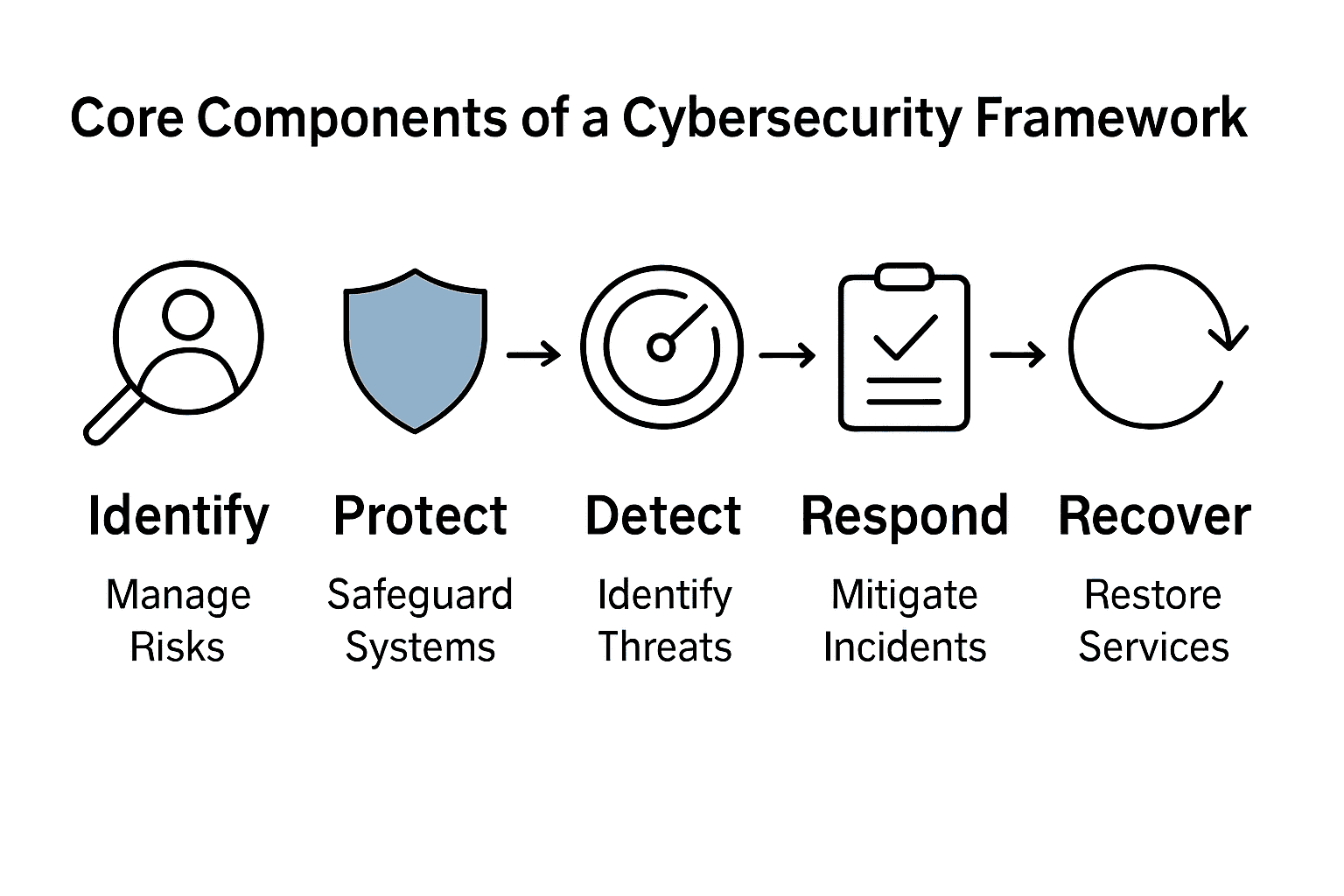
The Core Components of a cybersecurity framework typically encompass five fundamental functions:
- Identify: Understanding and managing cybersecurity risks across the organization
- Protect: Implementing safeguards to limit potential security incidents
- Detect: Developing capabilities to identify potential cybersecurity events
- Respond: Creating action plans for addressing detected security incidents
- Recover: Maintaining resilience and restoring capabilities after a cybersecurity event
Implementation processes draw heavily from Secure by Design principles, emphasizing proactive security integration. This approach involves critical strategies like minimizing attack surfaces, implementing defense-in-depth techniques, and adhering to the least privilege principle. Organizations must view security not as an add-on, but as a fundamental architectural consideration embedded throughout technological ecosystems.
Successful framework implementation requires a systematic approach:
- Conduct comprehensive risk assessments
- Align framework components with organizational objectives
- Develop clear communication protocols
- Establish continuous monitoring mechanisms
- Create adaptive response strategies
For organizations seeking deeper insights into strategic framework development, our guide on understanding the GRC framework provides additional context for navigating complex cybersecurity landscapes. Ultimately, an effective implementation transcends technical configurations, demanding a holistic approach that integrates technological solutions with organizational culture and strategic vision.
Benefits and Industry Use Cases for Organizations
NIST highlights that cybersecurity frameworks have become critical benchmarks for organizations across diverse industries, enabling systematic approaches to digital risk management. These frameworks provide structured methodologies that transform cybersecurity from a technical challenge into a strategic business imperative.
Key Benefits for organizations implementing cybersecurity frameworks include:
- Standardized risk assessment processes
- Enhanced threat detection capabilities
- Improved regulatory compliance
- Consistent security documentation
- Strategic alignment between technology and business objectives
- Reduced potential financial losses from cyber incidents
Industry use cases span multiple sectors, demonstrating the versatility of cybersecurity frameworks. Secure by Design principles have become particularly critical in domains ranging from consumer IoT devices to complex defense systems. Financial services, healthcare, government agencies, and technology companies increasingly rely on these frameworks to counter advanced persistent threats, ransomware, and sophisticated supply chain attacks.
Particularly compelling are real-world applications across different industries:
- Financial Services: Protecting sensitive transaction data and maintaining customer trust
- Healthcare: Securing patient information and maintaining HIPAA compliance
- Government: Defending critical infrastructure against state-sponsored cyber threats
- Technology: Safeguarding intellectual property and maintaining system integrity
For organizations seeking to navigate the complex landscape of cybersecurity strategy, our guide on understanding the GRC framework offers deeper insights into creating robust, adaptive security approaches. The most successful implementations recognize that cybersecurity is not just a technical requirement, but a critical business strategy that directly impacts organizational resilience and competitive advantage.
Risks, Challenges, and Compliance Considerations
NIST acknowledges that cybersecurity frameworks, while essential, present significant implementation challenges for organizations. The complexity and resource requirements can be particularly demanding, especially for smaller enterprises with limited technological and financial capabilities.
Key Compliance and Implementation Challenges include:
- High initial investment costs
- Complex integration with existing systems
- Resource-intensive implementation processes
- Continuous training and skill development requirements
- Maintaining framework relevance amid rapidly evolving threat landscapes
Secure by Design principles highlight additional critical challenges organizations must navigate. These include managing third-party component risks, addressing potential user resistance to new security controls, and effectively retrofitting security measures into legacy technological infrastructures. Organizations often struggle with balancing robust security implementations against operational efficiency and user experience.
Compliance considerations extend beyond technical implementations. Different industries face unique regulatory requirements that demand tailored approaches:
- Financial Services: Strict data protection and transaction security regulations
- Healthcare: HIPAA and patient data privacy mandates
- Government: Stringent national security and information protection standards
- Technology: Complex international data protection frameworks
For organizations seeking structured guidance through these intricate compliance landscapes, our security compliance checklist guide provides actionable insights. Successful cybersecurity framework adoption requires a holistic strategy that balances technological capabilities, regulatory requirements, and organizational risk tolerance.
Enhance Your Cybersecurity Framework with Skypher’s AI-Powered Solutions
Implementing a robust cybersecurity framework is critical for managing risks and ensuring compliance, but handling extensive security questionnaires and ongoing assessments can become overwhelming and resource heavy. If your organization struggles with integrating complex frameworks like NIST or ISO/IEC 27001 into daily operations or faces delays in responding to security reviews, Skypher’s AI Questionnaire Automation Tool is designed for you. By automating the response process and offering seamless integration with over 40 third-party risk management platforms, we help teams accelerate security documentation without sacrificing accuracy or oversight.
Don’t let security questionnaires slow down your progress or expose you to compliance risks. Discover how our platform supports secure collaboration, real-time updates, and advanced AI-driven content management to transform cybersecurity from a checklist into a strategic advantage. Start streamlining your security processes today by visiting Skypher and learn more about how we integrate with your existing tools through our API Integrations with TPRM Platforms and enable stronger compliance workflows detailed in our security compliance checklist guide. Take action now to enhance your cybersecurity posture efficiently and confidently.
Frequently Asked Questions
What is the purpose of a cybersecurity framework?
A cybersecurity framework serves as a strategic roadmap to help organizations systematically manage and mitigate digital security risks, providing guidelines for assessing and improving their ability to prevent, detect, and respond to cyber threats.
What are the main types of cybersecurity frameworks?
Four primary types include the NIST Cybersecurity Framework, ISO/IEC 27001, CIS Controls, and CMMC (Cybersecurity Maturity Model Certification). Each framework has unique focuses, such as flexible risk-based guidance, regulatory compliance, prioritized defense actions, and specific contractor requirements respectively.
What are the core components of a cybersecurity framework?
The core components typically encompass five fundamental functions: Identify, Protect, Detect, Respond, and Recover. These elements work together to establish robust digital defense mechanisms within organizations.
What are the benefits of implementing a cybersecurity framework?
Implementing a cybersecurity framework provides standardized risk assessment processes, enhanced threat detection capabilities, improved regulatory compliance, consistent security documentation, and better alignment between technology and business objectives.
Recommended
- Understanding GRC Cyber Security: Concepts and Importance
- Cybersecurity GRC: Essential Strategies for 2025 Success
- Understanding the GRC Framework: Key Concepts Explained
- Understanding SOC 2 AICPA: Your Guide to Compliance
- Complete Guide to Cybersecurity Basics for Small Business | Ibrandmedia
- Understanding Cybersecurity for Executives: A Comprehensive Guide - SRS Networks