
SOC 1 Type 1 and Type 2 reports hold the keys to financial credibility for organizations handling client data. Here is a stat that makes people pause: Type 2 reports usually involve rigorous testing of controls over a six-month period, delivering far deeper trust than a quick point-in-time snapshot. At first glance, most assume any SOC 1 report means ironclad controls, but the real difference comes down to ongoing reliability versus a one-day check. What surprises many is that choosing between these reports can completely change how vendors and clients see your company's integrity.
Table of Contents
- Overview of SOC 1 Type 1 and Type 2 Reports
- Key Differences Between SOC 1 Type 1 and Type 2
- When to Choose Type 1 vs Type 2 for Your Organization
- How SOC 1 Reports Impact Vendor and Client Trust
Quick Summary
| Takeaway | Explanation |
|---|---|
| Type 1 reports provide a snapshot of control design | Type 1 reports evaluate the design and implementation of internal controls at a specific point in time but do not assess their ongoing effectiveness. |
| Type 2 reports offer comprehensive insights into control effectiveness | Type 2 reports validate operational effectiveness through rigorous testing over a typically six-month period, providing deeper assurance and credibility. |
| Choosing the right report depends on organizational needs | Factors such as organizational maturity, regulatory requirements, and stakeholder expectations influence whether Type 1 or Type 2 reports are more appropriate. |
| SOC 1 reports build trust with clients and vendors | These reports serve as strategic tools for demonstrating financial control and operational integrity, aiding in establishing trust and enhancing relationships with stakeholders. |
Overview of SOC 1 Type 1 and Type 2 Reports
Understanding the difference between SOC 1 Type 1 and Type 2 reports is crucial for organizations seeking comprehensive insights into their financial reporting controls. These audit reports serve as critical tools for demonstrating the reliability and effectiveness of internal control systems.
What Are SOC 1 Reports?
SOC 1 reports focus specifically on controls relevant to financial reporting. These assessments are designed to provide stakeholders with confidence in an organization's ability to manage and protect financial information. According to IS Partners, SOC 1 reports are particularly important for service organizations that process transactions or maintain financial records for other companies.
Key Differences in Reporting Approaches
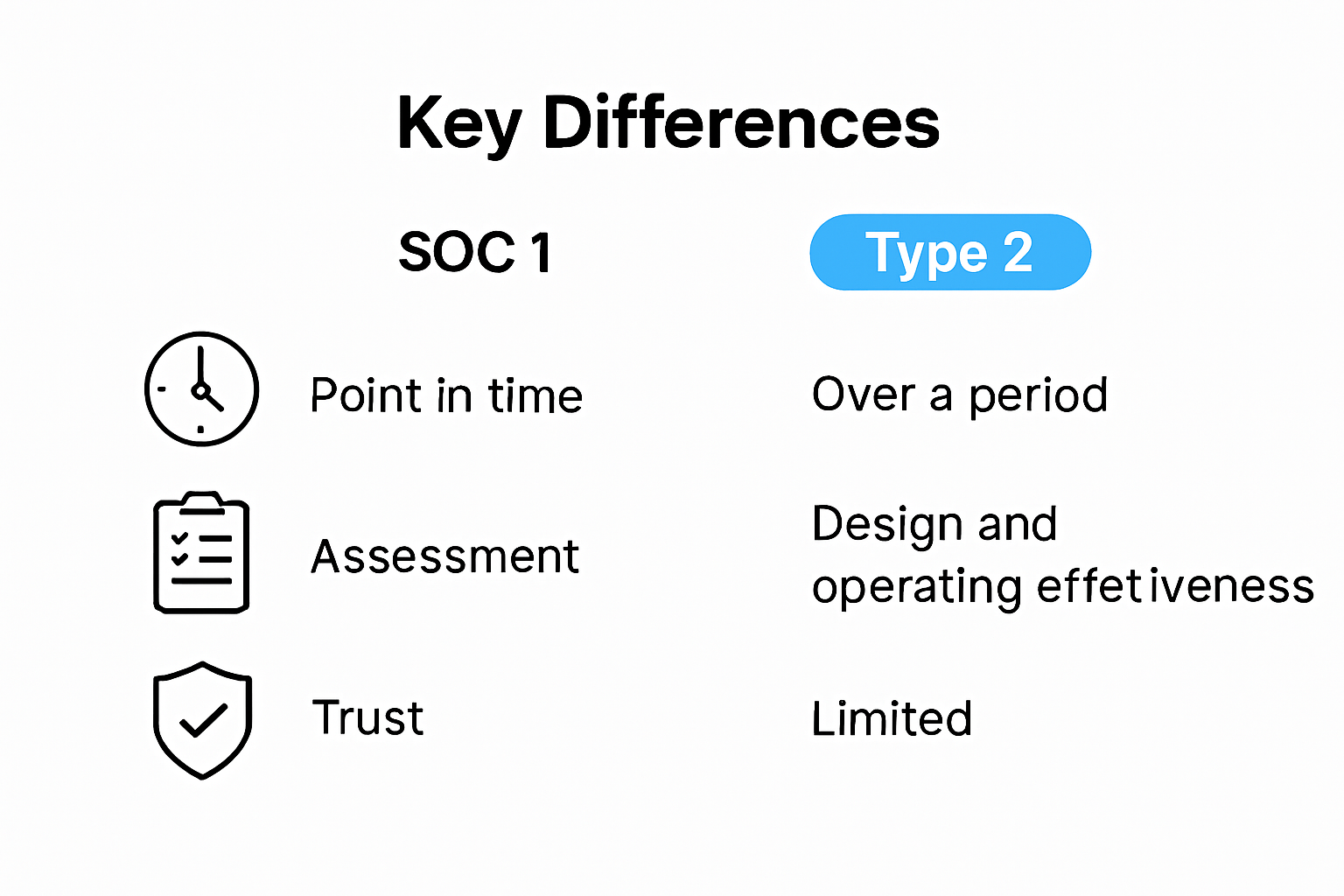
The fundamental distinction between SOC 1 Type 1 and Type 2 reports lies in their scope and depth of examination. Type 1 reports provide a snapshot assessment of control design at a specific point in time. They evaluate the design and implementation of internal controls but do not test their actual effectiveness over an extended period.
Type 2 reports, in contrast, offer a more comprehensive analysis. According to Insight Assurance, these reports not only examine the design of controls but also validate their operational effectiveness through rigorous testing over a typically six-month period.
Practical Implications for Organizations
Choosing between Type 1 and Type 2 reports depends on an organization's specific needs and stakeholder requirements. Type 1 reports are quicker to obtain and provide an initial assessment of control design. However, Type 2 reports deliver a more robust and credible evaluation.
For businesses seeking to demonstrate robust internal controls, a Type 2 report offers several advantages:
- Comprehensive Evaluation: Provides detailed insights into control effectiveness over time
- Enhanced Credibility: Offers more substantial evidence of control reliability
- Deeper Assurance: Demonstrates a commitment to ongoing control management
Organizations in financial services, technology, and other regulated industries frequently rely on these reports to build trust with clients, investors, and regulatory bodies. The depth of examination in a Type 2 report can be particularly valuable for companies that need to prove the consistency and reliability of their internal control systems.
While Type 1 reports serve as an initial checkpoint, Type 2 reports represent a more mature approach to internal control assessment. They provide a dynamic view of an organization's control environment, showing not just what controls exist, but how effectively they are implemented and maintained over an extended period.
Ultimately, the choice between SOC 1 Type 1 and Type 2 reports depends on specific organizational needs, stakeholder expectations, and the level of assurance required. Companies must carefully evaluate their unique circumstances to determine the most appropriate reporting approach.
Key Differences Between SOC 1 Type 1 and Type 2
The difference between SOC 1 Type 1 and Type 2 reports represents a critical nuance in financial control assessment that can significantly impact an organization's credibility and risk management strategy. While both reports examine internal controls related to financial reporting, their methodologies and depth of analysis vary substantially.
Temporal Scope and Assessment Approach
The most fundamental distinction lies in the timeframe and depth of examination. According to Insight Assurance, Type 1 reports provide a snapshot assessment at a specific point in time. These reports focus exclusively on evaluating the design and implementation of internal controls, essentially capturing a moment of organizational control infrastructure.
Type 2 reports, conversely, offer a more dynamic and comprehensive analysis. IS Partners explains that these reports conduct an in-depth examination of control effectiveness over an extended period, typically six months or longer. This extended observation allows for a more robust evaluation of how controls perform consistently over time.
Depth of Control Verification
The verification process represents another critical differentiator between Type 1 and Type 2 reports. In a Type 1 report, auditors primarily assess whether control systems are appropriately designed and structured. They examine documentation, policies, and theoretical frameworks to determine if controls appear sufficient and logically constructed.
Type 2 reports take this assessment several steps further. Auditors not only review control design but also actively test the operational effectiveness of these controls. This process involves:
- Evidence Collection: Gathering comprehensive documentation of control performance
- Operational Testing: Verifying that controls function as intended consistently
- Performance Tracking: Monitoring control effectiveness throughout the assessment period
Stakeholder Confidence and Reporting Value
The distinctions between Type 1 and Type 2 reports have significant implications for stakeholder confidence. A Type 1 report provides initial assurance about an organization's control design, which can be valuable for preliminary risk assessments. However, it offers limited insight into actual control performance.
Type 2 reports deliver a more compelling narrative of organizational control reliability. By demonstrating sustained effectiveness over time, these reports offer a higher level of assurance to clients, investors, and regulatory bodies. They transform control assessment from a theoretical exercise into a practical demonstration of ongoing risk management.
Organizations in highly regulated industries like financial services, healthcare, and technology find particular value in Type 2 reports. The comprehensive nature of these assessments helps build trust, showcase operational maturity, and provide transparent evidence of robust internal control mechanisms.
Choosing between Type 1 and Type 2 reports depends on specific organizational needs, regulatory requirements, and stakeholder expectations. While Type 1 reports serve as an initial checkpoint, Type 2 reports represent a more sophisticated approach to demonstrating control reliability and operational excellence.
When to Choose Type 1 vs Type 2 for Your Organization
Selecting the appropriate SOC 1 report type is a strategic decision that can significantly impact an organization's risk management and stakeholder confidence. Understanding the specific circumstances that warrant a Type 1 or Type 2 report helps businesses make informed choices about their financial control assessments.
Organizational Maturity and Reporting Needs
The decision between Type 1 and Type 2 reports often reflects an organization's stage of development and compliance requirements. According to Insight Assurance, newer organizations or those in the early stages of developing internal controls might find Type 1 reports more appropriate. These reports provide an initial snapshot of control design, offering a quick way to demonstrate the existence of robust control frameworks.
Scenarios Favoring Type 1 Reports:
- Startup organizations establishing initial control systems
- Companies undergoing significant structural changes
- Businesses needing a preliminary assessment of control design
- Organizations with limited historical data on control effectiveness
Long-Term Assurance and Stakeholder Expectations
IS Partners highlights that Type 2 reports become increasingly critical for organizations seeking to provide comprehensive assurance to stakeholders. These reports offer a more extensive examination of control effectiveness, typically spanning six months or longer.
Scenarios Recommending Type 2 Reports:
- Regulated industries requiring detailed compliance documentation
- Organizations handling sensitive financial information
- Companies with complex financial processing systems
- Businesses seeking to demonstrate sustained control reliability
- Entities with demanding client or investor reporting requirements
Strategic Considerations for Report Selection
Choosing between Type 1 and Type 2 reports involves careful evaluation of multiple factors. Organizations must consider their industry standards, regulatory requirements, and specific stakeholder expectations. While Type 1 reports provide an initial assessment, Type 2 reports deliver a more comprehensive narrative of control effectiveness.
Financial services, technology, and healthcare sectors often require more rigorous reporting. These industries typically prefer Type 2 reports due to their need for demonstrating consistent, reliable internal controls over an extended period.
The cost and time investment also play crucial roles in this decision. Type 1 reports are generally less expensive and quicker to complete, making them attractive for organizations with budget constraints or immediate reporting needs. Type 2 reports, while more resource-intensive, provide a more robust and credible assessment of internal control systems.
Ultimately, the choice between Type 1 and Type 2 reports should align with your organization's specific risk management strategy, compliance requirements, and long-term business objectives. Consulting with financial auditors and compliance experts can help determine the most appropriate approach for your unique organizational context.
How SOC 1 Reports Impact Vendor and Client Trust
In the complex world of business relationships, SOC 1 reports serve as critical instruments for establishing and maintaining trust between service organizations and their clients. These reports go beyond mere documentation, functioning as powerful testimonials of an organization's commitment to financial control and operational integrity.
Building Initial Confidence Through Transparent Reporting
For service organizations, SOC 1 reports represent a strategic tool for demonstrating credibility. According to Clear Network, even initial Type 1 reports signal to potential clients that an organization has deliberately designed robust internal controls. This transparency becomes particularly crucial for newer service providers seeking to establish their reliability in competitive markets.
Key Trust-Building Elements:
- Documented proof of control framework design
- Evidence of proactive risk management
- Commitment to financial reporting standards
- Clear communication of organizational processes
Demonstrating Operational Reliability
CG Compliance emphasizes that SOC 1 reports specifically focus on Internal Controls over Financial Reporting (ICFR), making them essential for organizations processing financial transactions. Type 2 reports, in particular, offer a more comprehensive narrative of sustained operational effectiveness.
Clients evaluate these reports as critical indicators of vendor reliability. A robust SOC 1 Type 2 report communicates several powerful messages:
- Consistent performance of financial controls
- Systematic approach to risk management
- Ongoing commitment to operational excellence
- Transparency in financial processes
Long-Term Relationship Dynamics
SOC 1 reports transcend simple compliance documentation. They function as sophisticated trust-building mechanisms that directly influence vendor selection, contract negotiations, and long-term business partnerships. Organizations with comprehensive SOC 1 Type 2 reports often gain significant competitive advantages.
For clients, these reports provide critical reassurance. They represent independent verification that a service organization maintains rigorous financial control standards. This becomes especially important in industries handling sensitive financial information, such as financial services, healthcare, and technology.
The psychological impact of SOC 1 reporting cannot be overstated. Potential clients view these reports as windows into an organization's operational DNA. A well-prepared SOC 1 report demonstrates not just technical compliance, but a genuine commitment to maintaining the highest standards of financial integrity.
Ultimately, SOC 1 reports serve as more than audit documents. They are strategic communication tools that bridge the trust gap between service providers and their clients. By offering transparent, detailed insights into financial control mechanisms, these reports transform potential uncertainty into confident partnership.
Frequently Asked Questions
What is the difference between SOC 1 Type 1 and Type 2 reports?
SOC 1 Type 1 reports provide a snapshot of internal control design at a specific point in time, while Type 2 reports assess the ongoing effectiveness of these controls over a typically six-month period, offering deeper assurance.
When should an organization choose a SOC 1 Type 1 report?
Organizations may opt for a SOC 1 Type 1 report when they are in the early stages of developing internal controls, need a preliminary assessment, or are undergoing significant structural changes.
Why are SOC 1 Type 2 reports considered more trustworthy?
SOC 1 Type 2 reports are viewed as more trustworthy because they undergo rigorous testing of controls over an extended period, providing comprehensive insights into operational effectiveness and control reliability.
How do SOC 1 reports impact client trust?
SOC 1 reports enhance client trust by demonstrating a service organization's commitment to maintaining strong financial controls. Type 2 reports, in particular, validate sustained operational reliability, which reassures clients about the organization's capability to manage sensitive financial information.
Transform Your SOC 1 Reporting Experience with Skypher
Struggling to keep up with SOC 1 Type 1 and Type 2 requirements? If your team feels pressure to maintain tight internal controls and build trust through reliable documentation, you are not alone. Rapid change, evolving regulations, and intense scrutiny put a spotlight on every detail. Manual processes and scattered information can easily undermine confidence when clients want proof today—not six months from now. What if you could simplify and speed up how you respond to security reviews and audit demands?
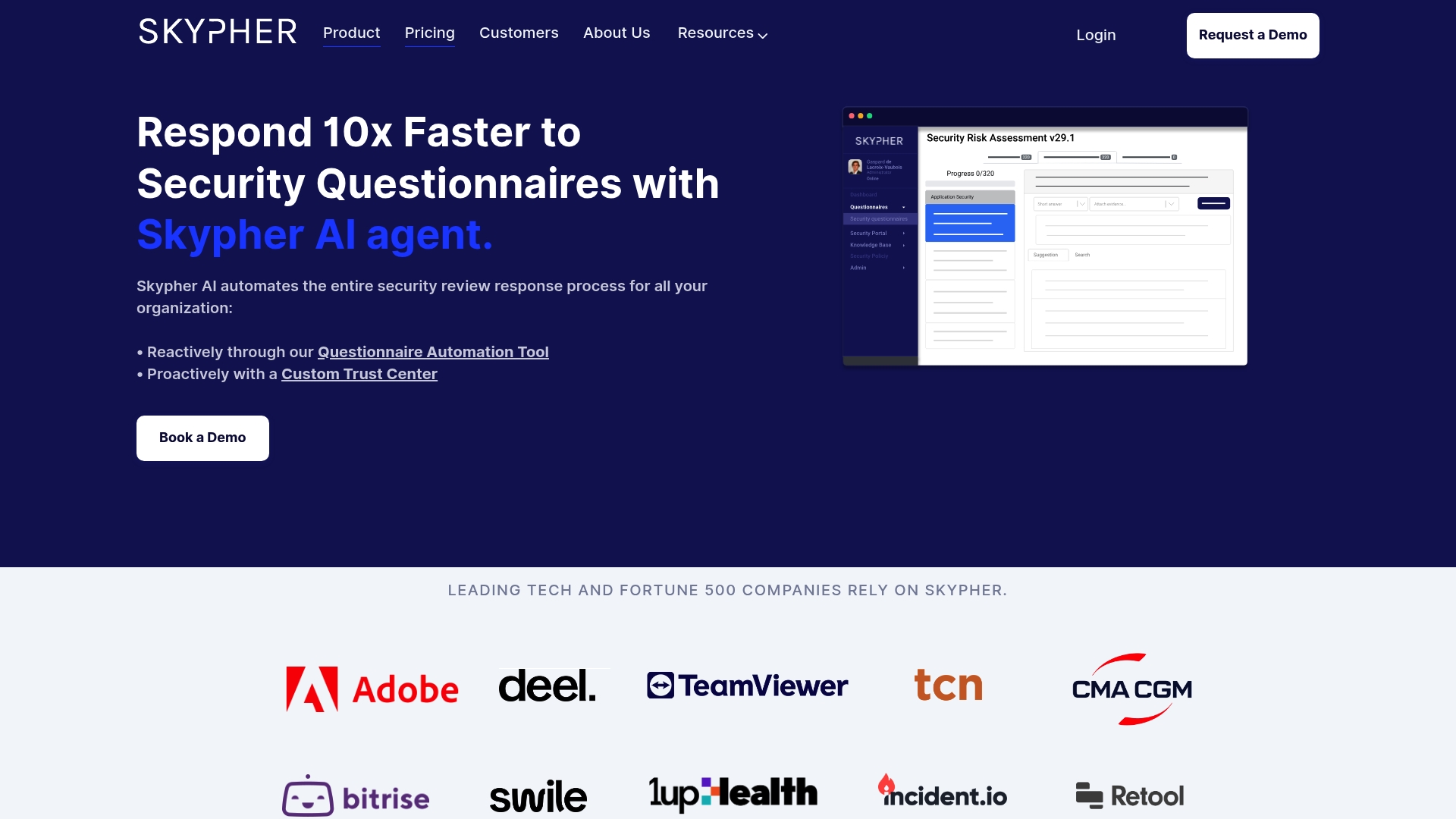
Let Skypher remove the stress from your next SOC 1 audit or security questionnaire. Our AI Questionnaire Automation Tool lets you handle complex due diligence requests with unmatched speed and accuracy. Collaborate in real time, integrate with your existing compliance tools, and impress clients by presenting controls and certifications confidently in your own Custom Trust Center. Book a free consultation at https://skypher.co now. Trust is built on transparency—see how easy it can be to prove your organization’s strength today.