

What is a Due Diligence Questionnaire and Why It Matters
A due diligence questionnaire (DDQ) is a comprehensive document used to systematically gather information about an organization, investment opportunity, or potential business partner. It serves as a structured framework for evaluating risks, verifying claims, and uncovering critical information before finalizing business transactions or investments.
DDQs are essential risk management tools that help stakeholders make informed decisions by providing transparency into operations, governance, compliance practices, and financial health. According to a 2022 study by Deloitte, companies that implement thorough due diligence processes experience 23% fewer post-transaction disputes than those with minimal evaluation protocols.
DDQs vary by industry and purpose, but typically cover:
- Organizational structure and leadership
- Financial performance and stability
- Regulatory compliance and legal history
- Risk management frameworks
- Operational capabilities and technology infrastructure
- Environmental, social, and governance (ESG) practices
Investment firms particularly rely on DDQs when evaluating fund managers. A well-structured due diligence questionnaire not only protects investors from potential fraud or misrepresentation but also helps investment managers demonstrate their competence and reliability in a standardized format that facilitates comparison between opportunities.
Key Takeaways
| Key Point | Details |
|---|---|
| Purpose of DDQs | DDQs provide a structured framework for evaluating risks and verifying claims before finalizing transactions or investments. |
| Importance of Thorough Processes | Implementing thorough due diligence processes can lead to 23% fewer post-transaction disputes according to a Deloitte study. |
| Key Components | Essential sections of a DDQ include organizational information, financial assessment, risk management frameworks, and regulatory compliance. |
| Customization Needs | Effective DDQs must be tailored to specific industries to capture relevant risks and comply with unique regulatory requirements. |
| Evaluation Impact | A structured follow-up process can help identify material issues that may not be apparent through written responses alone. |
Core Elements of an Effective Due Diligence Questionnaire
A robust due diligence questionnaire must strike the right balance between comprehensiveness and usability. The most effective DDQs incorporate several critical components that provide a complete picture of the entity under evaluation.
The foundation of any strong DDQ includes these essential sections:
- Organizational Information: Legal structure, ownership details, corporate governance, management team qualifications, and operational history
- Financial Assessment: Audited financial statements, revenue sources, expense structures, capital adequacy, and debt obligations
- Risk Management Framework: Identification of key risks, mitigation strategies, compliance procedures, and contingency planning
- Investment Strategy and Process: Decision-making methodology, portfolio construction approach, and performance track record (for investment DDQs)
- Operational Infrastructure: IT systems, cybersecurity measures, business continuity planning, and vendor management
- Regulatory Compliance: Licensing, registration status, regulatory actions, and compliance program effectiveness
A 2021 Alternative Investment Management Association survey revealed that 76% of institutional investors consider operational due diligence equally important as investment due diligence when evaluating fund managers.
When crafting a due diligence questionnaire template, questions should be specific enough to elicit detailed responses yet flexible enough to accommodate various organizational structures. The goal is creating a DDQ that serves as both a thorough evaluation tool and a reasonable undertaking for respondents.
Customizing the Questionnaire for Industry-Specific Needs
While due diligence questionnaires share common elements, effective DDQs must be tailored to specific industries and transaction types to capture relevant risks and compliance requirements.
Industry specialization significantly improves evaluation accuracy as demonstrated by a PwC study showing that sector-specific due diligence reduces post-transaction value erosion by up to 31% compared to generic approaches.
Industry-specific customization examples include:
- Financial Services: Emphasize regulatory compliance, capital adequacy ratios, risk management frameworks, and cybersecurity protocols
- Healthcare: Focus on patient data protection, regulatory approvals, clinical validation, reimbursement models, and compliance with HIPAA/GDPR
- Manufacturing: Prioritize supply chain resilience, quality control processes, environmental compliance, and intellectual property protections
- Technology: Scrutinize R&D capabilities, IP portfolio strength, technical debt, scalability metrics, and data security practices
For investment manager DDQs, customization typically addresses investment strategy specializations, performance attribution methodologies, and specific risk exposures. The Institutional Limited Partners Association (ILPA) DDQ template has become a standard in private equity, providing a comprehensive framework that covers 450+ questions across operational, legal, and investment domains.
When adapting a due diligence questionnaire template, the key is identifying industry-specific risk factors and regulatory requirements while maintaining the core evaluation structure.
Addressing Common Challenges and FAQs in Due Diligence
Due diligence questionnaires often present challenges for both issuers and respondents. Understanding these obstacles and implementing effective solutions ensures a more productive evaluation process.
Information overload represents the most significant DDQ challenge, with respondents frequently overwhelmed by questionnaire length and complexity. A Cornell University study found that the average DDQ contains 235 questions, with financial services questionnaires exceeding 400 questions in many cases.
Common DDQ challenges and their solutions include:
- Redundant Questions: Streamline questionnaires by consolidating similar inquiries and eliminating duplicative sections
- Resource Constraints: Implement phased approaches where initial questionnaires focus on deal-breakers before requesting comprehensive information
- Data Security Concerns: Utilize secure data rooms and confidentiality agreements to protect sensitive information
- Response Inconsistency: Provide clear instructions, structured response formats, and examples to guide respondents
- Verification Difficulties: Require supporting documentation for critical claims and implement follow-up verification processes
Frequently asked questions about due diligence questionnaires typically center on customization needs, response timeframes, and verification protocols. Investment managers responding to DDQs should maintain updated response repositories containing pre-approved answers to common questions, significantly reducing response time for standard inquiries while ensuring consistency across submissions.
When evaluating DDQ responses, focus on identifying inconsistencies, vague answers, and areas where supporting documentation is missing or insufficient.
Implementing Best Practices to Maximize Questionnaire Impact
The effectiveness of a due diligence questionnaire depends not only on its content but also on how it's implemented throughout the evaluation process. Organizations that follow established best practices achieve more reliable outcomes and stronger business relationships.
Strategic implementation dramatically improves DDQ results as evidenced by McKinsey research showing that companies employing structured due diligence processes achieve 12% higher returns on their investments than those using ad-hoc approaches.
To maximize the impact of your due diligence questionnaire:
- Prioritize critical inquiries: Place deal-breaking questions early in the document to identify fundamental misalignments quickly
- Establish clear evaluation criteria: Define objective standards for assessing responses before distributing the questionnaire
- Implement version control: Maintain documentation of questionnaire iterations to prevent confusion and ensure completeness
- Balance depth with efficiency: Focus on material risks rather than exhaustive questioning that yields diminishing returns
- Incorporate feedback loops: Regularly refine your DDQ template based on post-transaction insights and evolving industry standards
An often-overlooked aspect of effective due diligence is the follow-up process. A Harvard Business School analysis found that organizations conducting structured follow-up interviews after receiving DDQ responses identified 37% more material issues than those relying solely on written submissions.
DDQ templates should be living documents that evolve with regulatory changes, emerging risks, and organizational learning. Leading firms typically review and update their due diligence questionnaires annually, incorporating lessons from completed transactions and new compliance requirements.
Frequently Asked Questions
What is a Due Diligence Questionnaire (DDQ)?
A Due Diligence Questionnaire (DDQ) is a comprehensive document used to systematically gather information about an organization, investment opportunity, or potential business partner. It helps evaluate risks and verify claims before finalizing transactions or investments.
Why are DDQs important for investment firms?
DDQs are crucial for investment firms as they provide a structured framework for evaluating fund managers, protecting investors from potential fraud or misrepresentation, and helping to demonstrate competence in a standardized format.
How can I customize a DDQ for a specific industry?
Customizing a DDQ involves tailoring its questions to address unique risks and regulatory requirements of the industry in question, such as emphasizing regulatory compliance in financial services or patient data protection in healthcare.
What are some common challenges faced when using DDQs?
Common challenges include information overload for respondents, redundant questions, and inconsistencies in responses. Solutions involve streamlining questions, using secure data rooms, and providing clear response formats.
Streamline Your Due Diligence with Skypher!
Navigating the complexities of due diligence questionnaires can be daunting—especially when faced with overwhelming information and lengthy forms. As highlighted in our recent article, firms that master the art of effective DDQs can reduce post-transaction disputes by up to 23%. What if you could simplify this essential process while ensuring accuracy and compliance?
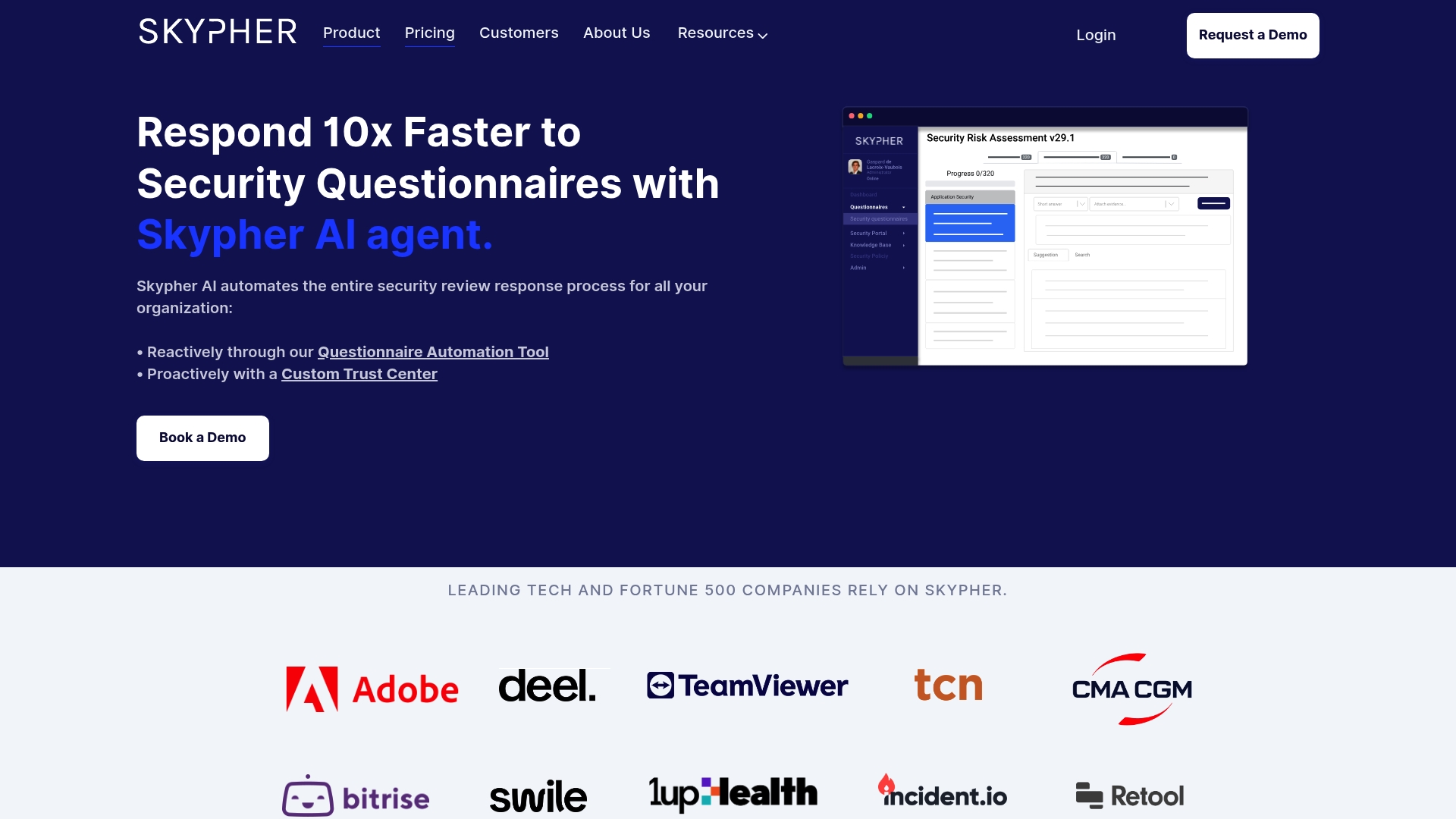
Unleash the power of Skypher’s SaaS platform! Our AI Questionnaire Automation Tool not only streamlines and automates your response process but also enhances collaboration across teams. With features like real-time collaboration, a custom Trust Center, and seamless API integrations with over 40 third-party risk management platforms, you can tackle security questionnaires with newfound confidence. Say goodbye to tedious manual work and hello to the precision that drives decision-making and fosters trust—just when you need it!
Act now! Visit https://skypher.co and transform your security review process today. Your time is valuable—don’t waste it on inefficiencies and inaccuracies. Let Skypher empower your due diligence efforts and elevate your organization’s cybersecurity posture!