

Nearly 80 percent of data breaches involve weak authentication methods, making robust security questions more important than ever for businesses. In the world of B2B, a single lapse in verification can put valuable information and partnerships at risk. Understanding how to design powerful security questions shapes stronger defenses, helps organizations meet compliance goals, and keeps sensitive data safe from evolving threats.
Quick Summary
| Takeaway | Explanation |
|---|---|
| 1. Security Questions Enhance Authentication | Effective security questions provide an additional layer of identity verification beyond passwords, protecting sensitive information. |
| 2. Contextual Questions Are Crucial | Questions should relate to specific organizational experiences and personal knowledge, making them hard for attackers to guess. |
| 3. Regularly Update Security Questions | Rotating question sets periodically helps maintain security and adapt to new threats in the business environment. |
| 4. Use Multi-Factor Authentication Techniques | Multi-factor security questions require comprehensive knowledge across various contexts, making unauthorized access significantly harder. |
| 5. Align Questions with Compliance Standards | Crafting security questions to meet regulatory requirements ensures both user verification and adherence to legal frameworks. |
Table of Contents
- 1. Understanding the Role of Security Questions in B2B
- 2. Basic User Verification: Name and Birthplace Questions
- 3. Advanced Account Recovery: Multi-Factor Security Questions
- 4. Device and Location-Based Question Examples
- 5. Business Process Security: Third-Party Vendor Questions
- 6. Customizing Security Questions for Compliance Needs
- 7. Best Practices for Secure and Effective Implementation
1. Understanding the Role of Security Questions in B2B
Security questions represent a critical authentication mechanism that goes far beyond simple password verification in the complex world of business interactions. As institutions have discovered over a century of practice, these questions serve as a sophisticated layer of identity validation that protects sensitive organizational information.
In business contexts, security questions function as a shared secret verification system that helps validate user identities through contextual knowledge difficult for unauthorized parties to replicate. Unlike standard password protocols, these questions leverage personal or organizational information that creates an additional authentication barrier.
Research highlights an intriguing challenge: the delicate balance between security strength and user memorability. According to academic studies, users frequently choose answers that are easy to remember but simultaneously weak against potential social engineering attacks. This means organizations must craft security questions that are both challenging for external actors and manageable for legitimate team members.
Effective B2B security questions should possess several key characteristics:
- Unique to the specific organizational context
- Complex enough to prevent simple guessing
- Memorable for authorized personnel
- Difficult to discover through casual research or social media investigation
By implementing well designed security questions, B2B teams can significantly enhance their authentication processes. Our comprehensive guide on effective security questions provides deeper insights into creating robust verification mechanisms that protect sensitive business interactions without creating unnecessary friction for legitimate users.
2. Basic User Verification: Name and Birthplace Questions
Traditional security questions centered around personal identity details have been a cornerstone of user verification for generations. According to historical documentation, financial institutions pioneered these authentication methods over a century ago using specific personal information as a verification mechanism.
Personal detail questions represent one of the most fundamental approaches to user authentication in business settings. These questions typically involve retrieving information that should be known only to the authorized individual such as their place of birth, childhood address, or family background details.
However modern B2B security professionals recognize significant limitations with conventional personal detail questions. Public information availability through social media platforms and online databases means many traditional security questions can be easily compromised or guessed by determined external actors.
When designing name and birthplace verification questions, organizations should consider these strategic approaches:
- Create multilayered questions requiring multiple specific details
- Avoid questions with easily discoverable public information
- Implement dynamic verification processes that change periodically
- Use contextual questions specific to organizational experiences
Strategic Implementation Recommendations
Instead of using generic birthplace queries, sophisticated B2B teams now craft contextual verification questions that blend personal knowledge with organizational specifics. For instance, a question might reference an employee's first project, specific training program, or internal mentor rather than relying solely on traditional personal background information.
Explore our comprehensive guide on security questionnaire strategies to understand how modern organizations are reimagining user verification processes beyond conventional approaches.
3. Advanced Account Recovery: Multi-Factor Security Questions
Multi-factor security questions represent a sophisticated approach to account recovery that goes beyond traditional single authentication methods. These advanced verification strategies create multiple layers of protection that significantly reduce unauthorized access risks for B2B organizations.
Multi-factor security questions transform standard identity verification by requiring users to answer multiple contextual queries that collectively validate their authentic organizational identity. Unlike simple single question approaches, this method demands comprehensive knowledge that becomes exponentially more challenging for potential intruders to replicate.
The core philosophy behind multi factor security questions involves creating interconnected verification pathways. Instead of relying on a single piece of information, these advanced systems require users to demonstrate deep organizational knowledge through a series of carefully constructed questions that interlink personal and professional experiences.
When implementing multi factor security questions, organizations should consider these strategic design principles:
- Create questions with contextual complexity
- Develop queries that require specific organizational knowledge
- Ensure questions cannot be easily discovered through public research
- Rotate and update question sets periodically
Practical implementation might involve developing a dynamic question set that pulls from different organizational domains. For example, a verification process could require answers about:
- Specific project details
- Internal training program information
- Unique team structure insights
- Contextual workplace experiences
Our guide on security questionnaire challenges provides deeper insights into constructing robust multi factor authentication frameworks that protect sensitive business information while maintaining user accessibility.
4. Device and Location-Based Question Examples
Device and location-based security questions represent a cutting-edge approach to authentication that leverages technological context to verify user identity. These innovative verification methods transform traditional security protocols by incorporating dynamic environmental information unique to each user.
Contextual authentication goes beyond static personal information by analyzing the specific technological ecosystem surrounding a user's access attempt. This means examining not just what someone knows but also where and how they are attempting to access a system.
Modern B2B organizations are increasingly adopting sophisticated device and location verification strategies that create intelligent authentication layers. These approaches examine multiple contextual signals including device fingerprinting, geographic location, network characteristics, and access patterns to build a comprehensive identity verification framework.
When designing device and location-based security questions, teams should consider these strategic elements:
- Capture unique device identifiers
- Track consistent access patterns
- Validate geographic login locations
- Monitor network connection characteristics
Practical implementation might involve crafting verification questions that require users to confirm specific technological context such as:
- Last known device used for company access
- Typical network connection point
- Specific hardware configurations
- Recent geographic login locations
Our comprehensive guide on security questionnaire challenges provides deeper insights into developing robust authentication mechanisms that protect sensitive organizational access while maintaining user experience.
5. Business Process Security: Third-Party Vendor Questions
Third-party vendor security questions represent a critical defense mechanism for organizations seeking to protect their operational integrity and sensitive information. These specialized authentication queries help businesses thoroughly evaluate potential risks associated with external partnerships and collaborative relationships.
Vendor security assessment involves creating a comprehensive set of strategic questions that probe deeply into an external partner's security protocols, compliance standards, and risk management capabilities. By implementing robust questioning frameworks, organizations can uncover potential vulnerabilities before they become significant operational challenges.
The primary objective of third-party vendor security questions is to establish a clear understanding of an external organization's security posture. These questions should systematically explore critical areas that might introduce potential risks to your business ecosystem.
When developing third-party vendor security questions, organizations should focus on key investigative domains:
- Information security infrastructure
- Data protection mechanisms
- Compliance with industry standards
- Incident response capabilities
- Historical security performance
Effective vendor security questions might require external partners to provide detailed insights about:
- Their cybersecurity team structure
- Specific data protection protocols
Our comprehensive guide to third-party vendor risk assessment offers deeper strategies for constructing thorough security evaluation frameworks that protect organizational interests while maintaining collaborative partnerships.
6. Customizing Security Questions for Compliance Needs
Compliance driven security questions represent a strategic approach to authentication that aligns organizational verification processes with specific regulatory requirements. These specialized questions transform standard identity checks into robust mechanisms that simultaneously validate user access and meet stringent industry standards.
Regulatory compliance demands a nuanced approach to security questioning that goes beyond simple identity verification. Organizations must craft questions that not only protect sensitive information but also demonstrate adherence to complex legal and industry specific frameworks such as GDPR, HIPAA, or financial service regulations.
The core objective of compliance focused security questions is to create a flexible yet rigorous verification ecosystem that can adapt to evolving regulatory landscapes. This means developing a dynamic questioning strategy that can be quickly modified to address new legal requirements while maintaining consistent security standards.
When designing compliance oriented security questions, organizations should prioritize these critical elements:
- Alignment with specific industry regulations
- Adaptability to changing legal frameworks
- Comprehensive documentation of verification processes
- Ability to demonstrate audit trail capabilities
Practical implementation might involve creating question sets that:
- Capture regulatory specific context
- Provide clear audit documentation
- Support multiple compliance frameworks
- Enable rapid modification
Our guide on security questionnaire automation provides advanced insights into developing flexible compliance verification strategies that protect organizational interests while meeting complex regulatory demands.
7. Best Practices for Secure and Effective Implementation
Implementing robust security questions requires a strategic approach that balances comprehensive verification with user experience. Organizations must craft authentication mechanisms that protect sensitive information while maintaining operational efficiency and user accessibility.
Secure implementation involves developing a holistic framework that considers multiple dimensions of organizational security. This means creating a dynamic questioning strategy that can adapt to evolving technological landscapes and emerging threat environments.
The fundamental goal of security question implementation is to build a multi layered authentication ecosystem that provides comprehensive protection without creating unnecessary friction for legitimate users. This requires a nuanced approach that combines technological sophistication with user centered design principles.
When developing security question implementation strategies, organizations should focus on these critical best practices:
- Regularly rotate and update question sets
- Implement advanced verification algorithms
- Create contextual and dynamic authentication layers
- Balance complexity with user accessibility
- Maintain comprehensive documentation
Practical implementation recommendations include:
- Developing question sets that evolve with organizational changes
- Creating multiple verification pathways
- Integrating artificial intelligence for adaptive authentication
- Establishing clear user communication protocols
Our guide on cybersecurity GRC strategies provides advanced insights into developing comprehensive security frameworks that protect organizational interests while maintaining operational flexibility.
Below is a comprehensive table summarizing the main topics and strategies discussed throughout the article on security questions in B2B contexts.
| Topic | Description | Key Considerations |
|---|---|---|
| Security Questions in B2B | Critical for identity verification beyond passwords. | Balance security strength with user memorability. |
| Basic User Verification | Uses personal details like birthplace. | Avoid easy-to-discover questions; use multilayered verification. |
| Advanced Account Recovery | Utilizes multi-factor security questions. | Requires deep organizational knowledge and periodic updates. |
| Device & Location-Based Questions | Leverages technological and location context. | Capture unique identifiers and track access patterns. |
| Third-Party Vendor Security | Evaluates vendor security protocols. | Focus on data protection, compliance, and incident response. |
| Compliance-Focused Questions | Align with regulatory requirements like GDPR. | Ensure adaptability to legal changes and audit documentation. |
| Implementation Best Practices | Establish a secure authentication framework. | Rotate questions, integrate AI, and maintain user accessibility. |
Transform Security Question Challenges Into Seamless Workflows
Struggling with time-consuming security questionnaires and the risks of manual errors? The article highlighted how complex verification, user accessibility, and regulatory requirements can make traditional B2B security questions feel overwhelming and inefficient. If your team feels the pressure of meeting strict compliance, managing countless security questions, or ensuring strong collaboration during the review process, there is a smarter way forward.
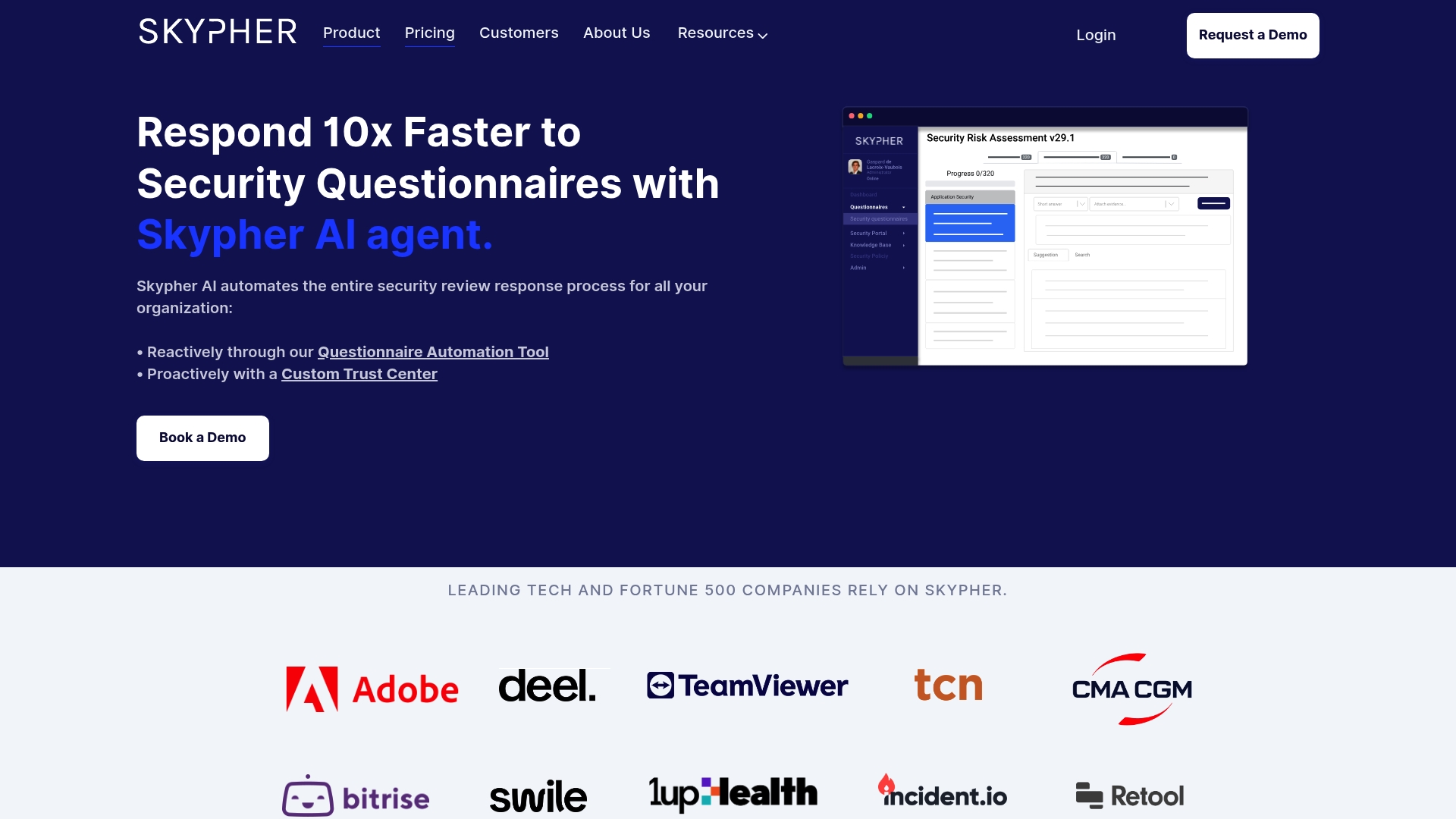
Meet next-generation automation. With Skypher's Questionnaire Automation Tool, you can accelerate the end-to-end response cycle, increase accuracy on every answer, and support advanced requirements like multi-factor security question handling. Choose Skypher if you want to complete even extensive questionnaires in minutes, not hours, and streamline team communication with dependable AI-driven workflows. Boost efficiency, ensure data protection, and impress your clients with every security review. Take control of your security questionnaires now and visit https://skypher.co to see how your B2B processes can evolve today.
Frequently Asked Questions
What are some effective examples of security questions for B2B teams?
Effective security questions for B2B teams should include contextual and organizational-specific details. Examples might be about specific projects or internal team configurations that only authorized personnel would know.
How can I implement multi-factor security questions in my organization?
To implement multi-factor security questions, create a system that requires users to answer multiple interconnected questions based on their professional experiences. For example, you could ask about their last project and who they collaborated with, which collectively validates their identity.
What characteristics should I look for in security questions for my B2B team?
When designing security questions, ensure they are unique to your organization, complex enough to prevent guessing, and memorable for authorized users. Aim for questions that are difficult to find through public sources or social media, such as referencing internal processes or specific company initiatives.
How often should I update my security questions to ensure effectiveness?
Regularly update your security questions every 6-12 months to keep them effective against potential breaches. This helps maintain a robust security posture and prevents unauthorized access from individuals who may learn or guess answers over time.
Can I customize security questions to meet compliance requirements?
Yes, you can customize security questions to align with your organization’s compliance needs by integrating specific regulatory contexts. Design questions that not only verify identity but also demonstrate how you comply with standards, such as data protection regulations, ensuring you stay aligned with legal requirements.
What steps can I take to enhance user experience while implementing security questions?
To enhance user experience, balance security with usability by creating straightforward and relevant security questions. Regularly gather user feedback to refine the questions, ensuring they remain easy to answer yet secure. Aim to achieve a 20% reduction in user frustration during the authentication process.
Recommended
- 7 Effective Security Questions Examples for Your Business
- The different formats & mistakes made when writing or answering security questionnaires
- The ever growing number of security questionnaires and what you and your company can do to face it
- The Case for Security Questionnaire Automation
- Transform42 New
- 35 SEO Interview Questions (Top Answers From The Experts) - Appture Digital ~ 855 Get Bizz