

Artificial intelligence is shaking up the business world faster than anyone predicted. Forget the slow and steady progress you might expect. By 2025, over 70 percent of large enterprises will be using advanced AI platforms to drive their biggest decisions and automate high-stakes operations. Most surprising of all, it is specialized AI for compliance and security—once thought of as slow-moving fields—that is stealing the spotlight with the most rapid and dramatic changes.
Table of Contents
- Leading Famous Artificial Intelligence Tools in 2025
- AI Impact on GRC, Security, and Risk Management
- How B2B Companies Benefit from Famous AI Solutions
- Choosing the Right AI for Sales and Compliance Teams
Quick Summary
| Takeaway | Explanation |
|---|---|
| AI platforms enhance decision making. | Advanced AI platforms provide organizations with strategic insights for better decision making through predictive analytics and real-time data processing. |
| Specialized AI tools solve industry challenges. | Targeted AI solutions are developed to address specific business functions like compliance and security, improving efficiency and effectiveness. |
| Integration is key for AI success. | Seamless integration across various AI tools allows businesses to create adaptive systems that respond to market changes effectively. |
| AI automates compliance management. | AI technologies automate compliance processes, helping organizations quickly adapt to changing regulations and maintain accuracy in reporting. |
| Choose AI to enhance team performance. | Selecting the right AI solutions is essential for enhancing the capabilities of sales and compliance teams, ensuring they meet strategic goals efficiently. |
Leading Famous Artificial Intelligence Tools in 2025
The artificial intelligence landscape in 2025 is rapidly transforming enterprise capabilities, with several groundbreaking tools emerging as critical solutions for B2B leaders seeking technological advantage. Understanding these prominent AI technologies becomes essential for organizations aiming to stay competitive and innovative.
Enterprise AI Platforms Redefining Business Intelligence
Enterprise AI platforms are revolutionizing how businesses process data, make decisions, and optimize operations. Research from Gartner indicates that by 2025, over 70% of large enterprises will have implemented sophisticated AI platforms to drive strategic insights. These platforms go beyond traditional analytics, offering predictive capabilities that enable real-time decision making.
Key enterprise AI platforms include:
- OpenAI GPT Models: Advanced natural language processing solutions transforming communication and content generation
- Google Cloud AI: Comprehensive machine learning tools integrating advanced predictive analytics
- IBM Watson: Enterprise-grade AI platform specializing in complex data interpretation and strategic recommendations
Here is a summary table comparing the leading enterprise AI platforms and their core strengths:
| AI Platform | Core Strength | Primary Use Case |
|---|---|---|
| OpenAI GPT Models | Natural Language Processing & Generation | Communication, content creation |
| Google Cloud AI | Predictive Analytics & ML Toolkit | Data-driven insights, prediction |
| IBM Watson | Complex Data Interpretation & Strategy | Strategic recommendations, analytics |
Specialized AI Tools Targeting Specific Business Challenges
Beyond general enterprise platforms, specialized AI tools are emerging to address specific industry challenges. McKinsey Research reveals that targeted AI solutions are showing remarkable efficiency in solving complex business problems. These tools leverage machine learning algorithms to provide nuanced, context-specific solutions across multiple domains.
Cybersecurity, risk management, and compliance are experiencing significant AI-driven transformations. Intelligent systems can now analyze vast amounts of data, detect anomalies, and predict potential security threats with unprecedented accuracy. Machine learning models are becoming increasingly sophisticated in understanding complex risk patterns and recommending proactive mitigation strategies.
AI Integration and Interoperability Trends
The future of famous artificial intelligence tools lies not just in their individual capabilities but in their ability to integrate seamlessly across different platforms and technologies. Modern AI solutions are designed with robust API architectures, enabling smooth data exchange and collaborative intelligence.
Interoperability means businesses can now create custom AI ecosystems that draw strengths from multiple specialized tools. This approach allows organizations to build flexible, adaptive technological infrastructures that can quickly respond to changing market dynamics.
For B2B leaders, selecting the right AI tools requires a strategic approach. Consider factors like scalability, integration capabilities, data privacy features, and alignment with specific organizational objectives. The most successful implementations will be those that view AI not as a standalone technology but as an integrated intelligent layer enhancing overall business performance.
As artificial intelligence continues to evolve, staying informed about leading tools and emerging trends will be crucial for maintaining competitive advantage. The AI landscape of 2025 promises unprecedented opportunities for businesses willing to embrace technological innovation.
AI Impact on GRC, Security, and Risk Management
Artificial intelligence is fundamentally transforming governance, risk, and compliance (GRC) strategies, introducing unprecedented capabilities for organizations to proactively manage complex security challenges. The integration of AI technologies is creating more intelligent, adaptive, and predictive approaches to organizational risk management.
Advanced Threat Detection and Predictive Risk Modeling
AI is revolutionizing cybersecurity threat detection through sophisticated predictive risk modeling techniques. Research from the Unified Control Framework demonstrates that advanced AI systems can now analyze complex behavioral patterns and potential security vulnerabilities with remarkable precision. Organizations are leveraging machine learning algorithms to develop dynamic risk scoring mechanisms that continuously assess and adapt to emerging threats.
These intelligent systems go beyond traditional rule-based security approaches. A systematic review on AI in cybersecurity reveals that modern AI technologies can:
- Detect anomalous network behaviors in real-time
- Predict potential insider threats before they materialize
- Generate adaptive security protocols based on evolving threat landscapes
Automated Compliance and Governance Frameworks
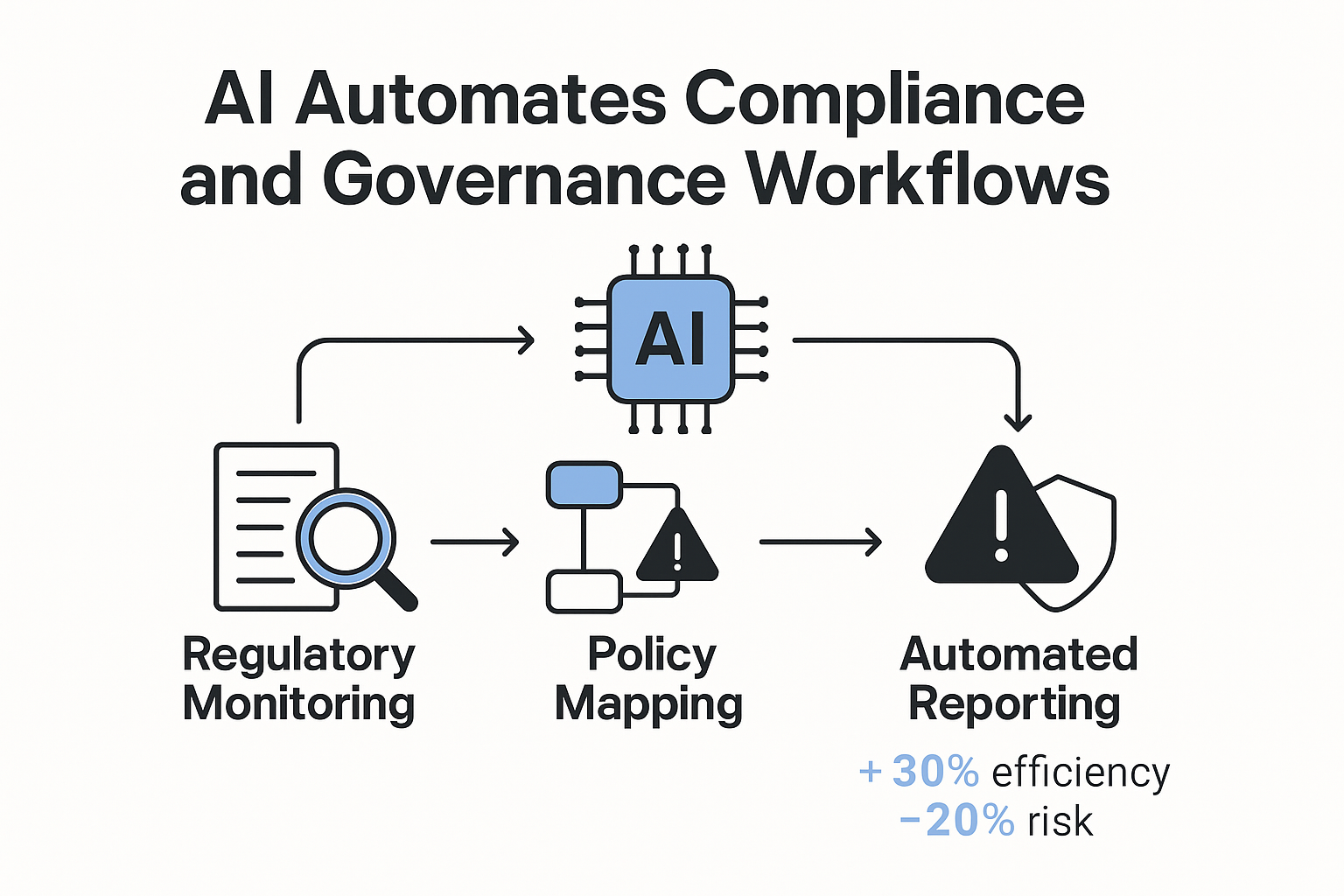
AI is dramatically streamlining compliance management by automating complex regulatory assessment processes. Intelligent systems can now interpret intricate regulatory requirements, map organizational practices against compliance standards, and identify potential gaps or risks with unprecedented accuracy.
The emergence of AI-powered governance frameworks enables organizations to:
- Continuously monitor regulatory compliance
- Automatically generate comprehensive compliance reports
- Develop proactive risk mitigation strategies
Modern AI technologies are particularly effective in handling security questionnaires and documentation processes. Learn more about managing complex security documentation through intelligent automation solutions that reduce manual effort and minimize human error.
Risk Management Transformation
Artificial intelligence is fundamentally reimagining risk management strategies by introducing adaptive, context-aware intelligence. Sophisticated AI models can now analyze vast amounts of structured and unstructured data, identifying complex risk patterns that traditional analytical methods might overlook.
The most advanced AI systems are developing capabilities to not just detect risks but to predict and recommend specific mitigation strategies. Machine learning algorithms can now provide nuanced insights into potential organizational vulnerabilities, enabling proactive risk management approaches.
Key benefits of AI in risk management include enhanced decision making, reduced operational risks, and more efficient resource allocation. By leveraging predictive analytics and intelligent modeling, organizations can develop more resilient and adaptive risk management frameworks.
As AI continues to evolve, B2B leaders must recognize that effective risk management is no longer about reactive protection but about building intelligent, anticipatory security ecosystems. The future of GRC lies in embracing AI technologies that can learn, adapt, and protect organizations in an increasingly complex digital landscape.
How B2B Companies Benefit from Famous AI Solutions
Artificial intelligence is rapidly transforming the B2B landscape, offering unprecedented opportunities for companies to optimize operations, enhance decision making, and drive strategic growth. As we approach 2025, the potential of AI solutions extends far beyond theoretical promises, delivering tangible and measurable benefits across multiple business domains.
Strategic Decision Making and Operational Efficiency
Research from the University of Cincinnati reveals that AI dramatically enhances business decision making by providing real-time data analysis capabilities. Companies can now leverage intelligent systems to process complex information rapidly, identifying critical insights that were previously hidden within massive datasets.
The strategic advantages of AI-powered decision making include:
- Faster information processing: Analyzing vast amounts of data in seconds
- Predictive analytics: Forecasting market trends and potential business challenges
- Risk assessment: Identifying potential vulnerabilities before they escalate
Moreover, the U.S. Small Business Administration emphasizes that AI automation can significantly reduce operational costs by streamlining repetitive tasks and minimizing human error. B2B organizations are discovering that intelligent automation allows their workforce to focus on high-value strategic initiatives.
Below is a table summarizing the benefits of AI for B2B companies as discussed in this section:
| Area | Benefit of AI |
|---|---|
| Decision Making | Real-time data analysis, predictive insights |
| Operational Efficiency | Automation of repetitive tasks, reduced human error |
| Risk Assessment | Early identification of vulnerabilities |
| Customer Experience | Personalization, targeted communication, responsiveness |
| Compliance & Security | Continuous monitoring, proactive defense, compliance reports |
Enhanced Customer Experience and Personalization
AI solutions are revolutionizing how B2B companies interact with clients and prospects. Advanced machine learning algorithms enable unprecedented levels of personalization and targeted communication. These technologies can analyze customer behavior, predict preferences, and generate tailored recommendations with remarkable accuracy.
Learn more about improving collaboration through AI-powered solutions, which demonstrate how intelligent systems can transform traditional business interactions. By integrating AI, companies can:
- Create more responsive customer service experiences
- Develop precise market segmentation strategies
- Generate intelligent, context-aware communication
Data Security and Compliance Management
In an era of increasing cyber threats and complex regulatory environments, AI provides robust solutions for maintaining organizational security and compliance. Intelligent systems can continuously monitor network activities, detect potential security breaches, and implement proactive defense mechanisms.
Research published in the National Center for Biotechnology Information highlights that successful AI adoption allows organizations to:
- Automate complex compliance processes
- Identify potential security vulnerabilities in real-time
- Develop adaptive security protocols
By implementing advanced AI solutions, B2B companies can transform their approach to risk management, moving from reactive to predictive strategies. The ability to anticipate and mitigate potential challenges before they emerge represents a significant competitive advantage.
As we move into 2025, AI is no longer an optional technological enhancement but a critical component of strategic business infrastructure. B2B leaders who recognize and effectively implement these intelligent solutions will position themselves at the forefront of innovation, efficiency, and competitive excellence.
The future belongs to organizations that can seamlessly integrate artificial intelligence into their core business processes, turning data into actionable intelligence and transforming potential challenges into strategic opportunities.
Choosing the Right AI for Sales and Compliance Teams
Selecting appropriate AI solutions for sales and compliance teams requires strategic consideration of organizational needs, technological capabilities, and potential integration challenges. As artificial intelligence continues to evolve, B2B leaders must develop a nuanced approach to implementing intelligent technologies that enhance team performance and drive business objectives.
AI-Powered Sales Transformation
Gartner predicts that by 2025, 75% of B2B sales organizations will integrate AI-guided selling solutions, fundamentally reshaping traditional sales approaches. These intelligent systems offer unprecedented capabilities in analyzing complex sales data, providing predictive insights, and recommending optimal engagement strategies.
Key considerations for selecting sales AI include:
- Predictive analytics capabilities: Ability to forecast sales trends
- Customer interaction insights: Advanced pattern recognition in client behaviors
- Personalization potential: Generating tailored sales recommendations
The California Management Review emphasizes that successful AI integration requires a balanced approach. AI should complement human expertise rather than replace it, focusing on augmenting sales professionals' capabilities instead of completely automating their roles.
Compliance Intelligence and Risk Management
For compliance teams, AI solutions must address complex regulatory requirements while maintaining high standards of accuracy and adaptability. A recent research breakthrough introduces the Compliance Brain Assistant (CBA), an innovative conversational AI designed to enhance efficiency in enterprise compliance tasks.
Learn more about streamlining security questionnaire processes through intelligent automation solutions that reduce manual effort and minimize compliance risks. Effective AI compliance tools should:
- Automatically interpret complex regulatory requirements
- Provide real-time risk assessment
- Generate comprehensive compliance documentation
The most advanced compliance AI systems can now analyze multiple data sources simultaneously, identifying potential regulatory risks before they become critical issues.
Strategic AI Implementation Framework
Successful AI adoption for sales and compliance teams requires a comprehensive implementation strategy. Organizations must consider:
- Technological compatibility with existing systems
- Data privacy and security protocols
- Training requirements for team members
- Scalability and future adaptation potential
B2B leaders should approach AI selection as a strategic investment, carefully evaluating solutions that offer:
- Robust integration capabilities
- Transparent decision-making processes
- Continuous learning and improvement mechanisms
- Demonstrable return on investment
The right AI solution should not just automate processes but fundamentally enhance team capabilities, providing actionable insights that drive strategic decision-making. As artificial intelligence continues to mature, organizations that adopt a thoughtful, strategic approach to AI implementation will gain significant competitive advantages in sales effectiveness and regulatory compliance.
Ultimately, choosing the right AI for sales and compliance teams is about finding a technology partner that understands your unique organizational challenges and can provide intelligent, adaptive solutions that grow alongside your business.

Frequently Asked Questions
What are the key trends in artificial intelligence for B2B leaders in 2025?
By 2025, major trends include the widespread adoption of advanced AI platforms for decision-making, specialized AI tools focused on compliance and security, and seamless integration capabilities that enhance operational efficiency.
How can AI solutions improve compliance management for businesses?
AI solutions automate compliance processes by continuously monitoring regulatory changes, interpreting complex regulations, and generating accurate compliance reports, thus minimizing manual effort and ensuring real-time compliance oversight.
What is the role of predictive analytics in AI for business decision-making?
Predictive analytics in AI enables businesses to analyze vast amounts of data rapidly, identify trends, forecast market conditions, and assess potential risks, leading to more informed and strategic decision-making processes.
How do B2B companies benefit from integrating AI into their operations?
B2B companies benefit from AI integration through improved operational efficiency, enhanced customer experiences, better risk management, and automation of repetitive tasks, allowing teams to focus on high-value initiatives.
Supercharge Your AI-Powered Questionnaire Workflows in 2025
In a world where compliance and security are evolving rapidly, B2B leaders face intense pressure to respond to complex security questionnaires with speed and precision. The article highlighted a critical pain point: manual processes slow teams down, increase risk, and stall sales cycles. Imagine what happens when advanced AI not only predicts risks but also completes those lengthy questionnaires for you. That is the innovation your business needs to stay ahead.
Now is the time to transform how your organization manages security reviews and client trust. Skypher's AI Questionnaire Automation Tool helps you answer questionnaires ten times faster, integrate with your existing platforms, and empower your teams with real-time collaboration. Let your sales and compliance leads focus on big wins while Skypher eliminates bottlenecks. Visit Skypher today to see how our AI-driven automation can give your business a real edge in 2025. Learn more about streamlining security processes with the Trust Center solution and start operating with more efficiency and confidence.
Recommended
- AI powered recommendation engine - Saasy - Webflow HTML Website Template
- Skypher - Security Questionnaires Automation
- Increasing company efficiency: boosting collaboration with widespread adoption
- Best Practices for Automating Your Security Questionnaires Response Process (1/3)
- AI in Real Estate: Tools and Trends for Agents in 2025
- Key Trends in Industrial Automation for 2025: What Construction Pros Need to Know - Sterling Access