

GDPR rules are reshaping how software companies handle personal data. That means over 60% of businesses with strong data mapping processes are hitting compliance targets faster than their competitors. Surprising as it seems, the riskiest thing you can do right now is stick with business as usual.
Table of Contents
- Step 1: Assess Your Current Data Practices
- Step 2: Identify Data Processing Activities
- Step 3: Implement Necessary Compliance Measures
- Step 4: Conduct Data Protection Impact Assessments
- Step 5: Train Your Team on GDPR Regulations
- Step 6: Review and Update Policies Regularly
Quick Summary
| Key Point | Explanation |
|---|---|
| 1. Conduct a thorough data mapping | Document all personal data types, their processing purposes, and storage locations to identify compliance gaps. |
| 2. Establish a detailed processing register | Track every instance of data processing to ensure legal accountability and transparency in your data practices. |
| 3. Integrate privacy safeguards into software | Implement technical controls and privacy-by-design principles to protect user data within software systems effectively. |
| 4. Regularly perform Data Protection Impact Assessments | Continuously assess processing activities for privacy risks and adapt strategies to mitigate those risks proactively. |
| 5. Develop ongoing GDPR training programs | Create role-specific training to empower employees with the knowledge and responsibility for privacy protection. |
Step 1: Assess Your Current Data Practices
Launching a comprehensive GDPR compliance strategy begins with a thorough examination of your current data management practices. This crucial first step helps software organizations understand their existing data ecosystem and identify potential compliance gaps before they become significant risks.
Understanding Your Data Landscape
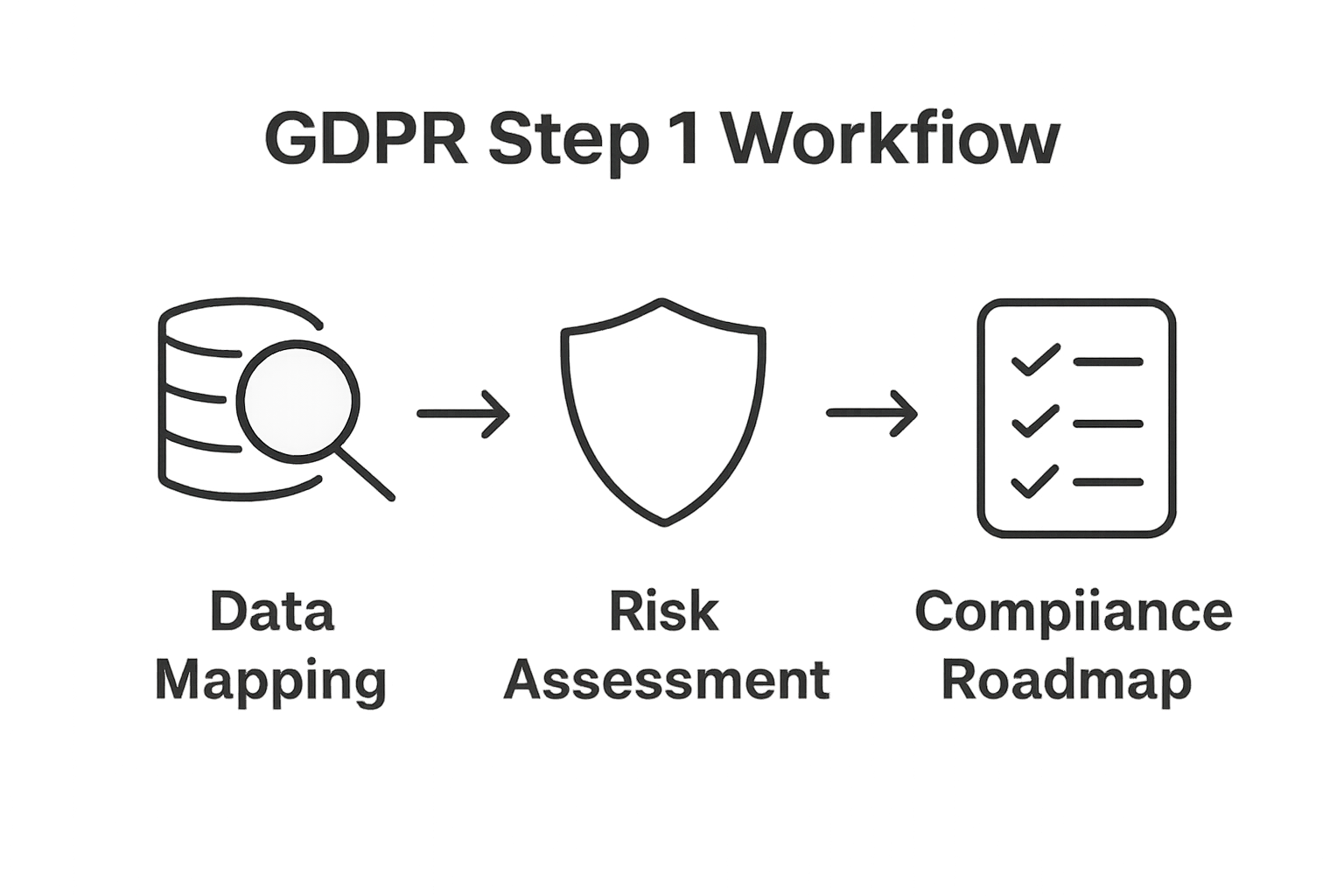
Start by conducting a detailed data inventory and mapping exercise. This means systematically documenting every type of personal data your software collects, processes, and stores. Trace each data point's journey through your systems tracking its origin, purpose, storage location, and retention period. Create a comprehensive inventory that captures details like customer information, employee records, user analytics, and any third party data interactions.
Your data mapping should include specific documentation about data processing activities, including:
- Categories of personal data collected
- Legal basis for processing each data type
- Data storage locations and durations
- Third party data sharing arrangements
- Current consent mechanisms
According to International Association of Privacy Professionals, organizations that develop robust data mapping strategies are 60% more likely to achieve successful regulatory compliance. This process is not just a bureaucratic exercise but a strategic approach to understanding your organization's data ecosystem.
Conducting a Risk Assessment
Once you have mapped your data landscape, perform a comprehensive risk assessment. Evaluate potential vulnerabilities in your data processing workflows, examining how personal information moves through your software systems. Look for potential weak points where unauthorized access, data breaches, or non consensual data usage might occur.
Key areas to scrutinize include user consent processes, data access controls, encryption standards, and data deletion protocols. Document any identified risks and develop mitigation strategies that align with GDPR principles of data minimization, purpose limitation, and user privacy protection.
Successful completion of this step means having a clear, documented understanding of your current data practices, potential compliance risks, and a roadmap for addressing any identified gaps.
Below is a summary table outlining the main GDPR compliance steps, their objectives, and primary outcomes to help you quickly scan and understand the process.
| Step | Objective | Primary Outcome |
|---|---|---|
| Assess Current Data Practices | Identify existing data types, processes, and potential compliance gaps | Clear data inventory and risk roadmap |
| Identify Data Processing Activities | Document all data processing to demonstrate regulatory accountability | Comprehensive processing register |
| Implement Compliance Measures | Integrate privacy controls and consent management into workflows | Technical and procedural user data protections |
| Conduct Data Protection Impact Assessments | Proactively identify and mitigate potential privacy risks | DPIA framework and updated risk documentation |
| Train Your Team on GDPR Regulations | Empower staff with role-based privacy and compliance training | Organization-wide GDPR awareness and responsibility |
| Review and Update Policies Regularly | Systematically adapt policies to evolving regulations and technologies | Adaptive, living compliance policy framework |
Step 2: Identify Data Processing Activities
After mapping your data landscape, the next critical step in GDPR compliance involves meticulously identifying and documenting all data processing activities within your software ecosystem. This step transforms your initial data inventory into a comprehensive record that demonstrates legal and regulatory accountability.
Comprehensive Processing Documentation
Begin by creating a detailed processing register that captures every instance where personal data is collected, transformed, accessed, or transmitted. This isn't just a technical exercise but a strategic documentation process that reveals the complete lifecycle of data within your organization. Examine each processing activity through the lens of purpose, legal justification, and potential privacy implications.
Your processing register should include granular details such as:
- Specific purposes for data processing
- Legal basis for each processing activity
- Categories of personal data involved
- Data subject types (customers, employees, vendors)
- Duration of data retention
- Security measures protecting the data
According to International Association of Privacy Professionals, organizations that develop comprehensive processing registers reduce compliance risks by up to 45% and streamline future audit processes.
Assessing Processing Legitimacy
Evaluate each processing activity against GDPR's fundamental principles. Determine whether you have a legitimate legal basis for processing personal data. This means critically examining whether your data processing serves a clear, specific, and lawful purpose. Consider whether you have obtained explicit consent, whether processing is necessary for contractual obligations, or if it falls under another lawful basis defined by GDPR.
Pay special attention to sensitive data categories that require heightened protection. These might include racial origin, political opinions, health information, or biometric data. For such categories, you need an additional layer of justification and typically require explicit, informed consent.
Successful completion of this step means having a comprehensive, transparent record of all data processing activities that demonstrates your commitment to privacy protection and regulatory compliance. Your processing register becomes both a strategic tool and a legal safeguard against potential GDPR violations.
Step 3: Implement Necessary Compliance Measures
Transitioning from identification to implementation, this step transforms your GDPR understanding into concrete operational strategies. Implementing compliance measures requires a systematic approach that integrates privacy protections directly into your software's architecture and operational workflows.
Building Technical Privacy Safeguards
Begin by establishing robust data protection mechanisms that ensure user privacy at every interaction point. This means implementing technical controls that limit data access, encrypt sensitive information, and provide granular permission management. Focus on creating privacy by design principles that are embedded into your software development lifecycle, not added as an afterthought.
Key technical implementations should include:
- End to end data encryption
- Secure access controls with multi factor authentication
- Automated data anonymization processes
- Comprehensive audit logging capabilities
- Granular user consent management systems
According to Open Source Security Foundation, organizations that integrate privacy controls during initial development stages reduce future compliance remediation costs by approximately 40%.
Developing Comprehensive Consent Management
Create a transparent and user friendly consent management framework that allows individuals complete control over their personal data. This involves designing intuitive interfaces where users can easily view, modify, and withdraw consent for data processing. Your consent mechanisms must be explicit, informed, and freely given no hidden clauses or complex legal language.
Implement clear consent workflows that provide users with precise information about what data is being collected, why it is being collected, and how it will be used. Include straightforward opt out options and ensure that withdrawing consent is as simple as providing it. Your software should automatically update data processing activities when user consent changes, demonstrating real time respect for individual privacy preferences.
Successful completion of this step means having a comprehensive set of technical and procedural measures that proactively protect user data, demonstrate regulatory compliance, and build trust with your software's user base.
This table presents a concise checklist of key technical and organizational safeguards you should implement to meet GDPR compliance in your software and ongoing operations.
| Safeguard | Purpose |
|---|---|
| Data Encryption | Secure personal data during transmission and storage |
| Access Controls | Limit data access to authorized personnel only |
| Consent Management | Obtain, record, and update user consent easily |
| Audit Logging | Maintain traceability of data processing activities |
| Data Anonymization | Reduce privacy risks from data analysis |
| Employee Training | Ensure staff understand and follow GDPR protocols |
| Regular Policy Review | Keep data protection strategies current and effective |
Step 4: Conduct Data Protection Impact Assessments
Data Protection Impact Assessments (DPIAs) represent a critical mechanism for proactively identifying and mitigating potential privacy risks within your software systems. This step transforms your compliance strategy from reactive protection to strategic risk management, ensuring that potential privacy vulnerabilities are systematically evaluated before they can compromise user data.
Structured Risk Evaluation Process
Begin by developing a comprehensive DPIA framework that systematically examines every data processing activity with potential high risk to individual privacy rights. This isn't a checkbox exercise but a deep analytical process that requires critical thinking and thorough documentation. Focus on understanding the complete lifecycle of data processing, evaluating potential impacts on user privacy, and identifying mitigation strategies.
Your DPIA should comprehensively address key evaluation criteria:
- Potential risks to individual rights and freedoms
- Likelihood and severity of potential privacy breaches
- Technical and organizational safeguards
- Residual risks after implementing protective measures
- Proposed remediation strategies
According to European Data Protection Board, organizations that conduct thorough DPIAs reduce potential privacy compliance risks by up to 70%.
Implementing Continuous Assessment Strategies
Develop a dynamic DPIA process that goes beyond a one time assessment. Create mechanisms for periodic reviews and updates, especially when introducing new technologies, changing processing activities, or expanding data collection methods. Your assessment should be a living document that evolves with your software ecosystem.
Ensure your DPIA documentation includes detailed narratives explaining your risk assessment methodology, the rationale behind identified risks, and specific mitigation strategies. This transparency demonstrates your commitment to privacy protection and provides a clear audit trail for regulatory compliance.
Successful completion of this step means having a robust, well documented DPIA that not only identifies potential privacy risks but provides a clear roadmap for addressing and mitigating those risks proactively.
Step 5: Train Your Team on GDPR Regulations
Transforming regulatory understanding into organizational culture requires a strategic and comprehensive training approach. GDPR compliance is not just a technical requirement but a fundamental shift in how your team perceives and handles personal data. This step focuses on creating a robust educational framework that empowers every team member to become a privacy protection advocate.
Developing Comprehensive Training Programs
Craft a multi tiered training strategy that addresses different roles and responsibilities within your organization. Your training program should move beyond generic presentations, delivering practical, role specific insights that translate complex regulatory language into actionable workflows. Develop interactive modules that demonstrate real world scenarios, helping team members understand the practical implications of GDPR compliance.
Key training components should include:
- Legal foundations of GDPR
- Specific organizational data processing practices
- Individual responsibilities in data protection
- Consequences of non compliance
- Practical privacy protection techniques
According to European Data Protection Board, organizations with comprehensive training programs reduce compliance risks by up to 55%.
Implementing Continuous Learning Mechanisms
Establish an ongoing learning environment that keeps privacy regulations at the forefront of your team's awareness. Explore our guide on best practices for security questionnaire responses to understand how continuous learning can transform your compliance strategy. Create periodic refresher courses, quarterly knowledge assessments, and real time updates on regulatory changes.
Encourage a culture of proactive learning where team members are motivated to stay informed about privacy regulations. Implement mentorship programs, host regular workshops, and create internal communication channels dedicated to discussing data protection challenges and solutions.
Successful completion of this step means developing a team that views GDPR compliance not as an external mandate, but as an integral part of their professional responsibility and organizational culture.
Step 6: Review and Update Policies Regularly
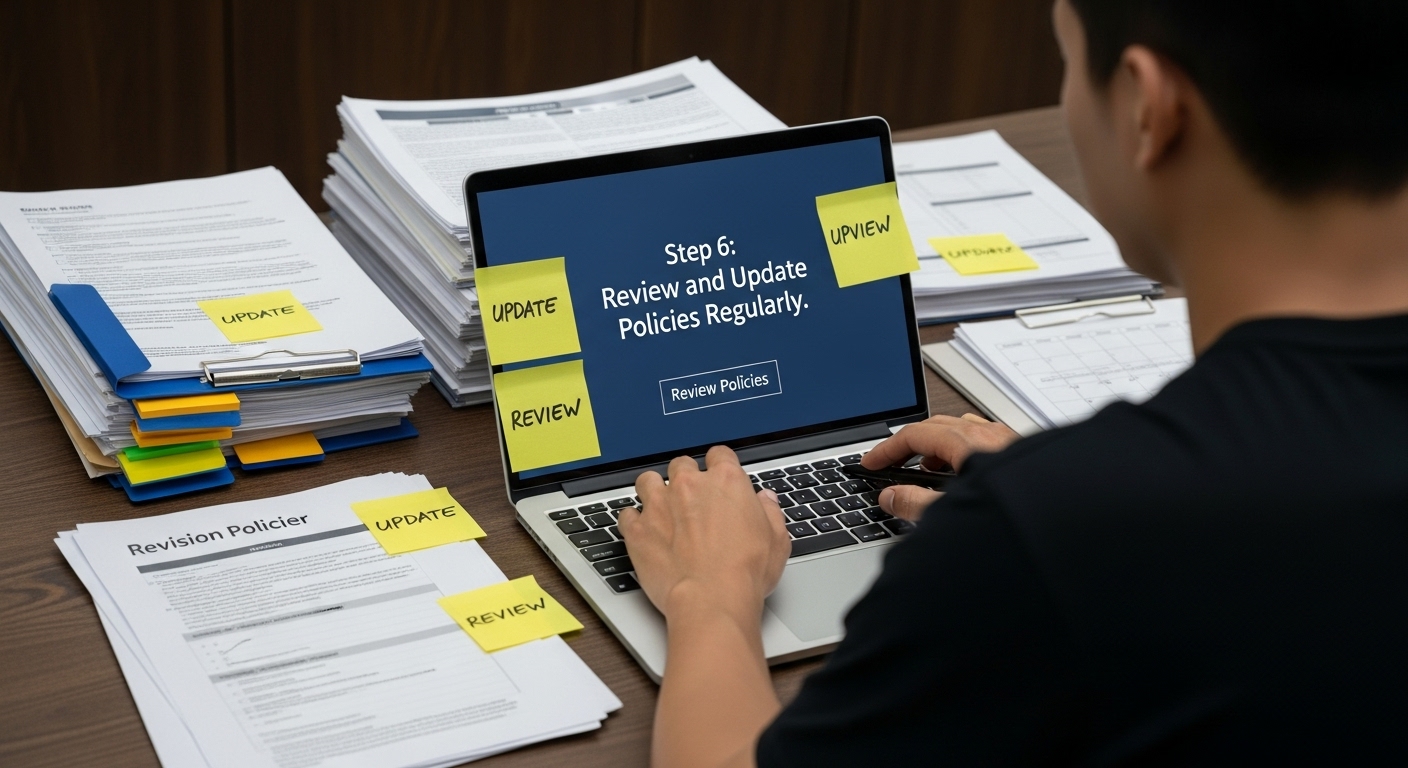
Regulatory compliance is not a static destination but a dynamic journey requiring continuous adaptation. Implementing a systematic approach to reviewing and updating your GDPR policies ensures your software remains resilient against evolving privacy challenges and regulatory shifts. This step transforms policy management from a reactive task to a proactive strategic initiative.
Establishing a Comprehensive Review Framework
Develop a structured policy review mechanism that goes beyond annual checkboxes. Create a dynamic system that triggers policy reviews based on multiple critical indicators such as technological changes, organizational transformations, regulatory updates, and identified compliance gaps. Your review framework should be flexible yet rigorous, allowing for both scheduled and triggered evaluations.
Key review triggers should include:
- Significant software architectural changes
- Introduction of new data processing technologies
- Modifications in data collection or storage methods
- Emerging regulatory guidance
- Internal audit findings
According to International Association of Privacy Professionals, organizations with adaptive policy review processes reduce compliance risks by approximately 38%.
Implementing Continuous Improvement Strategies
Transform policy updates into opportunities for organizational learning and refinement. Create cross functional review teams that bring diverse perspectives from legal, technical, and operational domains. Learn more about automating your security response processes to understand how technology can support continuous policy improvement.
Document every policy modification with clear change logs, rationale, and implementation timelines. Develop a communication strategy that ensures all team members understand policy updates, their implications, and any required behavioral changes. Integrate policy review findings into your ongoing training and awareness programs, creating a closed loop of continuous improvement.
Successful completion of this step means establishing a living, breathing policy management system that anticipates changes, adapts quickly, and maintains your organization's commitment to robust data protection.
Ready to Make Your GDPR Checklist a Reality?
Reaching full GDPR compliance means more than checking off a list. The article highlighted the urgent need to map your data, automate compliance tasks, and create a robust risk management culture for your software by 2025. Most organizations realize too late how manual processes and unclear responsibilities slow them down and increase risks. The repeated stress of incomplete audit trails or scattered policy updates can cost you business and damage trust.
Why wait another year struggling with spreadsheets and unanswered security requests? Discover how the Skypher SaaS platform empowers you to automate compliance, streamline your entire security questionnaire process, and stay ready for GDPR demands. Explore faster security questionnaire responses and real collaboration tools, or learn how automation transforms policy management and compliance reviews. Visit today and give your compliance strategy the upgrade it deserves before the next regulatory change.
Frequently Asked Questions
What is the first step in creating a GDPR compliance strategy for software?
To launch a GDPR compliance strategy, begin with a thorough assessment of your current data practices through a detailed data inventory and mapping exercise.
How can I assess potential compliance risks in my data processing activities?
Conduct a comprehensive risk assessment focusing on vulnerabilities within your data processing workflows, examining access controls, consent processes, and data retention protocols.
What should be included in a processing register for GDPR compliance?
A processing register should detail every instance of personal data collected, including the purposes of data processing, legal bases for each activity, categories of data involved, and security measures implemented.
Why is it important to conduct Data Protection Impact Assessments (DPIAs)?
DPIAs are critical in proactively identifying and mitigating potential risks to individual privacy rights, reducing compliance risks by evaluating data processing activities systematically.
Recommended
- The ever growing number of security questionnaires and what you and your company can do to face it
- The different formats & mistakes made when writing or answering security questionnaires
- The Case for Security Questionnaire Automation
- Guides - Saasy - Webflow HTML Website Template
- What to consider when running a challenge or award program
- digital preservation -