
Decoding GDPR Compliance Definition: Core Concepts and Legal Context
GDPR compliance definition refers to meeting the requirements outlined in the European Union's General Data Protection Regulation, which came into effect on May 25, 2018. At its core, what does GDPR compliance mean? It involves implementing specific measures to protect the personal data of EU citizens and residents, regardless of where your business operates.
The regulation fundamentally redefines how organizations must handle personal data by enforcing several key principles:
- Lawfulness, fairness, and transparency in data processing
- Purpose limitation (collecting data only for specified purposes)
- Data minimization (gathering only what's necessary)
- Accuracy (ensuring data remains correct and updated)
- Storage limitations (keeping data only as long as required)
- Integrity and confidentiality (maintaining security)
- Accountability (demonstrating compliance)
According to a 2022 IAPP-EY survey, 60% of organizations still struggle with fully understanding what it means to be GDPR compliant. This challenge stems from the regulation's broad scope, which governs everything from how consent is obtained to how data breaches are handled.
The meaning of GDPR extends beyond simple legal compliance—it represents a comprehensive framework for ethical data management. For businesses, GDPR compliance data requirements create a structured approach to information governance that builds consumer trust while avoiding significant penalties (up to €20 million or 4% of global annual revenue).
Key Takeaways
| Key Point | Details |
|---|---|
| GDPR Compliance Definition | Compliance means implementing measures to protect the personal data of EU citizens and residents. |
| Seven Key Principles | Organizations must adhere to principles like lawfulness, fairness, transparency, and accountability in data handling. |
| Ongoing Commitment | GDPR compliance is a continuous process, not a one-time project, involving regular audits and updates to data practices. |
| Investment in Compliance | Organizations investing in GDPR compliance see a return in terms of consumer trust and reduced risk of penalties. |
Key Principles and Pillars of GDPR Compliance

Understanding what GDPR compliance means requires familiarity with its seven fundamental principles that serve as the regulatory framework's foundation. These principles work together to create a comprehensive approach to data protection.
- Lawfulness, Fairness, and Transparency: Organizations must process personal data lawfully, fairly, and with complete transparency about how the data will be used.
- Purpose Limitation: Data collection must be for specified, explicit, and legitimate purposes only.
- Data Minimization: Only collect and process data that's necessary for your stated purposes—nothing more.
- Accuracy: Personal data must be kept accurate and up-to-date, with reasonable steps taken to rectify or erase inaccurate information.
- Storage Limitation: Data should be kept in identifiable form only as long as necessary for the stated purposes.
- Integrity and Confidentiality: Appropriate security measures must protect against unauthorized processing, loss, or damage.
- Accountability: Organizations must demonstrate compliance through appropriate technical and organizational measures.
A 2023 Data Protection Commission report revealed that 67% of GDPR enforcement actions stemmed from failures in the transparency principle. The data compliance GDPR framework isn't merely a checklist but rather an ongoing commitment to respecting data subjects' rights and privacy.
These principles apply universally across industries and organization sizes, though implementation specifics may vary depending on the volume and sensitivity of data processed.
Practical Implications: How GDPR Compliance Affects Your Business
GDPR compliance transforms how businesses collect, process, and manage personal data across all operations. Understanding what it means to be GDPR compliant requires examining its concrete business impacts:
- Data Management Overhaul: Companies must implement data mapping, maintain records of processing activities, and ensure proper data categorization.
- Enhanced Security Measures: Technical safeguards including encryption, access controls, and regular security testing become mandatory.
- Documentation Requirements: Detailed policies, procedures, and evidence of compliance must be maintained and updated.
- Customer Interactions: Privacy notices must be clear, consent must be explicit, and data subject rights (access, deletion, portability) must be honored.
- Vendor Management: Third-party processors require proper vetting and contractual safeguards.
A 2022 IAPP study found that organizations allocate an average of $1.3 million annually to GDPR compliance activities, with larger enterprises investing significantly more. However, this investment yields returns beyond regulatory compliance.
GDPR and privacy frameworks have become competitive differentiators in the marketplace. According to Cisco's 2023 Data Privacy Benchmark Study, 70% of consumers reported they would not do business with companies they don't trust with their data. This demonstrates how GDPR compliance extends beyond legal requirements to influence consumer trust and brand reputation.
For international businesses, understanding what GDPR law entails helps establish consistent global data practices while navigating varying regional requirements.
Overcoming Compliance Challenges: FAQs and Common Pitfalls
Implementing GDPR compliance poses significant challenges for organizations. Here are answers to common questions and solutions to frequent obstacles encountered when aligning with what GDPR means in practice:
Does GDPR apply to my organization?
GDPR applies if you:
- Process personal data of EU residents/citizens
- Offer goods/services to EU individuals
- Monitor behavior of EU individuals
- Have an establishment in the EU
Many organizations mistakenly assume GDPR doesn't apply because they're based outside the EU. The regulation's territorial scope is defined by data subjects' location, not your business location.
Common Compliance Pitfalls
- Incomplete data mapping: 58% of organizations fail GDPR audits due to inadequate data inventories, according to a 2022 Deloitte survey.
- Over-reliance on consent: Many businesses incorrectly use consent as their only lawful basis for processing when other legal bases might be more appropriate.
- Insufficient documentation: Organizations struggle to demonstrate compliance without proper documentation of decisions, processes, and actions.
- Inadequate breach response: Companies frequently lack tested incident response procedures within the required 72-hour notification window.
- Privacy by design neglect: Many implement GDPR as an afterthought rather than integrating data protection principles from project inception.
Proactive compliance requires understanding the meaning of GDPR beyond surface-level definitions. Regular data protection impact assessments, staff training, and privacy governance frameworks significantly reduce compliance risks while building a sustainable privacy program.
Roadmap to Success: Best Practices for Achieving and Maintaining GDPR Compliance
Establishing sustainable GDPR compliance requires a structured approach and ongoing commitment. Here's a practical roadmap to help your organization meet GDPR requirements effectively:
-
Conduct comprehensive data mapping - Document all personal data flows, including what data you collect, why you collect it, where it's stored, how it's processed, and who has access.
-
Establish legal bases for processing - Identify and document the appropriate legal ground for each processing activity (consent, contract, legitimate interest, etc.).
-
Update privacy policies and notices - Ensure these documents clearly explain what does GDPR compliance mean for data subjects by detailing your data practices in plain language.
-
Implement robust consent mechanisms - Design consent flows that are granular, specific, and easily withdrawn where consent is your legal basis.
-
Operationalize data subject rights - Create efficient processes for handling access requests, erasure requests, and other data subject rights.
A Ernst & Young survey found that organizations with mature privacy programs spend 40% less on GDPR compliance over time compared to those with reactive approaches.
Regular compliance audits are essential for maintaining GDPR standards. According to the UK Information Commissioner's Office, organizations conducting quarterly privacy assessments experience 30% fewer reportable breaches than those performing annual reviews.
Remember that GDPR compliance isn't a one-time project but an ongoing program. Building a privacy-conscious culture through regular training and clear accountability structures ensures that the meaning of GDPR becomes embedded in your organizational DNA.
Frequently Asked Questions
What does GDPR compliance mean for businesses?
GDPR compliance means implementing measures to protect the personal data of EU citizens and residents, ensuring lawfulness, fairness, transparency, and accountability in data processing.
Who needs to comply with GDPR?
Any organization that processes personal data of EU residents, offers goods/services to them, monitors their behavior, or has an establishment in the EU must comply with GDPR.
What are the key principles of GDPR?
The seven key principles of GDPR include lawfulness, fairness, and transparency; purpose limitation; data minimization; accuracy; storage limitation; integrity and confidentiality; and accountability.
How can organizations achieve and maintain GDPR compliance?
Organizations can achieve GDPR compliance by conducting comprehensive data mapping, establishing legal bases for processing, updating privacy policies, implementing robust consent mechanisms, and regularly auditing their compliance practices.
Streamline Your Path to GDPR Compliance with Skypher
Navigating the complexities of GDPR compliance can feel overwhelming for organizations, especially when facing issues like incomplete data mapping and insufficient documentation. As highlighted in our comprehensive guide, these challenges often lead to hefty fines and damage to consumer trust. But what if we told you there's a way to simplify and automate many of these burdensome processes?
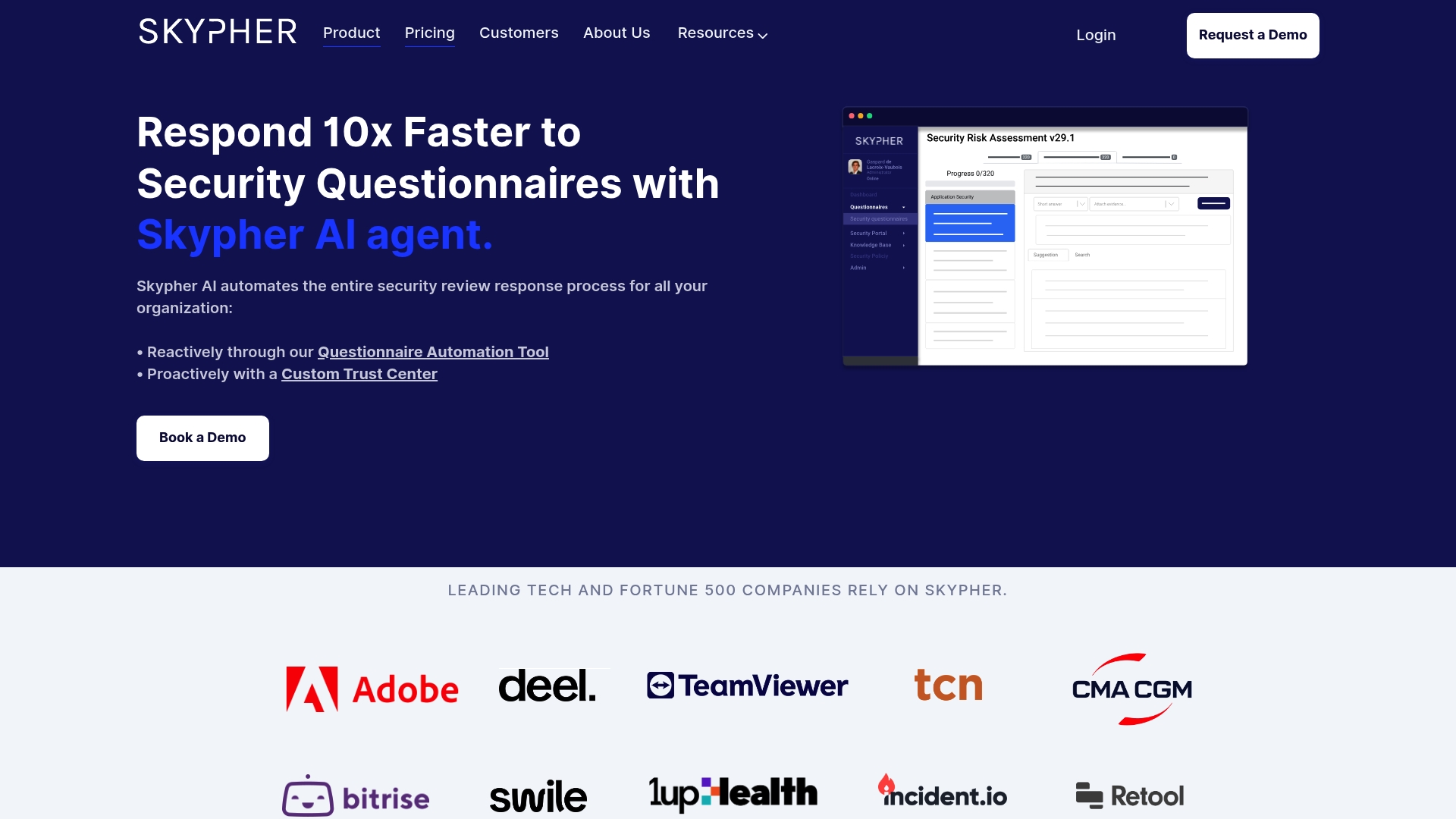
Enter Skypher! Our AI-driven Questionnaire Automation Tool is designed specifically for organizations in tech and finance, enabling you to answer security questionnaires faster and with higher accuracy. With seamless integration into over 40 third-party risk management platforms and features like real-time collaboration, Skypher not only enhances your data management practices but also builds trust through thorough documentation and transparency—key principles of GDPR.
Don’t wait—empower your organization to meet and maintain compliance effortlessly. Experience the transformation that automation brings: sign up today at https://skypher.co and take the first step towards a more secure and compliant future!