

GRC engineering is reshaping how B2B software companies handle compliance, shifting from tedious manual work to intelligent, automated systems. You might expect compliance to always slow things down, but that's no longer true. Companies using GRC automation now answer security questionnaires up to 10 times faster, flipping compliance from a burden into a secret sales weapon.
Table of Contents
- Understanding GRC Engineering in B2B Software
- Key Benefits for CISOs and Solution Engineers
- Best Practices to Boost Compliance and Sales
- Future Trends in GRC Engineering Solutions
Quick Summary
| Takeaway | Explanation |
|---|---|
| Integrate Compliance into Development | Embed compliance directly into software development for agility and reduced risks. |
| Proactive Risk Management is Essential | Utilize continuous monitoring and predictive analytics for better risk detection. |
| Streamline Compliance with Automation | Leverage automation to reduce manual compliance efforts and speed up sales processes. |
| Create Interconnected Compliance Ecosystems | Develop unified systems for managing diverse regulatory requirements seamlessly. |
| Adopt Continuous Compliance Monitoring | Transition to real-time monitoring for dynamic compliance management. |
Understanding GRC Engineering in B2B Software
GRC engineering represents a critical evolution in how B2B software organizations approach risk management, compliance, and governance. At its core, this approach transforms traditional compliance processes from reactive checklists into proactive, integrated systems that align technology, strategy, and regulatory requirements.
The Strategic Integration of Governance and Technology
Modern B2B software environments demand more than simple compliance monitoring. Learn more about our compliance automation approach, GRC engineering fundamentally reimagines how organizations manage complex regulatory landscapes. According to the SANS Institute, this approach leverages automation and infrastructure as code to embed compliance directly into the development lifecycle, enabling companies to maintain rapid innovation without compromising security standards.
The methodology goes beyond traditional risk management by creating a holistic framework that connects governance policies, technological infrastructure, and regulatory requirements. Organizations can now transform compliance from a potential roadblock into a strategic advantage, reducing potential vulnerabilities while maintaining operational agility.
Technological Framework and Risk Mitigation
GRC engineering utilizes advanced technological tools to create comprehensive risk management strategies. The Institute of Internal Auditors emphasizes that effective GRC software supports collaboration, improves visibility, and consolidates critical data into structured frameworks.
Key technological components include:
- Continuous Monitoring: Real-time tracking of system configurations and potential risks
- Automated Compliance Checks: Instant verification against predefined regulatory standards
- Integrated Risk Assessment: Dynamic evaluation of potential vulnerabilities across technological ecosystems
By implementing these sophisticated technological approaches, B2B software companies can develop more resilient, adaptive compliance strategies that respond quickly to emerging regulatory challenges and technological shifts.
To clarify the technological tools and their compliance benefits discussed, here's a summary table of key GRC engineering features and their roles in risk mitigation:
| Technological Feature | Description | Compliance Benefit |
|---|---|---|
| Continuous Monitoring | Real-time tracking of system configurations and potential risks | Early detection of vulnerabilities |
| Automated Compliance Checks | Instant verification against regulatory standards | Reduces manual errors, saves time |
| Integrated Risk Assessment | Dynamic evaluation across technological ecosystems | Comprehensive vulnerability analysis |
| Real-Time Vulnerability Scanning | Automated identification of security gaps | Immediate response to threats |
| Predictive Threat Modeling | Advanced analytics to anticipate security risks | Proactive risk management |
| Automated Policy Enforcement | Automatic application of security rules across infrastructure | Ensures consistent compliance |
Operational Benefits and Strategic Advantages
The Centers for Medicare & Medicaid Services highlights how comprehensive GRC frameworks promote continuous evaluation and organizational accountability. This approach transforms compliance from a bureaucratic exercise into a strategic business function that drives operational efficiency.
Companies adopting robust GRC engineering practices can expect significant benefits, including reduced regulatory risks, improved decision-making capabilities, and enhanced organizational transparency. The ability to proactively identify and mitigate potential compliance issues before they escalate represents a fundamental shift in how businesses approach risk management in an increasingly complex technological landscape.
As digital transformation continues to reshape business environments, GRC engineering emerges as a critical capability for organizations seeking to balance innovation, security, and regulatory compliance.
Key Benefits for CISOs and Solution Engineers
GRC engineering offers transformative advantages for CISOs and solution engineers navigating complex technological and regulatory landscapes. By integrating advanced risk management strategies, these professionals can dramatically enhance their organization's security posture and operational efficiency.
Enhanced Risk Detection and Proactive Management
Modern CISOs require sophisticated tools that move beyond traditional reactive security approaches. Explore our comprehensive security automation strategies, solution engineers can leverage GRC engineering to implement continuous risk monitoring and predictive threat assessment. According to the NIST Special Publication 800-37, integrated risk management frameworks enable information security professionals to systematically identify, assess, and mitigate potential vulnerabilities before they escalate.
Key risk detection capabilities include:
- Real-Time Vulnerability Scanning: Automated identification of potential security gaps
- Predictive Threat Modeling: Advanced analytics to anticipate potential security risks
- Comprehensive Compliance Tracking: Continuous monitoring of regulatory requirements
These capabilities empower CISOs to transition from defensive postures to strategic risk management, transforming potential vulnerabilities into opportunities for architectural improvement.

Operational Efficiency and Strategic Alignment
GRC engineering dramatically streamlines complex compliance processes, allowing solution engineers to focus on innovation rather than administrative overhead. By embedding compliance requirements directly into technological infrastructure, organizations can reduce manual intervention, minimize human error, and accelerate development cycles.
The strategic benefits include:
- Reduced time spent on manual compliance verification
- Improved cross-functional collaboration between security, engineering, and compliance teams
- Enhanced ability to demonstrate regulatory adherence
Solution engineers gain unprecedented visibility into compliance status, enabling more informed architectural decisions that balance security requirements with business objectives.
Technological Resilience and Adaptive Security
In an era of rapidly evolving cybersecurity threats, GRC engineering provides CISOs with a dynamic framework for maintaining technological resilience. By integrating continuous monitoring, automated compliance checks, and adaptive risk assessment, organizations can create robust security ecosystems that respond quickly to emerging challenges.
Critical components of this adaptive approach include:
- Automated policy enforcement across technological infrastructures
- Dynamic risk scoring and prioritization
- Seamless integration with existing security toolchains
CISOs and solution engineers can now develop more responsive, intelligent security strategies that anticipate and mitigate risks before they materialize, transforming compliance from a bureaucratic requirement into a strategic competitive advantage.
The future of enterprise security lies not in rigid, static frameworks, but in flexible, intelligent systems that can adapt as quickly as technological landscapes evolve. GRC engineering represents this critical evolution, providing CISOs and solution engineers with the tools they need to protect, optimize, and innovate.
Best Practices to Boost Compliance and Sales
Effective GRC engineering transcends traditional compliance mechanisms, serving as a strategic catalyst for business growth and sales acceleration. By implementing sophisticated compliance strategies, organizations can transform regulatory requirements from potential obstacles into competitive advantages.
Strategic Alignment of Compliance and Sales Processes
Discover how automation streamlines compliance workflows, organizations can leverage GRC engineering to create seamless interactions between compliance and sales teams. According to the SANS Institute, integrating governance principles directly into technological infrastructure enables companies to reduce manual overhead and accelerate sales cycles.
Key strategic alignment strategies include:
- Automated Compliance Documentation: Instant generation of security and compliance reports
- Real-Time Risk Assessment: Dynamic evaluation of potential sales barriers
- Transparent Communication Channels: Streamlined information sharing between compliance and sales teams
These approaches enable sales professionals to demonstrate robust security credentials quickly, building client trust and reducing friction in complex enterprise sales processes.
Proactive Risk Management and Sales Acceleration
The BAI Research Institute recommends taking an enterprise-wide perspective on risk management. By mapping risks comprehensively and establishing clear control mechanisms, organizations can create a more agile and responsive sales environment.
Proactive risk management techniques include:
- Developing detailed implementation plans
- Establishing clear roles and responsibilities
- Creating cross-functional collaboration frameworks
- Implementing continuous monitoring systems
These practices not only mitigate potential compliance risks but also provide sales teams with comprehensive, verifiable security credentials that can accelerate deal closures.
Here's a checklist table summarizing best practices and their role in supporting compliance and sales acceleration as outlined in this section:
| Best Practice | Key Action or Outcome | Supports Compliance | Accelerates Sales |
|---|---|---|---|
| Automated Compliance Documentation | Instant generation of reports | Yes | Yes |
| Real-Time Risk Assessment | Evaluate and address sales barriers | Yes | Yes |
| Transparent Communication Channels | Streamlined collaboration between teams | Yes | Yes |
| Detailed Implementation Plans | Clear, actionable steps for compliance | Yes | |
| Clear Roles and Responsibilities | Defined accountability in compliance processes | Yes | |
| Automated Evidence Collection & Verification | Reduce manual effort, improve audit readiness | Yes | Yes |
| AI-Powered Risk Prediction | Anticipate and mitigate security threats | Yes | |
| Comprehensive Compliance Training | Enhance employee understanding | Yes |
Technology-Driven Compliance and Sales Enablement
The IEEE Computer Society emphasizes the critical role of technological solutions in modern GRC engineering. By automating evidence collection, providing comprehensive training, and establishing real-time reporting mechanisms, organizations can transform compliance from a potential roadblock into a strategic sales enabler.
Advanced technological approaches include:
- Automated evidence collection and verification
- AI-powered risk prediction and mitigation
- Comprehensive compliance training programs
- Integration of compliance data with sales intelligence platforms
By embedding compliance intelligence directly into sales workflows, organizations can create a more transparent, efficient, and trustworthy business ecosystem. Sales teams gain the ability to quickly address potential client concerns, while maintaining the highest standards of regulatory adherence.
Ultimately, GRC engineering represents more than a technological solution—it is a strategic approach that aligns compliance, technology, and business objectives. Organizations that successfully implement these practices can convert regulatory requirements into competitive differentiators, driving both sales performance and organizational resilience.
Future Trends in GRC Engineering Solutions
The landscape of GRC engineering is undergoing a profound transformation, driven by technological innovation, evolving regulatory environments, and the increasing complexity of digital business ecosystems. As organizations seek more sophisticated approaches to governance, risk management, and compliance, emerging trends are reshaping how businesses conceptualize and implement their GRC strategies.
Artificial Intelligence and Predictive Risk Management
Explore advanced compliance automation techniques, organizations are increasingly turning to artificial intelligence to revolutionize their GRC engineering approaches. According to MITRE's technical research, machine learning and advanced data analytics are becoming critical tools for predicting and mitigating potential risks before they materialize.
Key AI-driven GRC innovations include:
- Predictive Risk Modeling: Advanced algorithms that forecast potential compliance vulnerabilities
- Automated Anomaly Detection: Real-time identification of potential regulatory deviations
- Intelligent Compliance Mapping: Dynamic systems that adapt to changing regulatory landscapes
These AI technologies enable organizations to move from reactive compliance approaches to proactive, intelligent risk management strategies that anticipate and address potential challenges with unprecedented precision.
Integrated and Interoperable Compliance Ecosystems
The future of GRC engineering lies in creating seamless, interconnected compliance frameworks that transcend traditional organizational silos. Modern enterprises require solutions that can integrate multiple compliance requirements, technological platforms, and regulatory standards into a cohesive, easily manageable ecosystem.
Emerging integration strategies include:
- Development of open standards for compliance data exchange
- Creation of unified compliance management platforms
- Enhanced API-driven interoperability between different risk management tools
- Real-time data synchronization across multiple organizational systems
By developing more flexible and interconnected compliance infrastructures, organizations can reduce complexity, minimize manual intervention, and create more responsive governance mechanisms.
Continuous Compliance and Real-Time Monitoring
Traditional periodic compliance assessments are rapidly being replaced by continuous, real-time monitoring systems. Future GRC engineering solutions will leverage advanced technologies to provide instantaneous insights into organizational risk profiles, enabling immediate response and adaptive governance strategies.
Advanced monitoring capabilities will encompass:
- Blockchain-enabled immutable compliance tracking
- IoT-integrated risk assessment mechanisms
- Cloud-native compliance management systems
- Quantum computing-enhanced risk prediction models
These technologies represent a fundamental shift from static, point-in-time compliance checks to dynamic, continuous risk management approaches that can adapt instantaneously to changing regulatory and technological landscapes.
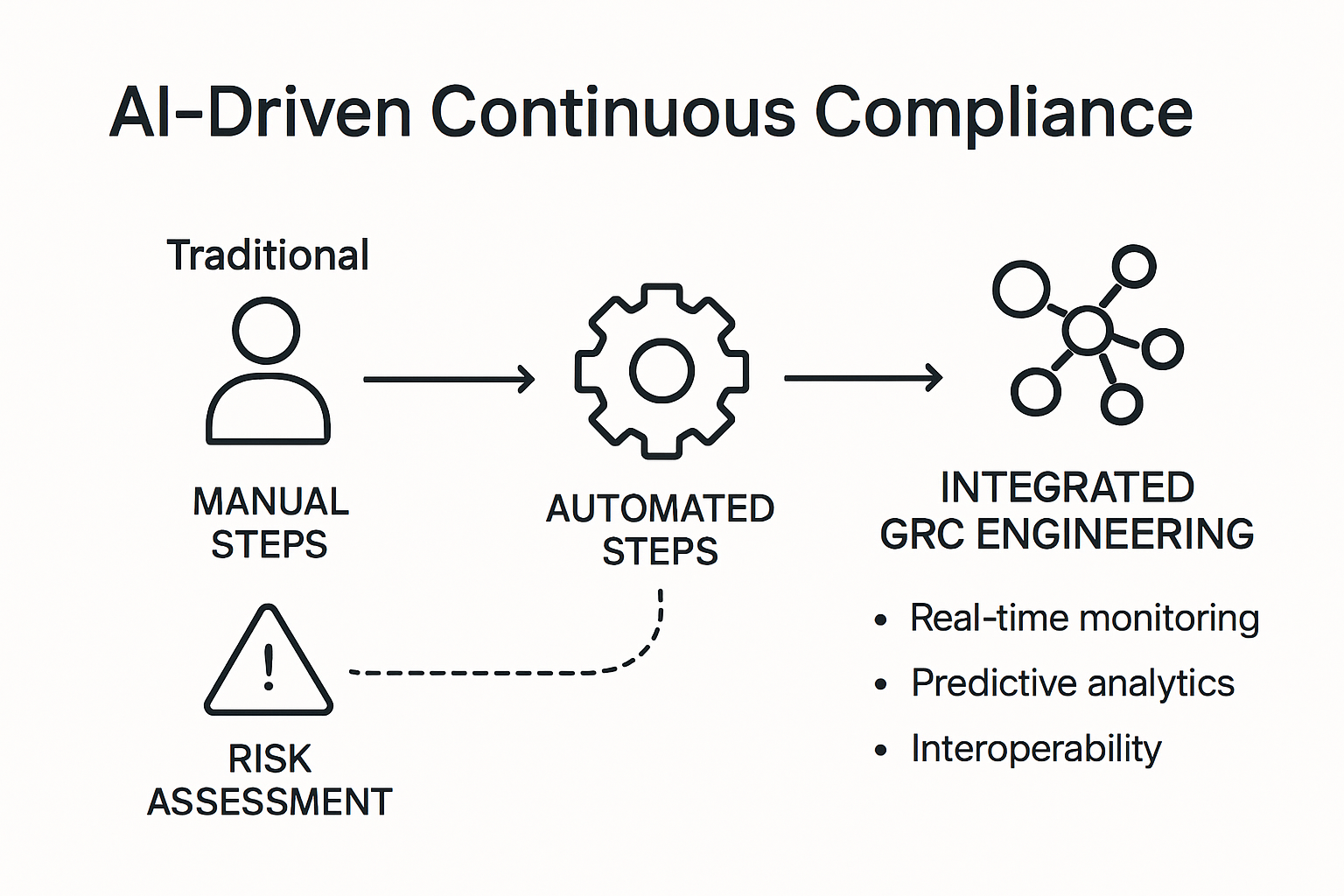
The convergence of artificial intelligence, advanced data analytics, and sophisticated technological infrastructures is creating a new paradigm in GRC engineering. Organizations that embrace these emerging trends will not only achieve superior regulatory compliance but also transform risk management from a necessary overhead into a strategic competitive advantage. As technological complexity continues to increase, the ability to implement intelligent, adaptive GRC solutions will become a critical differentiator in global business environments.
Frequently Asked Questions
What is GRC engineering in B2B software?
GRC engineering refers to the integration of governance, risk management, and compliance processes into B2B software development. It transforms traditional compliance from a manual, reactive process into a proactive, automated approach that aligns technology with regulatory requirements.
How does GRC automation improve compliance processes?
GRC automation streamlines compliance by utilizing technology to reduce manual efforts, enhance accuracy, and speed up processes. Companies can respond to security questionnaires and compliance checks up to 10 times faster, turning compliance from a burden into a competitive advantage.
What are the key benefits of GRC engineering for CISOs?
GRC engineering provides CISOs with enhanced risk detection, operational efficiency, and adaptive security frameworks. This proactive approach allows for better identification and mitigation of potential vulnerabilities before they escalate into serious issues.
What future trends should organizations be aware of in GRC engineering?
Organizations should pay attention to trends such as the use of artificial intelligence for predictive risk management, the development of integrated compliance ecosystems, and the shift towards continuous compliance monitoring. These innovations will enhance risk management and the overall compliance landscape.
Transform Compliance Bottlenecks into Competitive Wins
Does manual compliance work feel like a roadblock whenever you pursue new clients or try to speed up sales? The article highlighted how GRC engineering can make compliance an asset, yet many B2B software companies still struggle with delays and frustration caused by slow security questionnaire responses and repetitive risk checks. These are the exact challenges Skypher was designed to solve. Our AI-powered platform automates the response process, streamlines collaboration, and integrates directly with dozens of third-party risk management tools. That means real, measurable gains for your compliance and sales teams—less time wasted, fewer errors, more trust with every prospect.
Stop letting compliance slow down your deals. Try Skypher's automated solution now to answer security questionnaires up to 10 times faster, reduce operational effort, and deliver a seamless experience to both your clients and internal teams. Discover how our Questionnaire Automation Tool and customizable Trust Center can help you turn every compliance review into a business advantage. Explore more and take charge of your GRC engineering success today.
Recommended
- The Case for Security Questionnaire Automation
- Increasing company efficiency: boosting collaboration with widespread adoption
- The ever growing number of security questionnaires and what you and your company can do to face it
- The different formats & mistakes made when writing or answering security questionnaires
- Steps to comply CCPA compliance by Bista Solutions