
Every organization wants protection and peace of mind, but a strong GRC program goes beyond crisis control. Picture this: Companies that implement integrated GRC programs see a five-year ROI over 200 percent thanks to increased efficiency and smarter decision making. Sounds impressive, right? Most assume GRC is just about red tape and keeping auditors happy. The real surprise is that the biggest gains come from stronger stakeholder trust and resilience, turning risk and compliance from a chore into a source of real business power.
Table of Contents
- Understanding the Core Elements of a GRC Program
- Key Benefits of Implementing a GRC Program
- Steps to Build an Effective GRC Program
- Best Practices and Future Trends in GRC Programs
Quick Summary
| Takeaway | Explanation |
|---|---|
| Integrate Governance, Risk Management, and Compliance | A successful GRC program requires the seamless integration of governance, risk management, and compliance activities to drive strategic decision-making and protect organizational assets. |
| Leverage Technology for Efficiency | Employ advanced technologies, such as automation and AI, to streamline compliance processes, enhance monitoring, and support proactive risk management. |
| Establish Clear Goals and Assessment | Begin development of a GRC program by defining clear organizational objectives and evaluating current governance and compliance mechanisms to identify gaps. |
| Focus on Stakeholder Trust and Ethical Practices | Build stakeholder confidence through transparent operations, consistent compliance, and engagement in ethical practices within governance frameworks. |
| Incorporate ESG Considerations | As ESG factors become increasingly significant, integrate environmental, social, and governance risk assessments into your GRC strategies to meet evolving stakeholder expectations. |
Understanding the Core Elements of a GRC Program
A GRC program represents a strategic approach that integrates an organization's governance, risk management, and compliance activities into a cohesive framework. By understanding the core elements, businesses can create a robust system that supports strategic decision making, protects organizational assets, and ensures regulatory adherence.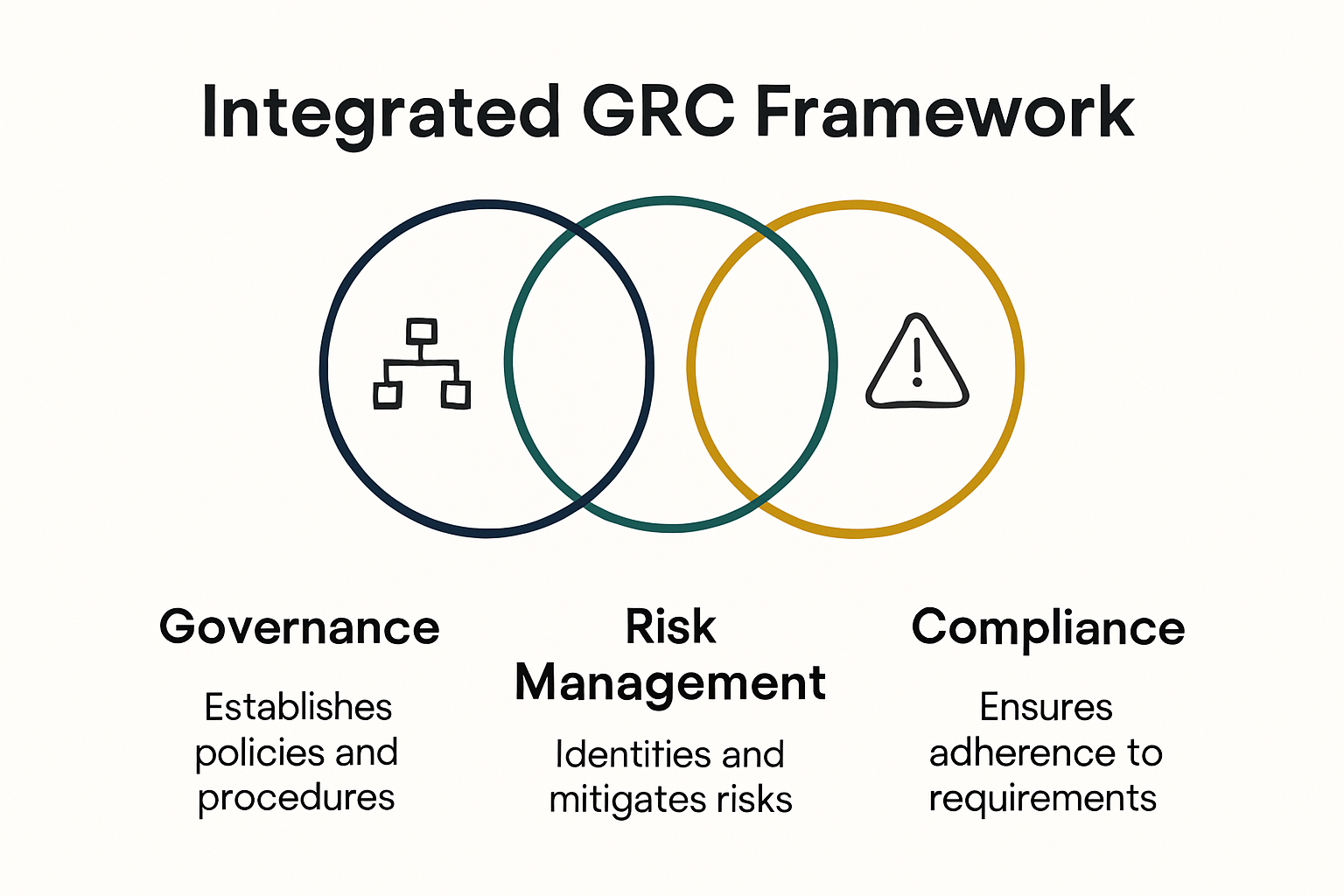
Governance: The Strategic Foundation
Governance forms the critical backbone of any effective GRC program. It establishes the organizational structure, defines roles and responsibilities, and creates the policies that guide decision making. According to MetricStream, governance provides the structural framework that aligns organizational operations with strategic objectives. This involves creating clear accountability mechanisms, setting ethical standards, and developing comprehensive policies that drive consistent behavior across all levels of the organization.
Key governance components include:
- Leadership Oversight: Establishing clear leadership roles and responsibilities
- Policy Development: Creating comprehensive organizational policies
- Decision Making Frameworks: Implementing structured processes for strategic choices
Risk Management: Identifying and Mitigating Organizational Threats
Risk management is the systematic process of identifying, assessing, and addressing potential threats that could impact organizational objectives. Kraft Business highlights that effective risk management involves a comprehensive approach to understanding and mitigating potential challenges. This process goes beyond simple risk identification, requiring organizations to develop proactive strategies for risk mitigation, monitoring, and response.
Effective risk management includes:
- Risk Identification: Comprehensive assessment of potential organizational threats
- Risk Analysis: Evaluating the potential impact and likelihood of identified risks
- Mitigation Strategies: Developing targeted approaches to address and minimize risks
Compliance: Ensuring Regulatory Alignment
Compliance represents the organization's commitment to meeting legal and regulatory requirements. According to Hyperproof, an effective compliance strategy enables organizations to demonstrate their commitment to ethical conduct and regulatory adherence. This involves creating systems that track and ensure compliance with relevant laws, industry standards, and internal policies.
Critical compliance elements include:
- Regulatory Tracking: Monitoring and understanding applicable laws and regulations
- Documentation: Maintaining comprehensive records of compliance efforts
- Reporting Mechanisms: Implementing robust reporting and audit trails
By integrating these three core elements, organizations can create a GRC program that not only protects against potential risks but also drives strategic performance. The interconnected nature of governance, risk management, and compliance allows businesses to develop a holistic approach to organizational management that promotes transparency, accountability, and strategic success.
Key Benefits of Implementing a GRC Program

Implementing a comprehensive GRC program offers organizations a strategic advantage in today's complex business environment. By integrating governance, risk management, and compliance efforts, businesses can transform potential challenges into opportunities for growth, efficiency, and long-term success.
Enhanced Operational Efficiency and Cost Reduction
A robust GRC program drives significant operational improvements and cost savings. According to GRC Management Insights, organizations implementing integrated GRC platforms have achieved a remarkable five-year return on investment (ROI) exceeding 200%. This substantial financial benefit stems from automation of critical processes such as audits, policy checks, and evidence collection.
Key efficiency gains include:
- Process Automation: Reducing manual compliance tasks and administrative overhead
- Resource Optimization: Streamlining workflows and eliminating redundant activities
- Cost Containment: Minimizing potential financial losses from regulatory violations and inefficient operations
Improved Risk Management and Organizational Resilience
GRC programs provide a comprehensive approach to identifying, assessing, and mitigating organizational risks. Risk Rising emphasizes that mature GRC frameworks enable organizations to break down operational silos, foster collaboration, and proactively address potential threats. This holistic approach transforms risk management from a reactive process to a strategic advantage.
Comprehensive risk management benefits include:
- Proactive Risk Identification: Early detection of potential organizational threats
- Strategic Decision Support: Providing data-driven insights for leadership
- Organizational Adaptability: Creating flexible frameworks to respond to emerging challenges
Stakeholder Trust and Competitive Advantage
A well-implemented GRC program builds significant stakeholder confidence and organizational reputation. GRC Management Insights reveals that mature GRC frameworks enhance stakeholder trust through increased transparency, clear policies, and open reporting. This trust translates into tangible business benefits, including higher employee retention, larger deal sizes, and greater brand resilience during challenging periods.
Stakeholder trust advantages include:
- Transparent Operations: Demonstrating commitment to ethical practices
- Regulatory Confidence: Proving consistent compliance with industry standards
- Competitive Differentiation: Establishing a reputation for responsible business management
By implementing a comprehensive GRC program, organizations can transform compliance from a mandatory requirement into a strategic asset. The integrated approach not only mitigates risks and ensures regulatory adherence but also creates a foundation for sustainable growth, operational excellence, and long-term organizational success.
Steps to Build an Effective GRC Program
Developing a comprehensive GRC program requires strategic planning, organizational commitment, and a systematic approach that aligns with business objectives. By following a structured methodology, organizations can create a robust framework that supports governance, manages risks, and ensures regulatory compliance.
Establishing Clear Organizational Goals and Assessment
The foundation of an effective GRC program begins with precise goal setting and comprehensive organizational assessment. According to CertPro, this initial phase involves defining specific organizational objectives, evaluating existing procedures, and identifying potential technological requirements. Senior leadership must play a critical role in establishing the strategic vision and commitment to the GRC initiative.
Key assessment steps include:
- Organizational Objective Mapping: Defining clear, measurable GRC goals
- Current Process Evaluation: Analyzing existing governance and compliance mechanisms
- Technology Infrastructure Review: Identifying technological gaps and integration needs
Implementing Adaptive Technologies and Frameworks
Modern GRC programs leverage advanced technologies to enhance monitoring, reporting, and compliance capabilities. TrustCloud Community highlights the importance of adaptive frameworks that utilize automation, artificial intelligence, and RegTech solutions. These technologies enable real-time regulatory monitoring, swift response to changing compliance requirements, and more efficient risk management processes.
Technology integration strategies include:
- Automation Tools: Implementing systems that streamline compliance tracking
- AI-Powered Monitoring: Utilizing intelligent systems for continuous risk assessment
- Real-Time Reporting: Creating dynamic dashboards for immediate insights
Comprehensive ESG Integration and Continuous Improvement
Contemporary GRC programs must extend beyond traditional compliance to incorporate Environmental, Social, and Governance (ESG) considerations. TrustCloud Community emphasizes that modern organizations are embedding ESG risk assessments, reporting mechanisms, and compliance monitoring to meet evolving stakeholder expectations.
ESG integration approaches include:
- Risk Assessment Frameworks: Developing comprehensive ESG risk evaluation processes
- Stakeholder Engagement: Creating transparent reporting and communication channels
- Continuous Improvement: Establishing mechanisms for ongoing program refinement
Successful GRC program implementation requires a holistic approach that combines strategic planning, technological innovation, and a commitment to continuous adaptation. By embracing these comprehensive steps, organizations can develop a resilient GRC framework that not only mitigates risks but also drives sustainable business performance and stakeholder confidence.
Best Practices and Future Trends in GRC Programs
The landscape of Governance, Risk, and Compliance (GRC) is rapidly evolving, driven by technological advancements, changing regulatory environments, and increasingly complex global business challenges. Understanding the emerging best practices and future trends is crucial for organizations seeking to maintain a competitive and resilient approach to GRC management.
Technological Integration and Intelligent Automation
McKinsey highlights the critical importance of integrated GRC frameworks that leverage advanced technologies to break down organizational silos and enhance collaborative risk management. Artificial intelligence and machine learning are transforming traditional GRC approaches, enabling more sophisticated and proactive risk identification and compliance processes.
Key technological best practices include:
- AI-Powered Risk Detection: Implementing intelligent systems for predictive risk analysis
- Automated Compliance Monitoring: Using machine learning to track and verify regulatory requirements
- Real-Time Data Integration: Creating dynamic, interconnected risk management platforms
Holistic Approach to Governance and Ethical Frameworks
Risk Rising emphasizes the growing significance of building strong ethical foundations and stakeholder trust within GRC programs. Modern organizations are increasingly focusing on transparency, comprehensive risk assessment, and creating robust governance structures that extend beyond traditional compliance metrics.
Ethical governance strategies include:
- Stakeholder Transparency: Developing clear communication channels and reporting mechanisms
- Comprehensive Ethics Training: Implementing organization-wide ethical awareness programs
- Values-Driven Compliance: Aligning regulatory adherence with core organizational values
Emerging Focus on ESG and Supply Chain Resilience
Environmental, Social, and Governance (ESG) considerations are becoming integral to contemporary GRC programs. Risk Rising identifies the growing importance of integrating sustainability, social responsibility, and governance risk management into organizational strategies.
ESG integration approaches include:
- Sustainability Risk Assessment: Developing comprehensive environmental impact evaluations
- Social Responsibility Metrics: Creating measurable frameworks for social impact
- Supply Chain Transparency: Implementing rigorous due diligence and ethical sourcing practices
As organizations navigate increasingly complex global business environments, successful GRC programs will require a dynamic, technology-enabled approach that balances regulatory compliance with strategic innovation. By embracing intelligent automation, maintaining strong ethical frameworks, and prioritizing comprehensive risk management, businesses can develop resilient GRC strategies that support long-term organizational success and stakeholder confidence.
Frequently Asked Questions
What is a GRC program?
A GRC program stands for Governance, Risk, and Compliance program, which is a strategic framework used by organizations to integrate and manage their governance, risk management, and compliance efforts effectively.
What are the key benefits of implementing a GRC program?
Implementing a GRC program can lead to enhanced operational efficiency, improved risk management, increased stakeholder trust, competitive advantage, and significant cost savings through streamlined processes and automation.
How can I build an effective GRC program?
To build an effective GRC program, start by establishing clear organizational goals, implement adaptive technologies and frameworks, and integrate comprehensive ESG considerations. Continuous assessment and improvement are also crucial for ongoing success.
What trends are shaping GRC programs in 2025?
Key trends shaping GRC programs in 2025 include the integration of intelligent automation, a focus on ethical governance and transparency, and the increasing importance of ESG (Environmental, Social, and Governance) factors in risk management strategies.
Ready to Turn GRC Challenges Into Quick Wins?
If you read the GRC Program Guide 2025, you already see the huge impact of integrating governance, risk, and compliance. But building trust, boosting efficiency, and keeping up with compliance demands can feel overwhelming, especially when security questionnaires slow down your workflow and stretch your team thin.
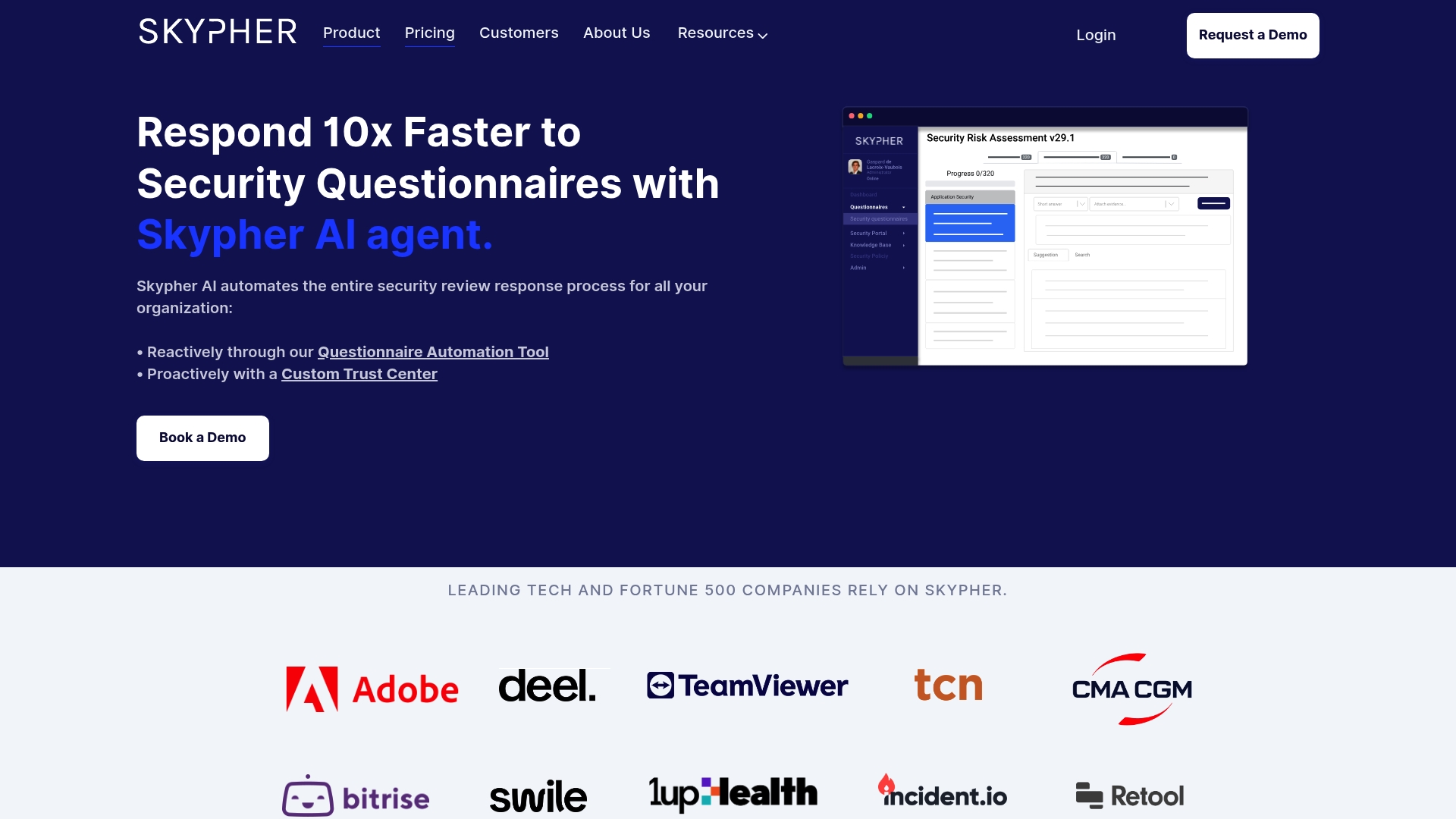
Imagine responding to security questionnaires in minutes instead of days—all while improving accuracy and making your sales process smoother. Skypher gives you an AI-driven Questionnaire Automation Tool that fits right into your GRC framework.
Do not let manual reviews drain your resources or add roadblocks to stakeholder confidence. See how Skypher helps organizations like yours improve operational efficiency, speed up risk reviews, and unlock true competitive advantage. Try it now and watch your GRC goals turn into real results.