

Over 60 percent of american organizations report struggling with the increasing complexity of regulatory requirements and risk management. As rules tighten and threats multiply, understanding how to manage governance, risk, and compliance becomes crucial for any business aiming to thrive. This guide offers a clear view into GRC software, showing how these modern solutions can help american companies transform compliance obstacles into opportunities for sharper decision-making and sustained success.
Table of Contents
- What Is GRC Software and Why It Matters
- Types of GRC Software and Core Functions
- Key Features: Automation, Integration, and Collaboration
- Real-World GRC Software Use Cases and Benefits
- Critical Risks, Pitfalls, and Best Practices
Key Takeaways
| Point | Details |
|---|---|
| GRC Software Significance | GRC software is essential for organizations to manage regulatory requirements, internal controls, and risks systematically. It aligns operational activities with institutional goals through a comprehensive management framework. |
| Types of GRC Solutions | Different types of GRC software, including Operational, IT, and Enterprise GRC systems, target specific governance and compliance needs, enhancing risk management across various functions. |
| Key Features | Advanced GRC platforms incorporate automation, integration, and collaboration tools, streamlining compliance processes, and enabling proactive risk management for improved operational efficiency. |
| Implementation Best Practices | Successful GRC software implementation requires careful change management, continuous staff training, and flexible compliance frameworks to overcome challenges and enhance organizational effectiveness. |
What Is GRC Software and Why It Matters
Governance, Risk, and Compliance (GRC) software represents a strategic technological solution designed to help organizations systematically manage their regulatory requirements, internal controls, and potential business risks. At its core, GRC software enables businesses to align their operational activities with broader institutional goals, creating a comprehensive framework for organizational management.
Modern GRC platforms integrate multiple critical business functions into a centralized system, allowing companies to track, assess, and mitigate risks across different departments. These software solutions help organizations develop structured approaches to compliance management, reducing potential legal vulnerabilities and operational inefficiencies. By providing real-time visibility into regulatory requirements and potential risk areas, GRC software transforms complex compliance challenges into manageable, strategic processes.
The strategic importance of GRC software extends beyond simple regulatory adherence. These tools enable proactive risk management by offering advanced analytics, automated reporting, and comprehensive dashboards that help leadership make informed decisions. Organizations can identify potential compliance gaps, assess emerging risks, and implement preventative measures before they escalate into significant challenges. With increasingly complex regulatory landscapes and growing cybersecurity threats, GRC software has transitioned from a nice-to-have tool to an essential component of strategic business management.
Key benefits of implementing GRC software include:
- Centralized risk and compliance tracking
- Automated compliance reporting
- Enhanced visibility into organizational risks
- Streamlined audit processes
- Improved decision-making capabilities
- Reduction of potential legal and financial penalties
Types of GRC Software and Core Functions
GRC software encompasses diverse types designed to address specific organizational needs, with solutions that can strategically target individual enterprise areas or work across comprehensive frameworks. These specialized platforms are categorized into several key types, each addressing unique governance, risk management, and compliance challenges faced by modern businesses.
The primary types of GRC software include Operational GRC, IT GRC, and Enterprise GRC systems. Operational GRC platforms focus on managing day-to-day risks and compliance requirements within specific business units, enabling departments to track and mitigate localized challenges. IT GRC solutions concentrate on technological environments, addressing cybersecurity risks, data protection standards, and technology-related regulatory requirements. Enterprise GRC systems provide the most comprehensive approach, offering holistic risk management strategies that integrate multiple organizational functions into a unified governance framework.

Core functions of GRC software are designed to streamline complex compliance processes and provide actionable insights. These functions typically include risk assessment and identification, regulatory tracking, policy management, audit trail documentation, and real-time reporting capabilities. Advanced GRC platforms leverage artificial intelligence and machine learning to predict potential risks, automate compliance workflows, and generate predictive analytics that help organizations proactively manage their governance strategies.
Key components of effective GRC software include:
- Centralized risk management dashboard
- Automated compliance monitoring
- Real-time reporting mechanisms
- Integrated policy management tools
- Comprehensive audit tracking
- Customizable compliance workflow configurations
- Advanced analytics and predictive risk modeling
By implementing robust GRC software, organizations can transform complex regulatory challenges into strategic opportunities for improved operational efficiency and risk mitigation.
Key Features: Automation, Integration, and Collaboration
GRC software has revolutionized organizational risk management through advanced technological capabilities that leverage software development and cloud-based automation, enabling businesses to transform complex compliance processes into streamlined, intelligent workflows. Automation stands at the forefront of these technological innovations, allowing organizations to reduce manual interventions and minimize human error in regulatory tracking and risk assessment.
The integration capabilities of modern GRC platforms represent a critical feature that distinguishes advanced solutions from traditional compliance management approaches. Comprehensive software compliance tools now offer seamless connectivity across multiple enterprise systems, creating unified dashboards that provide real-time insights into organizational risks, regulatory requirements, and compliance status. These integrations enable cross-functional teams to collaborate effectively, breaking down traditional silos and fostering a more holistic approach to governance and risk management.
Collaboration emerges as a fundamental pillar of contemporary GRC software, empowering teams to work simultaneously on risk assessment, policy development, and compliance monitoring. Advanced platforms incorporate features like shared workspaces, real-time document editing, automated notification systems, and centralized communication channels. These collaborative tools ensure that stakeholders across different departments can access, review, and contribute to risk management processes with unprecedented transparency and efficiency.
Key technological features that drive GRC software effectiveness include:
- Intelligent workflow automation
- Real-time risk detection and alerts
- Comprehensive system integration capabilities
- Centralized communication and collaboration tools
- Automated compliance documentation
- Predictive analytics for risk assessment
- Customizable reporting and visualization dashboards
By embracing these advanced features, organizations can transform compliance from a potential burden into a strategic advantage, enabling proactive risk management and sustainable organizational growth.
Real-World GRC Software Use Cases and Benefits
In the manufacturing sector, GRC software has transformed operational efficiency by providing sophisticated tracking and analytics for production compliance. Manufacturers can now monitor production deviations, implement corrective actions, and ensure consistent quality standards with unprecedented precision. These systems enable real-time detection of potential compliance issues, preventing defects and maintaining high customer satisfaction levels through proactive quality management.
Cybersecurity and technological innovation present complex compliance challenges that demand robust GRC solutions. Organizations leveraging emerging technologies like artificial intelligence, cloud computing, and advanced design platforms must navigate intricate regulatory landscapes. GRC software becomes crucial in these contexts, enabling businesses to capitalize on high-ROI technologies while maintaining rigorous data protection, ethical standards, and regulatory compliance.
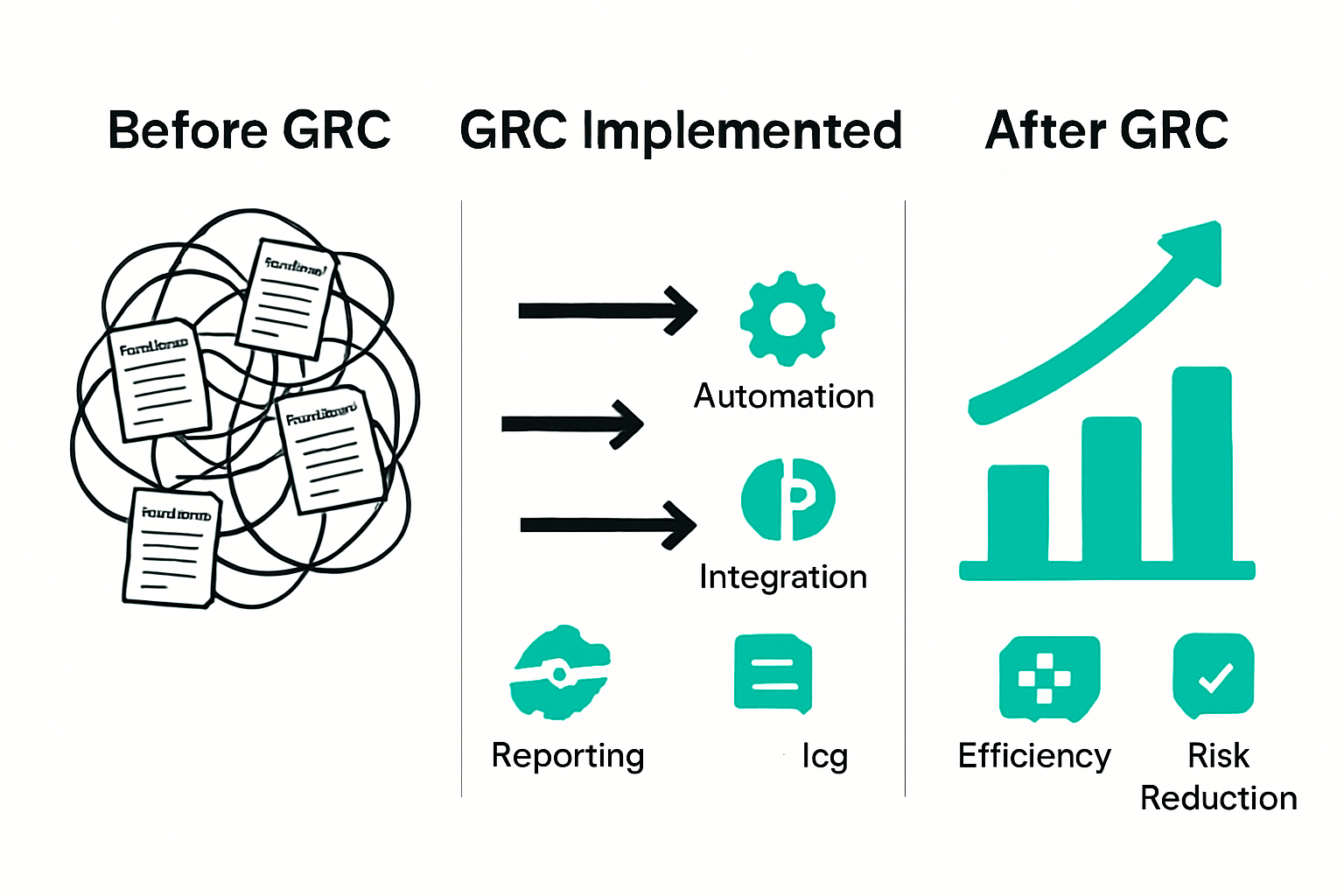
Across diverse industries, GRC software delivers transformative benefits by centralizing risk management, automating compliance processes, and providing actionable insights. Financial institutions use these tools to monitor transaction risks, healthcare organizations track patient data protection, and technology companies ensure ethical AI development. The versatility of GRC platforms allows organizations to create customized compliance frameworks that adapt to their unique operational requirements.
Key benefits of implementing GRC software include:
- Comprehensive risk assessment and mitigation
- Automated compliance monitoring
- Real-time regulatory tracking
- Enhanced operational transparency
- Reduced compliance-related costs
- Improved decision-making capabilities
- Proactive threat detection and prevention
By integrating advanced GRC solutions, organizations can transform compliance from a potential organizational burden into a strategic competitive advantage, enabling confident innovation and sustainable growth.
Critical Risks, Pitfalls, and Best Practices
Organizations implementing GRC software frequently encounter significant challenges that can undermine their compliance efforts. Legacy GRC tools often suffer from fundamental technological limitations, including complex interfaces, poor integration capabilities, and outdated technological frameworks. These systemic issues can create substantial barriers to effective risk management, rendering compliance processes inefficient and potentially exposing organizations to unexpected regulatory vulnerabilities.
Risk management strategies require careful, systematic implementation to overcome common organizational hurdles. Resistance to change emerges as a critical pitfall, with many teams struggling to adapt to new technological frameworks and compliance methodologies. Communication breakdowns, inadequate resource allocation, and complex workflow configurations can further compromise GRC software effectiveness, preventing organizations from realizing the full potential of their risk management platforms.
To mitigate these challenges, organizations must adopt a holistic approach to GRC software implementation. Successful strategies include comprehensive staff training, phased technological rollouts, continuous performance monitoring, and maintaining flexible, adaptive compliance frameworks. Prioritizing user experience, investing in intuitive interfaces, and ensuring seamless cross-departmental integration are essential for overcoming resistance and driving meaningful organizational change.
Critical best practices for successful GRC software implementation include:
- Conducting thorough organizational readiness assessments
- Developing comprehensive change management strategies
- Investing in continuous staff training and education
- Establishing clear communication channels
- Implementing phased, iterative deployment approaches
- Maintaining flexibility in compliance frameworks
- Regular performance and effectiveness evaluations
By proactively addressing potential implementation challenges, organizations can transform GRC software from a potential source of complexity into a powerful strategic asset for risk management and regulatory compliance.
Elevate Your GRC Strategy with AI-Driven Automation
The challenges of managing Governance, Risk, and Compliance grow as regulatory demands intensify and risk landscapes evolve. This article highlights how GRC software is critical for automating compliance tracking, integrating risk management functions, and enabling real-time collaboration across teams. If overcoming manual processes, minimizing errors, and fostering seamless cooperation are priorities for your organization, Skypher’s AI Questionnaire Automation Tool is designed to transform these challenges into strategic advantages.

Experience the benefits of centralized compliance workflows with Skypher’s powerful platform. Our solution supports more than 30 third-party risk management integrations like OneTrust and ServiceNow, empowers your teams with real-time collaboration through Slack and MS Teams, and accelerates questionnaire completion times dramatically. By streamlining complex security assessments and enabling a customizable Trust Center, Skypher helps medium to large tech and finance organizations reduce bottlenecks and improve client trust. Visit Skypher’s platform now to start automating your compliance process and stay ahead in your GRC journey.
Frequently Asked Questions
What is GRC software?
GRC software stands for Governance, Risk, and Compliance software. It is a strategic technological solution that helps organizations manage their regulatory requirements, internal controls, and potential business risks effectively.
What are the main types of GRC software?
The main types of GRC software include Operational GRC, IT GRC, and Enterprise GRC systems. Each type addresses specific governance, risk management, and compliance challenges within organizations.
How does GRC software benefit an organization?
GRC software benefits organizations by centralizing risk and compliance tracking, automating reporting processes, enhancing visibility into organizational risks, streamlining audit processes, and improving decision-making capabilities.
What key features should I look for in GRC software?
Key features to look for in GRC software include intelligent workflow automation, real-time risk detection and alerts, comprehensive system integration, centralized communication tools, and automated compliance documentation.
Recommended
- GRC Solutions Explained: Streamlining Compliance and Risk
- Understanding the GRC Framework: Key Concepts Explained
- Complete Guide to GRC Compliance Software Solutions
- 7 Essential Tips for Every GRC Analyst to Succeed
- Meeting Compliance Requirements: Complete Guide for Organisations|CS
- 6 Essential IT Governance Tools for Compliance | singleclic