

Confusion around HIPAA assessments can leave even experienced compliance teams guessing about what truly protects patient data. For those managing sensitive information in global tech or finance companies, understanding the difference between a one-time checklist and a living risk management strategy is vital. This overview clarifies common misconceptions, highlights national security standards for health information, and explains how ongoing HIPAA assessments support stronger data security and more efficient questionnaire processes.
Table of Contents
- HIPAA Assessments Defined and Common Misconceptions
- Key Types of HIPAA Security Assessments
- Legal Framework and Compliance Requirements
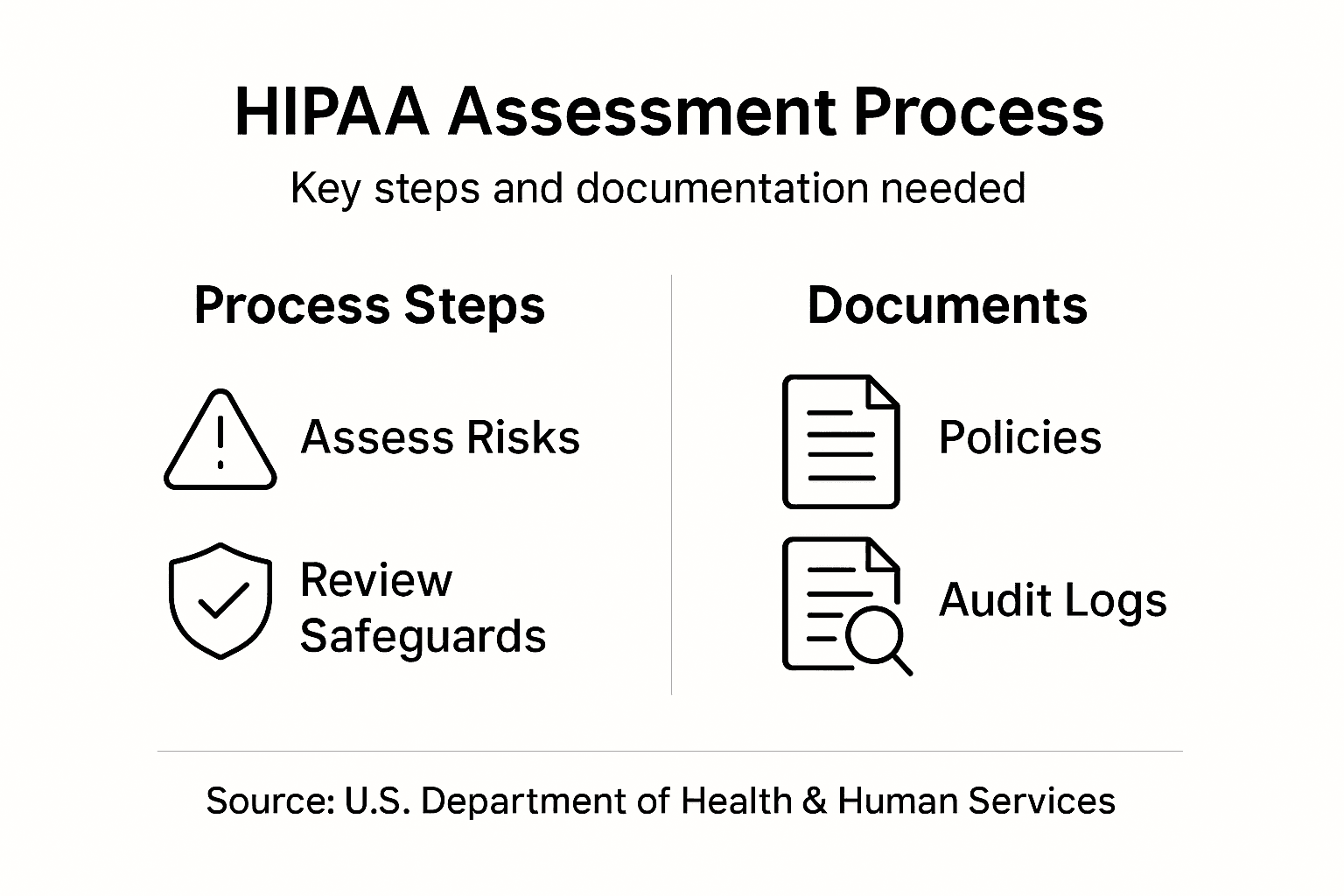
- Typical Process and Required Documentation
- Risks, Liabilities, and Common Pitfalls
Key Takeaways
| Point | Details |
|---|---|
| Ongoing Compliance | HIPAA compliance is a continuous process requiring regular assessments rather than a one-time event. Conduct annual reviews and evaluations after significant changes to maintain security. |
| Comprehensive Assessments | Utilize security risk analysis, vulnerability assessments, and compliance audits to identify and mitigate threats to electronic protected health information (ePHI). |
| Legal Framework Understanding | Familiarize yourself with the HIPAA Privacy, Security, and Breach Notification Rules to ensure all aspects of patient data protection are covered adequately. |
| Documentation and Training | Maintain thorough documentation and undertake regular training to address common compliance gaps and reinforce workforce knowledge about HIPAA regulations. |
HIPAA Assessments Defined and Common Misconceptions
HIPAA assessments are systematic evaluations designed to ensure healthcare organizations and their business associates maintain comprehensive security protocols for protecting electronic protected health information (ePHI). These assessments go beyond a simple checklist and represent a dynamic process of identifying, analyzing, and mitigating potential risks to patient data privacy and security.
At their core, HIPAA assessments involve examining an organization's administrative, physical, and technical safeguards to determine compliance with federal health information protection standards. National security standards for health information require covered entities to implement scalable measures tailored to their specific operational context. Contrary to popular belief, HIPAA compliance is not a one-time event but an ongoing, evolving process of risk management and continuous improvement.
Several persistent misconceptions can undermine an organization's approach to HIPAA assessments. Many believe that only large healthcare providers or hospitals need to comply, when in reality, any entity handling patient health information - including small clinics, medical billing services, and third-party vendors - must adhere to these regulations. Another critical misunderstanding is that HIPAA compliance guarantees absolute data security. In truth, compliance reduces but does not eliminate potential security risks, requiring organizations to maintain vigilant, proactive security strategies.
Pro tip: Conduct comprehensive HIPAA assessments annually and after any significant organizational changes to ensure ongoing compliance and minimize potential vulnerabilities.
Key Types of HIPAA Security Assessments
HIPAA security assessments represent a critical framework for healthcare organizations to protect electronic protected health information (ePHI). These comprehensive evaluations are designed to systematically identify, analyze, and mitigate potential security risks across multiple domains of an organization's information management infrastructure.
The primary types of HIPAA security assessments include security risk analysis, vulnerability assessments, and compliance audits. Security risk assessment tools and protocols require organizations to conduct thorough examinations of their administrative, physical, and technical safeguards. These assessments focus on evaluating potential threats to ePHI, examining access controls, identifying potential system vulnerabilities, and developing strategic risk mitigation strategies.
Each assessment type serves a unique purpose in maintaining comprehensive security. Security risk analysis involves a detailed examination of how patient information is stored, transmitted, and accessed, identifying potential points of unauthorized access or data breach. Vulnerability assessments pinpoint specific technical weaknesses in an organization's IT infrastructure, while compliance audits ensure that all regulatory requirements are being met consistently. Comprehensive risk assessment methodologies integrate standards from the National Institute of Standards and Technology (NIST) and align with the Office for Civil Rights (OCR) audit protocols, providing a robust framework for healthcare organizations to evaluate and enhance their security posture.
Here's how the main HIPAA security assessment types compare:
| Assessment Type | Main Focus | Typical Frequency | Key Outcome |
|---|---|---|---|
| Security Risk Analysis | Identify ePHI threats | Annual or as needed | Risk reduction plan |
| Vulnerability Assessment | Locate system weaknesses | Quarterly or after changes | Technical safeguards improvement |
| Compliance Audit | Review regulatory adherence | Annually | Documentation of compliance |
Pro tip: Develop a standardized, repeatable assessment process that includes annual reviews and immediate evaluations following any significant organizational or technological changes.
Legal Framework and Compliance Requirements
The HIPAA legal framework represents a comprehensive set of regulations designed to protect patient health information across healthcare and related industries. Federal privacy protection standards establish critical requirements for covered entities and business associates, mandating rigorous safeguards for electronic protected health information (ePHI).
Three primary rules form the core of the HIPAA legal framework: the Privacy Rule, the Security Rule, and the Breach Notification Rule. Each rule addresses specific aspects of health information protection. The Privacy Rule defines how patient information can be used and disclosed, setting strict limits on sharing sensitive medical data. The Security Rule establishes national standards for protecting electronic health information, requiring organizations to implement administrative, physical, and technical safeguards. The Breach Notification Rule mandates immediate reporting of any unauthorized information access or potential data compromise.

Compliance with these regulations is not optional and carries significant legal consequences. Organizations must conduct regular risk assessments, maintain comprehensive documentation, and implement workforce training programs. Administrative compliance requirements evolve continuously, reflecting changes in technology and healthcare delivery. The Office for Civil Rights enforces these regulations, with potential penalties ranging from modest fines to substantial financial sanctions for serious or repeated violations. This framework ensures that healthcare organizations and their partners maintain the highest standards of patient data protection and confidentiality.
Pro tip: Develop a comprehensive HIPAA compliance manual that is regularly updated and includes detailed protocols for risk management, staff training, and incident response.
Typical Process and Required Documentation
HIPAA compliance demands a structured and comprehensive approach to documenting and managing protected health information. Security risk assessment protocols require organizations to develop systematic processes that thoroughly evaluate and protect electronic protected health information (ePHI).
The typical HIPAA documentation process involves several critical components. Organizations must first conduct a comprehensive security risk assessment that identifies potential vulnerabilities in their information management systems. This assessment should include detailed documentation of existing security measures, potential risks, and mitigation strategies. Key documentation requirements include:
- Risk assessment reports
- Security policy manuals
- Workforce training records
- Incident response plans
- Data access logs
- System configuration documentation
Furthermore, research authorization documentation extends beyond standard organizational records. Research entities must maintain specific authorization forms, data use agreements, and disclosure accountings. These documents must be preserved for a minimum of six years, ensuring a comprehensive audit trail that demonstrates ongoing compliance and commitment to protecting patient information.
Pro tip: Implement a digital document management system that automatically tracks, timestamps, and secures all HIPAA-related documentation to ensure easy retrieval and comprehensive compliance tracking.
Risks, Liabilities, and Common Pitfalls
HIPAA compliance represents a complex landscape of potential risks and significant legal consequences for healthcare organizations. HIPAA security risks encompass multiple dimensions that extend far beyond simple technical vulnerabilities.
The most prevalent risks emerge from three primary areas: administrative negligence, technical vulnerabilities, and workforce knowledge gaps. Organizations frequently encounter challenges such as:
- Insufficient risk assessment processes
- Inadequate employee training programs
- Weak access control mechanisms
- Incomplete documentation of security protocols
- Inconsistent data protection practices
- Outdated cybersecurity infrastructure
HIPAA violation consequences can be devastating, ranging from substantial financial penalties to potential criminal charges. Violations may result in fines up to $50,000 per incident, with annual maximum penalties reaching $1.5 million for repeated infractions. Beyond financial repercussions, organizations risk severe reputational damage, loss of patient trust, and potential legal proceedings that could fundamentally compromise their operational capabilities.
Summary of common HIPAA compliance risks and their potential impact:
| Risk Area | Example Consequence | Business Impact |
|---|---|---|
| Administrative Errors | Missed assessments | Increased audit risk |
| Technical Weaknesses | Unpatched software exploited | Data breach and fines |
| Workforce Gaps | Mishandling patient data | Reputational and legal damage |
Pro tip: Develop a comprehensive, annual HIPAA risk assessment strategy that includes regular staff training, continuous system audits, and proactive vulnerability identification to mitigate potential compliance risks.
Streamline Your HIPAA Compliance with Skypher's AI-Powered Automation
Navigating the complexities of HIPAA assessments requires thorough risk analysis, detailed documentation, and continuous vigilance to protect sensitive patient data. Common challenges such as administrative errors, maintaining up-to-date security policies, and completing exhaustive compliance audits can drain valuable time and resources. Skypher’s AI Questionnaire Automation Tool transforms this process by automating security questionnaires with unmatched speed and accuracy, reducing the burden on your compliance teams while enhancing your organization’s risk management efforts.

Take control of your HIPAA compliance journey now by leveraging Skypher’s seamless integrations with over 40 third-party risk management platforms and collaboration tools like Slack and Microsoft Teams. Improve your documentation workflows, accelerate responses to security assessments, and maintain a trustworthy compliance posture. Discover how Skypher can help your organization meet stringent HIPAA requirements efficiently at https://skypher.co. Learn more about our AI Questionnaire Automation Tool and how our Custom Trust Center can support your compliance strategy today.
Frequently Asked Questions
What is a HIPAA assessment?
A HIPAA assessment is a systematic evaluation of healthcare organizations to ensure they comply with federal regulations for protecting electronic protected health information (ePHI). It involves examining administrative, physical, and technical safeguards.
How often should HIPAA assessments be conducted?
HIPAA assessments should be conducted annually and following any significant organizational changes to ensure ongoing compliance and minimize potential vulnerabilities.
What are the main types of HIPAA security assessments?
The main types of HIPAA security assessments include security risk analysis, vulnerability assessments, and compliance audits, each serving a unique purpose in evaluating and improving an organization’s security posture.
What are the legal consequences of HIPAA violations?
HIPAA violations can result in substantial financial penalties, with fines up to $50,000 per incident and annual maximum penalties reaching $1.5 million for repeated infractions, along with potential reputational damage and legal actions.
Recommended
- Understanding the HIPAA Security Rule for Businesses
- SIG Assessment Guide 2025: Process, Benefits, and Tips
- Complete Guide to Data Security Best Practices
- 7 Essential Tips for Every GRC Analyst to Succeed
- How Substance Abuse Impacts Patient Safety - 12PanelNow | 12 Panel Drug Test | Free Shipping
- Guide riskbedömning arbetsplats för bättre säkerhet