

Over half of american healthcare organizations face regulatory violations due to gaps in patient data security. The need for reliable solutions has never been greater, especially as complex digital systems handle more sensitive information every day. Understanding how HIPAA compliance platforms work gives healthcare professionals the knowledge to choose tools that truly protect their patients while meeting rigorous legal standards.
Table of Contents
- HIPAA Compliance Platforms Explained
- Core Features and Key Capabilities
- Legal Requirements and Regulatory Standards
- Integration With Security and TPRM Tools
- Common Compliance Risks and Mistakes
Key Takeaways
| Point | Details |
|---|---|
| Advanced Technology Integration | HIPAA compliance platforms are evolving to include Agentic AI and blockchain technologies for better regulatory enforcement and data management. |
| Key Compliance Features | Essential features include automated risk assessments, real-time monitoring, and comprehensive encryption protocols to safeguard patient data. |
| Legal and Regulatory Framework | Organizations must adhere to HIPAA rules regarding data privacy, security measures, and breach notification to avoid significant penalties. |
| Common Compliance Risks | Frequent risks include inadequate access controls, poor data handling, and insufficient staff training which can lead to compliance breaches. |
HIPAA Compliance Platforms Explained
HIPAA compliance platforms represent sophisticated technological solutions designed to help healthcare organizations protect patient data and meet stringent regulatory requirements. These advanced software systems provide comprehensive tools for managing, securing, and monitoring sensitive health information across complex digital environments.
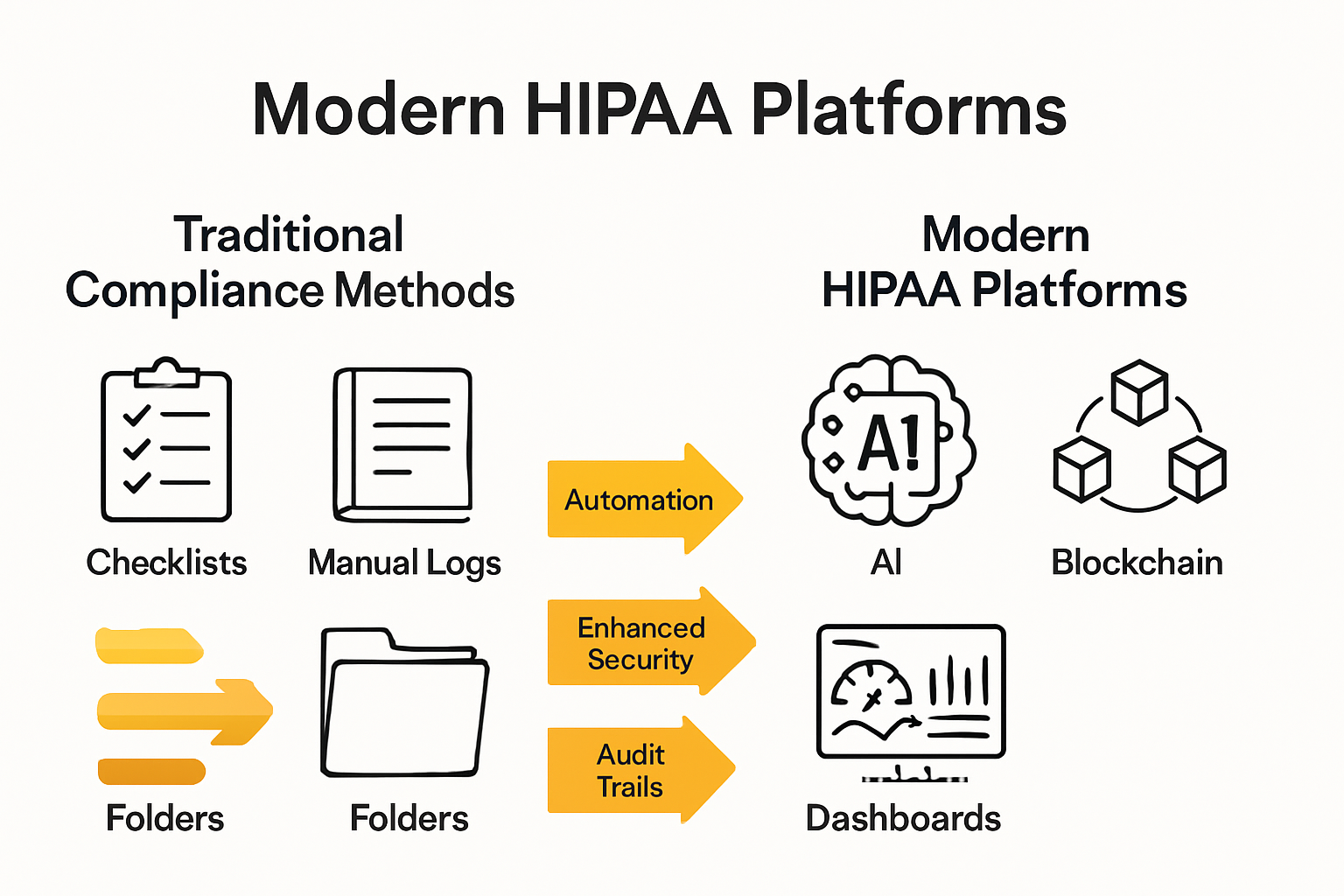
According to research from arxiv.org, modern HIPAA compliance platforms are evolving to incorporate Agentic AI frameworks that dynamically enforce regulatory policies through context-aware mechanisms. These innovative platforms integrate sophisticated access control strategies like Attribute-Based Access Control (ABAC), creating immutable audit trails that track every interaction with protected health information.
Key features of advanced HIPAA compliance platforms typically include:
- Automated risk assessment and management
- Real-time monitoring of data access and transfers
- Comprehensive encryption protocols
- Granular user permission controls
- Continuous compliance tracking and reporting
Interestingly, emerging research from arxiv.org suggests blockchain technology might revolutionize compliance platforms, proposing smart contract-based access control models that can enforce strict patient-provider data sharing agreements. This approach represents a significant leap forward in ensuring transparent, secure, and auditable health information management.
As healthcare organizations navigate increasingly complex regulatory landscapes, HIPAA compliance platforms have transformed from optional tools to mission-critical infrastructure. These platforms not only protect sensitive data but also streamline complex compliance workflows, reducing administrative burden and minimizing the risk of costly regulatory violations.
Core Features and Key Capabilities
HIPAA compliance platforms are sophisticated technological solutions that offer comprehensive features designed to protect sensitive healthcare data and streamline regulatory adherence. These advanced systems go beyond simple data protection, providing organizations with robust tools to manage complex compliance requirements effectively.
Research from arxiv.org highlights the critical importance of advanced data processing capabilities, such as Named Entity Recognition and Relationship Extraction, which enable secure and compliant healthcare information management. These technologies allow platforms to intelligently categorize, process, and protect sensitive patient information while maintaining strict regulatory standards.
Key capabilities of advanced HIPAA compliance platforms typically include:
- Comprehensive Data Mapping
- Automatic identification of sensitive information
- Real-time tracking of data flow across systems
- Advanced Access Controls
- Granular user permission management
- Multi-factor authentication protocols
- Automated Compliance Monitoring
- Continuous regulatory requirement tracking
- Instant risk detection and alerting mechanisms
- Secure Data Encryption
- End-to-end encryption for patient records
- Secure transmission and storage protocols
- Audit Trail Generation
- Detailed logs of all system interactions
- Immutable records for regulatory review
The most effective HIPAA compliance platforms integrate cutting-edge technologies like artificial intelligence and machine learning to provide predictive compliance insights. These intelligent systems can anticipate potential regulatory risks, recommend proactive mitigation strategies, and help healthcare organizations stay ahead of evolving compliance requirements. By combining advanced technological capabilities with comprehensive security frameworks, these platforms transform complex regulatory challenges into manageable, streamlined processes.

Legal Requirements and Regulatory Standards
Navigating the complex landscape of HIPAA legal requirements demands a comprehensive understanding of stringent regulatory standards that govern healthcare data protection. The Health Insurance Portability and Accountability Act (HIPAA) establishes critical guidelines for safeguarding patient health information, with specific mandates that organizations must meticulously follow to ensure compliance and avoid substantial financial penalties.
Recent research from arxiv.org highlights the advanced mechanisms emerging in regulatory compliance, particularly the implementation of Attribute-Based Access Control (ABAC) systems. These sophisticated frameworks create immutable audit trails that dynamically enforce policy compliance, providing a robust approach to tracking and managing sensitive healthcare information across complex digital ecosystems.
Key legal requirements under HIPAA include:
- Privacy Rule Compliance
- Protecting individually identifiable health information
- Establishing patient rights over their health data
- Setting limits on information usage and disclosure
- Security Rule Standards
- Implementing administrative safeguards
- Establishing physical security protocols
- Developing technical security mechanisms
- Breach Notification Obligations
- Reporting unauthorized data access
- Timely communication with affected patients
- Notifying federal authorities for significant breaches
Interestingly, emerging blockchain technologies are transforming regulatory compliance. According to research from arxiv.org, blockchain-based models can automate policy enforcement, creating verifiable and tamper-proof records that significantly enhance the transparency and accountability of healthcare data management. These innovative approaches represent a critical evolution in how organizations approach regulatory compliance, moving beyond traditional checklist-based methods to more dynamic, intelligent systems that can proactively identify and mitigate potential compliance risks.
Integration With Security and TPRM Tools
Effective integration with security and Third-Party Risk Management (TPRM) tools represents a critical component of comprehensive HIPAA compliance strategies. Modern healthcare organizations require seamless connectivity between various platforms to ensure robust data protection, risk assessment, and continuous monitoring across complex technological ecosystems.
According to Wikipedia, advanced compliance solutions now provide sophisticated regulatory change monitoring capabilities that track the health of an organization's compliance program through integrated third-party risk management tools. These intelligent systems enable organizations to develop a more proactive and dynamic approach to managing potential security vulnerabilities and regulatory risks.
Key integration capabilities for HIPAA compliance platforms include:
- Automated Risk Assessment
- Real-time vendor risk scoring
- Continuous security posture evaluation
- Comprehensive vendor performance tracking
- Seamless Data Exchange
- Secure API connections
- Standardized data mapping
- Encrypted communication protocols
- Comprehensive Reporting
- Consolidated compliance dashboards
- Automated compliance status updates
- Detailed audit trail generation
- Multi-Platform Compatibility
- Support for diverse security tools
- Flexible integration frameworks
- Cross-platform data synchronization
The most advanced HIPAA compliance platforms now leverage artificial intelligence and machine learning to create intelligent integration ecosystems. These systems can dynamically adapt to changing regulatory landscapes, automatically identify potential integration challenges, and provide predictive insights that help organizations maintain a proactive stance in managing third-party risks and maintaining stringent security standards.
Common Compliance Risks and Mistakes
Navigating the complex landscape of HIPAA compliance requires a nuanced understanding of potential risks that can compromise patient data security and expose organizations to significant legal and financial vulnerabilities. Healthcare organizations frequently encounter multifaceted challenges that can lead to unintentional compliance breaches, making proactive risk management an essential strategy.
Research from arxiv.org reveals critical insights into compliance gaps that often remain undetected until a potential data breach occurs. These policy compliance vulnerabilities can emerge from seemingly innocuous operational practices that gradually erode an organization's security posture.
Most frequent compliance risks include:
- Inadequate Access Controls
- Weak password management
- Insufficient user authentication protocols
- Delayed user access revocation
- Poor Data Handling Practices
- Unauthorized data sharing
- Improper data storage methods
- Lack of encryption for sensitive information
- Insufficient Staff Training
- Limited cybersecurity awareness
- Incomplete understanding of HIPAA regulations
- Inconsistent security protocol adherence
- Technology Implementation Errors
- Misconfigured security systems
- Outdated software and security patches
- Inadequate network segmentation
Additional research from arxiv.org emphasizes the critical challenges in adopting advanced technologies like Agentic AI systems within healthcare environments. Organizations must maintain strict compliance with regulatory frameworks, recognizing that technological innovation must always be balanced with robust security mechanisms and comprehensive risk management strategies.
Streamline Your HIPAA Compliance Efforts with Skypher
Ensuring your healthcare organization meets the demanding standards of HIPAA compliance requires proactive management of security questionnaires and regulatory documentation. The comprehensive guide to HIPAA compliance platforms highlights the complexities of managing granular access controls, audit trails, and third-party risk management integration. Skypher addresses these challenges directly by automating and accelerating your security questionnaire response process with AI-powered precision. This not only reduces manual workload but also minimizes costly compliance risks caused by human errors or delays.
Skypher’s AI Questionnaire Automation Tool integrates seamlessly with over 40 Third-Party Risk Management platforms and supports real-time collaboration to keep your team aligned on compliance tasks. With support for multiple document formats, multilingual capabilities, and enterprise-grade security, Skypher transforms compliance workflows into a fast, efficient process. Experience unparalleled accuracy in responding to complex requests, ensuring your HIPAA data privacy and security obligations are thoroughly addressed.

Take control of your HIPAA compliance today by exploring how Skypher simplifies regulatory requirements and enhances your cybersecurity processes. Visit our main site to see how our AI Questionnaire Automation Tool and API Integrations with TPRM Platforms empower your organization to stay ahead of evolving healthcare regulations. Don’t let compliance challenges slow you down. Act now and elevate your HIPAA compliance strategy with Skypher.
Frequently Asked Questions
What are HIPAA compliance platforms?
HIPAA compliance platforms are advanced technological solutions designed to help healthcare organizations protect patient data and meet regulatory requirements. They offer tools for managing, securing, and monitoring sensitive health information.
What are the key features of advanced HIPAA compliance platforms?
Key features typically include automated risk assessment, real-time monitoring of data access, comprehensive encryption protocols, granular user permission controls, and continuous compliance tracking and reporting.
How can blockchain technology improve HIPAA compliance?
Blockchain technology can enhance HIPAA compliance by automating policy enforcement through smart contracts, creating verifiable and tamper-proof records that improve the transparency and accountability of healthcare data management.
What common compliance risks should healthcare organizations be aware of?
Common compliance risks include inadequate access controls, poor data handling practices, insufficient staff training, and technology implementation errors, which can expose organizations to legal and financial vulnerabilities.