

Over ninety percent of american healthcare organizations face annual HIPAA training challenges that can leave patient data at risk. With ever changing regulations and new technology, staying compliant is not just a legal requirement but also a cornerstone of patient trust. Understanding how to evaluate and improve your HIPAA training strategy gives your organization a real chance to strengthen security, avoid costly violations, and support staff in protecting sensitive information.
Table of Contents
- Step 1: Assess Organizational HIPAA Training Needs
- Step 2: Develop Tailored HIPAA Training Materials
- Step 3: Implement HIPAA Training for All Employees
- Step 4: Track Employee Progress and Completion
- Step 5: Verify HIPAA Compliance and Training Effectiveness
Quick Summary
| Important Insight | Explanation |
|---|---|
| 1. Assess Training Needs Effectively | Conduct a comprehensive internal audit to identify gaps in HIPAA training and engage department heads for feedback. |
| 2. Tailor Training Materials | Customize HIPAA training content for different roles, using various formats to enhance understanding and retention. |
| 3. Implement Thorough Training | Schedule mandatory training for all employees using a blend of online modules and practical workshops to ensure compliance. |
| 4. Track Employee Training Progress | Utilize a centralized system to monitor training completion and knowledge retention, ensuring proactive compliance. |
| 5. Verify Training Effectiveness | Regularly assess employee knowledge through real-world scenarios and feedback to continuously improve HIPAA training programs. |
Step 1: Assess Organizational HIPAA Training Needs
Assessing your organization's HIPAA training requirements is the foundation for developing an effective compliance strategy. This process involves systematically identifying knowledge gaps and creating targeted training interventions that address your specific organizational needs.
According to the U.S. Department of Health and Human Services HHS, HIPAA Rules are intentionally flexible to accommodate different organizational sizes and structures. Start by conducting a comprehensive internal audit that examines your current training landscape. Gather insights from multiple sources such as recent compliance incidents, employee feedback, and departmental risk assessments. Key areas to evaluate include patient data handling practices, electronic health record management, privacy protocol understanding, and potential security vulnerabilities.
To streamline this assessment, create a structured framework that involves input from multiple stakeholders. Engage department heads, compliance officers, and frontline healthcare workers to develop a nuanced understanding of training requirements. NIST Special Publication 800-66r2 recommends involving key personnel to identify precise knowledge gaps and prioritize training content effectively. This collaborative approach ensures that your HIPAA training program addresses real world challenges specific to your organization's unique operational environment.

Pro Tip: Document every step of your training needs assessment to demonstrate proactive compliance efforts during potential future audits.
Once you complete this assessment, you will have a clear roadmap for developing targeted HIPAA training modules that enhance your organization's overall compliance posture.
Step 2: Develop Tailored HIPAA Training Materials
Creating effective HIPAA training materials requires a strategic approach that addresses your organization's unique compliance landscape. Your goal is to design training content that transforms complex regulatory requirements into clear, actionable guidance for employees across different departments.
According to the Office for Civil Rights, HIPAA training materials must be customized to match the specific needs of your organization. Begin by segmenting your training content for different roles. Healthcare administrators will need different depth of information compared to frontline medical staff or administrative personnel. Infosec Institute recommends developing role specific modules that cover key areas such as patient data privacy, electronic health record management, breach notification procedures, and security protocol implementation.
Structure your training materials to include a mix of learning formats video tutorials, interactive scenarios, written guidelines, and quick reference checklists. This multi modal approach ensures better knowledge retention and engagement. Incorporate real world examples and case studies that demonstrate the practical implications of HIPAA violations. Include specific scenarios relevant to your organization that help employees understand how abstract regulations translate into daily workplace practices.
Pro Tip: Update your training materials annually to reflect the latest regulatory changes and emerging cybersecurity threats.
Once your tailored training materials are developed, you will be prepared to implement a comprehensive HIPAA compliance education program that empowers your workforce and minimizes potential regulatory risks.
Step 3: Implement HIPAA Training for All Employees
Implementing comprehensive HIPAA training across your entire organization ensures that every employee understands their critical role in protecting patient information and maintaining regulatory compliance. Your goal is to create a consistent, engaging training approach that reaches workers at all levels and job functions.
According to the U.S. Department of Health and Human Services HHS, effective HIPAA training must be thorough and adaptable to different organizational roles. Begin by scheduling mandatory training sessions for all employees that include both initial onboarding and regular annual refresher courses. Utilize a blended learning approach that combines interactive online modules, in person workshops, and practical scenario based training. Infosec Institute recommends designing training that examines access controls and activity monitoring in information systems containing electronic protected health information.
Track and document employee training participation meticulously. Implement a robust learning management system that allows you to monitor completion rates, assessment scores, and individual progress. Create accountability by requiring employees to pass comprehension tests and sign acknowledgment forms confirming their understanding of HIPAA requirements. Develop a system for addressing knowledge gaps through targeted retraining or additional support for employees who struggle with the material.
Pro Tip: Consider gamification techniques like progress tracking and digital badges to increase employee engagement and motivation during HIPAA training.
By systematically implementing training across your organization, you will build a culture of compliance that protects patient data and reduces the risk of potential regulatory violations.
Step 4: Track Employee Progress and Completion
Tracking employee HIPAA training progress is crucial for maintaining organizational compliance and ensuring every team member understands their critical responsibilities in protecting patient information. Your objective is to implement a systematic approach that monitors training completion, comprehension, and ongoing learning.
According to Central Michigan University's HIPAA Training Program Plan, effective tracking requires comprehensive documentation and assessment mechanisms. Develop a centralized learning management system that captures detailed training metrics including completion dates, assessment scores, time spent in training modules, and individual performance benchmarks. The U.S. Department of Health and Human Services emphasizes the importance of establishing clear mechanisms to verify workforce training effectiveness.
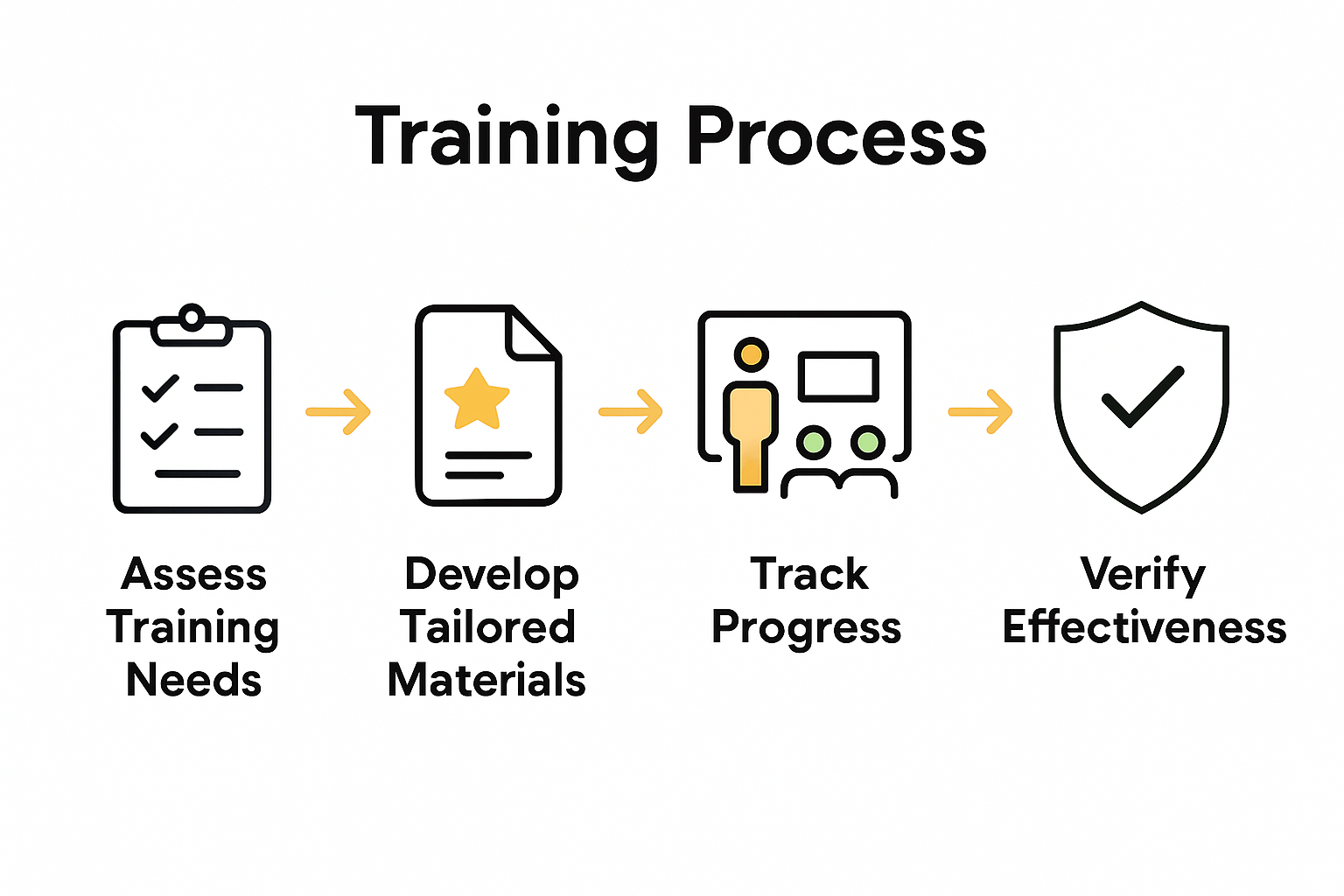
Implement a multi tiered tracking strategy that includes automated notifications for incomplete training, scheduled reminder emails, and mandatory quarterly compliance reports. Create individual employee training profiles that document their entire compliance journey tracking initial training, annual refreshers, and any specialized modules relevant to their specific role. Design a color coded dashboard that allows management to quickly identify training gaps, overdue completions, and areas requiring additional organizational focus.
Pro Tip: Integrate periodic knowledge validation quizzes that randomly test employee understanding to ensure continuous engagement and retention of HIPAA principles.
By meticulously tracking employee progress, you transform HIPAA training from a static requirement into a dynamic, continuously evolving compliance strategy that protects both your organization and patient information.
Step 5: Verify HIPAA Compliance and Training Effectiveness
Verifying HIPAA compliance and training effectiveness requires a strategic approach that goes beyond simple completion metrics. Your goal is to transform training from a checkbox exercise into a meaningful process that genuinely improves organizational security awareness and patient data protection.
Research from ArXiv highlights the critical shift from compliance focused programs to initiatives that create tangible behavioral changes. Develop a comprehensive verification strategy that includes multiple assessment methods such as simulated privacy scenarios, knowledge retention tests, and behavioral observation protocols. The U.S. Department of Health and Human Services recommends regular evaluations that not only measure employee knowledge but also assess their ability to apply HIPAA principles in real world situations.
Implement a robust verification framework that combines quantitative and qualitative assessment techniques. Conduct periodic mock audits that test employees ability to handle sensitive patient information, recognize potential security breaches, and follow proper reporting protocols. Create a scoring system that tracks individual and departmental performance, identifying trends and areas requiring additional training or intervention. Develop anonymous feedback mechanisms that allow employees to share insights about training effectiveness and potential improvements in the compliance process.
Pro Tip: Use unexpected scenario based assessments that evaluate employees actual response to potential privacy challenges rather than relying solely on standardized testing.
By systematically verifying training effectiveness, you create a dynamic compliance environment that continuously adapts and improves your organizations HIPAA protection strategies.
Streamline HIPAA Training Compliance with Smart Automation
Ensuring complete HIPAA employee training is a complex challenge. The article highlights the need to assess training gaps, customize content, track progress meticulously, and verify compliance effectively. These steps are time consuming and prone to human error, especially when managing multiple employees across different roles.
Skypher offers an AI-powered platform designed to ease the burden of regulatory compliance. Our AI Questionnaire Automation Tool accelerates how your organization responds to security and compliance questionnaires, making it easier to document training efforts, track employee completion, and generate reports that prove HIPAA compliance. Integrations with popular tools like Slack, ServiceNow, and Confluence improve team collaboration and communication, so everyone stays aligned on HIPAA training goals and deadlines.

Take control of your HIPAA compliance program today by automating training documentation and monitoring with Skypher. Visit Skypher to discover how our suite of tools can simplify your compliance workflows and empower your team. Start streamlining your security questionnaire responses now and reduce risk with advanced automation and 24/7 enterprise support.
Frequently Asked Questions
What are the initial steps to assess my organization's HIPAA training needs?
To assess your organization's HIPAA training needs, start by conducting an internal audit to evaluate current training practices. Gather insights from recent compliance incidents and employee feedback, focusing on key areas like patient data handling and security vulnerabilities.
How can I develop tailored HIPAA training materials for different employee roles?
To create tailored HIPAA training materials, segment your content based on employee roles and responsibilities. Design role-specific modules that cover essential topics like patient data privacy and security protocols to ensure that each employee receives relevant training.
What methods should I use to track employee progress in HIPAA training?
Implement a centralized learning management system to monitor employee training progress, including completion rates and assessment scores. Create individual training profiles to document participation and identify any areas needing additional support.
How can I verify the effectiveness of my HIPAA training program?
To verify training effectiveness, conduct assessments that evaluate employee knowledge retention and their ability to apply HIPAA principles in real-world scenarios. Use mock audits and feedback mechanisms to identify training gaps and areas for improvement in your compliance strategy.
What types of learning formats should I include in my HIPAA training program?
In your HIPAA training program, include a mix of learning formats such as video tutorials, interactive scenarios, and written guidelines. This variety can enhance engagement and improve knowledge retention among employees with different learning preferences.