

HIPAA software compliance is getting a major overhaul for 2025 as healthcare teams face higher digital risks and stricter rules. Think your organization is ready? Think again. The new regulations now require annual updates to your IT asset inventory and a fully mapped network as part of the compliance process. Most teams assume ticking a few boxes will get them through, but static checklists are out. The real priority is building continuous, adaptive security systems that put proactive protection at the core of patient care. Here is why that shift matters more than ever.
Table of Contents
- Understanding HIPAA Software Compliance in 2025
- Essential Features of Compliant Healthcare Software
- Step-by-Step Process to Achieve HIPAA Compliance
- Best Practices and Tools for Ongoing Software Security
Quick Summary
| Takeaway | Explanation |
|---|---|
| Comprehensive Risk Assessment is Essential | Conducting a thorough risk assessment is the first critical step towards HIPAA compliance, requiring organizations to continuously identify and address vulnerabilities in their handling of electronic protected health information (ePHI). |
| Dynamic Compliance as a Continuous Process | HIPAA compliance must be viewed as an ongoing effort involving regular updates to security protocols and continuous improvement, rather than a static annual checklist. |
| Advanced Security Protocols are Mandatory | Organizations must implement a multi-layered approach to security, incorporating administrative, physical, and technical safeguards to protect patient information effectively. |
| Invest in Automated Tools for Monitoring | Utilizing automated compliance monitoring and detection tools is crucial for real-time tracking of vulnerabilities, ensuring proactive rather than reactive security measures. |
| Foster a Culture of Continuous Training | Ongoing staff training and awareness programs are vital in maintaining a robust security culture, empowering all team members to contribute to safeguarding patient data. |
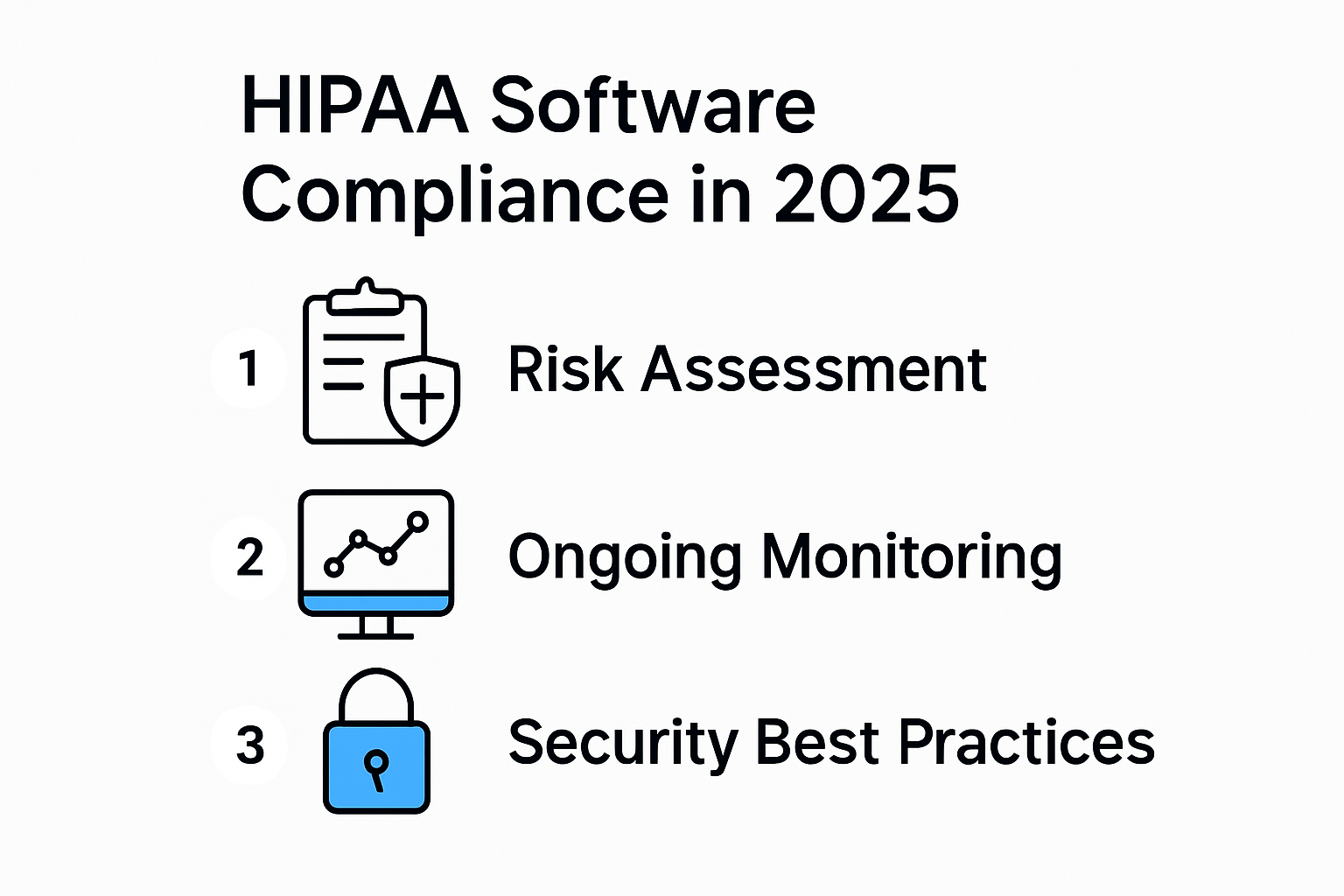
Understanding HIPAA Software Compliance in 2025
Healthcare organizations face increasingly complex digital security challenges in 2025, with HIPAA software compliance becoming more sophisticated and critically important. The regulatory landscape demands a proactive and comprehensive approach to protecting patient health information across technological ecosystems.
Key Regulatory Changes and Requirements
The 2025 HIPAA Security Rule introduces significant updates that fundamentally reshape how healthcare teams manage digital protected health information (PHI). Research from RSI Security reveals critical new mandates for covered entities. Organizations must now create and maintain a detailed IT asset inventory and comprehensive network map, which requires annual updates and integration into comprehensive risk assessments.
These new requirements go beyond traditional compliance checkboxes. Healthcare teams must develop a dynamic security framework that anticipates potential threats and proactively addresses vulnerabilities. The emphasis is on continuous monitoring and adaptive security strategies rather than static compliance documentation.
Technology and Risk Management Strategies
Successful HIPAA software compliance in 2025 demands a multifaceted technological approach. Healthcare organizations must implement robust security mechanisms that not only protect data but also demonstrate a systematic approach to risk management. According to cybersecurity experts, this includes:
- Annual Security Audits: Comprehensive system-wide reviews to identify potential security gaps
- Biannual Vulnerability Scanning: Proactive identification and mitigation of potential security risks
- Penetration Testing: Simulated cyberattacks to evaluate and strengthen existing security infrastructure
The integration of advanced technologies like artificial intelligence and machine learning can significantly enhance an organization's ability to detect and respond to potential security breaches. These tools provide real-time monitoring and predictive analytics that can identify unusual patterns or potential vulnerabilities before they become critical threats.

Compliance as a Continuous Process
HIPAA software compliance is no longer a static annual checklist but a dynamic, ongoing process of technological adaptation and security refinement. Healthcare teams must develop a culture of continuous improvement, where security protocols are regularly reviewed, updated, and integrated into every aspect of digital information management.
This approach requires investment in training, technology, and a strategic mindset that views compliance not as a regulatory burden but as a critical component of patient care and organizational integrity. By embracing these evolving standards, healthcare organizations can build trust, protect sensitive patient information, and create a robust digital security ecosystem that adapts to emerging technological challenges.
The future of HIPAA compliance lies in understanding that security is not just about preventing breaches but about creating a comprehensive, intelligent system that protects patient data with precision and proactive intelligence.
Essential Features of Compliant Healthcare Software
Healthcare software in 2025 requires a sophisticated approach to security, functionality, and regulatory compliance. The landscape of digital health technologies demands comprehensive solutions that protect patient data while enabling efficient, seamless healthcare delivery.
Advanced Security Architecture
HIPAA Vault research highlights the critical shift towards Zero Trust security frameworks for healthcare software. This approach means no user or system is automatically trusted, regardless of their location or previous access history. Multi-factor authentication (MFA) has become mandatory for all access points to electronic Protected Health Information (ePHI), creating multiple layers of identity verification.
The most robust healthcare software now implements military-grade encryption standards. Security experts recommend end-to-end encryption using AES-256 for data at rest and TLS for data in transit. Granular access controls with role-based permissions ensure that healthcare professionals can only access the specific patient information required for their immediate responsibilities.
Comprehensive Data Management and Workflow Automation
Compliant healthcare software in 2025 goes beyond basic security measures. Workflow automation platforms emphasize the importance of integrating complex healthcare processes while maintaining strict regulatory compliance. Key automated workflows include:
- Electronic Health Record (EHR) Synchronization: Seamless and secure data exchange between different healthcare systems
- Secure Patient Referral Processing: Automated and encrypted patient information transfer
- Claims Processing Automation: Streamlined billing and insurance claim management
- Appointment Scheduling: Secure and efficient patient scheduling systems
Data masking technologies have become crucial, providing an additional layer of protection by concealing sensitive patient information during processing and analysis. This approach ensures that even internal systems minimize unnecessary exposure of protected health information.
Continuous Compliance and Adaptability
The most effective healthcare software solutions in 2025 are characterized by their ability to adapt continuously. Automated compliance monitoring systems now provide real-time alerts for potential security risks, regulatory changes, and potential breaches. These systems integrate sophisticated AI technologies to predict and prevent potential compliance issues before they become critical.
Healthcare organizations must view compliance software as a dynamic ecosystem rather than a static tool. The most advanced solutions offer comprehensive audit trails, providing detailed logs of every interaction with patient data. These logs not only support regulatory compliance but also enable organizations to demonstrate their commitment to data protection and patient privacy.
Ultimately, compliant healthcare software is about creating a secure, efficient, and patient-centric technological environment. It balances the critical needs of data protection with the practical requirements of modern healthcare delivery, ensuring that patient information remains both accessible to authorized personnel and protected from potential security threats.
Step-by-Step Process to Achieve HIPAA Compliance
Navigating HIPAA compliance requires a strategic, comprehensive approach that goes beyond simple checklist completion. Healthcare organizations must develop a robust framework that systematically addresses regulatory requirements and protects patient data across all technological and operational domains.
Comprehensive Risk Assessment Foundation
Keepnet Labs research emphasizes that the first critical step in achieving HIPAA compliance is conducting a thorough risk assessment. This process involves meticulously identifying, documenting, and addressing potential vulnerabilities in how electronic protected health information (ePHI) is stored, accessed, and transmitted.
A comprehensive risk assessment should include:
- Detailed mapping of all electronic systems handling patient data
- Identification of potential security vulnerabilities
- Analysis of current security controls and their effectiveness
- Documentation of potential impact and likelihood of identified risks
Organizations must recognize that this assessment is not a one-time event but a continuous process requiring regular updates and refinement. The goal is to create a dynamic understanding of the organization's security landscape that evolves with technological changes and emerging threats.
Implementing Robust Security Protocols
Following the initial risk assessment, healthcare teams must develop and implement comprehensive security protocols. Compliance experts recommend a multi-layered approach that includes:
- Administrative Safeguards: Developing clear policies and procedures for managing PHI
- Physical Safeguards: Implementing controlled access to physical locations storing sensitive information
- Technical Safeguards: Deploying advanced encryption, access controls, and monitoring systems
Each safeguard must be carefully documented and demonstrate a proactive approach to protecting patient information. This involves creating detailed policies that address every potential scenario for data handling, transmission, and protection.
Ongoing Compliance and Continuous Improvement
HIPAA compliance in 2025 demands more than initial implementation. Regulatory guidance highlights the importance of ongoing, measurable actions that extend beyond policy creation. Organizations must establish a continuous improvement cycle that includes:
- Regular staff training on HIPAA requirements and best practices
- Periodic security audits and vulnerability assessments
- Comprehensive vendor risk management processes
- Detailed breach preparedness and response plans
Successful HIPAA compliance requires a cultural commitment to data protection. Healthcare organizations must foster an environment where every team member understands their role in protecting patient information. This means creating a proactive approach that views compliance not as a regulatory burden but as a critical component of patient care and organizational integrity.
Ultimately, achieving HIPAA compliance is about building a comprehensive, adaptive system that prioritizes patient privacy, data security, and organizational resilience. It requires a holistic approach that combines technological solutions, robust policies, and a culture of continuous improvement and vigilance.
Best Practices and Tools for Ongoing Software Security
Healthcare organizations must adopt a proactive and comprehensive approach to software security that goes beyond basic compliance requirements. The evolving digital landscape demands sophisticated strategies that protect patient data while maintaining operational efficiency.
Automated Compliance Monitoring and Detection
Cybersecurity experts emphasize the critical role of automated compliance monitoring tools in maintaining robust software security. These advanced systems provide real-time tracking and enforcement of security policies, creating a dynamic defense mechanism against potential vulnerabilities.
Key features of effective automated monitoring include:
- Continuous Vulnerability Scanning: Automated systems that continuously scan for potential security weaknesses
- Real-Time Threat Detection: Immediate identification and alerting of suspicious activities
- Comprehensive Audit Logging: Detailed tracking of all system interactions and access attempts
The most advanced monitoring tools leverage artificial intelligence and machine learning algorithms to predict and prevent potential security breaches before they can impact patient data. This predictive approach transforms security from a reactive to a proactive discipline.
Advanced Access Control and Authentication
Access management represents a critical component of ongoing software security. Security research indicates that implementing Zero Trust authentication principles is crucial for healthcare organizations. This approach means verifying every access request, regardless of its origin or previous authentication history.
Comprehensive access control strategies should include:
- Multi-factor authentication for all system access points
- Role-based access controls that limit user permissions
- Automatic session termination and re-authentication protocols
- Biometric and token-based verification methods
By implementing granular access controls, healthcare organizations can significantly reduce the risk of unauthorized data access and potential breaches.
Continuous Training and Security Culture
Technological tools alone cannot guarantee complete security. Cybersecurity experts argue that building a robust security culture is equally important. Organizations must invest in ongoing staff training programs that keep healthcare professionals updated on the latest security threats and best practices.
Effective security training should include:
- Regular cybersecurity awareness workshops
- Simulated phishing and social engineering exercises
- Detailed protocols for handling sensitive patient information
- Understanding of emerging technological risks
The most successful healthcare organizations treat security as a collective responsibility, empowering every team member to become an active participant in protecting patient data.
Ongoing software security is not a destination but a continuous journey of adaptation, learning, and improvement. By combining advanced technological tools, robust access management, and a culture of security awareness, healthcare organizations can create a comprehensive defense against evolving digital threats.
Frequently Asked Questions
What are the key changes to HIPAA compliance in 2025?
The key changes include mandatory annual updates to IT asset inventories and a fully mapped network. Healthcare organizations must adopt a dynamic security framework focusing on continuous monitoring and adaptive security strategies instead of relying on static checklists.
How can healthcare organizations effectively conduct a risk assessment for HIPAA compliance?
Organizations should perform a thorough risk assessment by mapping all electronic systems that handle patient data, identifying vulnerabilities, analyzing current security controls, and continuously updating their risk assessment as technology and threats evolve.
What are essential features of HIPAA-compliant healthcare software?
Essential features include advanced security architecture such as military-grade encryption, comprehensive data management, workflow automation, and continuous compliance monitoring that adjusts to regulatory changes and potential security breaches.
What best practices should be followed for ongoing software security in healthcare?
Best practices include utilizing automated compliance monitoring tools, implementing advanced access control measures like multi-factor authentication, and fostering a culture of continuous security training among all healthcare staff.
Ready for Effortless HIPAA Compliance in 2025?
Healthcare teams everywhere are facing tougher HIPAA software compliance standards. If updating assets, tracking network changes, and responding to never-ending security questionnaires feels overwhelming, you are not alone. The article highlighted how the new compliance landscape means constant change—annual IT asset reviews, dynamic risk assessments, and zero margin for error when protecting Protected Health Information. Manual compliance tracking just cannot keep pace anymore.
Take control and get peace of mind with Skypher. Automate your security questionnaire responses, easily manage your regulatory documentation, and prove your compliance with confidence. Use our AI Questionnaire Automation Tool to cut down your review cycles and show your partners and clients you take HIPAA seriously. Visit Skypher now and discover a smarter, faster way to master 2025's HIPAA demands. Start streamlining your compliance process today.