

HIPAA, or the Health Insurance Portability and Accountability Act, was enacted in 1996 to safeguard patient information amid a rapidly evolving healthcare landscape, shaping how our medical data is protected. Yet, many still ask, 'Why is HIPAA so critical today?' The answer is startling—it's not just about keeping secrets safe. HIPAA fundamentally transforms the way healthcare is delivered, ensuring patient privacy while enhancing the quality of care received. With breaches costing millions and trust at stake, understanding HIPAA's importance is not just beneficial—it's essential.
Understanding HIPAA and Its Purpose
The Health Insurance Portability and Accountability Act (HIPAA) was enacted in 1996, yet many Americans still wonder, "what is HIPAA and why is it important?" At its core, HIPAA represents a comprehensive federal law designed to transform how the healthcare industry handles sensitive patient information while ensuring individuals maintain health insurance coverage during job transitions.
Foundational Elements of HIPAA
HIPAA consists of five crucial titles, each addressing different aspects of healthcare management. The most widely recognized components are the Privacy Rule and Security Rule, which establish national standards for protecting medical records and personal health information. These rules specify how healthcare providers, health plans, and business associates must safeguard Protected Health Information (PHI).
The importance of HIPAA extends beyond merely keeping information confidential. According to research from healthcare security experts, HIPAA plays a fundamental role in preventing unauthorized access to sensitive medical data while simultaneously improving communication among healthcare professionals through standardized electronic health records.
Why is HIPAA important in healthcare? Consider this: before HIPAA, there were no consistent national standards governing who could access your health information or how it could be used. Medical facilities could potentially share your sensitive health details without your knowledge or consent. HIPAA changed this landscape dramatically by establishing clear boundaries and requirements.
Beyond Privacy: HIPAA's Broader Impact
While privacy protection is a cornerstone of HIPAA, the legislation's scope extends much further. HIPAA streamlines healthcare operations by standardizing electronic transactions and code sets, which reduces administrative costs and improves efficiency. This standardization helps healthcare organizations communicate more effectively with each other and with insurance companies.

HIPAA also addresses health insurance coverage concerns. The "Portability" aspect of HIPAA ensures that individuals can maintain health insurance coverage when changing jobs or during periods of unemployment, reducing gaps in coverage that could otherwise lead to denied claims for pre-existing conditions.
Many ask why HIPAA is necessary, and the answer lies in the modern healthcare ecosystem's complexity. With the rapid digitization of medical records and the increasing interconnectedness of healthcare systems, HIPAA provides a crucial framework that balances technological advancement with patient rights. It establishes accountability throughout the healthcare sector while enabling the secure flow of information needed for high-quality care.
Understanding HIPAA's purpose helps patients recognize their rights and enables healthcare professionals to maintain ethical practices while delivering efficient care. The importance of HIPAA in healthcare cannot be overstated—it forms the foundation of the trust relationship between patients and their healthcare providers.
Key Takeaways
| Takeaway | Explanation |
|---|---|
| Importance of HIPAA Compliance | HIPAA establishes essential standards for patient privacy and data protection, ensuring healthcare organizations handle sensitive information responsibly and maintain trust with patients. |
| Operational Changes Required | Healthcare providers must implement significant operational adjustments, including designating privacy officers, conducting risk assessments, and developing comprehensive policies to ensure compliance with HIPAA regulations. |
| Staff Training and Education | Ongoing training for all healthcare staff is crucial to maintain awareness of privacy practices and compliance requirements, fostering a culture that prioritizes patient confidentiality. |
| Regular Risk Assessments | Conducting continuous risk assessments is vital to identify vulnerabilities, allowing organizations to proactively address security gaps and adapt to evolving threats in the healthcare environment. |
| Vendor Management under HIPAA | Establishing clear expectations and compliance monitoring for business associates who handle protected health information is essential to maintaining overall HIPAA adherence and safeguarding patient data. |
HIPAA Why Is It Important: Protecting Privacy & Enhancing Care
When discussing why HIPAA is important, patient privacy protection stands at the forefront of its significance. In our increasingly digital healthcare environment, safeguarding sensitive medical information has never been more critical. HIPAA establishes comprehensive standards that create a framework of trust between patients and healthcare providers while facilitating improved healthcare delivery.
Safeguarding Protected Health Information (PHI)
The importance of HIPAA becomes evident when considering what it protects: your most sensitive personal health information. Protected Health Information (PHI) includes a vast array of data—from medical records and test results to billing information and demographic details—when held by covered entities like hospitals, clinics, or health insurers.
HIPAA's Privacy Rule establishes national standards for who can access your health information and how it can be used or shared. This means your medical history, treatment plans, and health status remain confidential, accessible only to authorized individuals directly involved in your care or those you explicitly permit.
According to healthcare privacy experts, HIPAA empowers patients with specific rights regarding their health information, including the ability to access their records, request corrections to inaccurate information, and receive an accounting of how their information has been disclosed. These provisions give you greater control over your personal health data while ensuring transparency in how it's handled.
Why is HIPAA important to patients? Consider a scenario where you're receiving treatment for a sensitive medical condition. Without HIPAA protections, details about your diagnosis or treatment could potentially be disclosed to employers, marketers, or other unauthorized parties—potentially leading to discrimination, embarrassment, or other negative consequences.
Balancing Information Sharing with Privacy Protection
The importance of HIPAA in healthcare extends beyond simply restricting access to information. HIPAA creates a balanced framework that permits necessary information sharing for treatment purposes while preventing inappropriate disclosures.

HIPAA recognizes that effective healthcare requires coordination among providers. A primary care physician needs to share information with specialists, pharmacists, and other healthcare professionals to provide comprehensive care. HIPAA accommodates this necessity while maintaining privacy guardrails that prevent unauthorized or unnecessary sharing.
This careful balance highlights why HIPAA is so important in modern healthcare delivery. It enables the healthcare system to function efficiently while respecting patient confidentiality. Healthcare providers can coordinate care effectively, while patients maintain confidence that their sensitive information remains protected.
HIPAA's approach to privacy isn't about creating barriers to information flow; rather, it establishes appropriate channels for necessary sharing while blocking inappropriate disclosures. This framework demonstrates why HIPAA is necessary—it creates a healthcare environment where information can be used appropriately to improve care without compromising patient privacy.
The impact of HIPAA on healthcare privacy cannot be overstated. By establishing clear guidelines, enforcement mechanisms, and patient rights, HIPAA has fundamentally transformed how the healthcare industry approaches confidentiality, making privacy protection an essential element of quality healthcare rather than an afterthought.
HIPAA Impact on Healthcare Providers
While discussions about why HIPAA is important often center on patient benefits, healthcare providers experience equally significant impacts from this legislation. HIPAA's regulations have fundamentally transformed healthcare delivery systems, administrative processes, and organizational cultures across the industry.
Operational and Administrative Changes
The importance of HIPAA compliance for healthcare providers cannot be overstated. Since its implementation, healthcare organizations have had to develop comprehensive frameworks to address HIPAA's requirements, including establishing privacy policies, implementing technical safeguards, conducting staff training, and creating documentation systems.
Healthcare facilities must designate privacy officers, conduct regular risk assessments, and implement physical, technical, and administrative safeguards to protect patient information. These requirements have necessitated significant operational changes in how medical offices handle everything from appointment scheduling to record storage.
Why is HIPAA important in a medical office? It establishes clear guidelines for daily operations that might otherwise vary widely between practices. By standardizing information management practices, HIPAA helps prevent breaches while creating consistency in how patient data is handled across the healthcare ecosystem.
The financial implications of these requirements are substantial. According to recent cybersecurity research, healthcare data breaches cost an average of $10.1 million per incident, highlighting the crucial importance of robust HIPAA security measures. This financial reality has transformed information security from an afterthought to a central business concern for healthcare organizations.
Enhancing Quality of Care Through Standardization
Why HIPAA is important in healthcare extends beyond compliance concerns—it has actually improved quality of care through standardization. By establishing common formats for electronic transactions and code sets, HIPAA has facilitated more efficient communication between providers, payers, and patients.
This standardization has reduced administrative burdens, allowing healthcare professionals to devote more time to patient care rather than paperwork. It has also enabled more effective coordination between specialists, primary care physicians, and other healthcare entities, ensuring patients receive more cohesive treatment plans.
The importance of HIPAA in healthcare is particularly evident in electronic health record (EHR) systems. HIPAA's Security Rule has guided the development of secure EHR platforms that allow for protected information sharing while maintaining confidentiality. These systems enable providers to access comprehensive patient histories, reducing duplicate testing and helping physicians make more informed treatment decisions.
Cultural Shift in Healthcare Organizations
Perhaps the most profound impact of HIPAA has been the cultural shift within healthcare organizations. Why is HIPAA compliance important? Because it has transformed privacy and security considerations from occasional concerns to fundamental values embedded in organizational cultures.
Healthcare staff at all levels now receive regular training on privacy practices, security protocols, and patient rights. This educational emphasis has elevated awareness about the importance of confidentiality throughout healthcare organizations. From receptionists to physicians, all personnel understand their role in protecting sensitive information and the potential consequences of HIPAA violations.
The question of why HIPAA is so important can be answered by observing how it has redefined professional ethics in healthcare. Respect for patient privacy is now recognized as an essential component of quality care rather than simply a legal obligation. Healthcare providers increasingly understand that maintaining confidentiality builds trust with patients, which in turn improves communication, treatment adherence, and ultimately, health outcomes.
By providing a structured framework for privacy protection, HIPAA has enabled healthcare organizations to build cultures where information security is viewed as an integral part of patient care rather than an administrative burden.
Common HIPAA Compliance Challenges
Understanding why HIPAA is important means recognizing the significant challenges healthcare organizations face in meeting compliance requirements. Despite widespread awareness of HIPAA's importance, many providers struggle with implementation due to the regulation's complexity, evolving technology, and resource constraints.
Risk Assessment and Management Deficiencies
One of the most prevalent compliance issues is inadequate risk analysis. The importance of HIPAA risk assessments cannot be overstated—they form the foundation of an effective compliance program by identifying vulnerabilities in how protected health information is handled. Yet compliance experts report that failure to conduct comprehensive, organization-wide risk analyses is a leading violation often resulting in substantial fines.
What makes this particularly troubling is that risk assessment isn't merely a one-time activity. HIPAA requires regular reassessment, especially when operations change or new technologies are implemented. Many organizations conduct initial assessments but fail to maintain ongoing evaluation processes, leaving them vulnerable as their operations evolve.
Equally concerning is when organizations identify risks but fail to address them. The importance of HIPAA compliance extends beyond documentation to actual implementation of security measures. Recognizing vulnerabilities without taking corrective action violates HIPAA requirements and leaves patient data exposed to potential breaches.
Human Factors and Training Challenges
Why HIPAA is necessary becomes especially clear when examining the human element of healthcare operations. Staff members at all levels handle protected health information daily, and their actions directly impact compliance. Despite understanding why HIPAA is important in healthcare, many organizations struggle with consistent workforce training.
The challenge isn't merely providing initial training but maintaining ongoing education that adapts to evolving threats and changing regulations. Staff turnover further complicates this issue, as new employees require thorough onboarding on privacy practices.
What makes training particularly challenging is that HIPAA compliance isn't just about following explicit rules—it requires judgment in complex situations. Healthcare workers must balance efficiency with privacy protections, making real-time decisions about information sharing that have compliance implications.
Technical Compliance in an Evolving Landscape
The importance of HIPAA in the digital age presents unique challenges as healthcare increasingly relies on electronic systems. Maintaining compliant electronic health record systems requires ongoing vigilance, especially as technology evolves and new vulnerabilities emerge.
Secure messaging, encryption implementation, and access controls present particular difficulties. Many organizations struggle with creating systems that are both secure and usable in fast-paced healthcare environments. When security measures become too cumbersome, staff may develop workarounds that compromise compliance.
The expanding use of mobile devices further complicates HIPAA compliance. Healthcare professionals increasingly access patient information on smartphones and tablets, creating potential security gaps if these devices aren't properly secured or if staff use personal devices for work purposes.
Resource Constraints and Small Practice Challenges
Why is HIPAA compliance important regardless of organization size? Because privacy breaches can occur in any setting. However, smaller healthcare practices face disproportionate challenges in implementing comprehensive compliance programs.
Limited budgets often mean smaller practices cannot afford dedicated compliance personnel or sophisticated technical solutions. Many must rely on staff members who balance compliance responsibilities with clinical or administrative duties, potentially leading to oversight gaps.
The financial impact of HIPAA compliance is particularly acute for smaller organizations. While large health systems can distribute compliance costs across extensive operations, small practices face similar regulatory requirements without comparable resources. This disparity highlights why HIPAA can be especially challenging for independent physicians and small specialty practices.
Despite these challenges, understanding why HIPAA is important to patients and providers motivates organizations to overcome implementation difficulties. By recognizing common compliance obstacles, healthcare entities can develop targeted strategies to address vulnerabilities, protect patient information, and fulfill their obligations under this essential healthcare legislation.
Practical Tips for HIPAA Adherence
Recognizing why HIPAA is important is just the first step—putting it into practice requires concrete actions. Healthcare organizations seeking to strengthen their HIPAA compliance can implement several practical strategies to protect patient information while maintaining efficient operations.
Implement Comprehensive Security Measures
The importance of HIPAA compliance begins with robust security infrastructure. According to healthcare compliance experts, basic password protection is no longer sufficient for protecting sensitive health information, especially in today's remote work environment. Multi-factor authentication has become essential for accessing electronic protected health information (ePHI), providing an additional security layer beyond traditional passwords.
Effective HIPAA adherence requires encryption of data both at rest and in transit. This means implementing encryption for stored patient information on servers and devices, as well as securing data being transmitted across networks. While HIPAA doesn't mandate specific encryption methods, implementing current industry standards demonstrates good faith efforts toward compliance.
Physical safeguards are equally important in explaining why HIPAA is needed. These include:
- Restricted access to areas containing patient information
- Proper disposal procedures for physical documents
- Secure storage of backup devices and media
- Inventory tracking for equipment containing ePHI
When implementing these measures, organizations should document their security decisions and rationale, demonstrating thoughtful consideration of risk management approaches rather than arbitrary choices.
Develop Effective Policies and Procedures
Why is HIPAA compliance important? Because it establishes standard operating procedures that protect patient information across all organizational activities. Developing comprehensive, accessible policies is fundamental to achieving this goal.
Effective HIPAA policies should address:
- Privacy practices and patient rights
- Security incident response procedures
- Business associate management
- Workforce training requirements
These policies must be living documents that evolve with regulatory changes and organizational growth. Regular review cycles (at least annually) help ensure policies remain current and effective.
Just as important as creating policies is making them accessible to staff. Rather than burying detailed procedures in lengthy manuals, consider creating quick-reference guides for common situations, such as handling release of information requests or responding to potential breaches.
Prioritize Staff Training and Awareness
Understanding why HIPAA is important in healthcare must extend beyond compliance officers to every staff member. Comprehensive training programs should go beyond annual checkbox exercises to create a culture of privacy awareness.
Effective training approaches include:
- Role-specific education addressing unique challenges different staff members face
- Scenario-based learning that presents realistic privacy dilemmas
- Micro-training sessions that reinforce key concepts throughout the year
- Immediate training for new hires before they access protected information
The importance of HIPAA in healthcare is perhaps best demonstrated through real examples. Including de-identified case studies of privacy incidents in training helps staff understand practical applications of privacy principles and potential consequences of non-compliance.
Conduct Regular Risk Assessments
HIPAA compliance isn't a one-time achievement but an ongoing process of evaluation and improvement. Regular risk assessments form the cornerstone of this process by identifying vulnerabilities before they lead to breaches.
Effective risk assessment practices include:
- Documenting all systems containing protected health information
- Evaluating both technical and non-technical vulnerabilities
- Assessing likelihood and potential impact of various threats
- Developing prioritized remediation plans for identified risks
Why is HIPAA necessary? Because it establishes this framework of continuous improvement that adapts to evolving threats. Organizations should schedule assessments at regular intervals and following significant operational changes, such as implementing new systems or expanding services.
Manage Business Associate Relationships
Understanding why HIPAA is important extends to vendor management. Organizations must establish clear expectations with any business associates who handle protected health information on their behalf.
This process begins with proper Business Associate Agreements (BAAs) that clearly define responsibilities for information protection. However, effective oversight goes beyond paperwork to include vendor selection processes that evaluate security practices, ongoing monitoring of compliance, and clear incident reporting procedures.
The importance of HIPAA compliance becomes particularly evident when working with technology vendors. Before adopting new software solutions, organizations should conduct security evaluations to ensure these tools can be implemented in compliance with privacy requirements.
By implementing these practical approaches, healthcare organizations demonstrate their understanding of why HIPAA is important to patients while creating sustainable compliance programs that protect sensitive information and support quality care delivery.
Frequently Asked Questions
What is HIPAA and why is it important?
HIPAA, or the Health Insurance Portability and Accountability Act, is a federal law established in 1996 to protect patient information and ensure health insurance coverage during job transitions. Its importance lies in safeguarding personal health information and enhancing communication in the healthcare system.
How does HIPAA protect patient privacy?
HIPAA protects patient privacy through its Privacy Rule, which sets national standards for accessing and sharing Protected Health Information (PHI). It ensures that sensitive medical details are kept confidential and only accessible to authorized personnel involved in the patient's care.
Why is HIPAA crucial for healthcare providers?
HIPAA is crucial for healthcare providers because it establishes clear guidelines for managing patient information. It helps prevent unauthorized access, reduces administrative costs through standardized practices, and fosters a culture of confidentiality, which ultimately enhances the quality of patient care.
What are the consequences of HIPAA non-compliance?
The consequences of HIPAA non-compliance can be severe, including significant financial penalties, legal actions, and damage to a healthcare organization's reputation. Frequent data breaches can lead to patient distrust, which undermines the quality of care delivered.
Elevate Your Compliance Standards with Skypher
In today's complex healthcare environment, understanding HIPAA's importance is crucial for maintaining patient trust and protecting sensitive information. As the article highlights, ensuring compliance involves not only safeguarding Protected Health Information (PHI) but also streamlining communication across healthcare organizations.
Skypher addresses these challenges head-on. Our AI-driven Questionnaire Automation Tool simplifies the compliance process by enabling your team to complete security reviews faster and more accurately. By integrating with over 40 third-party risk management platforms, you can enhance collaboration and efficiency without compromising on security.
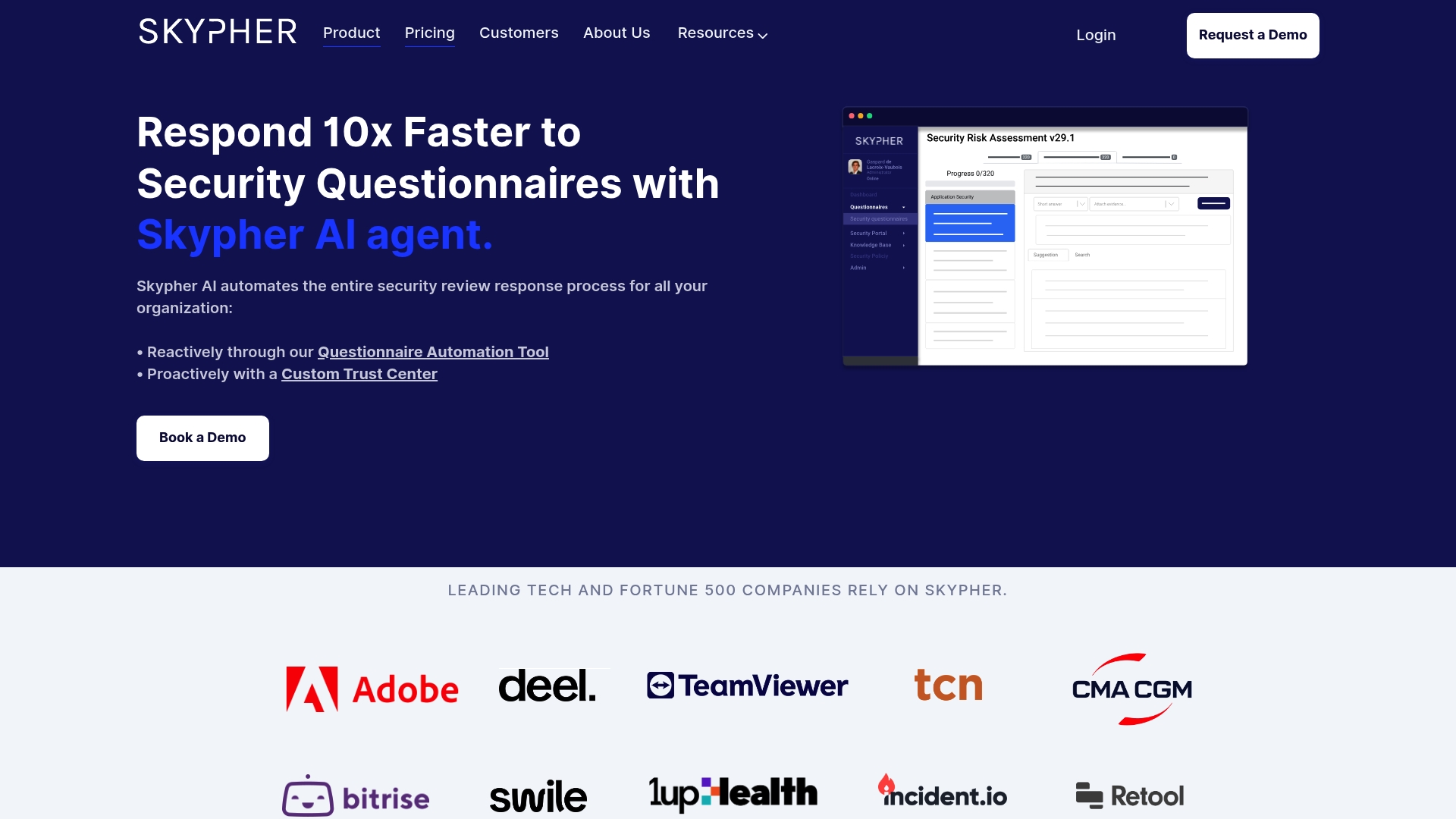
Are you ready to transform how you manage compliance and ensure patient privacy? Don’t wait—start improving your operational productivity and strengthening your cybersecurity posture today! Visit https://skypher.co and unlock the key to effortless compliance management.