

HIPAA rules are changing fast, and 2025 will be the year when every healthcare organization faces pressure to adapt or pay the price. Multi-Factor Authentication (MFA) is now a mandatory requirement for all access points handling electronic protected health information. Most expect paperwork will be the hard part. Actually, it’s the new technical standards and the annual risk assessments that catch most teams off guard and leave organizations exposed. Few realize just how high the stakes are if even one of these critical details is missed.
Table of Contents
- Understanding HIPAA Requirements for 2025
- Key Steps to Achieve HIPAA Compliance
- Common HIPAA Compliance Challenges and Solutions
- Maintaining HIPAA Compliance: Ongoing Best Practices
Quick Summary
| Takeaway | Explanation |
|---|---|
| Implement Multi-Factor Authentication (MFA) | MFA is now a mandatory requirement for all access points handling electronic protected health information (ePHI), enhancing security protocols significantly. |
| Conduct Comprehensive Risk Assessments Annually | Organizations must perform thorough evaluations of their digital infrastructure to identify vulnerabilities and ensure ongoing compliance. |
| Develop Robust Documentation and Policies | Establish clear and detailed policies to address compliance and potential risks effectively, with regular updates to maintain relevance. |
| Prioritize Cybersecurity Training for Staff | Continuous education on security best practices is essential for all employees to foster a culture of compliance and security awareness. |
| Verify Vendor Compliance Regularly | Regularly assess the security measures and compliance of all third-party vendors to ensure they meet HIPAA standards and safeguard patient data. |
Understanding HIPAA Requirements for 2025
The Health Insurance Portability and Accountability Act (HIPAA) continues to evolve, with 2025 bringing critical updates that demand healthcare organizations and their business associates pay close attention. Understanding these requirements is not just about compliance - it's about protecting sensitive patient information in an increasingly complex digital ecosystem.
Key Regulatory Changes for Healthcare Organizations
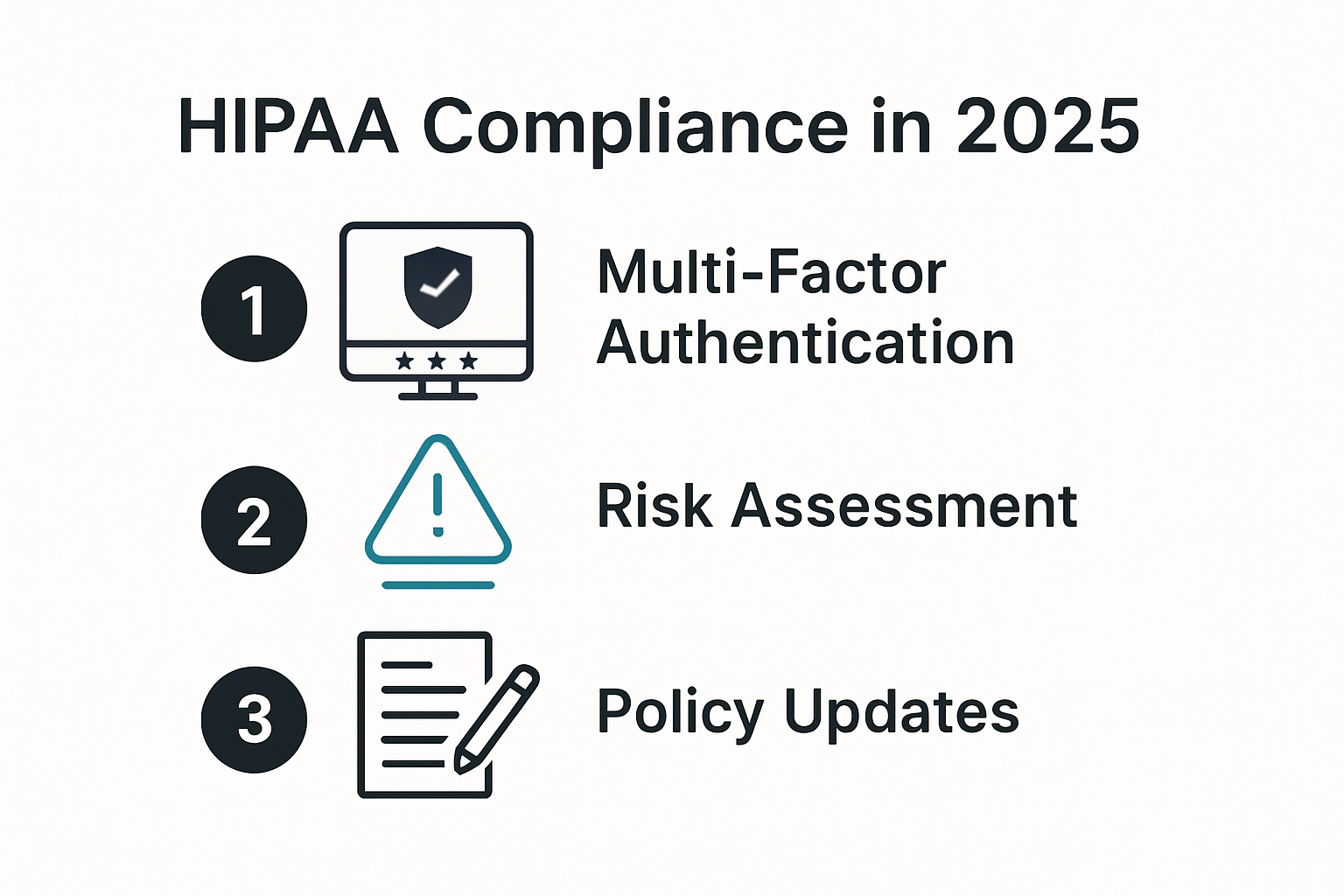
The 2025 HIPAA landscape introduces significant modifications that organizations must carefully navigate. Research from Thales Group highlights several crucial updates that demand immediate attention. Most notably, the Security Rule now mandates Multi-Factor Authentication (MFA) as a critical requirement for all access points handling electronic protected health information (ePHI).
This authentication requirement represents a fundamental shift in how healthcare organizations approach digital security. Entities must implement robust authentication protocols that go beyond traditional username and password systems. The new guidelines require multiple verification steps to ensure that only authorized personnel can access sensitive patient data. For instance, this might involve combining something an employee knows (password) with something they possess (security token) or a biometric identifier.
Comprehensive Compliance Strategy
Nordlayer's compliance research outlines a comprehensive approach organizations must adopt to meet 2025 HIPAA requirements. The strategy involves several critical components:
- Privacy Officer Appointment: Organizations must designate a dedicated professional responsible for overseeing HIPAA compliance efforts.
- Infrastructure Assessment: Comprehensive IT infrastructure checks are mandatory to identify and address potential security vulnerabilities.
- Staff Training Program: Continuous education for employees about privacy protocols and security best practices is essential.
- Documentation Management: Maintaining meticulous records of compliance efforts becomes increasingly important.
The MetricStream report emphasizes that these requirements are not merely suggestions but legally binding mandates. Healthcare organizations, business associates, and subcontractors must proactively update their written policies, enhance technical safeguards, and revise existing business associate agreements.
Beyond technical requirements, the 2025 HIPAA guidelines underscore a holistic approach to patient data protection. This means integrating technological solutions with robust organizational practices. Organizations must develop a culture of privacy and security that permeates every level of their operations.
Failing to comply with these updated requirements can result in significant financial penalties and potential legal consequences. The stakes are high, and organizations must treat HIPAA compliance as a critical business imperative. By understanding and implementing these requirements, healthcare entities can protect patient information, maintain trust, and demonstrate their commitment to data privacy and security.
As the digital healthcare landscape continues to transform, staying ahead of regulatory changes is not just a compliance requirement - it's a strategic necessity.
Key Steps to Achieve HIPAA Compliance
Achieving HIPAA compliance requires a strategic and comprehensive approach that goes far beyond simple checkbox exercises. Organizations must implement a robust framework that addresses technological, administrative, and procedural aspects of data protection. The journey to full compliance demands meticulous planning, continuous monitoring, and a proactive security posture.
Comprehensive Risk Assessment and Management
RSI Security research reveals critical initial steps for organizations seeking HIPAA compliance. First and foremost, covered entities must develop a detailed IT asset inventory and comprehensive network mapping. This foundational step allows organizations to understand their entire digital infrastructure and potential vulnerability points.
A thorough risk assessment involves multiple critical components:
- Network Mapping: Documenting all hardware, software, and network connections
- Vulnerability Identification: Systematically analyzing potential security weaknesses
- Risk Prioritization: Ranking potential threats based on likelihood and potential impact
The assessment process requires organizations to conduct annual security audits and penetration testing. These proactive measures help identify potential security gaps before they can be exploited by malicious actors. Nordlayer's compliance guidelines emphasize the importance of creating a comprehensive compliance plan that addresses both technological and human factors.
Technical Security Implementations
Technical safeguards form the backbone of HIPAA compliance. RSI Security highlights several critical technical requirements for 2025:
- Multi-Factor Authentication (MFA): Mandatory for all system access points
- Data Encryption: Comprehensive protection for protected health information (PHI) at rest and in transit
- Software Management: Regular updates and removal of unnecessary software from PHI systems
- Network Security: Disabling unused network ports and implementing strict access controls
Organizations must also verify the cybersecurity measures of their business associates annually. This means conducting thorough assessments of third-party vendors who might have access to sensitive health information. The goal is to create a comprehensive security ecosystem that leaves no room for potential breaches.

Implementing these technical safeguards requires more than just purchasing security tools. It demands a strategic approach that integrates technology with organizational processes. Your security infrastructure must be both robust and flexible, capable of adapting to emerging threats and evolving regulatory requirements.
The cost of non-compliance far outweighs the investment in proper security measures. Healthcare organizations can face substantial financial penalties, legal consequences, and irreparable damage to their reputation. By treating HIPAA compliance as a critical business strategy rather than a mere regulatory requirement, organizations can protect patient data and maintain trust.
Success in HIPAA compliance is not a destination but a continuous journey of improvement, vigilance, and commitment to protecting sensitive health information.
Common HIPAA Compliance Challenges and Solutions
Navigating HIPAA compliance presents complex challenges for healthcare organizations, requiring strategic approaches and proactive management. While the regulatory landscape continues to evolve, understanding and addressing these challenges becomes critical for maintaining patient data security and avoiding potential penalties.
Documentation and Policy Complexity
HIPAA Journal's annual survey reveals a significant challenge facing healthcare organizations: inadequate documentation for emerging and complex risks. Many organizations struggle to create comprehensive policies that address nuanced technological and procedural threats.
The research indicates that most organizations have limited HIPAA-related policies, often creating gaps in their compliance framework. Compliance.com findings show that over 50% of healthcare organizations have 16 or fewer HIPAA policies, which may not sufficiently cover all regulatory requirements. This limitation can create significant vulnerabilities in areas such as breach notification management.
To address these challenges, organizations should:
- Develop Comprehensive Policies: Create detailed, clear documentation covering all potential risk scenarios
- Consolidate and Clarify: Merge related policies to reduce redundancy while maintaining specificity
- Regular Policy Review: Update documentation at least annually or after significant organizational changes
Risk Analysis and Management
The U.S. Department of Health and Human Services emphasizes the critical importance of comprehensive risk analyses. Conducting thorough assessments of electronic protected health information (ePHI) and associated risks remains a persistent challenge for many healthcare organizations.
Effective risk management requires a multifaceted approach:
- Annual Comprehensive Assessments: Conduct detailed evaluations of all potential vulnerabilities
- Continuous Monitoring: Implement real-time tracking of potential security risks
- Proactive Threat Identification: Develop mechanisms to detect and address emerging technological threats
The complexity of risk management extends beyond technological solutions. Organizations must create a culture of security that permeates every level of operations. This involves ongoing staff training, robust communication protocols, and a commitment to transparency and continuous improvement.
Successful HIPAA compliance is not about achieving a static state of security but maintaining a dynamic, adaptive approach to protecting patient information. Each challenge presents an opportunity to strengthen your organization's overall security infrastructure.
By addressing documentation gaps, conducting thorough risk analyses, and fostering a comprehensive security culture, healthcare organizations can transform HIPAA compliance from a regulatory burden into a strategic advantage. The goal is not merely to avoid penalties but to build trust, protect patient data, and demonstrate a genuine commitment to privacy and security.
Maintaining HIPAA Compliance: Ongoing Best Practices
Maintaining HIPAA compliance is a continuous process that demands vigilance, strategic planning, and adaptive approaches. Organizations must move beyond static compliance models and embrace dynamic, proactive strategies that anticipate and address evolving regulatory requirements and cybersecurity threats.
Comprehensive Risk Assessment and Management
Keepnet Labs research emphasizes the critical importance of regular, comprehensive risk assessments. These assessments are not one-time events but ongoing processes that require continuous attention and meticulous documentation. Organizations must develop detailed evaluations specifically tailored to their unique technological infrastructure and operational landscape.
Key components of effective risk assessments include:
- System-Specific Analysis: Evaluate risks unique to your organization's technological ecosystem
- Regular Documentation: Maintain up-to-date records of potential vulnerabilities
- Continuous Monitoring: Implement real-time tracking of emerging security threats
Cybersecurity Policy Development and Staff Training
Varonis cybersecurity guidelines highlight the critical role of robust cybersecurity policies and comprehensive staff training. Developing clear, actionable procedures is not just a regulatory requirement but a fundamental strategy for protecting sensitive patient information.
Effective policy development requires:
- Clear Documentation: Create comprehensive, easy-to-understand cybersecurity protocols
- Regular Training Programs: Conduct ongoing education sessions for all staff members
- Violation Investigation Protocols: Establish transparent processes for addressing and remediating potential security breaches
Vendor and Technology Compliance
Doctors Management's compliance research underscores the importance of verifying compliance across all technological platforms and vendor relationships. This includes ensuring telehealth platforms have end-to-end encryption and regularly reviewing Business Associate Agreements (BAAs).
Critical vendor management strategies include:
- Comprehensive BAA Reviews: Conduct annual assessments of vendor agreements
- Encryption Verification: Ensure all digital platforms meet HIPAA security standards
- Vendor Compliance Monitoring: Regularly validate that business associates maintain required security protocols
Successful HIPAA compliance transcends mere technical implementations. It requires creating an organizational culture that prioritizes patient data protection. This means fostering an environment where every team member understands their role in maintaining security and privacy.
The landscape of healthcare technology and regulatory requirements is constantly evolving. Organizations must remain adaptable, continuously updating their approaches to meet new challenges. By treating HIPAA compliance as a dynamic, ongoing commitment rather than a static checklist, healthcare entities can effectively protect patient information and maintain trust.
Remember, compliance is not about perfection but about demonstrating a genuine, persistent commitment to protecting sensitive health data. Each assessment, policy update, and training session moves your organization closer to comprehensive security.
Frequently Asked Questions
What is HIPAA compliance and why is it important in 2025?
HIPAA compliance refers to meeting the regulations set forth by the Health Insurance Portability and Accountability Act to protect patient data. In 2025, regulatory changes, including mandatory Multi-Factor Authentication (MFA), make compliance essential to safeguard sensitive health information and avoid significant penalties.
What are the key steps to achieve HIPAA compliance in 2025?
Key steps include implementing Multi-Factor Authentication (MFA), conducting comprehensive annual risk assessments, developing robust documentation and policies, prioritizing cybersecurity training for staff, and verifying vendor compliance regularly.
How often should healthcare organizations conduct risk assessments for HIPAA compliance?
Healthcare organizations must perform comprehensive risk assessments at least annually. These assessments should include a detailed evaluation of IT infrastructure, identification of vulnerabilities, and prioritization of risks to ensure ongoing compliance.
What are the main challenges organizations face when maintaining HIPAA compliance?
Common challenges include complexity in documentation and policies, inadequate risk analysis and management practices, and ensuring ongoing staff training. Organizations must continually adapt to emerging threats and regulatory changes to maintain compliance.
Hit Every HIPAA Requirement—And Never Miss a Security Detail Again
Struggling to keep up with the complex changes in HIPAA compliance for 2025? It's not just about MFA or annual risk assessments anymore. The article above highlights how easy it is to be tripped up by meticulous documentation, tight technical standards, and responsive vendor reviews. These details can put your organization at risk for costly fines and headaches if not handled proactively. What if you could simplify the entire compliance process and complete all your security questionnaires in record time?
Stop letting exhausting paperwork and coordination slow you down. Discover how Skypher empowers healthcare, tech, and finance teams to automate tedious security responses, verify compliance fast, and collaborate in real time using advanced AI. Ready to prove and maintain your compliance without the stress? Get started with Skypher today and give your organization the peace of mind it deserves.