
Picking the right IT security vendor for 2025 is a high-stakes decision that can make or break your organization’s digital safety. Here’s a shocker. Over 35 percent of security breaches in 2025 will stem from third-party access. Most teams fixate on fancy new features and forget that a vendor’s ability to patch vulnerabilities in just one to three business days is a far bigger lifesaver. The real secret? The strongest partnerships are built on continuous trust and fast, clear communication—not just technology.
Table of Contents
- Key Factors When Selecting an IT Security Vendor
- Comparing Top IT Security Vendors in 2025
- Essential Questions to Ask Potential Vendors
- Maximizing Value From Your IT Security Vendor Partnership
Quick Summary
| Takeaway | Explanation |
|---|---|
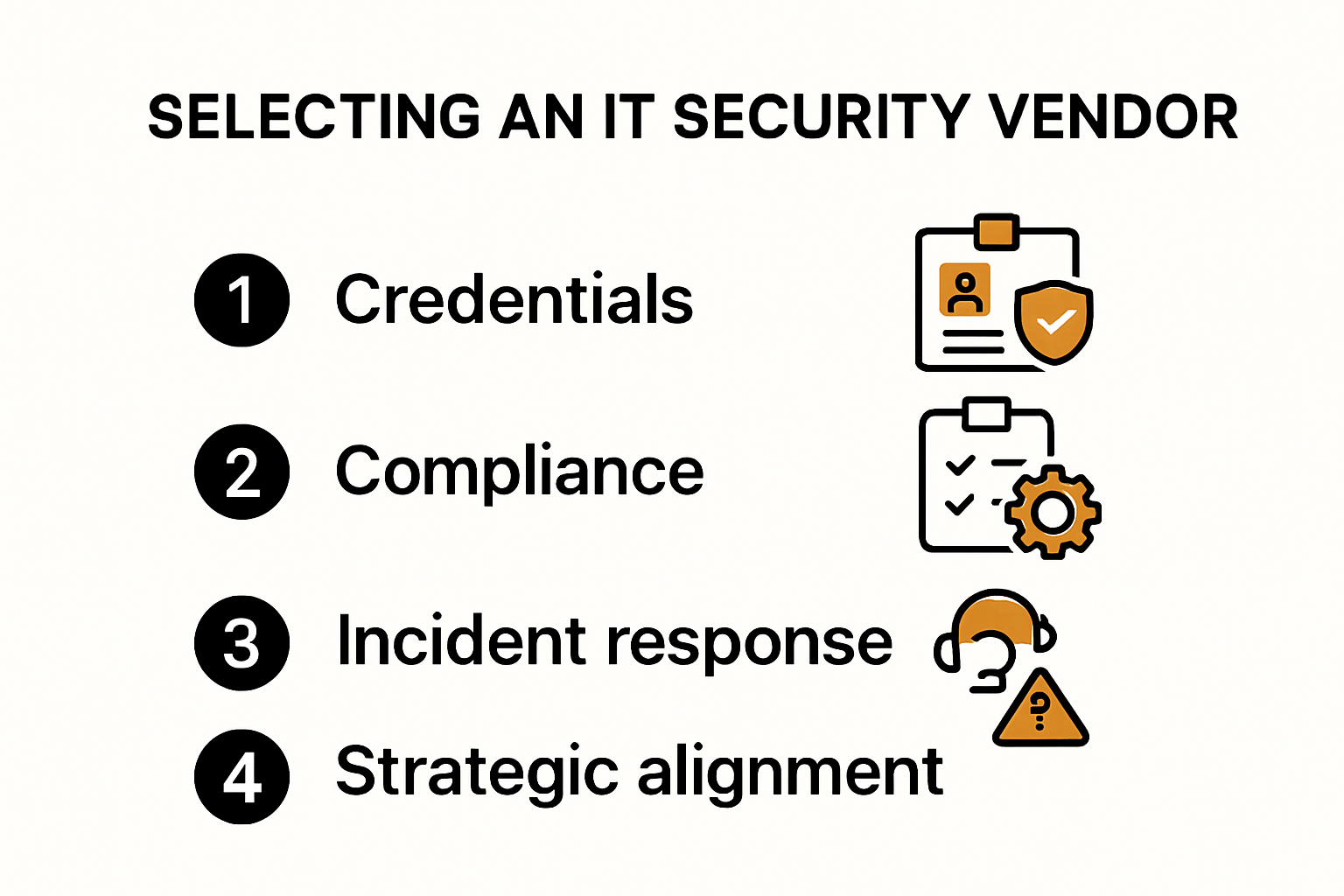
| Comprehensive Security Credentials Are Essential | Prioritize vendors with relevant certifications like ISO 27001 and SOC 2, and ensure they comply with industry-specific regulations to demonstrate their commitment to security practices. |
| Rapid Incident Response Is Critical | Assess vendors for their ability to quickly patch vulnerabilities within 1-3 business days and their clarity in breach notification procedures to ensure effective threat management. |
| Evaluate Track Record and Strategic Fit | Conduct thorough evaluations of a vendor's past performance and ability to align with your organization's specific cybersecurity needs and growth to establish a fruitful partnership. |
Key Factors When Selecting an IT Security Vendor
Choosing the right IT security vendor represents a critical strategic decision that can dramatically impact an organization's cybersecurity posture and operational resilience. The complexity of modern cybersecurity demands a comprehensive and nuanced approach to vendor selection.
Comprehensive Security Credentials and Compliance Verification
Evaluating an IT security vendor requires deep examination of their professional credentials and compliance standards. Research from TechTarget highlights that organizations must prioritize vendors with relevant cybersecurity certifications such as ISO 27001, SOC 2, and professional credentials like CISSP. These certifications demonstrate a vendor's commitment to robust security practices and ongoing professional development.
Moreover, industry-specific compliance is non-negotiable. Depending on your sector, you might need vendors who understand and adhere to specialized regulatory frameworks like HIPAA for healthcare, PCI DSS for financial services, or GDPR for organizations handling European data. A vendor's ability to navigate these complex regulatory landscapes reflects their technical sophistication and risk management capabilities.
Incident Response and Vulnerability Management
Security Scorecard research reveals a stark reality: 35.5% of security breaches in 2025 originate from third-party access. This statistic underscores the critical importance of thoroughly assessing a potential IT security vendor's incident response protocols and vulnerability management strategies.
Key evaluation criteria should include:
- Rapid Vulnerability Patching: Vendors must demonstrate the ability to address security vulnerabilities within 1-3 business days.
- Transparent Breach Notification: Clear and immediate communication procedures during potential security incidents.
- Comprehensive Access Controls: Robust systems that limit and monitor external access to critical infrastructure.
Track Record and Organizational Alignment
Beyond technical capabilities, selecting an IT security vendor requires evaluating their historical performance and alignment with your organization's specific needs. Sprinto's cybersecurity guidelines recommend conducting thorough background checks that extend beyond marketing materials.
Consider requesting:
- Reference Checks: Speak directly with organizations of similar size and sector who have worked with the vendor.
- Detailed Security Assessments: Comprehensive reports demonstrating the vendor's security practices, breach history, and mitigation strategies.
- Scalability Evidence: Proof that the vendor can adapt their solutions as your organization grows and technological landscapes evolve.
Ultimately, selecting an IT security vendor is not just about technological capabilities but about establishing a strategic partnership that evolves with emerging cybersecurity challenges. Rigorous, multifaceted evaluation processes will help ensure you choose a vendor who can genuinely protect and enhance your organization's digital resilience.

Comparing Top IT Security Vendors in 2025
The IT security vendor landscape in 2025 presents a complex ecosystem of innovative solutions designed to protect organizations against increasingly sophisticated cyber threats. Understanding the nuanced strengths and specialized capabilities of leading vendors becomes crucial for making informed cybersecurity investment decisions.
Comprehensive Security Platform Evaluation
Technology Magazine's 2025 cybersecurity analysis reveals that top IT security vendors are distinguished by their comprehensive approach to threat management. Companies like Fortinet, Zscaler, Microsoft Security, Cisco, and Trend Micro have emerged as industry leaders, each offering unique strengths in addressing advanced cyber challenges.
Station X research indicates that effective vendor comparison requires a multifaceted assessment approach. Key evaluation criteria now extend beyond traditional security metrics to include:
- AI-Driven Threat Intelligence: Vendors demonstrating advanced machine learning capabilities
- Cloud-Native Security Solutions: Platforms offering robust protection for distributed work environments
- Comprehensive Incident Response: Proven track records of rapid and effective threat mitigation
Vendor-Specific Strengths and Innovations
Different vendors excel in specific areas of cybersecurity. Astra's cybersecurity analysis provides insights into the unique positioning of market leaders:
Fortinet distinguishes itself through:
- Advanced secure networking capabilities
- Automated security operations powered by AI
- Comprehensive threat protection platforms
Zscaler leads in:
- Cloud-native security architecture
- Zero-trust access solutions
- Advanced threat intelligence mechanisms
Microsoft Security, Cisco, and Trend Micro each offer specialized solutions that address specific organizational security needs, demonstrating the importance of aligned vendor selection with specific technological infrastructure and risk profiles.
To help compare the strengths and focus areas of major IT security vendors discussed above, the following table summarizes their key differentiators:
| Vendor | Key Strengths | Innovations & Focus Areas |
|---|---|---|
| Fortinet | Advanced secure networking, comprehensive protection | AI-powered automation, unified security platform |
| Zscaler | Cloud-native architecture, zero-trust access | Advanced threat intelligence, cloud solutions |
| Microsoft Security | Integration with MS ecosystem, broad threat defense | Endpoint security, identity management |
| Cisco | Network security, infrastructure solutions | Secure access, scalability, IT integrations |
| Trend Micro | Endpoint protection, hybrid cloud security | Advanced malware detection, cloud defense |
Strategic Selection Considerations
Selecting an IT security vendor in 2025 requires more than comparing feature lists. Organizations must consider:
- Scalability: The vendor's ability to adapt to evolving technological landscapes
- Integration Capabilities: Seamless compatibility with existing technological ecosystems
- Continuous Innovation: Demonstrated commitment to staying ahead of emerging cyber threats
The most effective IT security vendors will provide not just technological solutions but strategic partnerships that evolve with an organization's changing security requirements. This approach transforms vendor selection from a transactional process to a collaborative cybersecurity strategy.
Ultimately, the right IT security vendor acts as a critical partner in protecting digital assets, enabling organizations to navigate increasingly complex technological environments with confidence and resilience.
Essential Questions to Ask Potential Vendors
Selecting an IT security vendor requires a strategic and methodical approach that goes beyond surface-level evaluations. The right set of probing questions can reveal critical insights into a vendor's capabilities, reliability, and alignment with your organization's security requirements.
Cybersecurity Credentials and Compliance Verification
TechTarget's cybersecurity selection guide emphasizes the importance of verifying a vendor's professional credentials. Critical questions in this domain include:
- Certification Inquiry: What specific cybersecurity certifications do you hold? Look for credentials such as ISO 27001, SOC 2, CISSP, or GIAC.
- Regulatory Compliance: How do you ensure compliance with industry-specific standards like HIPAA, PCI DSS, or FedRAMP?
- Ongoing Training: What continuous professional development programs do your security professionals undergo?
Incident Response and Vulnerability Management
Security Scorecard research reveals that 41.4% of ransomware attacks originate from third-party access, making vendor vulnerability management crucial. Essential questions to probe this area include:
- Vulnerability Patching: What is your typical timeline for addressing critical security vulnerabilities? Sprinto's cybersecurity guidelines recommend vendors should patch within 1-3 business days.
- Breach Notification Protocol: Can you provide a detailed explanation of your breach notification process?
- External Security Ratings: What is your current cybersecurity rating from independent assessment organizations?
Operational Transparency and Strategic Alignment
Beyond technical capabilities, understanding a vendor's operational approach is critical. Consider asking:
- Data Hosting: Where are your data centers located? Can you provide full transparency about data storage and processing locations?
- Scalability: How do your solutions adapt to changing organizational needs and emerging technological landscapes?
- Reference Verification: Can you provide detailed references from organizations similar to ours in size and industry sector?
Additionally, request comprehensive documentation that demonstrates:
- Detailed security assessment reports
- Historical performance metrics
- Comprehensive incident response strategies
To provide a clear overview of essential vendor evaluation areas, here is a checklist to guide your questioning and documentation requests:
| Evaluation Area | Key Question or Action | Status (Y/N/Requested) |
|---|---|---|
| Cybersecurity Certifications | Does the vendor hold ISO 27001, SOC 2, CISSP, etc.? | |
| Regulatory Compliance | Confirmed alignment with HIPAA, PCI DSS, FedRAMP, sector rules? | |
| Vulnerability Patching Timeline | Patches critical vulnerabilities in 1-3 days? | |
| Breach Notification Clarity | Clear, timely notification protocols provided? | |
| Independent Security Ratings | Up-to-date third-party assessments available? | |
| Data Hosting Transparency | Discloses data center & storage locations? | |
| Reference Checks | References from similar organizations provided and verified? | |
| Security Assessment Reports | Supplies detailed assessment, breach history, and mitigation documentation? |
The goal is not to interrogate but to establish a transparent, collaborative partnership. A vendor confident in their capabilities will welcome thorough questioning and provide clear, comprehensive answers.
Remember that selecting an IT security vendor is fundamentally about establishing a strategic relationship. The right vendor should feel less like a service provider and more like a trusted cybersecurity partner committed to protecting your organization's digital infrastructure.
Maximizing Value From Your IT Security Vendor Partnership
Transforming an IT security vendor relationship from a transactional agreement to a strategic partnership requires deliberate effort, continuous communication, and proactive engagement. The most successful organizations view their vendor partnerships as collaborative relationships that evolve with their technological and security landscapes.
Performance Metrics and Continuous Evaluation
Sprinto's cybersecurity guidelines emphasize the critical importance of establishing clear performance-based contract clauses and ongoing evaluation mechanisms. Organizations should implement robust monitoring frameworks that go beyond traditional service level agreements.
Key performance indicators to track include:
- Vulnerability Response Time: Verifying that critical security patches are implemented within 1-3 business days
- Incident Resolution Effectiveness: Measuring the speed and comprehensiveness of threat mitigation
- Proactive Threat Intelligence: Assessing the vendor's ability to anticipate and prevent emerging cybersecurity risks
Strategic Alignment and Collaborative Innovation
TechTarget's vendor selection research highlights that maximizing vendor value requires deep alignment with organizational goals. This means moving beyond technical capabilities to establish a genuine partnership focused on strategic cybersecurity objectives.
Strategic collaboration strategies include:
- Regular Strategic Reviews: Quarterly meetings to discuss evolving security landscapes
- Joint Innovation Workshops: Collaborative sessions exploring emerging technological challenges
- Customized Solution Development: Working together to create tailored security approaches
Risk Management and Continuous Improvement
Security Scorecard analysis reveals that 35.5% of security breaches originate from third-party access, underscoring the critical nature of ongoing vendor risk management. Organizations must implement comprehensive monitoring and assessment processes.
Recommended risk management approaches:
- External Security Rating Tracking: Continuous monitoring of the vendor's cybersecurity performance
- Compliance Verification: Regular audits ensuring adherence to industry standards and certifications
- Scenario-Based Testing: Conducting simulated security challenges to assess vendor responsiveness
The most effective IT security vendor partnerships transcend traditional service agreements. They represent dynamic, collaborative relationships where both parties are committed to continuous learning, innovation, and adaptive security strategies.
Ultimately, maximizing vendor value is about creating a symbiotic relationship where your organization's security objectives are consistently met and consistently evolving. This requires mutual trust, transparent communication, and a shared commitment to technological resilience.
Frequently Asked Questions
What should I look for when selecting an IT security vendor in 2025?
When choosing an IT security vendor, prioritize their comprehensive security credentials, including certifications like ISO 27001 and SOC 2. Assess their incident response capabilities, such as the speed of vulnerability patching and breach notification protocols. Finally, evaluate their track record and alignment with your organization's specific cybersecurity needs.
How important is incident response time when choosing an IT security vendor?
Incident response time is crucial. A vendor's ability to patch vulnerabilities within 1-3 business days significantly impacts your organization's ability to manage threats effectively. Fast communication during breaches is also essential for timely threat management.
What types of certifications should an IT security vendor have?
An effective IT security vendor should hold relevant certifications such as ISO 27001, SOC 2, CISSP, or other professionally recognized credentials. Additionally, they should comply with industry-specific standards like HIPAA, PCI DSS, or GDPR depending on your sector.
How can I ensure that an IT security vendor aligns with my organization's needs?
To ensure alignment, conduct reference checks with organizations of similar size and industry that have previously worked with the vendor. Request detailed security assessments and discuss how the vendor can adapt their solutions to fit your organization's growth and specific security requirements.
Take the Uncertainty Out of IT Security Vendor Reviews
Still feeling overwhelmed by long security questionnaires and the pressure to verify every compliance detail when evaluating IT security vendors? The article highlights how choosing the right partner for 2025 means demanding rapid responses, up-to-date credentials, and truly transparent communication. Yet, manual processes and scattered data put your organization's risk—and reputation—on the line.
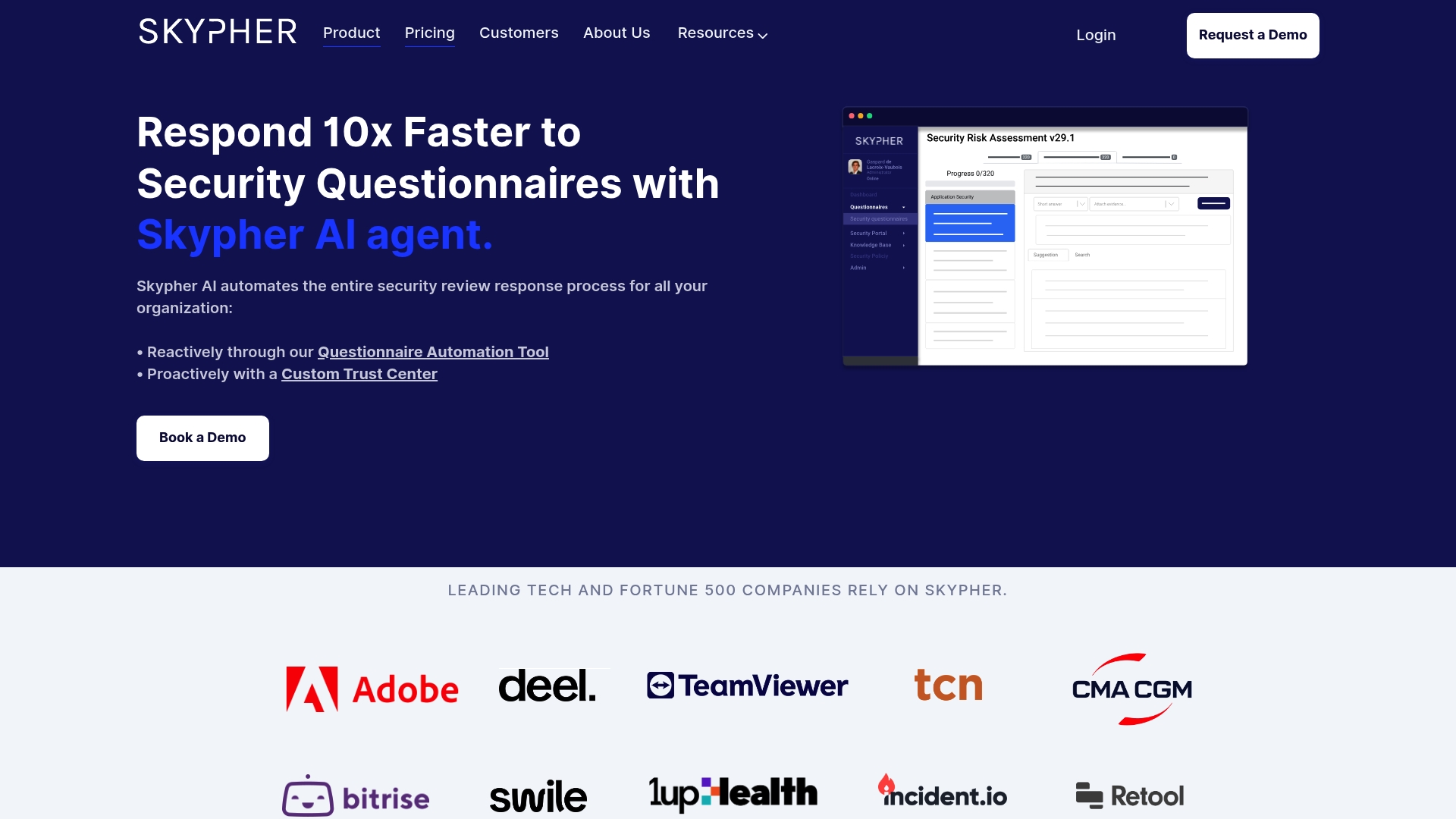
Transform vendor assessments from a compliance headache into a strategic advantage with Skypher's AI-driven Questionnaire Automation Tool. Streamline every security review, close contracts faster, and showcase your trustworthiness through a customizable Trust Center. Streamline your path to the vendors who truly fit your needs today. Discover how leading teams are automating security reviews and accelerating decision-making. Visit Skypher now to see it in action and gain the confidence to choose the right IT security partner before the next risk cycle begins.