

ISO 27001 certification sounds like a complicated badge for cybersecurity compliance, but its impact reaches far beyond paperwork and checklists. Here’s the twist. Nearly 87 percent of consumers claim they hesitate to work with organizations that appear insecure which means this certification can make or break new partnerships. It is not just a technical hurdle but a strategic gateway that sets your business apart from the crowd and wins trust in a world where every data breach hurts your bottom line.
Table of Contents
- What ISO 27001 Certified Really Means
- Steps to Achieve ISO 27001 Certification
- Key Benefits of Being ISO 27001 Certified
- Common Challenges and How to Overcome Them
Quick Summary
| Takeaway | Explanation |
|---|---|
| ISO 27001 Certification is a Strategic Investment | Achieving ISO 27001 certification enhances organizational credibility, demonstrates a commitment to information security, and opens up new business opportunities, making it a vital asset for competitive differentiation. |
| Systematic Implementation is Essential | Successful certification requires a structured approach, including comprehensive risk assessments, clear documentation of information security practices, and integration of security protocols into daily operations. |
| Overcoming Challenges is Key to Success | Organizations must address common challenges such as resource constraints, cultural resistance, and technical documentation complexities by prioritizing tasks, leveraging automation, and fostering a culture of security awareness. |
| Continuous Improvement is Required | ISO 27001 certification is not a one-time achievement; ongoing monitoring, annual audits, and continuous updates to security strategies are essential for maintaining compliance and enhancing security posture. |
What ISO 27001 Certified Really Means
ISO 27001 certification represents far more than a simple compliance checkbox. It is a comprehensive framework that demonstrates an organization's commitment to protecting sensitive information and managing cybersecurity risks with strategic precision.
The Core Definition of ISO 27001 Certification
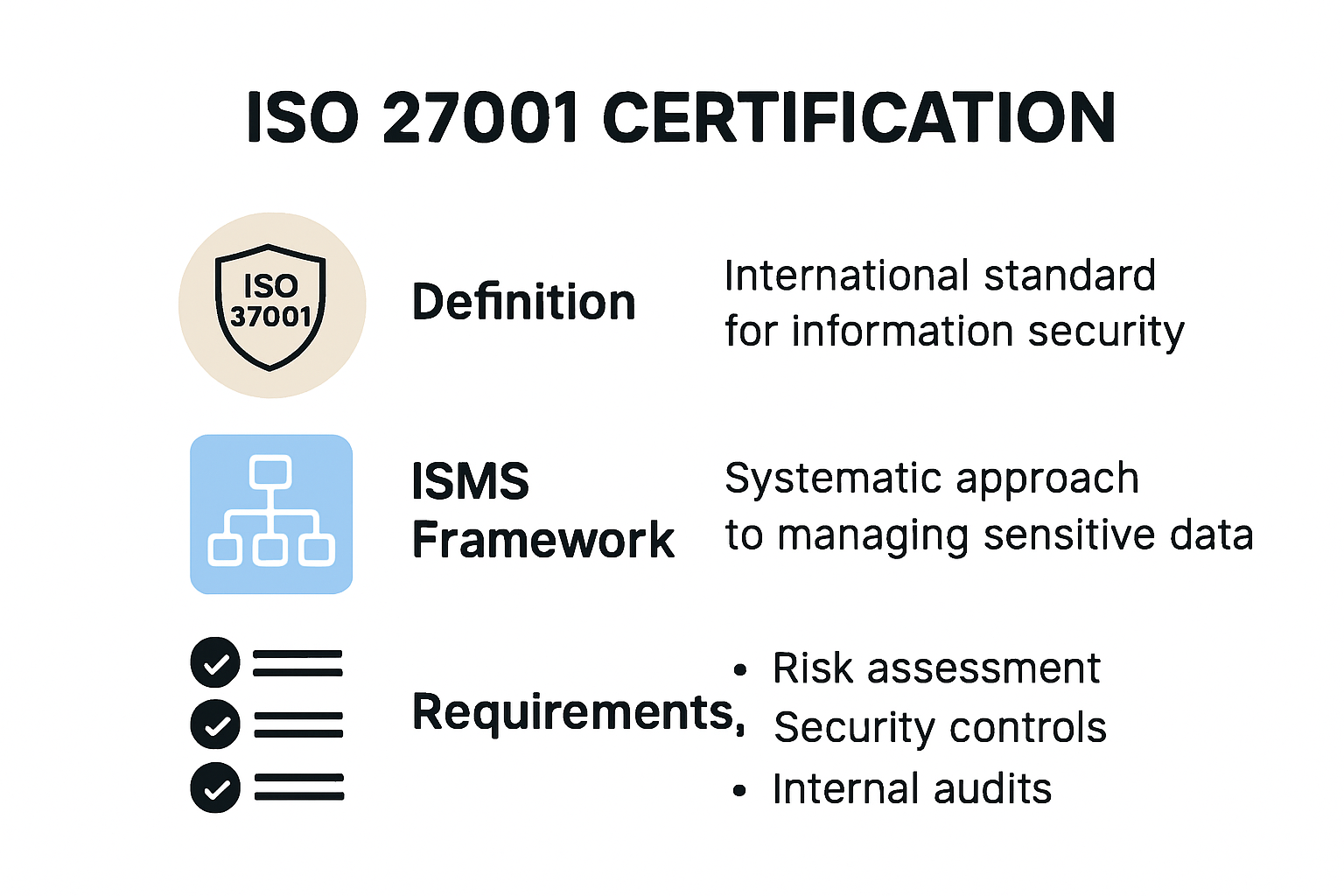
At its essence, ISO 27001 certification is an internationally recognized standard that validates an organization's Information Security Management System (ISMS). This isn't just a technical designation. It signifies that a company has developed a systematic approach to managing confidential data, identifying potential security vulnerabilities, and implementing robust protective measures.
The certification process requires organizations to undergo a rigorous external audit that evaluates their information security practices against strict international standards. When a company achieves this certification, it essentially proves they have:
- Comprehensive Risk Assessment: A thorough process of identifying and mitigating potential information security threats
- Structured Security Protocols: Well-defined procedures for protecting digital and physical information assets
- Continuous Improvement Mechanism: Regular reviews and updates to security strategies
Why ISO 27001 Matters Beyond Compliance
Beyond technical requirements, ISO 27001 certification signals profound organizational maturity. According to IT Governance Research, the certification demonstrates that an organization has implemented best practices in information security management that align with global standards.
For businesses, this certification offers multiple strategic advantages. It builds trust with clients, partners, and stakeholders by showing a proactive commitment to data protection. In an era of increasing cyber threats, this becomes a significant competitive differentiator. Potential clients see ISO 27001 certification as a mark of reliability and professionalism.
Moreover, the certification process compels organizations to develop a holistic view of information security. It's not just about implementing technological solutions but creating a culture of security awareness. This means training employees, establishing clear protocols, and developing an organizational mindset that prioritizes data protection.
The Business Impact of ISO 27001
The real value of ISO 27001 certification extends far beyond a mere compliance document. As ISMS Online explains, it helps businesses enhance their reputation, reduce potential security risks, and demonstrate a commitment to maintaining the highest standards of information security.
Financially, the certification can lead to significant advantages. Many enterprises and government agencies now require vendors and partners to have ISO 27001 certification as a prerequisite for collaboration. This means the certification can open doors to new business opportunities and provide a competitive edge in contract negotiations.
Cybersecurity is no longer an optional consideration but a critical business imperative. ISO 27001 certification provides a structured, internationally recognized framework for managing this complex landscape. It transforms information security from a technical necessity into a strategic business asset.
Steps to Achieve ISO 27001 Certification
Achieving ISO 27001 certification is a strategic journey that requires careful planning, commitment, and systematic implementation. While the process might seem complex, breaking it down into clear stages can help organizations navigate the certification pathway effectively.
Initial Preparation and Scoping
The first critical step in obtaining ISO 27001 certification involves defining the precise scope of your Information Security Management System (ISMS). Drata highlights that organizations must clearly identify which business units, processes, and information assets will be included in the certification.
This initial phase requires leadership commitment and cross-functional collaboration. You'll need to:
- Conduct Comprehensive Risk Assessment: Systematically identify potential information security risks across your organization
- Define ISMS Boundaries: Determine exact organizational units and systems to be covered
- Secure Executive Support: Ensure top management understands and supports the certification initiative
Documenting your current information security practices becomes crucial during this stage. Detailed documentation will serve as the foundation for your ISMS and demonstrate your organization's structured approach to information security management.

Implementation of Security Controls
After establishing the scope, organizations must implement a robust set of security controls aligned with ISO 27001 requirements. According to Secureframe, this involves developing comprehensive policies, procedures, and technical safeguards that address potential vulnerabilities.
Key implementation activities include:
- Developing information security policies
- Creating risk treatment plans
- Implementing technical and organizational controls
- Training employees on security protocols
- Establishing incident response mechanisms
The goal is not just to create documentation but to embed these practices into the organization's daily operations. This means transforming security from a checklist item to an integral part of your business culture.
Audit and Certification Process
Hyperproof emphasizes that the certification process typically spans approximately one year and involves two critical audit stages. Stage 1 focuses on reviewing ISMS documentation, while Stage 2 conducts an in-depth assessment of actual business processes and security controls.
During the certification audit, an independent third-party auditor will:
- Examine your ISMS documentation
- Verify implementation of security controls
- Assess the effectiveness of your risk management processes
- Identify any potential non-conformities
Successful completion results in a three-year certification, with mandatory annual surveillance audits to maintain compliance. Organizations must demonstrate continuous improvement and commitment to information security throughout this period.
Remember, ISO 27001 certification is not a one-time achievement but an ongoing journey of security enhancement and organizational resilience. Continuous monitoring, regular internal audits, and adaptation to emerging threats are essential for maintaining your certification and protecting your organization's valuable information assets.
Key Benefits of Being ISO 27001 Certified
ISO 27001 certification goes far beyond a simple compliance achievement. It represents a strategic investment that delivers substantial organizational advantages across multiple dimensions of business operations and strategic positioning.
Enhanced Cybersecurity and Risk Management
Lansweeper highlights that ISO 27001 certification fundamentally strengthens an organization's cybersecurity infrastructure. By enforcing rigorous access controls and systematic vulnerability identification, businesses create a robust defense mechanism against potential security threats.
The certification process compels organizations to develop comprehensive risk management strategies that proactively address potential security vulnerabilities. This means:
- Systematic Risk Identification: Comprehensive evaluation of potential security gaps
- Structured Mitigation Strategies: Developing precise protocols for addressing identified risks
- Continuous Security Monitoring: Regular assessments to maintain and improve security postures
Moreover, these structured approaches significantly reduce the likelihood of data breaches and minimize potential financial and reputational damages associated with security incidents.
Competitive Advantage and Market Credibility
According to Vinsys, ISO 27001 certification provides a remarkable competitive edge in today's increasingly security-conscious business environment. Research indicates that 87% of consumers are hesitant to engage with organizations they perceive as insecure.
The certification serves as a powerful trust signal that communicates several key messages to potential clients and partners:
- Proven Security Commitment: Demonstrates a structured approach to information protection
- Regulatory Compliance: Shows alignment with international security standards
- Professional Maturity: Indicates sophisticated organizational risk management capabilities
Businesses with ISO 27001 certification often find themselves more attractive to enterprise clients, government contracts, and international partnerships. This credential can open doors to new market opportunities and differentiate an organization from competitors who lack similar certifications.
Financial and Operational Benefits
Beyond reputation and security, ISO 27001 certification delivers tangible financial advantages. By implementing systematic risk management processes, organizations can prevent costly security incidents and minimize potential business disruptions.
The certification encourages organizations to:
- Optimize security infrastructure investments
- Reduce potential financial losses from security breaches
- Streamline operational processes related to information management
- Lower insurance premiums through demonstrated risk management
Furthermore, the structured approach required for certification often leads to improved internal processes, increased operational efficiency, and a more robust organizational framework. The discipline required to maintain ISO 27001 certification naturally promotes a culture of continuous improvement and strategic thinking.
Ultimately, ISO 27001 certification is not just a technical achievement but a strategic asset that enhances an organization's resilience, credibility, and competitive positioning in an increasingly complex digital landscape.
Common Challenges and How to Overcome Them
Pursuing ISO 27001 certification is a complex journey fraught with potential obstacles. Understanding these challenges and developing strategic approaches to address them can significantly smooth the path to successful certification.
Resource Constraints and Implementation Complexity
Lansweeper highlights that limited time and manpower represent significant barriers for organizations seeking ISO 27001 certification. Many businesses struggle with allocating sufficient resources to meet the rigorous requirements of the certification process.
To effectively overcome resource challenges, organizations can:
- Prioritize Critical Areas: Focus initial efforts on high-risk information security domains
- Leverage Automation: Implement compliance management tools to reduce manual workload
- Create Dedicated Teams: Assign specific personnel with clear responsibilities for the certification process
Strategic resource allocation means understanding that certification is not a one-time event but an ongoing commitment. Investing in the right tools and personnel upfront can dramatically reduce long-term compliance burdens.
Cultural and Organizational Resistance
CyberUpgrade points out that employee resistance and organizational inertia frequently derail ISO 27001 implementation efforts. Security compliance requires fundamental changes to existing processes and mindsets.
Effective strategies to address cultural challenges include:
- Comprehensive Training Programs: Develop engaging security awareness sessions
- Leadership Engagement: Ensure top management visibly supports the certification initiative
- Clear Communication: Explain the benefits of ISO 27001 certification to all stakeholders
- Incremental Implementation: Use a phased approach to reduce organizational disruption
Transforming organizational culture requires patience and a strategic approach. Success depends on making security a shared responsibility rather than a top-down mandate.
Technical and Documentation Challenges
Deiterate emphasizes the complexity of managing extensive documentation and maintaining ongoing compliance. The technical requirements of ISO 27001 can overwhelm unprepared organizations.
To navigate these challenges, organizations should:
- Implement Robust Documentation Systems: Use digital tools for tracking and managing security documentation
- Develop Clear Policy Templates: Create standardized documentation frameworks
- Establish Continuous Monitoring: Set up automated systems for ongoing compliance tracking
- Conduct Regular Internal Audits: Proactively identify and address potential compliance gaps
Successful ISO 27001 certification requires a holistic approach that balances technical requirements with organizational capabilities. It's not about perfect implementation but demonstrating a committed, systematic approach to information security management.
Remember, challenges are opportunities for growth. Each obstacle overcome brings your organization closer to a more robust, secure, and resilient information security framework. The journey to ISO 27001 certification is as much about cultural transformation as it is about technical compliance.
Frequently Asked Questions
What is ISO 27001 certification?
ISO 27001 certification is an internationally recognized standard that validates an organization's Information Security Management System (ISMS), demonstrating its commitment to managing sensitive information and cybersecurity risks.
Why is ISO 27001 important for businesses?
ISO 27001 is crucial for businesses as it enhances credibility, builds trust with clients, and enables compliance with international security standards, making it a competitive differentiator in the market.
What are the steps to achieve ISO 27001 certification?
To achieve ISO 27001 certification, organizations must follow key steps: define the scope of the ISMS, implement security controls, conduct a thorough audit, and undergo the certification process with an external auditor.
How long does the ISO 27001 certification process take?
The ISO 27001 certification process typically spans about one year and requires ongoing commitment, including annual surveillance audits to maintain compliance.
Tackle ISO 27001 Security Questionnaires with Confidence—Automate & Excel
Struggling to keep up with documentation, endless security reviews, and proof for every control during your ISO 27001 certification journey? You are not alone. The article highlighted how preparing for compliance eats up precious time, drains teams, and turns security questionnaires into a headache just when your focus should be on risk management and improvement. Now you do not have to choose between speed and accuracy.
Imagine shaving days off your response cycle, with AI-powered automation that fills in security details with accuracy and builds confidence in every audit or client exchange. Skypher gives you collaborative tools that integrate with your existing platforms and instantly generate answers that satisfy even the toughest ISO 27001 requirements. Do not let manual processes slow your business or put your certification at risk. Explore Skypher now to automate your questionnaires and turn compliance into a competitive advantage today.