
ISO 27001 compliance is critical for any organization serious about safeguarding its information. Did you know that over 40 percent of companies lose customers after a data breach? This stark reality emphasizes the importance of securing sensitive data. Yet, many organizations see compliance as a bureaucratic checklist rather than a comprehensive approach. By adopting ISO 27001, businesses can turn a compliance obligation into a robust strategy for information security that drives trust and resilience.
Table of Contents
- Understanding ISO 27001 Compliance
- Implementation Roadmap and Checklist
- Risk Assessment and Security Controls
- Documenting Processes and Audits
Quick Summary
| Takeaway | Explanation |
|---|---|
| ISO 27001 Compliance Requires Detailed Documentation | Organizations must create comprehensive documentation, including policies, risk assessment methodologies, and incident management procedures, to prove compliance and ensure consistent security practices. |
| Risk Management is Central to ISO 27001 | A robust risk management process must identify, assess, and mitigate risks to information assets, ensuring that the organization focuses on its most critical security concerns. |
| Ongoing Improvement is Essential | ISO 27001 compliance is not a one-time effort; it requires regular monitoring, internal audits, and updates to practices and documentation to adapt to changing conditions and maintain security effectiveness. |
| The Implementation Roadmap is Critical | A structured roadmap comprising phases from preparation to certification helps organizations navigate the complexities of ISO 27001 implementation effectively. |
| Training and Awareness are Vital for Success | Comprehensive training programs for staff are necessary to ensure understanding and compliance with security controls, highlighting that security is a responsibility shared across the organization. |
Understanding ISO 27001 Compliance
ISO 27001 represents the global gold standard for information security management systems (ISMS). But what exactly does compliance with this standard entail? Let's break down this complex framework into understandable components that will help you navigate the compliance journey.
What Is ISO 27001?
At its core, ISO 27001 is an internationally recognized standard that provides a framework for establishing, implementing, maintaining, and continually improving an information security management system. ISO.org recognizes it as the leading standard for ISMS compliance worldwide, making it the benchmark for organizations serious about protecting sensitive information.
The standard isn't just a checklist of security controls—it's a comprehensive approach to managing information security risks through a systematic process. This process-oriented approach is what distinguishes ISO 27001 from other security frameworks.
Key Components of ISO 27001 Compliance
Compliance with ISO 27001 isn't something you achieve overnight. It requires thorough documentation and implementation of several key elements:
- Documented ISMS Scope: Clearly defining what your information security management system covers
- Information Security Policy: Establishing the rules and guidelines for information security
- Risk Assessment and Treatment Process: Identifying threats and implementing controls
- Statement of Applicability: Documenting which controls are relevant to your organization
According to Advisera, these documents are mandatory requirements specified throughout the clauses of the standard. Without proper documentation, compliance becomes impossible to verify or maintain.
The ISO 27001 Compliance Cycle
Compliance with ISO 27001 follows a cyclical pattern based on the Plan-Do-Check-Act (PDCA) methodology:
- Plan: Establish ISMS policy, objectives, processes, and procedures
- Do: Implement and operate the ISMS policy, controls, processes, and procedures
- Check: Monitor and review ISMS performance against policy and objectives
- Act: Take corrective and preventive actions based on internal audit results
This cycle ensures that information security isn't treated as a one-time project but as an ongoing process of continuous improvement.
The Role of Risk Management
At the heart of ISO 27001 compliance is risk management. The standard requires organizations to:
- Identify information assets that need protection
- Assess potential threats and vulnerabilities
- Evaluate the likelihood and impact of security incidents
- Implement controls to mitigate identified risks
- Regularly review and update risk assessments
As noted by Secureframe, ISO 27001 compliance is fundamentally built around this cycle of risk identification, assessment, mitigation, and ongoing management. This risk-based approach allows organizations to focus their resources on the most critical security concerns.
From Compliance to Certification
While internal compliance with ISO 27001 is valuable, many organizations pursue formal certification. This third-party validation demonstrates to clients, partners, and stakeholders that your information security practices meet international standards.
The certification process typically involves:
- Stage 1 Audit: Review of documentation and preparedness
- Stage 2 Audit: In-depth assessment of implementation
- Certification Decision: Issuance of certification if requirements are met
- Surveillance Audits: Regular check-ups to ensure ongoing compliance
- Recertification: Complete reassessment every three years
Remember that ISO 27001 compliance isn't about checking boxes on a iso 27001 checklist. It's about embedding security into your organizational culture and processes. The most successful implementations occur when security becomes everyone's responsibility rather than being siloed within the IT department.
By understanding the fundamental principles and requirements of ISO 27001 compliance, you're taking the first step toward building a robust information security management system that protects your organization's most valuable assets.
Implementation Roadmap and Checklist
Navigating the ISO 27001 implementation process can seem daunting at first glance. To help transform this complex standard into actionable steps, let's establish a clear roadmap and practical checklist that will guide your organization toward successful ISO 27001 compliance.
Phase 1: Preparation and Planning
Before diving into the implementation itself, proper preparation creates the foundation for success. This initial phase is critical and often underestimated by organizations eager to achieve certification quickly.
Start by securing executive commitment. Without top-level support, your ISO 27001 implementation will likely struggle to gain traction across departments. Next, assemble your implementation team, ensuring diverse representation from IT, legal, HR, operations, and other relevant departments.
According to Hyperproof, developing a comprehensive project plan is a crucial early step in ISO 27001 implementation. This plan should include:
- Clear objectives and scope definition
- Timeline with realistic milestones
- Resource allocation and budget
- Roles and responsibilities of team members
- Communication strategies for stakeholders
During this stage, you'll also need to define the boundaries of your ISMS, as StrongDM points out. This involves specifying exactly which parts of your organization will be certified and which controls are applicable to your specific context. This scope definition prevents scope creep and keeps the project manageable.
Phase 2: Risk Assessment and Treatment
Once planning is complete, conduct a thorough risk assessment—the cornerstone of ISO 27001 implementation. This process identifies threats to your information assets and evaluates their potential impact and likelihood.
Your risk assessment checklist should include:
- Inventory all information assets within scope
- Identify threats and vulnerabilities to each asset
- Analyze risks based on impact and probability
- Prioritize risks that require immediate attention
- Develop risk treatment plans for significant risks
After completing the risk assessment, develop your Statement of Applicability (SoA), which documents which Annex A controls you're implementing and why certain controls might be excluded. This document serves as your master iso 27001 controls checklist for the implementation phase.
Phase 3: Control Implementation
With risks identified and prioritized, it's time to implement the necessary controls. Based on your risk assessment and SoA, design and implement appropriate security controls that align with your risk treatment decisions.
The challenge in this phase is balancing security with business functionality. Controls should protect information without unnecessarily hindering operations. Your implementation team will need to work closely with affected departments to ensure controls are both effective and practical.
Phase 4: Documentation Development
Documentation is the evidence that proves your compliance with ISO 27001 requirements. Thoropass notes that a comprehensive ISO 27001 implementation requires approximately 25 different policies covering various aspects of information security management.
Key documentation to develop includes:
- Information Security Policy
- Risk Assessment and Treatment Methodology
- Access Control Policy
- Acceptable Use Policy
- Incident Management Procedures
- Business Continuity Plans
- Training and Awareness Programs
Ensure your documentation is clear, accessible, and regularly updated. Remember, documentation that isn't followed in practice will be flagged during certification audits.
Phase 5: Training and Awareness
Even the most robust security controls will fail if your employees don't understand them or their importance. Develop and implement comprehensive training programs for all staff, with specialized training for those with specific security responsibilities.
Your iso 27001 audit checklist should include verification that training has been completed and understood by all relevant personnel. Regular refresher training helps maintain awareness and reinforces the importance of information security.
Phase 6: Monitoring and Review
Implement monitoring mechanisms to ensure your ISMS remains effective. This includes internal audits, management reviews, and continuous improvement processes. Regular monitoring helps identify and address issues before they become significant problems.
Before proceeding to certification assessment, conduct a pre-assessment to identify and remediate any remaining issues. This "dress rehearsal" for certification can save significant time and resources by identifying gaps before the official audit.
Phase 7: Certification
Once your ISMS is fully implemented and operational, you're ready for certification. Select an accredited certification body, prepare for the audit, and address any non-conformities identified during the certification process.
Remember that certification is not the end of your ISO 27001 journey but rather a milestone in your ongoing commitment to information security. Continuous improvement remains essential even after achieving certification.
Risk Assessment and Security Controls
At the core of ISO 27001 lies a systematic approach to information security risk management. This section dives deep into the critical processes of risk assessment and the implementation of appropriate security controls—elements that form the backbone of any successful ISO 27001 compliance program.
The Risk Assessment Process
Risk assessment isn't just a checkbox on your iso 27001 checklist—it's the foundation that determines which security controls your organization needs. According to Drata, ISO 27001 requires organizations to establish specific risk criteria and implement repeatable processes for conducting valid and comparable risk analysis.
A comprehensive risk assessment typically follows these steps:
-
Asset Identification: Document all information assets within your defined scope. These include hardware, software, data, people, and supporting services.
-
Threat and Vulnerability Analysis: Identify potential threats to each asset and determine vulnerabilities that those threats might exploit.
-
Impact Evaluation: Assess the potential consequences if a threat exploits a vulnerability. Consider impacts on confidentiality, integrity, and availability of information.
-
Risk Level Determination: Calculate risk levels based on the likelihood of occurrence and potential impact. This prioritization helps you focus resources on addressing the most significant risks first.
-
Risk Treatment Planning: Develop strategies to address identified risks through appropriate controls.
What makes ISO 27001 risk assessment unique is its requirement for a repeatable, documented methodology. Your approach must produce consistent, comparable results over time, allowing you to track your security posture as it evolves.
Risk Treatment Options
Once you've identified and assessed risks, you need to decide how to handle them. ISO 27001 prescribes four main risk treatment options:
- Risk Mitigation: Implementing controls to reduce risk to an acceptable level
- Risk Transfer: Shifting risk to another party (e.g., through insurance or outsourcing)
- Risk Acceptance: Formally accepting risks that fall within your tolerance levels
- Risk Avoidance: Eliminating activities or processes that create unacceptable risk
CyberUpgrade emphasizes that developing a documented risk treatment plan addressing these options is mandatory for effective ISO 27001 implementation. This plan becomes your roadmap for control implementation and forms a critical part of your certification evidence.
Selecting and Implementing Security Controls
Annex A of ISO 27001 contains 114 controls organized into 14 sections, providing a comprehensive catalog of security measures. However, not every control is necessary for every organization. Your selection should be based directly on your risk assessment results.
Controls generally fall into three categories:
- Technical Controls: Firewalls, encryption, access control systems, etc.
- Administrative Controls: Policies, procedures, training programs, etc.
- Physical Controls: Building security, equipment protection, environmental safeguards, etc.
The Statement of Applicability (SoA) documents which controls you're implementing and provides justification for any exclusions. This isn't just bureaucracy—it's a critical document that demonstrates the logical connection between your identified risks and implemented controls.
Tailoring Controls to Your Organization
One common mistake in ISO 27001 implementation is attempting to apply controls without customizing them to your specific organizational context. Generic security measures rarely provide adequate protection against your unique risk profile.
For example, a healthcare organization might prioritize controls related to patient data encryption and access restrictions, while a manufacturing company might focus more on physical security of production systems and intellectual property protection.
Effective control implementation requires:
- Alignment with your risk assessment findings
- Integration with existing business processes
- Clear ownership and accountability
- Measurable effectiveness criteria
- Regular testing and validation
Continual Evaluation and Improvement
Risk assessment and control implementation aren't one-time activities. ISO 27001 explicitly requires ongoing evaluation to ensure continual effectiveness of your ISMS. This means regularly revisiting your risk assessments, testing your controls, and updating your approach as needed.
Factors that might trigger reassessment include:
- Organizational changes (mergers, new products, restructuring)
- Technology changes (new systems, cloud migration)
- Emerging threats or vulnerabilities
- Regulatory changes
- Lessons learned from security incidents
By treating risk assessment and control implementation as ongoing processes rather than point-in-time projects, you create a dynamic security program that adapts to changing conditions—exactly what ISO 27001 is designed to promote.
Remember that documentation of your risk assessment methodology, findings, and control implementations is essential both for certification purposes and for maintaining consistent security practices across your organization.
Documenting Processes and Audits

Documentation is the backbone of ISO 27001 compliance—it transforms your security practices from informal habits into verified, repeatable processes. While often viewed as bureaucratic overhead, proper documentation and audit procedures serve critical functions in maintaining an effective information security management system (ISMS).
The Documentation Hierarchy
ISO 27001 documentation follows a hierarchical structure, moving from high-level policy documents down to detailed operational records. Understanding this structure helps organize your documentation efforts effectively:
- Level 1: Policies - High-level statements that reflect management's commitment and direction
- Level 2: Procedures - Step-by-step instructions for implementing policies
- Level 3: Work Instructions - Detailed guidance for specific tasks
- Level 4: Records - Evidence of activities performed and results achieved
According to Wattle Corp, ISO 27001 requires comprehensive documentation including ISMS policy, risk assessment methodology, Statement of Applicability (SoA), and incident management procedures. These documents serve dual purposes: guiding day-to-day operations and providing verifiable evidence during audits.
Essential Document Requirements
While the standard doesn't prescribe exactly how your documents should look, certain elements are expected in all ISO 27001 documentation:
- Version Control: Track document revisions with dates and approval information
- Ownership: Identify who is responsible for creating and maintaining each document
- Review Cycles: Establish how often documents will be reviewed and updated
- Access Controls: Define who can view, edit, or approve documents
- Format Consistency: Maintain a recognizable structure across document types
Remember that documentation shouldn't exist merely to satisfy auditors—it should provide real value to users. Overly complex or verbose documents will likely be ignored in practice, undermining your security objectives.
Documentation Management System
As your documentation library grows, managing it becomes increasingly challenging. Consider implementing a documentation management system that provides:
- Centralized storage with appropriate access controls
- Automated workflow for review and approval processes
- Version tracking and change history
- Search functionality for quick reference
- Integration with your training and awareness programs
Many organizations create an iso 27001 compliance checklist specifically for documentation management to ensure nothing falls through the cracks as policies and procedures evolve.
Internal Audit Process
Internal audits verify that your ISMS is functioning as intended and identify opportunities for improvement. These audits must be meticulously documented to demonstrate compliance.
Wattle Corp emphasizes that internal audit reports are mandatory under ISO 27001 and must be kept up to date. These records demonstrate transparency and accountability during certification and surveillance audits.
A well-documented internal audit process includes:
- Audit Program: Annual schedule covering all ISMS elements
- Audit Plans: Detailed scope and methodology for each audit
- Auditor Selection: Criteria ensuring independence and competence
- Audit Checklists: Questions and evidence requirements
- Nonconformity Reports: Documentation of findings and required actions
- Corrective Action Plans: Steps to address identified issues
The results of these audits should feed directly into your management review process, closing the loop on continuous improvement.
Preparing for External Audits
External audits by certification bodies ultimately determine whether your organization receives or maintains ISO 27001 certification. These audits are significantly less stressful when your documentation and internal audit records are well-maintained.
Before external audits, conduct a thorough review of your documentation to ensure:
- All mandatory documents are complete and up-to-date
- Internal audit findings have been addressed
- Management reviews have occurred as scheduled
- Documentation reflects current practices (not aspirational ones)
- Records demonstrate consistent implementation of controls
It's worth creating an iso 27001 audit checklist specifically for preparation, focusing on documentation readiness for each clause of the standard.
Continuous Documentation Improvement
Just as your ISMS evolves, so should your documentation. The documentation and records required for ISO 27001 must be reviewed and updated regularly to support continuous improvement and maintain conformity with the standard, especially as processes change or incidents occur.
Establish a rhythm for document reviews that aligns with your operational tempo. Some documents (like incident response procedures) may need more frequent updates than others (like your overall security policy).
Encourage feedback from document users and incorporate their suggestions to improve clarity and usability. Documentation that works for your organization will naturally support better security practices and smoother audits.
Remember that while comprehensive documentation is essential for ISO 27001 compliance, the ultimate goal is effective information security—not paperwork perfection. Focus on creating documentation that genuinely supports your security objectives rather than merely checking boxes on an audit form.
Frequently Asked Questions
What is ISO 27001?
ISO 27001 is an internationally recognized standard for establishing, implementing, maintaining, and continuously improving an Information Security Management System (ISMS). It provides a framework for managing sensitive information securely.
Why is risk management important in ISO 27001?
Risk management is central to ISO 27001 as it helps organizations identify, assess, and mitigate potential risks to their information assets. This approach ensures that security measures are tailored to the specific threats faced by the organization.
What are the key phases in the ISO 27001 implementation roadmap?
The key phases in the ISO 27001 implementation roadmap include Preparation and Planning, Risk Assessment and Treatment, Control Implementation, Documentation Development, Training and Awareness, Monitoring and Review, and Certification.
How does documentation support ISO 27001 compliance?
Documentation is essential for ISO 27001 compliance as it provides evidence of the organization's security practices and processes. It includes policies, procedures, and records necessary to demonstrate adherence to the standard and facilitate audits.
Elevate Your ISO 27001 Compliance with Skypher
Navigating the complexities of ISO 27001 compliance can feel overwhelming, especially with the emphasis on detailed documentation and risk management embedded throughout the article. Did you know that the consistent challenge many organizations face is the time-consuming process of completing security questionnaires? With over 40% of companies losing customers due to data breaches, streamlined processes are no longer a luxury but a requirement for maintaining trust and operational efficiency.
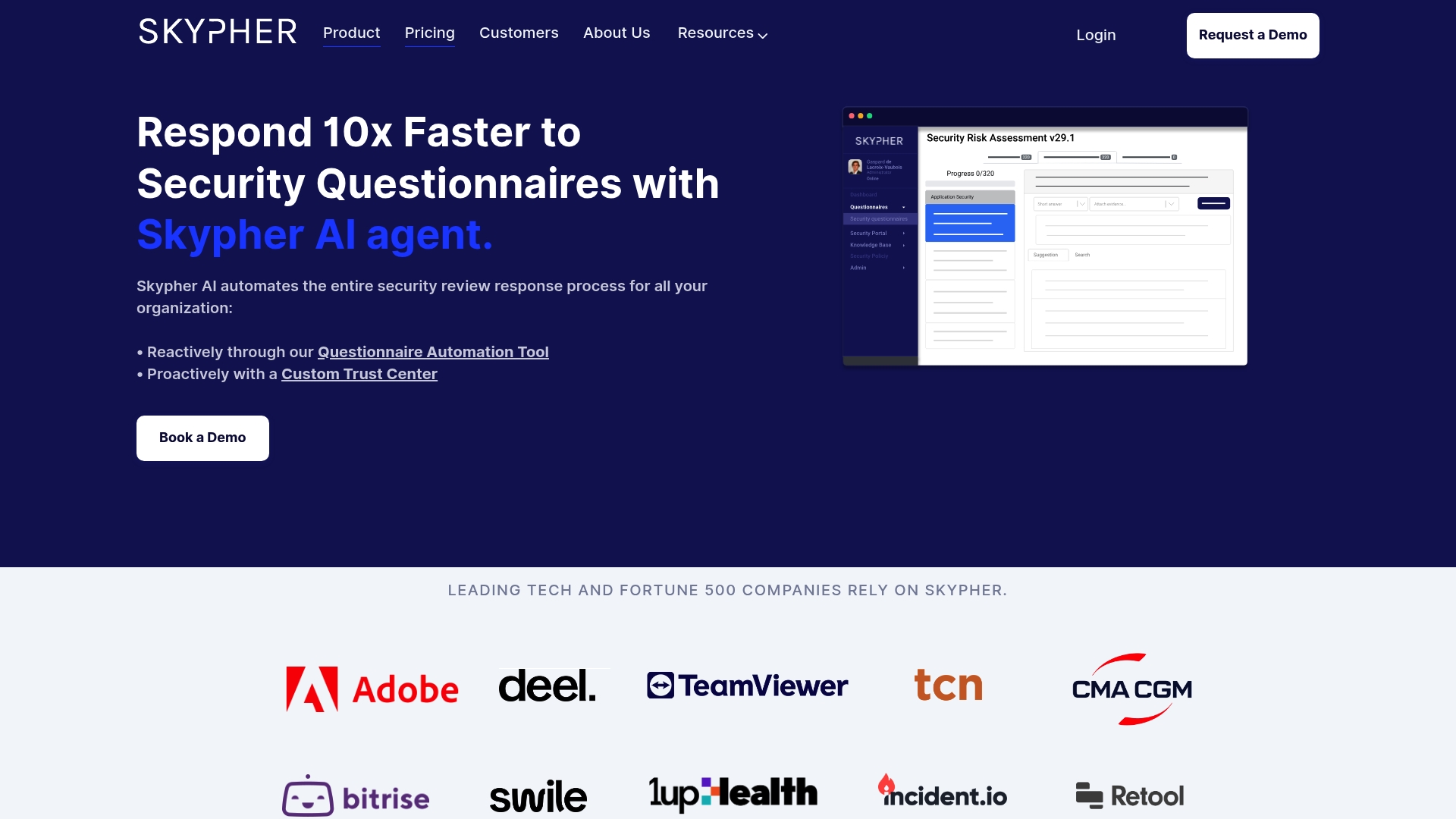
Skypher’s AI Questionnaire Automation Tool is designed to transform your response process. By automating security reviews, our platform enables your team to complete assessments faster and with higher accuracy, directly addressing the core pain points discussed in the ISO 27001 implementation roadmap. With integrations to over 40 third-party risk management platforms, you’ll ease your compliance efforts while ensuring real-time collaboration among team members.
Don’t let tedious documentation slow you down. Embrace efficiency and strengthen your cybersecurity posture today! Visit https://skypher.co to explore how our solutions can make your compliance journey smoother than ever.