
ISO 27001 compliance is the cornerstone of effective information security management. With 77 percent of organizations recognizing the importance of a solid framework to safeguard sensitive data, the pressure to achieve compliance has never been higher. But here's the twist: merely meeting these standards is not enough to secure your organization in today's evolving digital landscape. The real game-changer lies in leveraging compliance as a strategic advantage, turning potential roadblocks into stepping stones for operational excellence and customer trust.
Table of Contents
- Understanding ISO 27001 Compliance
- Planning and Implementing Compliance Steps
- Audit Strategies and Ongoing Maintenance
- Benefits, Challenges and Expert Tips
Quick Summary
| Takeaway | Explanation |
|---|---|
| Implement a Risk-Based Approach | Focus on identifying and treating risks to sensitive information, prioritizing high-risk areas in your scope to optimize your ISMS implementation. |
| Establish Effective Documentation | Maintain comprehensive documentation of policies, procedures, and practices as evidence of compliance, ensuring clarity and responsibility for document maintenance. |
| Conduct Regular Internal Audits | Internal audits help assess adherence to ISO 27001 and identify areas for continuous improvement, thus ensuring ongoing compliance and operational effectiveness. |
| Engage Management Support | Secure commitment from executive management to reinforce the importance of compliance as a strategic business advantage, enhancing resource allocation and focus on security initiatives. |
| Utilize the PDCA Cycle | Implement the Plan-Do-Check-Act framework for continuous improvement of your ISMS, adapting to changes and performing regular reviews to maintain compliance and security posture. |
Understanding ISO 27001 Compliance

ISO 27001 represents the global gold standard for information security management. Organizations seeking to protect sensitive data and demonstrate their commitment to security increasingly turn to this framework as both a guideline and certification goal. But what exactly does ISO 27001 compliance entail, and why has it become so crucial in today's digital landscape?
Core Components of ISO 27001
At its heart, ISO 27001 compliance revolves around implementing and maintaining an effective Information Security Management System (ISMS). An ISMS is a systematic approach to managing sensitive company information through risk assessment and establishing appropriate controls to preserve confidentiality, integrity, and availability of data.
The standard is structured around two key elements:
- A management framework consisting of 11 clauses that outline how to establish, implement, maintain, and continually improve an ISMS
- Annex A, which details 93 security controls organized into 14 sections
According to StrongDM, organizations pursuing ISO 27001 certification must align their security standards to these 11 clauses through documented operations that implement and maintain their ISMS. This includes developing comprehensive risk assessment and treatment plans that address their specific security challenges.
The Statement of Applicability
One crucial document required for ISO 27001 compliance is the Statement of Applicability (SoA). This document serves as the cornerstone of your compliance efforts by detailing which of the 93 controls from Annex A you're implementing and providing justifications for any controls you've chosen to exclude.
The SoA isn't just paperwork—it's your organization's declaration of how you're addressing security risks in alignment with the ISO 27001 standard. It demonstrates to auditors and stakeholders that you've thoughtfully considered each control and made deliberate decisions about their applicability to your organization's unique risk profile.
Documentation Requirements
Documentation forms a substantial part of ISO 27001 compliance. The standard requires organizations to maintain specific documented information as evidence of their security practices.
According to Secureframe, organizations pursuing certification must document numerous specific policies and procedures, including:
- Mobile device policies
- Information classification schemes
- Password management policies
- Change management procedures
- Data backup strategies
- Incident response plans
This documentation serves dual purposes: guiding internal operations and providing evidence to auditors that your organization is following established security protocols.
The Certification Process
Becoming ISO 27001 certified involves several stages:
- Gap analysis: Assessing your current security posture against ISO 27001 requirements
- Implementation: Developing and deploying the ISMS based on identified gaps
- Internal audit: Verifying compliance through self-assessment
- External audit: Having an accredited certification body review your ISMS
- Certification: Receiving official recognition of compliance
- Continuous improvement: Maintaining and enhancing your ISMS
It's important to understand that ISO 27001 certification isn't a one-time achievement—it requires ongoing commitment. Organizations must conduct regular internal audits and undergo surveillance audits by the certification body to maintain their certified status.
Benefits Beyond Compliance
While achieving ISO 27001 compliance may initially seem like a checkbox exercise, organizations typically discover benefits that extend far beyond certification itself. A well-implemented ISMS can lead to improved operational efficiency, reduced security incidents, enhanced customer trust, and competitive advantage in markets where security assurance is valued.
Moreover, the risk-based approach promoted by ISO 27001 helps organizations allocate security resources more effectively, focusing investments where they'll have the greatest impact rather than implementing security measures indiscriminately.
Planning and Implementing Compliance Steps
Achieving ISO 27001 compliance isn't something that happens overnight. It requires methodical planning, resource allocation, and systematic implementation. Organizations that succeed in their compliance journey typically follow a structured approach that breaks down this complex undertaking into manageable steps.
Defining Your Scope
The first critical step in ISO 27001 implementation is properly defining the scope of your Information Security Management System (ISMS). According to Sprinto, this involves creating a detailed scoping document that specifies the types of sensitive information, products, services, supporting processes, people, and technology that fall within your ISMS boundaries.
Scope definition serves several important purposes:
- It establishes clear boundaries for your security efforts
- It helps identify which assets need protection
- It determines which processes must comply with the standard
- It clarifies which departments and personnel will be affected
A common mistake is attempting to apply the standard too broadly too quickly. While comprehensive security is the ultimate goal, starting with a narrower, well-defined scope often leads to more successful initial implementation and certification. You can always expand your scope in subsequent certification cycles.
Establishing Project Management Framework
ISO 27001 implementation should be treated as a formal project with proper governance and oversight. This includes:
- Appointing a project manager with clear authority
- Establishing a steering committee with executive representation
- Defining roles and responsibilities for team members
- Creating a realistic project timeline with milestones
- Allocating appropriate resources (budget, personnel, tools)
As Hyperproof notes, effective ISO 27001 implementation requires developing a comprehensive project plan that includes specific phases: risk assessment, control design and implementation, process documentation, and compliance monitoring before scheduling certification assessment.
Risk Assessment and Treatment
At the core of ISO 27001 is a risk-based approach to information security. Your implementation must include:
- Identifying information assets within your scope
- Evaluating threats and vulnerabilities to those assets
- Assessing potential impacts of security breaches
- Determining risk levels based on likelihood and impact
- Deciding how to treat identified risks
Risk treatment options typically include:
- Mitigating risks by implementing controls
- Transferring risks through insurance or third-party agreements
- Avoiding risks by eliminating the associated activity
- Accepting risks that fall within your organization's risk appetite
Document your risk methodology, assessment findings, and treatment plans thoroughly, as these will be scrutinized during certification audits.
Implementing Security Controls
Once you've identified and assessed risks, the next step is implementing appropriate security controls. Linford & Company explains that implementing security controls is a key step in the ISO 27001:2022 compliance process, following the establishment of an ISMS framework and risk assessment.
These controls should address the risks identified in your assessment and typically include:
- Technical safeguards (firewalls, encryption, access controls)
- Administrative measures (policies, procedures, training)
- Physical security measures (facility access, environmental protections)
Rather than implementing controls haphazardly, prioritize based on:
- Risk severity (address higher risks first)
- Implementation complexity (start with quick wins)
- Resource requirements (balance effort with impact)
- Interdependencies (consider sequential requirements)
Documentation and Training
Comprehensive documentation is essential for both implementing and demonstrating compliance. Key documents typically include:
- ISMS policy and objectives
- Risk assessment and treatment methodology
- Statement of Applicability
- Control procedures and work instructions
- Records of security activities and incidents
Equally important is ensuring your team understands their security responsibilities. Develop and deliver targeted training programs for:
- Executive leadership (focus on governance and oversight)
- Department managers (emphasis on operational compliance)
- Technical staff (detailed control implementation)
- General employees (security awareness and best practices)
Monitoring and Measurement
Once controls are implemented, establish mechanisms to monitor their effectiveness. This includes:
- Regular reviews of security metrics and KPIs
- Internal audits against ISO 27001 requirements
- Management reviews of ISMS performance
- Vulnerability assessments and penetration testing
These activities help identify gaps or weaknesses in your security posture before they become audit findings or, worse, security incidents.
Preparing for Certification
The final step before seeking certification is conducting a pre-assessment or readiness review. This helps identify any remaining gaps and gives you an opportunity to address them before the formal certification audit. When you're confident in your readiness, schedule your certification assessment with a qualified assessor who will evaluate your ISMS against the ISO 27001 standard.
Audit Strategies and Ongoing Maintenance
Achieving ISO 27001 certification is a significant milestone, but it's only the beginning of your compliance journey. Maintaining compliance requires ongoing vigilance, regular audits, and continuous improvement of your Information Security Management System (ISMS). This section explores effective strategies for both auditing and maintaining your ISO 27001 compliance over time.
The Importance of Internal Audits
Internal audits serve as your organization's self-check mechanism to ensure continued alignment with ISO 27001 requirements. According to NQA, these audits are essential for checking adherence to policies, procedures, and processes while confirming that controls are operating as intended. Additionally, they help identify areas for continual improvement as part of your broader ISMS maintenance strategy.

When designing your internal audit program, consider:
- Establishing an audit schedule that covers all aspects of your ISMS over time
- Ensuring auditor independence (auditors shouldn't audit their own work)
- Developing standardized audit procedures and documentation
- Training internal auditors on both ISO 27001 requirements and effective auditing techniques
A well-structured internal audit program doesn't just prepare you for external certification audits—it drives ongoing security improvements and helps prevent compliance drift.
Risk-Based Audit Strategies
Not all areas of your ISMS require the same level of audit scrutiny. AuditBoard recommends starting by identifying key processes based on risk assessments and the ISMS's scope, followed by regular engagement with process owners to evaluate process criticality and maintain operational controls.
This risk-based approach allows you to:
- Allocate audit resources more effectively
- Focus on high-risk or high-impact areas
- Adjust audit frequency based on past performance and changing conditions
- Identify emerging risks that may require new or modified controls
By concentrating your audit efforts on the areas that matter most, you maximize the security value of your compliance program while using resources efficiently.
External Audit Preparation
External certification audits typically occur in cycles—an initial certification audit followed by surveillance audits (usually annually) and recertification audits (typically every three years). Preparing for these external audits should be a systematic process:
- Review previous audit findings and verify that corrective actions were implemented
- Conduct a comprehensive internal audit shortly before the external audit
- Prepare key documentation, including your Statement of Applicability, risk assessment, and evidence of control effectiveness
- Brief staff who may be interviewed during the audit
- Designate point persons to accompany auditors and facilitate information access
Remember that external auditors aren't adversaries—they're there to verify compliance, not to "catch you" doing something wrong. Approach external audits as opportunities for expert feedback on your security program.
Continuous Improvement Through PDCA
ISO 27001 is built on the Plan-Do-Check-Act (PDCA) cycle, which provides a framework for ongoing maintenance and improvement. As noted by Sprinto, this cycle is fundamental to continuous improvement, requiring organizations to implement, monitor, review, and update ISMS controls based on internal audit outcomes and system performance reviews.
The PDCA cycle applied to ISO 27001 maintenance includes:
- Plan: Establish objectives and processes necessary to deliver results in accordance with security policies
- Do: Implement the processes as planned
- Check: Monitor and measure processes against policies, objectives, and requirements
- Act: Take actions to continually improve process performance
By embedding this cycle into your operations, you create a self-improving system that adapts to changing threats, technologies, and business requirements.
Addressing Changes in Your Environment
Your ISMS must evolve as your organization changes. Key triggers for reassessment include:
- Organizational restructuring
- New products or services
- Changes to IT infrastructure or applications
- Shifts in regulatory requirements
- Emerging security threats
- Significant security incidents
When these changes occur, conduct focused risk assessments to determine their impact on your security posture and update your controls accordingly. Document these changes and their justification to maintain a clear audit trail.
Management Review
Periodic management reviews provide executive oversight of your ISMS and are a requirement of ISO 27001. These reviews should evaluate:
- The status of actions from previous management reviews
- Changes in external and internal issues relevant to the ISMS
- Feedback on information security performance
- Results of risk assessments and status of risk treatment plans
- Opportunities for continual improvement
Management reviews ensure continued executive support for your security program and help align security priorities with overall business objectives.
Documentation Maintenance
As your ISMS evolves, so too must your documentation. Establish version control for all ISMS documents and implement a regular review cycle to ensure they remain current and relevant. Train staff to use the most recent versions and archive outdated documents to maintain a clear audit trail.
Benefits, Challenges and Expert Tips
As organizations navigate the path to ISO 27001 compliance, they encounter both significant advantages and substantial hurdles. This section explores these dimensions while offering practical expert guidance to help you maximize benefits and overcome common obstacles.
Measurable Benefits of ISO 27001 Compliance
Enhanced Customer Trust and Business Opportunities
In today's data-sensitive business environment, security credentials have become a competitive differentiator. Research from McKinsey reveals that 87% of consumers would not do business with a company they perceive as insecure. ISO 27001 certification serves as a powerful trust signal that your organization properly manages and protects customer data.
This enhanced trust often translates into tangible business outcomes:
- Qualification for contracts requiring ISO 27001 certification
- Reduced customer due diligence requirements
- Faster sales cycles with security-conscious clients
- Improved standing against competitors without certification
Financial and Operational Benefits
While ISO 27001 implementation requires significant initial investment, these costs are typically offset many times over by preventing expensive security incidents. According to Vinsys, the long-term financial benefits include avoiding costs associated with:
- Data breaches and their remediation
- Legal penalties and regulatory fines
- Litigation expenses from affected parties
- Business interruption and lost productivity
- Reputational damage and customer churn
Beyond these protective benefits, many organizations report operational improvements from the structured approach to security that ISO 27001 requires. These include more efficient processes, clearer responsibilities, and better resource allocation.
Security Culture Transformation
One of the most valuable yet often overlooked benefits is the evolution of organizational security culture. Compliance Cosmos notes that ISO 27001 certification leads to an improved security culture within organizations over time. This cultural shift manifests as:
- Heightened security awareness among all employees
- Proactive identification of security issues before they become incidents
- Better cross-departmental collaboration on security matters
- Integration of security considerations into business decisions
Common Challenges and How to Address Them
Resource Constraints
Many organizations struggle with limited budgets, staff, and time when implementing ISO 27001. To overcome these constraints:
- Start with a clearly defined, manageable scope
- Prioritize high-risk areas for initial implementation
- Consider using compliance automation tools to reduce manual effort
- Leverage templates and frameworks rather than building everything from scratch
- Explore cloud-based compliance management solutions
Maintaining Staff Engagement
Security fatigue and resistance to change can undermine your compliance efforts. Combat this by:
- Emphasizing the "why" behind security requirements
- Integrating security into existing workflows rather than adding separate processes
- Recognizing and rewarding security-conscious behavior
- Making training relevant to individuals' specific job functions
- Sharing success stories and positive outcomes of security improvements
Keeping Documentation Current
Documentation maintenance is often cited as one of the most challenging aspects of ISO 27001 compliance. Address this challenge by:
- Implementing a document management system with version control
- Assigning clear ownership for each document
- Establishing regular review cycles tied to your audit schedule
- Using templates with standardized formats
- Consider documentation automation where appropriate
Expert Tips for Success
Start with Executive Buy-in
Secure genuine commitment from top management before proceeding too far. Without executive support, compliance initiatives often falter when they compete with other priorities. Effective approaches include:
- Framing ISO 27001 in terms of business benefits and risk reduction
- Providing clear cost-benefit analysis
- Sharing competitor adoption as a strategic imperative
- Establishing regular executive briefings on compliance progress
Build on Existing Frameworks
Many organizations already have elements of security controls in place. Rather than starting from zero:
- Map existing controls to ISO 27001 requirements
- Leverage complementary compliance frameworks you may already follow
- Use gap analysis to identify what's missing rather than rebuilding what exists
- Integrate ISO 27001 requirements into existing governance structures
Focus on Sustainability from Day One
Design your ISMS with long-term maintenance in mind:
- Build monitoring and measurement into your initial implementation
- Develop clear roles and responsibilities for ongoing maintenance
- Create internal expertise through training and certification
- Establish feedback mechanisms to capture improvement opportunities
- Consider how your ISMS will scale as your organization grows
Leverage External Expertise Strategically
Consultants and advisors can provide valuable guidance, but use them wisely:
- Engage experts for knowledge transfer, not just implementation
- Have consultants train your internal team rather than replace them
- Use external resources for specific technical challenges
- Retain ownership of your ISMS rather than outsourcing responsibility
By understanding these benefits, preparing for common challenges, and applying expert insights, you can navigate your ISO 27001 compliance journey more effectively and extract maximum value from your investment in information security.
Frequently Asked Questions
What is ISO 27001 compliance?
ISO 27001 compliance refers to adhering to the international standard that specifies the requirements for an Information Security Management System (ISMS). It helps organizations systematically manage sensitive data to ensure its confidentiality, integrity, and availability.
Why is ISO 27001 compliance important for organizations?
ISO 27001 compliance is crucial because it helps organizations protect sensitive data from breaches and instills customer trust. It can also provide a competitive advantage and mitigate financial losses associated with data breaches and regulatory fines.
What are the key steps for implementing ISO 27001 compliance?
The key steps for implementing ISO 27001 compliance include defining your scope, establishing a project management framework, conducting a risk assessment, implementing appropriate security controls, maintaining proper documentation, and preparing for certification.
How long does it take to achieve ISO 27001 certification?
The time to achieve ISO 27001 certification varies based on an organization's size, complexity, and existing controls. Generally, it can take anywhere from a few months to over a year, depending on the thoroughness of the preparation and implementation.
Streamline Your ISO 27001 Compliance Journey with Skypher
Navigating the complexities of ISO 27001 compliance can feel overwhelming, especially when faced with the documentation requirements and the need for regular internal audits. But what if you could ease these burdens with a solution designed specifically for your security needs? That's where Skypher comes in—your partner in transforming compliance from a daunting task into a streamlined process.
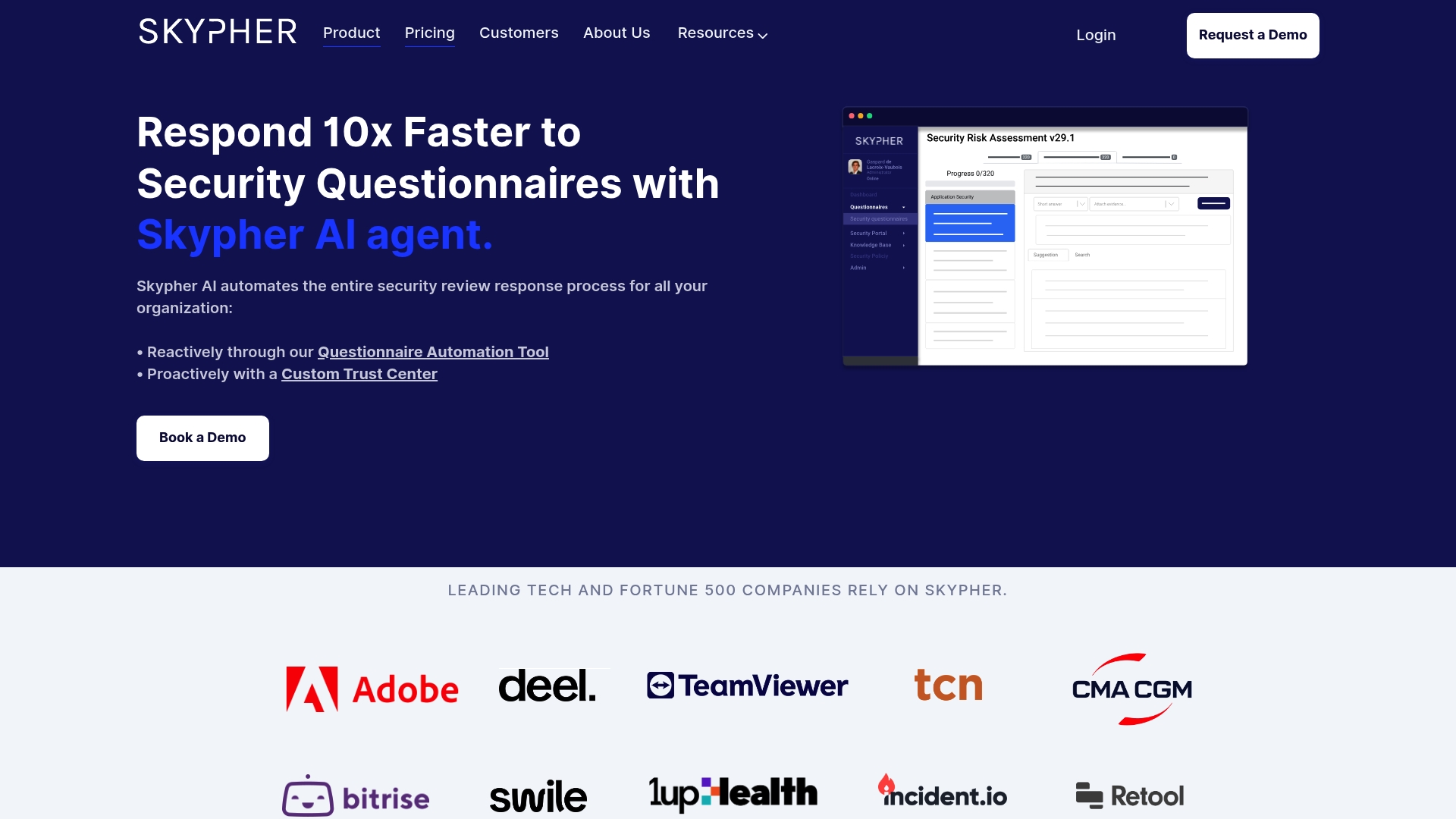
Imagine completing security questionnaires in a fraction of the time! With our AI-driven Questionnaire Automation Tool, you'll not only ensure compliance with the demanding requirements of ISO 27001 but also foster enhanced communication and collaboration among teams. Real-time integration with over 40 TPRM platforms means your ISMS will stay relevant and robust, adapting dynamically as your organization evolves. Harness the power of efficiency and get back to what really matters: securing your organization and building client trust.
Ready to simplify your compliance journey? Start leveraging the tools that help businesses like yours achieve operational excellence and peace of mind. Visit us at https://skypher.co and elevate your approach to information security today!