

Over half of organizations fail their first ISO audit due to fragmented documentation and unclear processes—a challenge that even seasoned American tech and finance leaders face. Preparation goes far beyond simple checklists, especially when cybersecurity and risk management expectations are rising worldwide. This guide shows how CISOs and compliance managers can move from uncertainty to readiness using proven steps that minimize audit headaches and protect reputation.
Table of Contents
- Step 1: Assess Organizational Readiness for ISO Audits
- Step 2: Gather and Organize Critical Documentation
- Step 3: Deploy Automated Tools for Audit Execution
- Step 4: Collaborate with Teams to Resolve Findings
- Step 5: Verify Compliance and Document Final Outcomes
Quick Summary
| Key Message | Explanation |
|---|---|
| 1. Assess Organizational Readiness | Conduct an internal review to identify gaps in processes and documentation before the audit. |
| 2. Organize Critical Documentation | Create a structured digital filing system for all necessary documents to facilitate easy access. |
| 3. Utilize Automated Tools for Efficiency | Implement technology to streamline audit processes, ensuring real-time compliance monitoring. |
| 4. Collaborate for Effective Resolution | Form a cross-functional team to address audit findings and implement lasting improvements. |
| 5. Verify Compliance and Document Outcomes | Ensure thorough documentation of compliance results and create an action plan for continuous improvement. |
Step 1: Assess Organizational Readiness for ISO Audits
Preparing your organization for an ISO audit requires strategic planning and comprehensive evaluation. This step involves systematically reviewing your current processes, documentation, and management systems to identify potential gaps before an external auditor arrives.
The assessment process begins with a thorough internal review of your quality management system. Organizations must carefully define their audit scope and certification boundaries, ensuring that all critical processes and operational boundaries are clearly understood. Start by mapping out your entire operational landscape, including both internal departments and any outsourced processes that fall within your management system's scope. Document each process meticulously, highlighting how they interconnect and contribute to your overall quality objectives.
Conducting a comprehensive gap analysis is crucial for identifying areas that need improvement before the official audit. This involves performing internal audits to compare your current practices against ISO standards, systematically documenting any discrepancies, and developing corrective action plans. Engage your leadership team and key stakeholders throughout this process to ensure organizational alignment and commitment to meeting ISO requirements.
Pro tip: Create a dedicated audit preparation team with representatives from different departments to distribute the workload and bring diverse perspectives to your readiness assessment.
Step 2: Gather and Organize Critical Documentation
Effective documentation management is the backbone of a successful ISO audit preparation. Your goal in this step is to systematically collect, categorize, and organize all critical documents that demonstrate your organization's compliance with ISO standards.

Successful documentation management requires creating a comprehensive system that standardizes formats and ensures easy retrieval. Begin by identifying all essential documentation types, including quality management system manuals, policy documents, procedural instructions, work guidelines, and historical records. Create a master inventory that tracks each document's version, date of creation, last review, and responsible department. Implement a digital filing system that allows quick access and maintains a clear audit trail, ensuring that every piece of documentation is current and accurately reflects your organization's actual operational practices.
Pay special attention to organizing your documentation in a logical, chronological manner that tells a cohesive story of your quality management processes. This means not just collecting documents, but ensuring they demonstrate continuous improvement, risk management, and consistent adherence to established procedures. Include evidence of internal audits, management reviews, corrective actions, and performance metrics that showcase your organization's commitment to maintaining high standards.
Here's a summary of critical documentation types and their audit relevance:
| Document Type | Audit Relevance | Typical Responsible Department |
|---|---|---|
| Quality Manual | Core compliance evidence | Quality Management |
| Policy Documents | Show organizational objectives | Senior Leadership |
| Procedural Instructions | Demonstrate standardization | Operations/Production |
| Historical Records | Support continuous improvement | Administration |
| Audit Reports | Proof of internal audit activity | Internal Audit |
Pro tip: Develop a color coded or clearly labeled digital folder structure that allows auditors to navigate your documentation intuitively, reducing time spent searching and demonstrating your organizational excellence.
Step 3: Deploy Automated Tools for Audit Execution
Automated tools have transformed the landscape of ISO audit preparation, offering organizations unprecedented efficiency and precision in compliance management. Your objective is to strategically implement technology that simplifies and streamlines the entire audit execution process.
Audit automation software now enables organizations to dramatically reduce preparation time by automatically collecting evidence and linking materials directly to specific standard clauses. Begin by evaluating your current technological infrastructure and identifying automation tools that integrate seamlessly with your existing systems. Look for solutions that offer real time compliance monitoring, centralized document management, and robust reporting capabilities. Focus on platforms that can automatically track document versions, flag potential compliance gaps, and generate comprehensive audit trails with minimal manual intervention.
Select tools that provide end to end visibility into your compliance processes, allowing your team to proactively manage and demonstrate adherence to ISO standards. Prioritize solutions with intuitive dashboards, customizable reporting features, and the ability to map your specific organizational workflows. Implement a phased rollout approach, starting with pilot teams or departments to validate the tool effectiveness and gather user feedback before full scale deployment.
This table compares manual vs. automated ISO audit processes:
| Attribute | Manual Process | Automated Process |
|---|---|---|
| Efficiency | Time-consuming, prone to error | Rapid, reduced errors |
| Documentation | Physical or scattered files | Centralized digital repository |
| Compliance Tracking | Difficult to monitor in real-time | Automated tracking and alerts |
| Reporting | Manual preparation | Auto-generated, customizable |
Pro tip: Request sandbox or trial versions of potential audit automation tools to thoroughly test their compatibility with your existing systems and validate their actual performance before making a final investment decision.
Step 4: Collaborate with Teams to Resolve Findings
Addressing audit findings requires a strategic and collaborative approach that brings together diverse organizational expertise. Your primary goal is to transform audit observations into meaningful improvements across your entire organization.
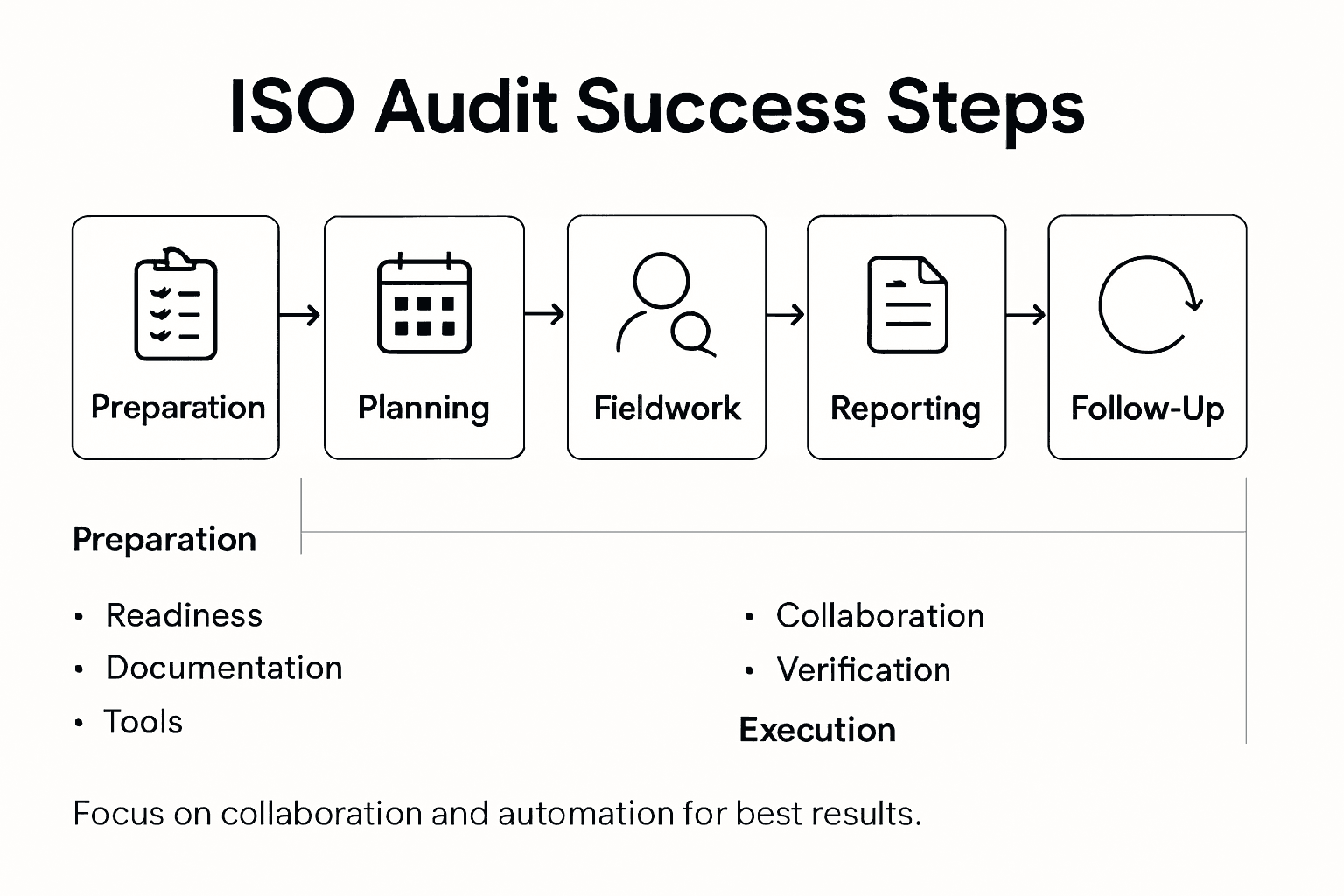
Implementing cross functional collaboration is critical for comprehensive audit issue resolution and organizational accountability. Start by forming a dedicated resolution team that includes representatives from key departments such as finance, information technology, risk management, and operations. Assign clear responsibilities for each finding, establishing specific timelines and accountability metrics. Create a centralized tracking system where team members can document progress, share insights, and maintain transparency throughout the remediation process.
Ensure that your collaborative approach focuses on root cause analysis rather than superficial problem solving. Encourage open dialogue where team members can discuss challenges, share perspectives, and develop innovative solutions. Develop a structured communication protocol that includes regular status update meetings, detailed documentation of proposed remediation strategies, and mechanisms for validating the effectiveness of implemented changes.
Pro tip: Establish a collaborative digital workspace where team members can collectively track audit findings, share real time updates, and maintain a transparent record of resolution progress.
Step 5: Verify Compliance and Document Final Outcomes
The final stage of your ISO audit process involves meticulously confirming that your organization has successfully met all required standards and comprehensively documenting the results. Your objective is to create a transparent, accurate record of audit findings that demonstrates your commitment to continuous improvement.
Verification of compliance requires a systematic approach to reviewing audit evidence and confirming alignment with established standards. Begin by conducting a comprehensive review of all documentation, cross referencing audit findings against each specific ISO requirement. Assemble a final report that includes detailed evidence of compliance, identified areas for improvement, and actionable recommendations. Ensure that your documentation provides clear context for each finding, includes supporting evidence, and outlines specific steps taken or planned to address any observed gaps.
Prepare a presentation of final outcomes for senior management that highlights key audit insights, demonstrates the organization's compliance status, and articulates the strategic value of the audit process. Include both quantitative metrics and qualitative assessments that showcase your organizational commitment to maintaining high quality standards. Create a forward looking action plan that transforms audit findings into opportunities for systematic improvement and ongoing organizational development.
Pro tip: Develop a standardized audit outcome template that allows for consistent documentation and easy tracking of compliance progress across multiple audit cycles.
Accelerate Your ISO Audit Success with Skypher's Automation Solutions
Mastering ISO audits requires meticulous documentation, cross-functional collaboration, and precise compliance verification. The article highlights challenges like organizing vast documentation, coordinating teams to resolve audit findings, and ensuring real-time compliance monitoring. These pain points can slow down your audit readiness and hinder your organization’s ability to respond quickly and accurately.
Skypher has been engineered to address these very challenges. Our AI Questionnaire Automation Tool streamlines the response process by rapidly parsing complex documents and automating answers to security questionnaires in seconds. With collaboration and real-time integration features connected to tools like Slack and Microsoft Teams, your entire audit preparation team stays aligned and transparent. Plus, our platform supports over 30 APIs with popular risk management systems ensuring your compliance tracking is always synchronized.

Take control of your ISO audit preparations now. Visit Skypher to discover how we can help your organization accelerate audit readiness, enhance collaboration, and automate compliance tasks that often become bottlenecks during audits. Don’t wait until your next audit to realize the difference automation makes. Start your journey to streamlined ISO success today and transform your compliance process with AI Questionnaire Automation Tool, Collaboration and Real-Time Integration, and our advanced enterprise-grade features.
Frequently Asked Questions
How can I assess my organization's readiness for ISO audits?
To assess your organization's readiness for ISO audits, conduct a thorough internal review of your quality management system. Map out all operational processes and identify any gaps by performing internal audits, documenting discrepancies, and developing corrective action plans within 30 days.
What types of documentation are essential for ISO audit preparation?
Essential documentation for ISO audit preparation includes quality management system manuals, policy documents, procedural instructions, and historical records. Organize these documents in a centralized digital filing system to ensure easy access and a clear audit trail, completing this task within 60 days.
How do automated tools improve the ISO audit process?
Automated tools streamline the ISO audit process by reducing preparation time and enhancing compliance management. Implement technology that collects audit evidence and generates reports automatically, which can cut your preparation time by up to 50% compared to manual processes.
What steps should I take to resolve audit findings effectively?
To resolve audit findings effectively, form a cross-functional resolution team and assign clear responsibilities for each issue. Utilize a centralized tracking system to document progress and maintain accountability, aiming for resolution on identified findings within 30 days.
How do I verify compliance after the ISO audit?
Verify compliance by conducting a comprehensive review of all documentation and audit findings against the ISO requirements. Prepare a final report with evidence of compliance and actionable recommendations, ensuring this verification is completed within 14 days after the audit.