

ISO compliance is more than just a stamp of approval for businesses now. Across the globe, over one million organizations are ISO certified, all working under the same strict standards. Surprisingly, most companies see those rules as paperwork headaches. That thinking is holding them back because the real advantage is that ISO compliance can turn your business into an engine of growth and trust.
Table of Contents
- Understanding ISO Compliance and Its Importance
- Key ISO Standards Relevant for Businesses
- Steps to Achieve and Maintain ISO Compliance
- Common Challenges and Best Practices for ISO Compliance
Quick Summary
| Takeaway | Explanation |
|---|---|
| ISO compliance drives operational excellence. | Organizations can enhance quality and efficiency by adhering to ISO standards, transforming them into integral components of their culture. |
| Invest in training for effective implementation. | Comprehensive training ensures employees understand ISO standards and their roles, facilitating smoother compliance throughout the organization. |
| Continuous improvement is essential for success. | Regular audits and performance metrics help maintain compliance, fostering an environment of ongoing evaluation and enhancement. |
| Address organizational resistance proactively. | Effective communication about the benefits of ISO standards can alleviate concerns and encourage buy-in from employees during implementation. |
| Leverage expert guidance for challenges. | Engaging ISO consultants can help organizations interpret standards accurately and navigate complex compliance processes efficiently. |
Understanding ISO Compliance and Its Importance
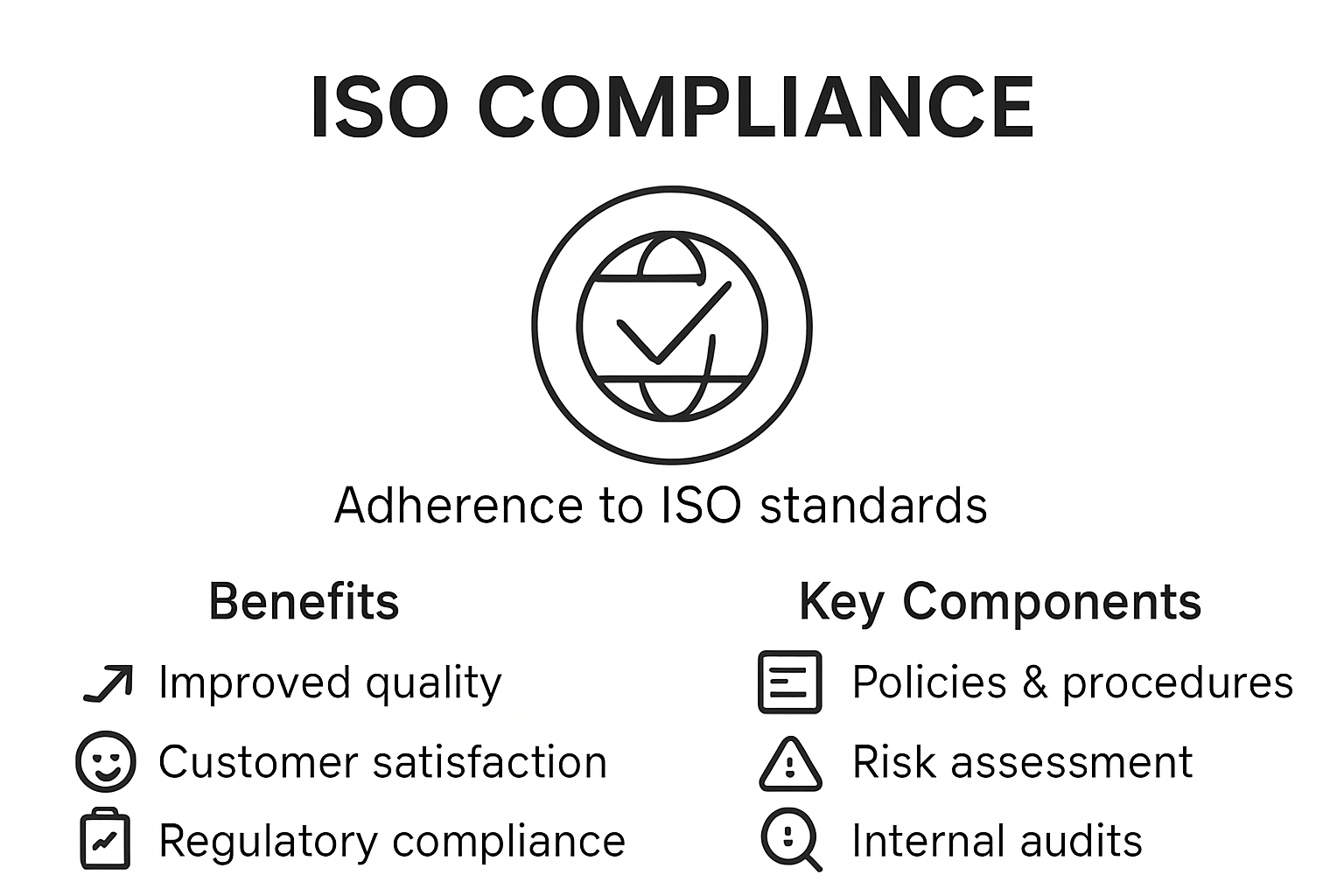
ISO compliance represents a critical framework for businesses seeking to establish systematic approaches to quality, safety, and operational excellence. At its core, ISO compliance involves adhering to internationally recognized standards that provide structured guidelines for managing organizational processes and ensuring consistent performance across multiple dimensions.
The Strategic Significance of ISO Standards
Organizations invest in ISO compliance not merely as a checkbox exercise, but as a strategic approach to demonstrating commitment to quality and continuous improvement. ISO 9001 serves as a prime example, offering a comprehensive quality management system that helps businesses standardize their operations, reduce errors, and enhance customer satisfaction.
The international recognition of these standards provides businesses with several key advantages. Companies that achieve ISO certification gain credibility in global markets, signaling to potential clients and partners that they maintain rigorous operational standards. This certification acts as a powerful differentiator, particularly in competitive industries where trust and reliability are paramount.
Key Dimensions of ISO Compliance
Beyond quality management, ISO standards cover multiple critical organizational domains. ISO 14001 focuses on environmental management, guiding organizations to minimize their environmental impact and implement sustainable practices. This standard helps businesses reduce waste, optimize resource utilization, and demonstrate environmental responsibility.
Effective ISO compliance goes beyond documentation and audit processes. It requires a holistic approach that integrates standard requirements into an organization's culture, encouraging continuous learning, process optimization, and systematic risk management. Successful implementation means transforming ISO guidelines from external requirements into internal operational DNA.
For businesses, ISO compliance represents more than regulatory adherence. It is a strategic framework that drives operational efficiency, reduces operational risks, and creates a structured approach to solving complex organizational challenges. Companies that embrace these standards position themselves as forward thinking, adaptable, and committed to delivering consistent, high quality outcomes across all operational domains.
The journey toward ISO compliance demands dedicated leadership, comprehensive training, and a genuine commitment to organizational improvement. While the initial implementation may require significant investment, the long term benefits include enhanced operational performance, increased stakeholder confidence, and a robust foundation for sustainable business growth.
Key ISO Standards Relevant for Businesses
Businesses across various industries rely on multiple ISO standards to enhance their operational efficiency, manage risks, and demonstrate commitment to quality and best practices. Understanding these key standards helps organizations develop robust systems that address critical aspects of business performance and management.
Information Security and Risk Management
ISO/IEC 27001 stands out as a critical standard for organizations managing sensitive information. This international standard provides a comprehensive framework for establishing and maintaining an information security management system (ISMS). Companies implementing ISO/IEC 27001 can systematically identify, assess, and mitigate information security risks, protecting critical assets like financial data, intellectual property, and customer information.
The standard requires organizations to develop a structured approach to security that goes beyond traditional IT protection. It demands a holistic view of information security that encompasses people, processes, and technological systems. Businesses that achieve this certification demonstrate their commitment to protecting sensitive data and managing potential cybersecurity threats effectively.
Quality and Operational Excellence
ISO 9001 remains the cornerstone of quality management standards, providing a universal framework for organizations seeking to improve their operational processes. The International Organization for Standardization designed this standard to help businesses establish systematic approaches to quality management, customer satisfaction, and continuous improvement.
Companies implementing ISO 9001 benefit from a structured methodology that addresses key operational challenges. The standard encourages organizations to develop clear processes, establish performance metrics, and create mechanisms for ongoing evaluation and enhancement. This approach helps businesses reduce errors, optimize resource allocation, and create more predictable and efficient operational environments.
Environmental and Sustainability Standards
ISO 14001 represents a critical standard for organizations committed to environmental responsibility. This standard provides a comprehensive framework for developing and implementing environmental management systems that help businesses minimize their ecological footprint. Companies can use ISO 14001 to systematically address environmental impacts, reduce waste, and demonstrate their commitment to sustainable practices.
Beyond compliance, these environmental standards offer strategic advantages. Organizations can leverage ISO 14001 certification to improve their corporate reputation, meet regulatory requirements, and potentially reduce operational costs through more efficient resource management. The standard encourages a proactive approach to environmental stewardship, helping businesses transform environmental challenges into opportunities for innovation and responsible growth.
Navigating the complex landscape of ISO standards requires a strategic approach. Businesses must carefully assess their specific needs, industry requirements, and organizational goals when selecting and implementing these standards. While certification demands significant effort and resources, the long term benefits include enhanced operational performance, increased stakeholder confidence, and a robust framework for sustainable business development.

To help organizations distinguish among the major ISO standards discussed, the following table provides a summary of their primary focus and key benefits.
| ISO Standard | Primary Focus | Key Benefits |
|---|---|---|
| ISO 9001 | Quality Management | Improved operations, customer satisfaction, error reduction |
| ISO/IEC 27001 | Information Security Management | Risk identification and mitigation, sensitive data protection |
| ISO 14001 | Environmental Management | Sustainability, reduced waste, regulatory compliance |
Steps to Achieve and Maintain ISO Compliance
Achieving and maintaining ISO compliance requires a strategic, systematic approach that goes beyond simple documentation. Organizations must develop a comprehensive strategy that integrates standard requirements into their core operational processes, ensuring consistent performance and continuous improvement.
To provide a clear overview, the table below summarizes the main steps to achieve and maintain ISO compliance, along with their objectives.
| Step | Objective |
|---|---|
| Initial Assessment and Gap Analysis | Identify current status and areas needing improvement |
| Implementation and Documentation | Set up required processes, allocate resources, and train staff |
| Continuous Monitoring and Improvement | Maintain compliance through audits, metrics, and ongoing updates |
Initial Assessment and Gap Analysis
According to Omnia Intranet, the first critical step in ISO compliance involves conducting a thorough initial assessment and gap analysis. This process requires organizations to meticulously map their existing business processes, identifying areas that currently meet ISO standards and those requiring significant improvement.
During this initial phase, businesses must develop a detailed understanding of the specific ISO standards relevant to their industry. This involves reviewing current operational practices, documenting existing procedures, and creating a comprehensive roadmap for addressing potential compliance gaps. The goal is not merely to meet minimum requirements but to establish a robust framework that supports organizational excellence.
Implementation and Documentation
Qualitiamo highlights the critical importance of obtaining management support and establishing clear roles and resources during the implementation phase. Successful ISO compliance demands more than technical adjustments. It requires a cultural transformation that encompasses leadership commitment, employee engagement, and systematic process documentation.
Key implementation strategies include:
- Comprehensive Training: Developing targeted training programs that help employees understand ISO standards and their specific roles in maintaining compliance.
- Process Documentation: Creating detailed, clear documentation that outlines standard operating procedures, quality control mechanisms, and performance measurement protocols.
- Resource Allocation: Dedicating sufficient organizational resources to support the compliance journey, including technological tools, personnel, and ongoing education.
Continuous Monitoring and Improvement
Maintaining ISO compliance is an ongoing process that extends far beyond initial certification. Organizations must establish robust internal audit mechanisms, regularly review their performance against established standards, and commit to continuous improvement. This requires developing a culture of transparency, accountability, and proactive problem solving.
Effective monitoring involves:
- Regular Internal Audits: Conducting systematic reviews to identify potential compliance gaps or areas for improvement.
- Performance Metrics: Establishing clear, measurable indicators that track organizational performance against ISO standard requirements.
- Adaptive Management: Creating flexible systems that can quickly respond to changes in industry standards, technological developments, or organizational needs.
Successful ISO compliance is not a destination but a continuous journey of organizational development. Businesses must view these standards not as bureaucratic requirements but as strategic frameworks that drive operational excellence, enhance customer trust, and create competitive advantages.
The path to ISO compliance demands patience, commitment, and a holistic approach that integrates standard requirements into every aspect of organizational culture. While the process can be complex and resource intensive, the long term benefits include improved operational efficiency, enhanced risk management, and a demonstrable commitment to quality and continuous improvement.
Common Challenges and Best Practices for ISO Compliance
Achieving ISO compliance presents organizations with a complex set of challenges that demand strategic planning, comprehensive understanding, and persistent commitment. While the benefits of certification are significant, businesses must navigate multiple obstacles to successfully implement and maintain these rigorous standards.
Organizational Resistance and Cultural Transformation
According to ICERT Gulf, one of the most significant challenges in ISO implementation is organizational resistance to change. Employees often perceive new standards as additional bureaucratic processes that disrupt existing workflows. This resistance can undermine the entire compliance effort if not addressed proactively.
Successful organizations combat this challenge by developing comprehensive communication strategies that clearly articulate the benefits of ISO standards. This involves transparent discussions about how these standards improve operational efficiency, reduce risks, and create competitive advantages. Leadership must demonstrate genuine commitment, actively participating in training programs and modeling the behaviors expected from employees.
Technical and Resource Challenges
Smithers research highlights the technical complexities organizations face during ISO compliance implementation. Businesses frequently struggle with misinterpreting standard requirements, allocating sufficient resources, and maintaining comprehensive documentation.
To address these challenges, organizations should:
- Invest in Expert Guidance: Engage experienced ISO consultants who can provide nuanced interpretation of standard requirements.
- Develop Robust Documentation Systems: Implement centralized document management platforms that ensure consistency and accessibility.
- Phased Implementation: Start with small, manageable sections of the organization to build confidence and expertise before full scale rollout.
Sustaining Continuous Improvement
Dionach's analysis emphasizes that maintaining ISO compliance is an ongoing process requiring persistent commitment to improvement. Organizations must establish systematic approaches to monitoring, evaluating, and enhancing their compliance frameworks.
Key strategies for sustaining compliance include:
- Regular Internal Audits: Conduct comprehensive reviews that identify potential gaps or areas for enhancement.
- Performance Metrics: Develop clear, measurable indicators that track compliance effectiveness.
- Continuous Training: Create ongoing education programs that keep employees updated on evolving standards and best practices.
While navigating ISO compliance challenges can seem daunting, businesses can learn more about managing complex documentation processes through strategic approaches that prioritize adaptability and organizational learning.
Ultimately, successful ISO compliance transcends mere certification. It represents a transformative journey that requires holistic organizational commitment, strategic thinking, and a genuine dedication to excellence. By understanding and proactively addressing potential challenges, businesses can turn compliance into a powerful driver of operational improvement and competitive differentiation.
Frequently Asked Questions
What is ISO compliance?
ISO compliance refers to adhering to internationally recognized standards set by the International Organization for Standardization. These standards provide structured guidelines for managing quality, safety, and operational processes in organizations.
Why is ISO compliance important for businesses?
ISO compliance is important because it enhances operational efficiency, reduces risks, and improves credibility with stakeholders and customers. Achieving ISO certification signals a commitment to quality and continuous improvement, giving businesses a competitive advantage.
What are the steps to achieve ISO compliance?
The steps to achieve ISO compliance include conducting an initial assessment and gap analysis, implementing suitable processes and documentation, and establishing continuous monitoring and improvement strategies to maintain compliance.
What are some common challenges in achieving ISO compliance?
Common challenges include organizational resistance to change, technical complexities in understanding and interpreting standards, and maintaining comprehensive documentation. Addressing these proactively through training and expert guidance can facilitate successful compliance.
Take Control of ISO Compliance With Advanced Automation
Feeling overwhelmed by ISO compliance challenges like complex documentation, ongoing audits, and constant process updates? Many businesses stall their operational growth due to outdated manual systems and burdensome security reviews. The pressure to keep up with evolving ISO standards is real, but you do not have to face it with uncertainty.
Imagine automating your entire security questionnaire workflow, reducing the time spent on audits, and giving your team more hours to focus on true improvement. Skypher was designed for organizations aiming to master ISO requirements while eliminating bottlenecks in communication and proof of compliance. Explore how our AI Questionnaire Automation Tool can help your business achieve and maintain ISO excellence with greater speed and accuracy. Do not wait while others move ahead—start building a smarter compliance strategy with Skypher now.
Recommended
- The different formats & mistakes made when writing or answering security questionnaires
- The ever growing number of security questionnaires and what you and your company can do to face it
- The Case for Security Questionnaire Automation
- 3 Ways to Speed Up Your Response to Security Questionnaires with Skypher
- Data Privacy Best Practices for Small Businesses in 2025 - Loft Legal
- Just in Time Delivery: Essential Guide for 2025 Success - ORNER