
ISO cybersecurity standards are shaping how companies protect their data and handle digital threats. More than 70 percent of businesses say ISO/IEC 27001 certification is now a client requirement. Many organizations assume checking these boxes is just red tape or extra paperwork. The reality flips that notion. Proper implementation turns these standards into powerful shields against cyberattacks and can actually open new markets.
Table of Contents
- Understanding ISO Standards in Cybersecurity
- Key ISO Cybersecurity Frameworks Explained
- How to Implement ISO Cybersecurity in Your Organization
- Top Benefits of ISO Cybersecurity Certification
Quick Summary
| Takeaway | Explanation |
|---|---|
| Implement ISO standards for systematic risk management | Establishing ISO cybersecurity standards helps organizations systematically identify and mitigate cybersecurity risks effectively. |
| Develop a robust Information Security Management System (ISMS) | A comprehensive ISMS incorporates defined policies, continuous training, and incident response plans for effective security management. |
| Achieve ISO certification to enhance credibility | Obtaining certifications like ISO/IEC 27001 boosts organizational credibility and demonstrates a commitment to data protection to clients and stakeholders. |
| Prioritize continuous improvement in cybersecurity practices | Ongoing evaluation, regular audits, and responsiveness to new threats ensure that security practices remain effective over time. |
| Adopt a flexible approach to security implementation | Implementing ISO standards should be adaptable to changing technological environments, allowing organizations to address evolving threats effectively. |
Understanding ISO Standards in Cybersecurity
ISO cybersecurity standards represent a critical framework for organizations seeking to protect their digital assets and infrastructure. These internationally recognized guidelines provide a structured approach to managing cybersecurity risks and establishing robust security practices.
The Foundation of ISO Cybersecurity Frameworks
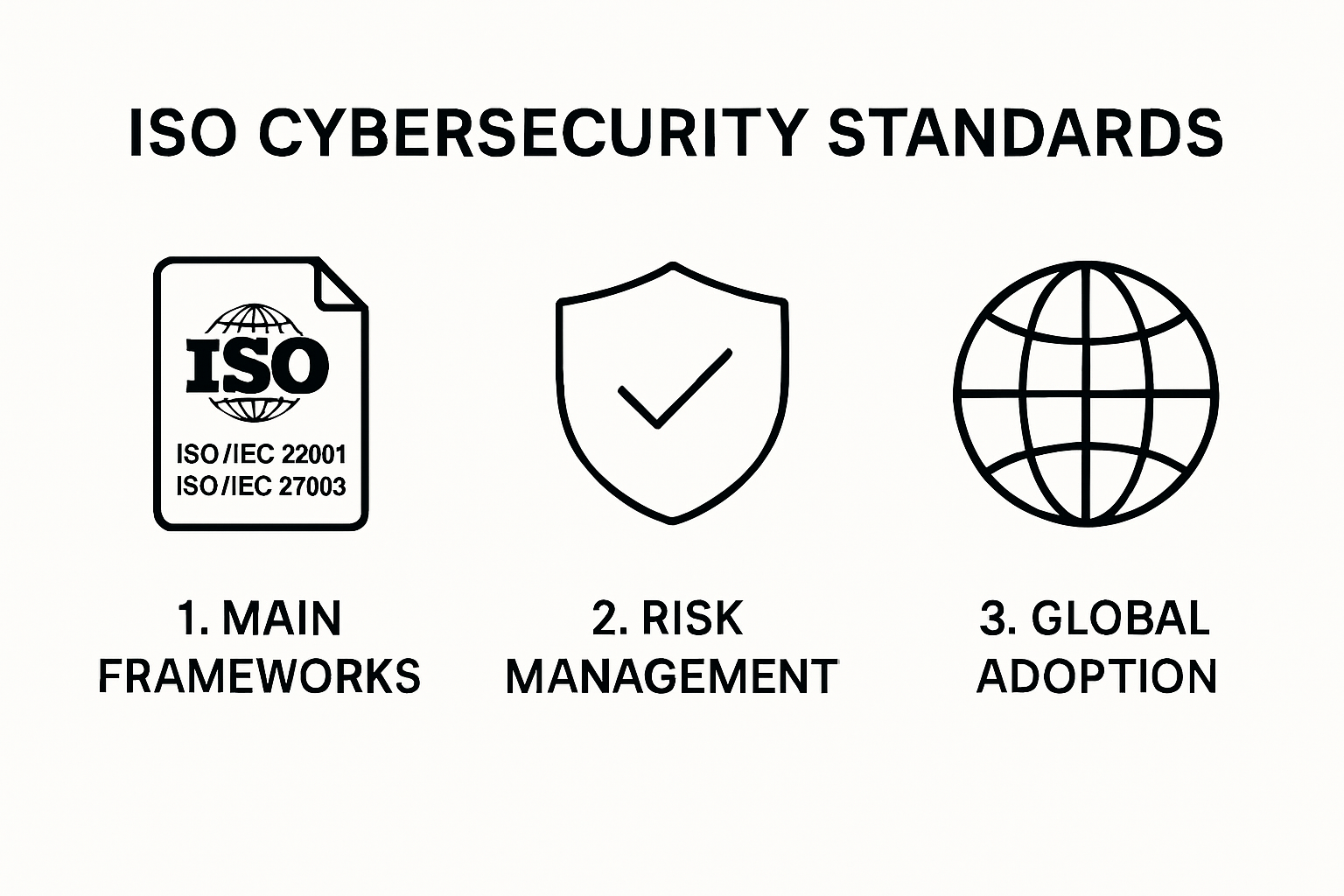
At the core of ISO cybersecurity standards are comprehensive guidelines that help organizations develop systematic approaches to information security. NIST Special Publication 800-53 highlights the critical role of these international standards in creating effective security controls. The most prominent standards in this domain include ISO/IEC 27001 and ISO/IEC 27002, which offer comprehensive blueprints for information security management.
These standards are not just theoretical documents. They provide practical frameworks that organizations can implement to:
- Risk Management: Develop systematic approaches to identifying and mitigating cybersecurity risks
- Security Controls: Establish robust mechanisms to protect digital assets
- Compliance: Meet international best practices for information security
Key Components of ISO Cybersecurity Standards
Understanding the core components of ISO cybersecurity standards is crucial for effective implementation. International Electrotechnical Commission research indicates that these standards typically encompass several critical domains:
- Information Security Policies
- Asset Management
- Access Control
- Cryptography
- Physical and Environmental Security
- Operations Security
- Communication Security
- System Acquisition and Development
- Supplier Relationships
- Incident Management
Each of these domains provides specific guidelines and best practices that organizations can adapt to their unique cybersecurity needs. The flexibility of ISO standards allows businesses across various industries to implement comprehensive security strategies that are both robust and tailored to their specific requirements.
Implementation and Global Recognition
Implementing ISO cybersecurity standards is not just about following a checklist. It represents a strategic approach to managing digital risks. Organizations that successfully implement these standards demonstrate a commitment to protecting their information assets, building trust with stakeholders, and maintaining a proactive security posture.
The global recognition of these standards means that organizations can communicate their security capabilities consistently across international boundaries. This becomes particularly important in an increasingly interconnected digital ecosystem where cybersecurity threats know no geographical limitations.
While the implementation process can be complex, the long-term benefits far outweigh the initial investment. Organizations gain a structured methodology for identifying vulnerabilities, managing risks, and responding to potential security incidents with precision and confidence.
Cybersecurity is no longer an optional consideration but a critical business imperative. ISO standards provide the roadmap for organizations to navigate the complex and ever-evolving digital threat landscape with strategic insight and comprehensive protection.
Key ISO Cybersecurity Frameworks Explained
Cybersecurity frameworks serve as critical blueprints for organizations seeking to protect their digital infrastructure and manage information security risks. These standardized approaches provide comprehensive guidance for developing robust security strategies across various industries and technological environments.
ISO/IEC 27001: The Cornerstone of Information Security Management
ISO/IEC 27001 represents the gold standard for information security management systems. This internationally recognized framework offers a systematic approach to managing sensitive information and ensuring its confidentiality, integrity, and availability. Organizations implementing this standard gain a structured methodology for identifying, assessing, and mitigating information security risks.
The framework encompasses several critical aspects of information security:
- Risk Assessment: Comprehensive evaluation of potential security vulnerabilities
- Control Implementation: Establishing specific security measures and protocols
- Continuous Improvement: Regular review and updating of security practices
NIST Cybersecurity Framework complements ISO/IEC 27001 by providing additional insights into risk management strategies. This integration allows organizations to develop more comprehensive and adaptable security approaches.
Advanced ISO Cybersecurity Standards
Beyond ISO/IEC 27001, several specialized frameworks provide targeted guidance for specific cybersecurity challenges:
- ISO/IEC 27002: Offers detailed guidelines for information security controls
- ISO/IEC 27017: Focuses on cloud security practices
- ISO/IEC 27018: Provides privacy protection guidelines for cloud environments
- ISO/IEC 27701: Addresses privacy information management
Each of these standards addresses unique aspects of cybersecurity, allowing organizations to develop nuanced and comprehensive security strategies. The modular nature of these frameworks enables businesses to select and implement standards most relevant to their specific operational requirements.
Practical Implementation and Global Impact
Implementing ISO cybersecurity frameworks is more than a compliance exercise. It represents a strategic approach to managing digital risks and protecting organizational assets. These standards provide a common language for security professionals, facilitating better communication and more effective risk management across different departments and international boundaries.
Organizations that successfully adopt these frameworks demonstrate:
- Enhanced Credibility: Proving commitment to robust security practices
- Improved Risk Management: Systematic approach to identifying and mitigating potential threats
- Competitive Advantage: Differentiating themselves in markets that prioritize information security
The global recognition of these standards means that businesses can communicate their security capabilities consistently. This becomes increasingly important in an interconnected digital ecosystem where cybersecurity threats continue to evolve rapidly.
While implementing these frameworks requires significant investment in time and resources, the long-term benefits far outweigh the initial challenges. Organizations gain a structured methodology for protecting their most valuable digital assets, building trust with stakeholders, and maintaining a proactive security posture in an increasingly complex technological landscape.
To help readers quickly compare and understand the focus areas of core ISO cybersecurity frameworks mentioned above, the following table summarizes their key specialties and application domains:
| Framework | Focus Area | Application Domain |
|---|---|---|
| ISO/IEC 27001 | Information Security Management System (ISMS) | All business sectors, information management |
| ISO/IEC 27002 | Information Security Controls (Guidelines) | Security controls for diverse organizations |
| ISO/IEC 27017 | Cloud Security Practices | Cloud service providers and customers |
| ISO/IEC 27018 | Privacy in Cloud Environments | Protection of PII in cloud computing |
| ISO/IEC 27701 | Privacy Information Management | Data privacy, especially GDPR compliance |
How to Implement ISO Cybersecurity in Your Organization
Implementing ISO cybersecurity standards requires a strategic and systematic approach that goes beyond simple checklist compliance. Organizations must develop a comprehensive strategy that integrates robust security practices across their entire technological ecosystem.
Establishing a Comprehensive Security Framework
ISACA research highlights the critical importance of developing structured processes for effective cybersecurity implementation. The process begins with a thorough assessment of current security infrastructure and potential vulnerabilities.
Key initial steps include:
- Risk Assessment: Conduct a comprehensive evaluation of existing security controls
- Gap Analysis: Identify areas where current practices fall short of ISO standards
- Resource Allocation: Determine necessary investments in technology and personnel
NIST Cybersecurity Framework provides additional guidance on creating a robust implementation strategy, emphasizing the importance of a flexible and adaptive approach to security management.
Developing an Information Security Management System (ISMS)
The core of ISO cybersecurity implementation revolves around creating a comprehensive Information Security Management System. 6clicks research demonstrates how ISO 27001 provides a structured framework for developing an effective ISMS.
Critical components of an effective ISMS include:
- Clearly defined security policies
- Risk management processes
- Employee training and awareness programs
- Continuous monitoring and improvement mechanisms
- Incident response and recovery plans
Successful implementation requires a holistic approach that integrates technical controls, organizational processes, and human factors. Organizations must move beyond technical solutions to create a culture of security awareness and proactive risk management.
Ongoing Evaluation and Continuous Improvement
Implementing ISO cybersecurity standards is not a one-time event but a continuous journey of improvement. Organizations must establish robust mechanisms for:
- Regular security audits
- Periodic risk reassessments
- Continuous employee training
- Adaptive security strategy development
The most successful organizations view cybersecurity as a dynamic process that requires constant attention and refinement. This approach ensures that security measures remain effective against evolving threat landscapes.
Key considerations for maintaining an effective ISO cybersecurity implementation include:
- Flexibility: Ability to adapt to changing technological environments
- Comprehensiveness: Covering all aspects of organizational security
- Proactivity: Anticipating potential security challenges
Implementing ISO cybersecurity standards represents a significant commitment to protecting digital assets. While the process can be complex, the long-term benefits of a robust, systematic approach to cybersecurity far outweigh the initial challenges. Organizations that successfully implement these standards demonstrate a mature approach to risk management and digital protection.
The following table outlines the general step-by-step approach, as detailed in the content above, for implementing ISO cybersecurity in an organization:
| Step | Description |
|---|---|
| 1. Risk Assessment | Evaluate current controls and identify vulnerabilities |
| 2. Gap Analysis | Compare current practices to ISO standard requirements |
| 3. Resource Allocation | Allocate technology and personnel resources |
| 4. ISMS Development | Implement policies, training, monitoring, and response plans |
| 5. Continuous Evaluation & Improvement | Conduct regular audits, training, and strategy adaptation |
Top Benefits of ISO Cybersecurity Certification
ISO cybersecurity certification represents a strategic investment for organizations seeking to enhance their digital resilience and demonstrate a commitment to comprehensive information security. Beyond mere compliance, these certifications offer substantial strategic advantages that can transform an organization's approach to risk management and digital protection.
Enhanced Organizational Credibility and Trust
PECB research highlights that ISO cybersecurity certification significantly boosts an organization's credibility in the marketplace. By obtaining internationally recognized certifications like ISO/IEC 27001, businesses signal a proactive approach to information security that resonates with clients, partners, and stakeholders.
Key credibility benefits include:
- Client Confidence: Demonstrating robust security practices
- Competitive Differentiation: Standing out in markets that prioritize security
- Stakeholder Trust: Providing tangible evidence of commitment to data protection
IT Governance research suggests that certification can directly influence business opportunities, potentially opening new markets and partnerships for organizations willing to invest in comprehensive security frameworks.
Strategic Risk Management and Compliance
ISO cybersecurity certification goes beyond theoretical security practices. It provides a structured methodology for identifying, assessing, and mitigating potential security risks. Digital Forensics research indicates that a well-implemented Information Security Management System (ISMS) can enhance an organization's ability to detect, respond to, and recover from potential security incidents.
Critical risk management advantages include:
- Systematic vulnerability identification
- Structured incident response protocols
- Comprehensive risk assessment frameworks
- Legal and regulatory compliance support
- Enhanced digital forensics capabilities
Organizations that implement these certifications develop a more holistic approach to cybersecurity, moving beyond reactive measures to proactive risk management strategies.
Operational Efficiency and Continuous Improvement
ISO cybersecurity certification is not a static achievement but a dynamic process of continuous improvement. By establishing standardized security protocols, organizations can:
- Streamline Security Processes: Create consistent, repeatable security procedures
- Reduce Operational Risks: Minimize potential security vulnerabilities
- Optimize Resource Allocation: Focus investments on most critical security areas
- Foster a Security-Conscious Culture: Embed security awareness across the organization
The certification process encourages organizations to regularly review and update their security practices, ensuring they remain adaptive and responsive to evolving technological challenges.
While achieving ISO cybersecurity certification requires significant investment in time, resources, and organizational commitment, the long-term benefits far outweigh the initial challenges. Organizations that successfully navigate this process gain more than a certificate they develop a comprehensive, strategic approach to protecting their most valuable digital assets.
Frequently Asked Questions
What are ISO cybersecurity standards?
ISO cybersecurity standards are internationally recognized guidelines that help organizations protect their digital assets and manage cybersecurity risks through structured approaches and best practices.
How can my organization implement ISO cybersecurity standards?
To implement ISO cybersecurity standards, organizations should follow a strategic approach that includes risk assessment, gap analysis, developing an Information Security Management System (ISMS), and establishing continuous evaluation and improvement processes.
What is ISO/IEC 27001?
ISO/IEC 27001 is a prominent international standard that provides a framework for establishing, implementing, maintaining, and continuously improving an Information Security Management System (ISMS), focusing on managing sensitive information securely.
What are the benefits of ISO cybersecurity certification?
ISO cybersecurity certification enhances organizational credibility and trust, supports strategic risk management and compliance, and promotes operational efficiency through standardized security practices and continuous improvement.
Turn ISO Standards Into a Competitive Advantage With Skypher
If implementing ISO cybersecurity standards feels like paperwork overload or you are worried about bottlenecks when completing vital security questionnaires for ISO/IEC 27001 or other frameworks, Skypher brings relief. Many organizations spend far too many hours tackling repetitive, manual reviews and chasing down answers across teams. This can stall sales cycles and damage partner trust in your cybersecurity posture. Protect your resources, streamline compliance, and build trust by letting our AI-powered platform automate the most tedious parts of the ISO security process.
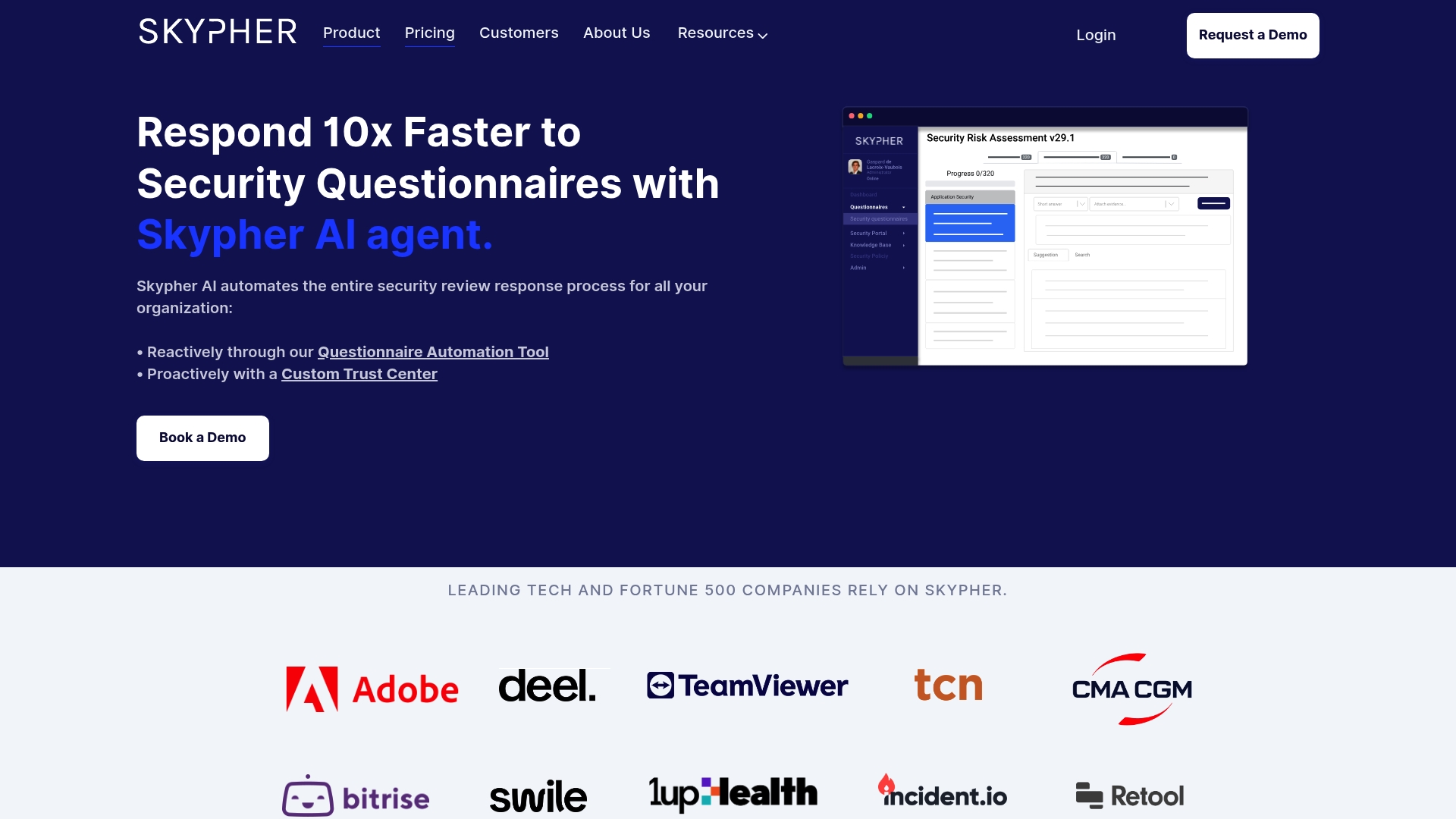
See for yourself how Skypher dramatically speeds up security questionnaire responses while maintaining accuracy. Our automation supports ISO-aligned documentation, integrates with dozens of risk management tools, and keeps your team in sync every step of the way. Do not let slow response times or inconsistent answers be the reason you lose a deal or slow down your compliance journey. Discover how our AI Questionnaire Automation Tool transforms ISO readiness. Visit https://skypher.co and schedule a demo today to take control of your ISO cybersecurity requirements.