

IT compliance auditing sounds technical, but it shapes the backbone of how businesses protect data and guard their reputations. Regulatory violations can cost companies anywhere from thousands up to millions of dollars, all while shaking customer trust. Most people see audits as a tedious checkbox routine, but they are actually powerful tools that turn risk into real business strength and set the stage for continuous improvement.
Table of Contents
- What is IT compliance auditing?
- Why IT Compliance Auditing Matters for Businesses
- How IT Compliance Auditing Works: Key Components
- Theoretical Foundations of IT Compliance Auditing
- Real-World Applications of IT Compliance Auditing
Quick Summary
| Takeaway | Explanation |
|---|---|
| IT compliance auditing is essential for organizations | It ensures adherence to regulatory standards and helps identify vulnerabilities in technological systems. |
| Non-compliance can lead to significant risks | Financial penalties, legal issues, and reputational damage can arise from inadequate compliance measures. |
| Auditors must understand the regulatory landscape | Staying current with laws like HIPAA or GDPR is crucial for effective auditing and risk mitigation. |
| Compliance auditing enhances operational efficiency | It identifies areas for improvement, streamlining processes while reinforcing governance and cybersecurity. |
| IT audits are a continuous improvement tool | They foster adaptability to evolving challenges in technology and regulatory requirements, promoting resilience. |
What is IT Compliance Auditing?
IT compliance auditing represents a systematic process of evaluating an organization's technological infrastructure, policies, and procedures to ensure they meet established regulatory standards, industry guidelines, and internal security protocols. This critical function helps businesses identify potential vulnerabilities, maintain data protection standards, and mitigate risks associated with technological operations.
Understanding the Core Components
At its foundation, IT compliance auditing involves comprehensive examination of an organization's technological ecosystem. Auditors conduct detailed assessments that encompass multiple critical domains:
- Reviewing software configurations and security settings
- Analyzing network infrastructure and access controls
- Examining data storage and transmission protocols
- Verifying adherence to industry-specific regulatory requirements
The primary goal is not simply to identify weaknesses but to provide strategic recommendations for improving an organization's overall technological governance. By systematically analyzing digital environments, compliance auditors help create robust frameworks that protect sensitive information and maintain operational integrity.
Regulatory Landscape and Implications
Modern businesses operate within complex regulatory environments that demand rigorous technological oversight. According to Gartner Research, organizations face increasing pressure to demonstrate comprehensive security and compliance measures. These audits become particularly crucial for industries handling sensitive data such as healthcare, finance, and technology sectors.
Successful IT compliance auditing requires a multifaceted approach that combines technical expertise, regulatory knowledge, and strategic thinking. Auditors must stay current with evolving cybersecurity threats, understand intricate regulatory frameworks, and develop nuanced strategies for risk mitigation. The process goes beyond mere checkbox compliance, representing a dynamic mechanism for continuous technological improvement and organizational resilience.
Why IT Compliance Auditing Matters for Businesses
IT compliance auditing has transformed from a peripheral business function to a critical strategic imperative in today's complex digital landscape. Organizations across industries recognize that proactive compliance management is not merely about avoiding penalties but about building sustainable, trustworthy technological ecosystems.
Financial and Reputational Risk Management
The financial implications of non-compliance can be catastrophic. Regulatory violations can result in substantial monetary penalties, ranging from thousands to millions of dollars depending on the severity and industry. Beyond direct financial costs, businesses face significant reputational damage that can erode customer trust and market positioning.
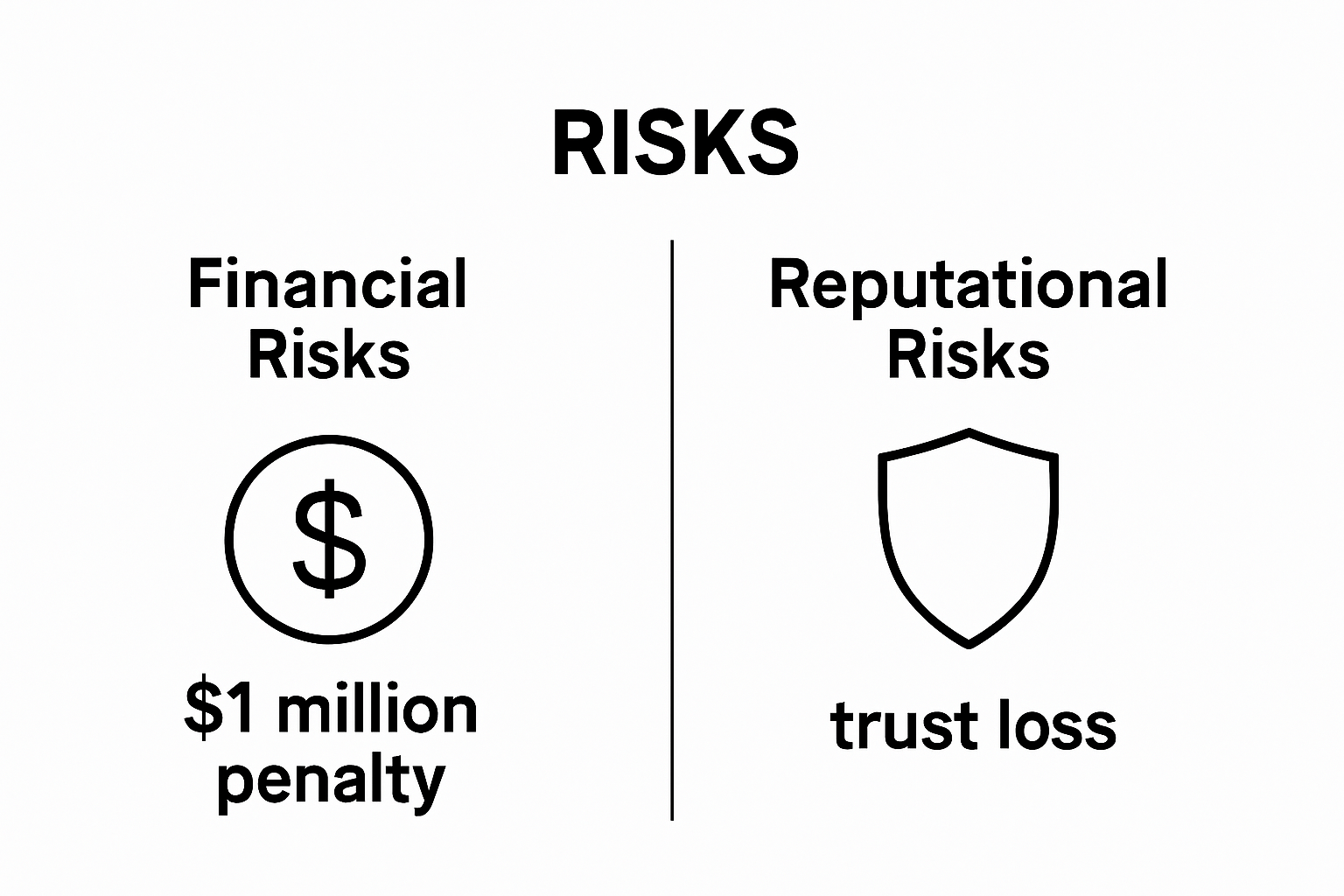
Key financial risks associated with inadequate compliance include:
- Substantial regulatory fines and penalties
- Potential legal litigation expenses
- Loss of business contracts and partnerships
- Decreased investor confidence
- Potential business operational disruptions
Cybersecurity and Data Protection Strategies
In an era of increasing cyber threats, IT compliance auditing serves as a critical defense mechanism. According to Ponemon Institute, organizations that implement robust compliance frameworks experience significantly reduced security vulnerabilities. These audits help businesses:

-
Identify potential security gaps before they can be exploited
-
Develop comprehensive risk mitigation strategies
-
Demonstrate commitment to protecting sensitive organizational and customer data
Strategic Business Optimization
Contrary to perceiving compliance as a bureaucratic burden, forward-thinking organizations view IT compliance auditing as a strategic optimization tool. By systematically reviewing technological infrastructure, businesses can:
- Streamline operational processes
- Improve technological infrastructure efficiency
- Enhance overall organizational governance
- Create competitive advantages through demonstrated technological maturity
Modern IT compliance auditing transcends traditional checkbox approaches. It represents a dynamic, continuous process of technological assessment and improvement, enabling businesses to adapt rapidly to evolving regulatory landscapes and technological challenges.
How IT Compliance Auditing Works: Key Components
IT compliance auditing is a structured, methodical process that encompasses multiple strategic stages designed to comprehensively evaluate an organization's technological infrastructure, security protocols, and regulatory adherence. Unlike simplistic checklist approaches, modern compliance auditing represents a sophisticated, holistic examination of an organization's digital ecosystem.
Preparation and Scoping
Effective IT compliance auditing begins with meticulous preparation, which involves defining the audit's precise scope, objectives, and methodological framework. Auditors must first understand the specific regulatory landscape relevant to the organization, which might include industry-specific standards like HIPAA for healthcare, PCI DSS for payment systems, or GDPR for data protection.
Key preparation activities include:
- Identifying applicable regulatory requirements
- Mapping organizational technological infrastructure
- Establishing clear audit objectives
- Determining assessment methodologies
- Selecting appropriate evaluation tools and frameworks
Comprehensive Assessment Techniques
According to U.S. Government Accountability Office, the assessment phase involves multiple critical evaluation strategies. Auditors employ a range of sophisticated techniques to thoroughly examine an organization's technological governance:
- Conducting detailed document reviews
- Performing technical security assessments
- Interviewing key technological and managerial personnel
- Analyzing system configurations and access controls
- Evaluating incident response and recovery protocols
Reporting and Continuous Improvement
The final stage of IT compliance auditing focuses on translating technical findings into actionable strategic insights. Auditors generate comprehensive reports that not only highlight existing vulnerabilities but also provide strategic recommendations for technological enhancement.
This phase is not about punitive measures but creating a constructive pathway for continuous technological improvement.
To help clarify the comprehensive process of IT compliance auditing, the table below breaks down the three key stages and summarizes the main activities and objectives within each stage.
| Stage | Main Activities | Objectives |
|---|---|---|
| Preparation and Scoping | Define audit scope, map infrastructure, set objectives, select methodologies | Understand requirements, set framework for audit effectiveness |
| Comprehensive Assessment | Review documents, assess security, interview personnel, analyze configurations | Identify vulnerabilities, assess controls, gather evidence |
| Reporting and Improvement | Generate reports, recommend enhancements, establish monitoring mechanisms | Provide actionable insights, enable continuous improvement |
By identifying potential risks, recommending targeted interventions, and establishing ongoing monitoring mechanisms, compliance auditing becomes a dynamic tool for organizational resilience and technological maturity.
Theoretical Foundations of IT Compliance Auditing
IT compliance auditing emerges from a sophisticated intersection of organizational theory, risk management, and technological governance. These theoretical foundations represent a complex framework that transforms compliance from a reactive administrative task into a strategic organizational capability.
Organizational Governance and Control Theory
At its core, IT compliance auditing draws from organizational control theory, which examines how institutions establish systems to monitor, regulate, and align technological operations with strategic objectives. This theoretical approach recognizes that effective governance requires more than simple rule enforcement—it demands a nuanced understanding of organizational dynamics and technological ecosystems.
Key theoretical principles include:
- Establishing clear accountability mechanisms
- Creating transparent decision-making frameworks
- Developing adaptive regulatory response systems
- Integrating technological capabilities with strategic goals
- Promoting a culture of continuous improvement
Risk Management and Systemic Perspectives
According to Springer Research, compliance auditing fundamentally represents a dynamic capabilities approach to organizational risk management. This theoretical perspective views technological compliance not as a static checklist but as an evolving, adaptive process that responds to changing technological landscapes and emerging threats.
The systemic perspective emphasizes understanding organizations as interconnected networks where technological, human, and regulatory elements continuously interact and influence each other. This approach requires auditors to:
- Analyze complex interdependencies
- Recognize potential systemic vulnerabilities
- Develop holistic risk mitigation strategies
- Understand technological systems as living, adaptive entities
Normative and Institutional Theory Applications
Normative and institutional theories provide additional theoretical scaffolding for IT compliance auditing. These frameworks explore how organizations develop shared norms, values, and practices that shape technological governance. By understanding these deeper cultural and institutional dynamics, compliance professionals can design more effective, contextually appropriate audit strategies.
Ultimately, the theoretical foundations of IT compliance auditing represent a sophisticated approach that transcends traditional regulatory compliance. They provide a comprehensive lens for understanding how organizations can proactively manage technological risks, align technological capabilities with strategic objectives, and create resilient, adaptive governance frameworks.
Real-World Applications of IT Compliance Auditing
IT compliance auditing transforms theoretical frameworks into actionable strategies across diverse industries, demonstrating its critical role in modern technological governance. Beyond abstract principles, compliance auditing provides tangible mechanisms for organizations to protect their technological assets, maintain regulatory integrity, and build robust operational resilience.
Healthcare and Patient Data Protection
In healthcare, IT compliance auditing becomes a lifeline for protecting sensitive patient information. Organizations must navigate complex regulatory environments like HIPAA, which demands rigorous protection of electronic health records. Compliance audits help healthcare providers:
- Identify potential data security vulnerabilities
- Ensure proper patient data encryption
- Validate access control mechanisms
- Verify secure data transmission protocols
- Maintain comprehensive audit trails for regulatory reporting
Financial Services and Security Frameworks
According to National Institute of Standards and Technology, financial institutions leverage IT compliance auditing to create multilayered security ecosystems. These audits are instrumental in:
- Preventing unauthorized financial transactions
- Detecting potential fraud mechanisms
- Ensuring adherence to international banking regulations
- Protecting customer financial data
- Maintaining transparent operational records
Technology and Cloud Service Environments
Modern cloud service providers and technology companies use IT compliance auditing as a strategic differentiation tool. Comprehensive audits demonstrate organizational commitment to security and reliability, helping businesses:
- Validate cloud infrastructure security
- Ensure multi-tenant environment protection
- Demonstrate compliance with international data protection standards
- Build trust with enterprise customers
- Create transparent operational governance frameworks
Real-world IT compliance auditing represents more than a regulatory requirement. It is a sophisticated risk management approach that enables organizations to proactively identify, assess, and mitigate potential technological vulnerabilities while maintaining operational excellence and customer trust.
The following table compares how IT compliance auditing is applied across different industries, focusing on the main regulatory environment and the unique objectives or benefits in each sector.
| Industry Sector | Main Regulatory Environment | Key Audit Objectives and Benefits |
|---|---|---|
| Healthcare | HIPAA | Protect patient data, ensure encrypted records, maintain audit trails |
| Financial Services | International Banking Regulations, NIST | Detect fraud, prevent unauthorized transactions, protect data |
| Technology/Cloud | GDPR, International Standards | Validate security, ensure multi-tenant protection, build customer trust |
Unlock Effortless IT Compliance in B2B Software with Skypher
Struggling to keep up with complex IT compliance auditing? Many organizations face the same challenge described in our article: endless security questionnaires, evolving regulations, and pressure to prove data protection. These challenges cause deal slowdowns, burnout for teams, and costly compliance gaps. Skypher's AI Questionnaire Automation Tool delivers faster, more accurate responses. Free your team from hours of repetitive work. Ensure every answer aligns with your security framework and regulatory requirements. Feel confident knowing your risk assessments are completed with less effort and greater reliability.
Ready to transform your compliance process? Visit Skypher now. Explore how seamless integrations and a Custom Trust Center help you win trust, speed up contracts, and proactively strengthen your organization’s compliance posture. Take charge of IT compliance today—don't let inefficiency delay your next business opportunity.
Frequently Asked Questions
What is IT compliance auditing?
IT compliance auditing is a systematic process of evaluating an organization's technological infrastructure, policies, and procedures to ensure they meet regulatory standards and internal security protocols.
Why is IT compliance auditing important for businesses?
IT compliance auditing is crucial as it helps manage financial and reputational risks, enhances cybersecurity, ensures data protection, and serves as a strategic tool for optimizing business operations.
What are the main components of an IT compliance audit?
The main components include preparation and scoping, comprehensive assessment techniques, and reporting with a focus on continuous improvement of technological governance.
How do organizations ensure they meet regulatory standards during an IT compliance audit?
Organizations ensure compliance by understanding applicable regulations, conducting thorough assessments of their technological infrastructure, and developing actionable recommendations based on audit findings.