
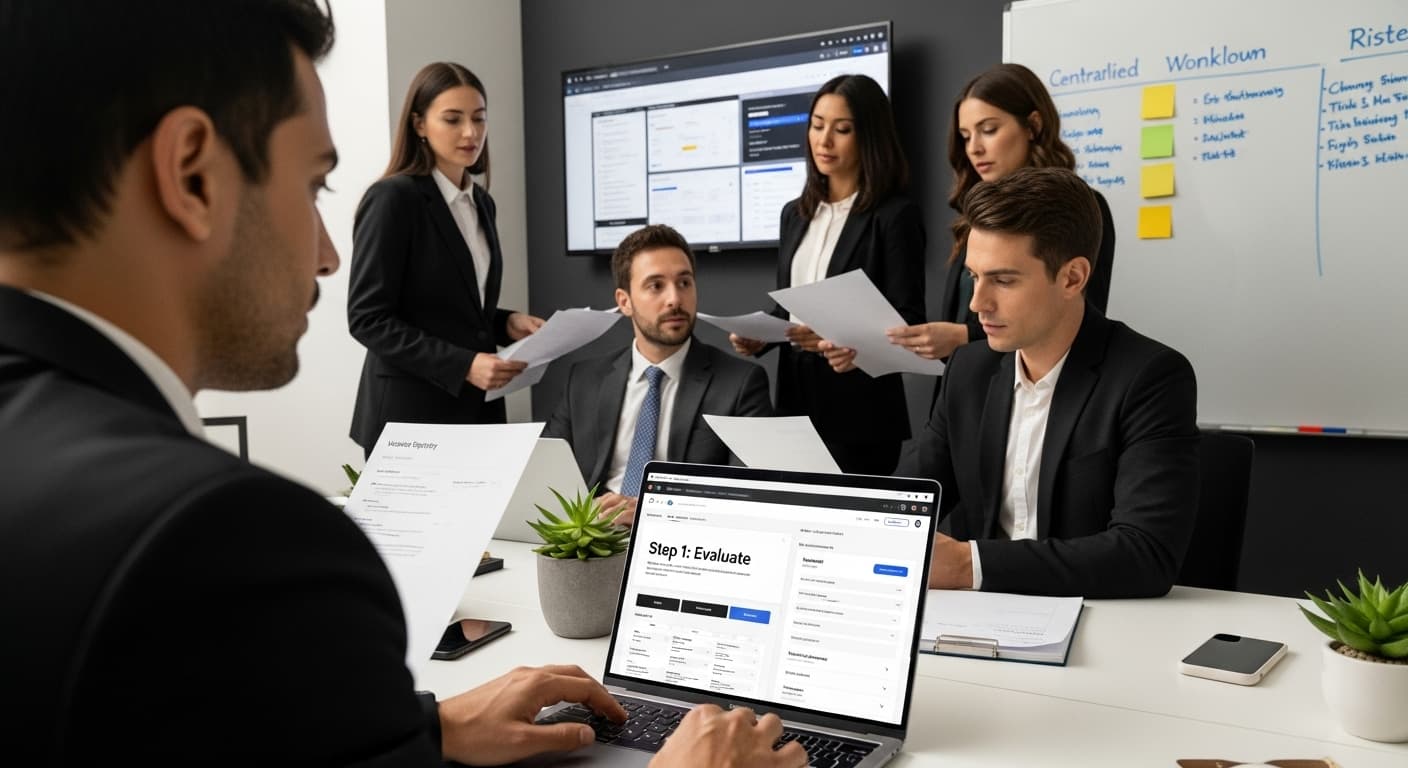
Every business today relies on outside partners for technology, logistics, or support. But most companies have so many vendors they lose track of who does what and where the risks really are. Surprisingly, research shows that only about 48 percent of organizations even maintain a comprehensive vendor registry. That means most are running blind, missing out on smarter decisions and safer operations. Understanding how to evaluate, select, and monitor your vendors turns this tangled mess into a real strategic advantage.
Table of Contents
- Step 1: Evaluate Your Current Vendor Landscape
- Step 2: Establish Clear Vendor Selection Criteria
- Step 3: Implement a Robust Vendor Onboarding Process
- Step 4: Monitor Vendor Performance Continuously
- Step 5: Maintain Ongoing Compliance and Risk Assessment
- Step 6: Review and Optimize Vendor Relationships Regularly
Quick Summary
| Key Point | Explanation |
|---|---|
| 1. Create a centralized vendor registry | Document all vendor details, including contracts and access levels, for clear visibility and risk management. |
| 2. Develop a comprehensive vendor selection framework | Use a scoring matrix for evaluating vendors based on financial, technical, and compliance criteria to ensure strategic alignment. |
| 3. Implement a structured onboarding process | Establish clear expectations and accountability from the outset to strengthen vendor relationships and minimize risks. |
| 4. Monitor vendor performance continuously | Utilize real-time tracking to assess compliance and performance, enabling proactive management of vendor relationships. |
| 5. Regularly review and optimize vendor partnerships | Conduct holistic evaluations of vendor contributions to ensure flexibility and alignment with evolving business needs. |
Step 1: Evaluate Your Current Vendor Landscape
Managing 3rd party vendors effectively starts with a comprehensive evaluation of your current vendor ecosystem. This critical initial phase helps organizations understand their existing relationships, identify potential risks, and create a strategic foundation for vendor management.
Begin by conducting a thorough inventory of all current third-party vendors across your organization. This process requires collaboration with multiple departments including procurement, IT, finance, and operations. Create a centralized vendor registry that captures essential details for each vendor: contact information, contract terms, service scope, access levels, and critical dependencies.
As you compile this inventory, pay close attention to vendors with access to sensitive systems or data. According to FINRA regulatory guidance, organizations must establish robust supervisory systems that track and monitor third-party relationships. Your vendor registry should include specific risk categorizations that help prioritize future assessment and management efforts.
Below is a checklist table summarizing critical information to document for each vendor as part of evaluating your current vendor landscape.
| Vendor Documentation Item | Description | Example or Details |
|---|---|---|
| Contract Duration & Renewal Dates | When the vendor contract starts and ends | 1-year term, renews each January |
| Service Level Agreements (SLAs) | Agreed-upon performance and service standards | 99.9% uptime, 24hr support response |
| Data Access Permissions | Types of organizational data vendor can access | Payroll data, customer PII |
| Compliance Certifications | Proof of compliance with relevant standards | SOC 2, ISO 27001, GDPR |
| Historical Performance Metrics | Vendor track record with your organization | On-time delivery rate, past incidents |
Key information to document for each vendor includes:
- Contract duration and renewal dates
- Service level agreements (SLAs)
- Data access permissions
- Compliance certifications
- Historical performance metrics
Consider developing a standardized assessment framework that assigns risk scores based on vendor criticality, data exposure, and potential business impact. This approach transforms your vendor landscape from a passive list into an actionable strategic resource.
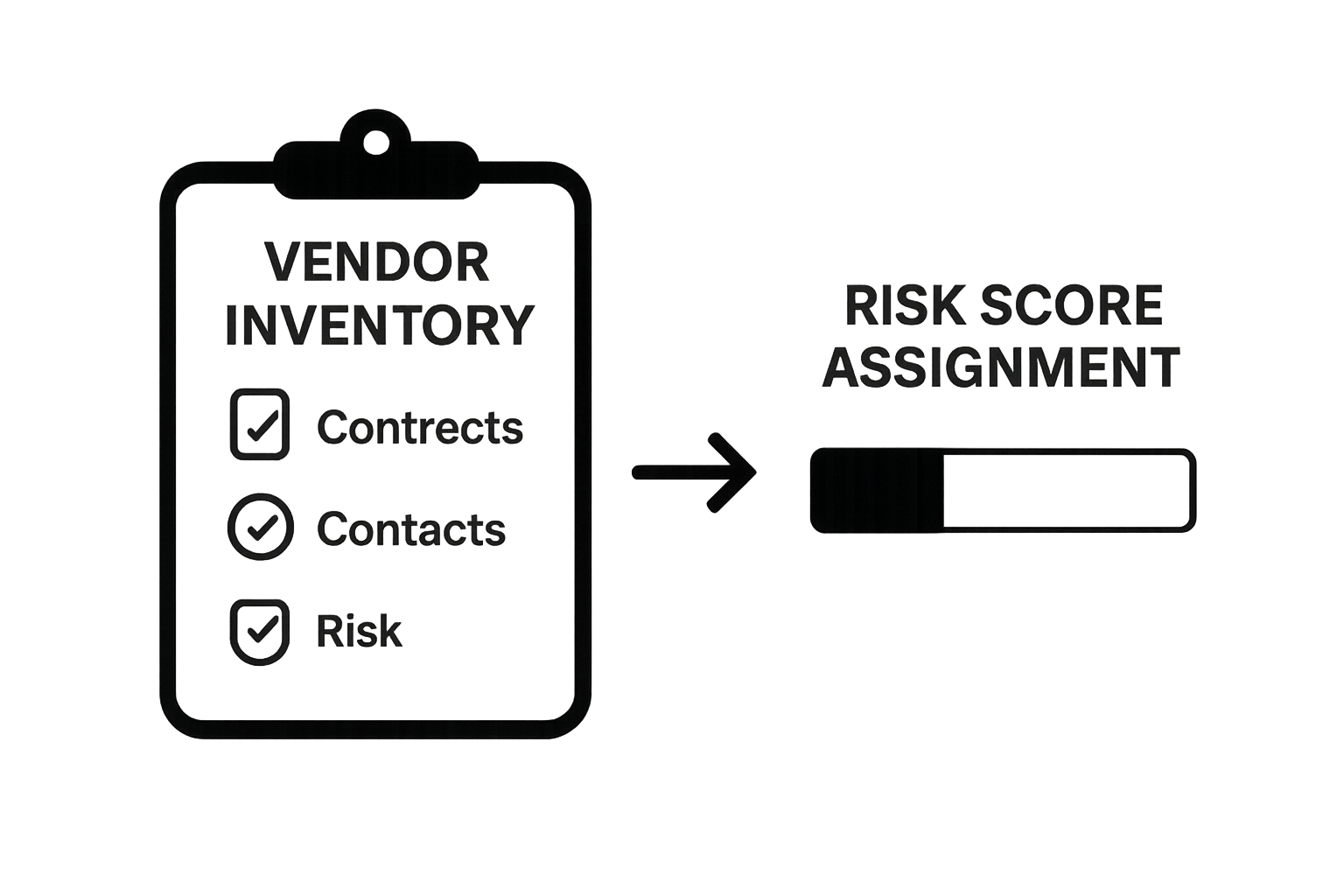 Regularly update this registry to ensure ongoing accuracy, treating it as a dynamic document that reflects your organization's evolving vendor relationships.
Successful completion of this step means having a comprehensive, up-to-date vendor inventory that provides clear visibility into your organization's external partnerships and potential risk exposure.
Step 2: Establish Clear Vendor Selection Criteria
Defining precise vendor selection criteria transforms managing 3rd party vendors from a reactive process into a strategic approach. This critical step ensures your organization selects vendors that not only meet technical requirements but also align with broader business objectives and risk management frameworks.
Develop a comprehensive scoring matrix that evaluates potential vendors across multiple dimensions. Start by identifying key performance indicators relevant to your specific business needs. These might include financial stability, technological capabilities, compliance history, security protocols, and cultural alignment. The goal is to create an objective, quantifiable method for comparing potential vendors that goes beyond surface-level assessments.
Research on strategic sourcing emphasizes the importance of transparent, measurable criteria. Your selection framework should include weighted scoring for different evaluation categories. For instance, cybersecurity might receive a higher weight for technology vendors, while financial stability might be more critical for long-term service providers.
Key evaluation criteria to consider include:
- Compliance with industry regulations
- Data security and privacy standards
- Financial health and stability
- Technical capabilities and innovation
- Service level agreement (SLA) reliability
- Cost-effectiveness and total cost of ownership
Implement a cross-functional review process that involves stakeholders from IT, legal, finance, and operations. This collaborative approach ensures a holistic evaluation that considers technical, financial, and operational implications. Create a standardized vendor assessment template that can be consistently applied across different vendor selections, promoting fairness and systematic evaluation.
Here is a summary table comparing key criteria to include and consider when building your vendor selection framework.
| Evaluation Category | What to Consider | Why It Matters |
|---|---|---|
| Compliance with Industry Regulations | Adherence to all legal and regulatory requirements | Reduces organizational legal and financial risks |
| Data Security & Privacy Standards | Vendor safeguards for sensitive data | Ensures data integrity and customer trust |
| Financial Health & Stability | Vendor solvency, financial records | Reduces risk of sudden vendor disruption |
| Technical Capabilities & Innovation | Breadth of technical solutions, adaptability | Supports current and future business needs |
| SLA Reliability | Ability to meet agreed service levels | Directly impacts operational performance |
| Cost-Effectiveness & TCO | Pricing and overall cost efficiency | Maximizes return on vendor investment |
Successful completion of this step means having a robust, repeatable vendor selection framework that enables your organization to make informed decisions. The criteria should be flexible enough to adapt to changing business needs while maintaining a consistent core evaluation methodology. Regularly review and update these selection criteria to ensure they remain aligned with your organization's evolving strategic objectives.
Step 3: Implement a Robust Vendor Onboarding Process
A strategic vendor onboarding process transforms initial vendor interactions from transactional exchanges into comprehensive partnership foundations. Managing 3rd party vendors effectively requires a methodical approach that establishes clear expectations, communication channels, and performance benchmarks from the very beginning.
Develop a comprehensive onboarding workflow that systematically integrates new vendors into your organizational ecosystem. This process should begin immediately after vendor selection and continue through initial contract implementation. Create a detailed onboarding checklist that ensures consistent treatment across all vendor relationships, minimizing potential gaps or oversights.
According to Gartner's vendor management research, organizations can prevent substantial value loss by establishing clear accountability and performance targets during the onboarding phase. Your workflow should include multiple touchpoints that verify vendor capabilities, align organizational expectations, and establish mutual understanding of roles and responsibilities.
Critical components of an effective vendor onboarding process include:
- Comprehensive documentation and contract review
- Security and compliance training
- Technical integration and system access protocols
- Performance metric establishment
- Initial relationship management orientation
- Risk assessment and mitigation planning
Implement a structured communication plan that involves key stakeholders from multiple departments. This cross-functional approach ensures that technical requirements, legal considerations, financial expectations, and operational needs are thoroughly addressed. Schedule initial meetings that bring together vendor representatives and internal team members to discuss detailed implementation strategies, potential challenges, and collaborative problem-solving approaches.
Successful vendor onboarding means creating a transparent, structured process that sets clear expectations, facilitates smooth integration, and establishes a foundation for long-term partnership. The goal is to transform vendor relationships from transactional interactions into strategic collaborations that drive mutual value and organizational success.
The table below outlines essential components of an effective vendor onboarding process and their main purposes.
| Onboarding Component | Purpose |
|---|---|
| Documentation & Contract Review | Ensure mutual terms, clarity, and legal compliance |
| Security & Compliance Training | Align with your security and regulatory needs |
| Technical Integration & Access Protocols | Enable secure system integration and data exchange |
| Performance Metric Establishment | Set baseline for ongoing vendor evaluation |
| Initial Relationship Management Orientation | Clarify collaboration expectations and roles |
| Risk Assessment & Mitigation Planning | Identify and address early partnership risks |

Step 4: Monitor Vendor Performance Continuously
Continuous vendor performance monitoring transforms managing 3rd party vendors from a static relationship into a dynamic, responsive partnership. This critical step ensures that vendors consistently meet established performance standards, compliance requirements, and organizational expectations.
Establish a comprehensive performance tracking system that goes beyond traditional quarterly reviews. Implement real-time monitoring mechanisms that provide immediate insights into vendor performance, compliance, and potential risk areas. This approach allows for proactive intervention rather than reactive problem-solving.
According to information security guidance, organizations must maintain rigorous oversight of external partners who access or manage critical information assets. Develop a multifaceted monitoring approach that combines quantitative metrics with qualitative assessments.
Key performance monitoring elements include:
- Service level agreement (SLA) compliance tracking
- Security and compliance risk assessments
- Financial stability reviews
- Performance metric evaluations
- Incident response and resolution times
- Customer satisfaction and feedback analysis
Create a centralized dashboard that aggregates vendor performance data from multiple sources. This tool should provide real-time visibility into key performance indicators, allowing stakeholders to quickly identify potential issues or emerging risks. Implement automated alerts that trigger when vendors fall below predefined performance thresholds, enabling swift corrective action.
Regular vendor performance reviews should involve cross-functional teams, including representatives from IT, legal, finance, and operations. These comprehensive assessments go beyond numerical metrics to evaluate the strategic value and alignment of vendor relationships.
Below is a table summarizing key performance monitoring elements and what they reveal about vendor relationships.
| Monitoring Element | What It Tracks | Key Benefit |
|---|---|---|
| SLA Compliance Tracking | Vendor adherence to service agreements | Detects performance gaps |
| Security & Compliance Assessments | Vendor risk and regulatory posture | Minimizes compliance breaches |
| Financial Stability Reviews | Ongoing vendor solvency and risk | Reduces impact of vendor failures |
| Incident Response Time | Speed and quality of vendor issue responses | Ensures timely resolutions |
| Customer Satisfaction Analysis | Stakeholder feedback on vendor output | Informs holistic relationship health |
Develop a standardized scoring system that provides objective, comparable insights across different vendor partnerships.
Successful continuous monitoring means creating a dynamic, responsive vendor management approach that proactively identifies and addresses potential issues. The goal is to transform vendor relationships into strategic partnerships that consistently deliver value and support your organization's broader objectives.
Step 5: Maintain Ongoing Compliance and Risk Assessment
Managing 3rd party vendors requires a proactive and dynamic approach to compliance and risk management. This critical step transforms vendor relationships from static agreements into adaptive, responsive partnerships that protect your organization's strategic interests.
Develop a comprehensive risk assessment framework that goes beyond initial vendor onboarding. This approach requires creating a systematic process for continuous evaluation of vendor compliance, technological capabilities, and potential vulnerabilities. Implement a tiered risk assessment methodology that categorizes vendors based on their potential impact on your organization's operations, data security, and regulatory compliance.
According to NIST supply chain risk management guidance, organizations must establish robust mechanisms for ongoing vendor risk monitoring. This involves creating a dynamic risk assessment process that adapts to changing technological landscapes, regulatory environments, and organizational needs.
Key elements of an effective compliance and risk assessment strategy include:
- Regular security and compliance audits
- Periodic vendor documentation reviews
- Cybersecurity vulnerability assessments
- Regulatory compliance verification
- Financial stability checks
- Incident response capability evaluations
Establish a cross-functional risk assessment team that brings together expertise from legal, IT, finance, and operations. This collaborative approach ensures a holistic evaluation of vendor risks that goes beyond traditional compliance checklists. Develop a standardized risk scoring system that assigns numerical values to different risk categories, allowing for objective and consistent vendor assessments.
Implement automated monitoring tools that provide real-time insights into vendor compliance and potential risk indicators. These technologies should integrate seamlessly with your existing vendor management systems, creating a comprehensive view of your vendor ecosystem. Create clear escalation protocols that define specific actions to be taken when vendors fail to meet compliance standards or exhibit increased risk profiles.
This checklist table provides a summary of critical compliance and risk assessment elements to track with all third-party vendors.
| Risk Assessment Element | Description | Example or Focus Area |
|---|---|---|
| Security & Compliance Audits | Regular checks for regulatory/security gaps | Annual SOC 2 audit |
| Vendor Documentation Review | Ensure vendor info and reports are current | Updated insurance certificates |
| Cybersecurity Vulnerability Assessments | Identify/mitigate security threats | Penetration testing results |
| Regulatory Compliance Verification | Confirm ongoing industry/region compliance | HIPAA, GDPR, CCPA, etc. |
| Financial Stability Checks | Detect early warning signs of instability | Quarterly financial review |
| Incident Response Evaluation | Review vendor response capabilities | Disaster recovery drill |
Successful ongoing compliance and risk assessment means creating a proactive, adaptive approach that continuously validates vendor capabilities, mitigates potential risks, and ensures alignment with your organization's strategic objectives. The goal is to transform vendor management from a reactive process to a strategic advantage.
Step 6: Review and Optimize Vendor Relationships Regularly
Managing 3rd party vendors is an evolving process that requires continuous refinement and strategic reassessment. This critical step transforms vendor relationships from static agreements into dynamic, value-generating partnerships that adapt to changing business landscapes and organizational needs.
Implement a structured relationship review framework that goes beyond traditional performance evaluations. Create a comprehensive approach that analyzes vendor contributions from multiple perspectives, including financial performance, strategic alignment, innovation potential, and overall organizational impact. This holistic assessment ensures that vendor relationships remain flexible, responsive, and aligned with your organization's evolving objectives.
Research on B2B supply chain relationships emphasizes the importance of continuous evaluation and optimization of vendor partnerships. Develop a systematic review process that combines quantitative metrics with qualitative insights, providing a nuanced understanding of each vendor's strategic value.
Key elements of an effective vendor relationship optimization strategy include:
- Comprehensive performance scorecard development
- Strategic alignment assessments
- Innovation and collaboration potential evaluation
- Contract renegotiation opportunities
- Cost-efficiency analysis
- Future capability and growth potential review
Establish a cross-functional review team that brings together perspectives from different departments. This collaborative approach ensures a holistic evaluation that considers technological, financial, operational, and strategic dimensions of vendor relationships. Schedule regular strategic partnership meetings that go beyond transactional interactions, focusing on mutual growth, shared objectives, and collaborative innovation.
Create a dynamic vendor relationship management platform that tracks historical performance, captures institutional knowledge, and provides actionable insights for future decision-making.
The table below summarizes key elements of an ongoing vendor relationship review process and the benefits of each for optimizing partnerships.
| Relationship Review Element | Focus Area | Purpose or Outcome |
|---|---|---|
| Performance Scorecard Development | Metrics from service, financial, etc. | Track results and flag issues |
| Strategic Alignment Assessment | Vendor fit with current goals | Maintain long-term compatibility |
| Innovation Collaboration Evaluation | Opportunities for co-innovation | Unlock new value and solutions |
| Contract Renegotiation Opportunities | Terms, pricing, obligations | Improve agreement flexibility |
| Cost-Efficiency Analysis | Cost vs. value delivered | Streamline vendor spend |
| Future Capability Review | Assess vendor ability to scale/grow | Support future business needs |
Successful vendor relationship optimization means creating a proactive, forward-looking approach that continuously validates and enhances the strategic value of external partnerships. The goal is to transform vendor management from a cost center into a strategic competitive advantage.
Elevate Vendor Management With AI-Driven Confidence
You know how exhausting it is to keep up with endless security questionnaires from your 3rd party vendors. The article you just explored made it clear that managing vendors well means tracking risk and compliance constantly. Does your team struggle with slow or complex security reviews? Manual processes can put your business at risk and take away focus from what really matters: building strategic partnerships and driving B2B success.
Experience a smarter way to handle security questionnaires and third-party risk. Skypher lets you automate responses, collaborate in real time, and maintain full visibility of your vendor landscape. With features that support onboarding, risk evaluation, and compliance monitoring, Skypher helps you stay ahead. Start streamlining your vendor management today by visiting the Skypher homepage and unlock faster, safer partnerships. Take control of your vendor relationships now before the next critical review cycle arrives.
Frequently Asked Questions
How can I evaluate my current vendor landscape effectively?
To evaluate your current vendor landscape, begin by conducting a comprehensive inventory of all third-party vendors within your organization. Collaborate with multiple departments to create a centralized vendor registry that includes essential details such as contract terms, service scope, and compliance certifications.
What should be included in vendor selection criteria?
Vendor selection criteria should encompass various dimensions such as financial stability, cybersecurity measures, compliance with industry regulations, and service level agreement reliability. Developing a comprehensive scoring matrix can help objectively evaluate potential vendors based on these criteria.
How can I implement a robust vendor onboarding process?
A robust vendor onboarding process should include a detailed checklist covering contract reviews, security training, and performance metric establishment. Establish clear communication channels and set mutual expectations to ensure smooth integration and collaboration with the vendor.
What are effective strategies for continuous vendor performance monitoring?
Effective strategies for continuous vendor performance monitoring include establishing a multi-faceted performance tracking system, utilizing real-time monitoring tools, and conducting regular reviews that involve cross-functional teams to assess compliance, performance, and potential risks.