

Decoding the Security RFP: Definition & Importance
A Security Request for Proposal (RFP) is a comprehensive document that outlines an organization's security requirements, inviting qualified vendors to propose tailored solutions. It serves as a critical communication tool between organizations seeking security services and potential service providers.
Security RFPs have become increasingly vital as organizations face complex threats across physical and digital environments. According to research from Sprinto, insider threat attacks due to employee negligence alone cost businesses an average of $3.8 million annually, highlighting why meticulous security planning through structured RFPs is essential.
The importance of well-crafted security RFPs extends beyond vendor selection:
- Creates a clear framework for evaluating security service providers objectively
- Ensures alignment between organizational security needs and proposed solutions
- Establishes measurable criteria for ongoing security performance assessment
- Provides legal protection through defined scope, deliverables, and responsibilities
- Enables accurate budgeting and resource allocation for security initiatives
Whether seeking physical security guard services, comprehensive cybersecurity solutions, or integrated security systems, the RFP process helps organizations systematically identify capable vendors who can deliver solutions that match specific security requirements and compliance standards.
Key Takeaways
| Takeaway | Explanation |
|---|---|
| Importance of RFPs | Security RFPs are essential in addressing complex security threats and ensuring proper planning to mitigate risks. |
| Clear Framework | A well-structured RFP creates an objective evaluation process that aligns vendors' proposals with organizational needs. |
| Legal and Budget Benefits | Detailed RFPs provide legal protection and enable accurate budgeting for security initiatives. |
| Customization of Security Solutions | Organizations can specify their security requirements, allowing vendors to propose tailored and compliant solutions. |

Essential Components of a Successful Security RFP
A comprehensive security RFP must contain specific elements to effectively communicate requirements and evaluate vendor responses. The structure and content of your security RFP directly impacts the quality of proposals you'll receive.
According to research from BridgePoint Technologies, 40% of businesses exceed their technology budgets due to ineffective procurement processes, making well-structured security RFPs critical for cost control and solution effectiveness.
Every successful security RFP should include:
- Company Background & Project Overview: Clear context about your organization, security challenges, and project goals
- Detailed Scope of Work: Precise specifications of required security services, whether physical security guard services, cybersecurity solutions, or integrated systems
- Technical Requirements: Specific security controls, technology compatibility needs, and performance expectations
- Compliance Standards: Relevant regulatory requirements (GDPR, HIPAA, ISO 27001, etc.) vendors must satisfy
- Selection Criteria: Transparent evaluation framework detailing how proposals will be scored
- Timeline & Milestones: Clear schedule for implementation and performance checkpoints
- Budget Parameters: Financial constraints or expected investment range for the security solution
- Response Format: Standardized submission requirements to facilitate proposal comparison
The most effective security RFPs balance prescriptive requirements with room for vendors to demonstrate expertise through innovative approaches to your security challenges.
Crafting a Detailed Security RFP: Best Practices & Pitfalls
Developing an effective security RFP requires careful planning and precision to attract qualified vendors while avoiding common mistakes that can derail your security procurement process.
As documented by RTA Fleet Management, poor RFP specifications can lead to significant operational challenges, including costly data integration issues and system incompatibilities that compromise security objectives.
Best Practices
- Assemble a cross-functional team including security, IT, legal, procurement, and end-users to capture comprehensive requirements
- Conduct thorough discovery sessions to document current security gaps and future needs before drafting requirements
- Prioritize requirements as "must-have" versus "nice-to-have" to focus vendor responses on critical capabilities
- Include realistic scenarios that vendors must address, demonstrating how their solutions handle specific security threats
- Establish clear evaluation criteria with weighted scoring that aligns with organizational security priorities
Common Pitfalls to Avoid
- Vague specifications that leave requirements open to interpretation, resulting in misaligned security solutions
- Excessive technical jargon that obscures actual needs and limits the pool of qualified respondents
- Unrealistic timelines for both the RFP response period and implementation expectations
- Overlooking integration requirements with existing security systems and infrastructure
- Focusing solely on price rather than total value, including vendor expertise, support, and solution longevity
The most successful security RFPs balance thoroughness with clarity, providing vendors sufficient information to propose tailored solutions while maintaining consistent evaluation standards across all responses.
Evaluating Vendor Proposals for Security Solutions
Once proposals start arriving in response to your security RFP, a structured evaluation process becomes essential to identify the most suitable security partner. This critical phase requires methodical assessment against predetermined criteria to ensure objective decision-making.
According to BridgePoint Technologies, effective RFP processes transform security procurement from a simple transaction into a strategic function that aligns with overall organizational objectives.

Implement these evaluation strategies for optimal vendor selection:
- Establish a scoring matrix: Create a weighted evaluation framework that prioritizes critical security requirements over "nice-to-have" features
- Form a diverse evaluation committee: Include stakeholders from security, IT, legal, finance, and operations to provide varied perspectives
- Conduct comparative analysis: Evaluate proposals side-by-side on key factors rather than reviewing them in isolation
- Verify security credentials: Validate vendor certifications, compliance history, and industry-specific security expertise
- Request proof of capability: Require demonstrations, case studies, or references that specifically address your security challenges
When reviewing security service proposals, pay particular attention to:
- Alignment between your stated security requirements and proposed solutions
- Realistic implementation timelines and resource requirements
- Clear cost structures without hidden fees or ambiguous pricing models
- Specific security metrics and KPIs for measuring performance
- Comprehensive support, training, and incident response capabilities
Remember that the lowest-priced security proposal rarely represents the best value when considering the full spectrum of security risks and operational impacts.
Navigating Contract Negotiations & Implementation Strategies
After selecting a preferred security vendor, successful negotiations and implementation planning become the critical bridge between promising proposals and operational reality.
According to Sterling Miller, CEO and Senior Counsel at Hilgers Graben PLLC, "Negotiation is 90% preparation, 10% talking." This principle applies perfectly to security service contracts, where thorough preparation protects both immediate and long-term interests.
Effective security contract negotiations should address:
- Service Level Agreements (SLAs) with specific security performance metrics and remediation procedures
- Liability provisions that clearly define responsibilities in security breach scenarios
- Scalability terms to accommodate changing security requirements without contract overhauls
- Data ownership and privacy stipulations that protect sensitive information
- Exit strategies with comprehensive transition support if the relationship ends
Once contracts are finalized, implementation success depends on:
- Developing a detailed implementation roadmap with clear milestones and responsibilities
- Establishing communication protocols between your team and the security provider
- Creating comprehensive testing procedures to validate security controls before full deployment
- Planning user training and change management to ensure adoption of new security protocols
- Documenting baseline security metrics to measure post-implementation improvements
Remember that security implementation rarely proceeds exactly as planned. Build flexibility into your timeline and maintain regular stakeholder communication to manage expectations throughout the process. The most successful security implementations balance urgency with thoroughness to ensure no vulnerabilities emerge during transition periods.
Frequently Asked Questions
What is a Security RFP and why is it important?
A Security Request for Proposal (RFP) outlines an organization's specific security requirements, enabling potential vendors to propose tailored solutions. It's crucial for systematically addressing security challenges and ensuring proper alignment between organizational needs and vendor capabilities.
What are the essential components of a successful Security RFP?
A successful Security RFP should include company background, detailed scope of work, technical requirements, compliance standards, selection criteria, timeline, budget parameters, and response format to effectively communicate requirements and evaluate vendor responses.
How do I evaluate vendor proposals for security solutions?
Vendor proposals should be evaluated using a structured scoring matrix that prioritizes critical security requirements, alongside a diverse evaluation committee, comparative analysis, verification of credentials, and requests for proof of capability to ensure the most suitable vendor is selected.
What are the best practices for crafting a Security RFP?
Best practices include assembling a cross-functional team, conducting thorough discovery sessions, prioritizing must-have requirements, including realistic scenarios for vendors, and establishing clear evaluation criteria to facilitate effective proposal submissions.
Elevate Your Security RFP Process with AI-Powered Efficiency!
Crafting a Security RFP can feel like an overwhelming task, filled with challenges such as vague specifications, misaligned solutions, and intricate proposal evaluations. You want to ensure accuracy, security, and cost-effectiveness while navigating compliance requirements and technical jargon. Fear not! At Skypher, we understand these pain points and offer a solution that can dramatically transform your security questionnaire response process.
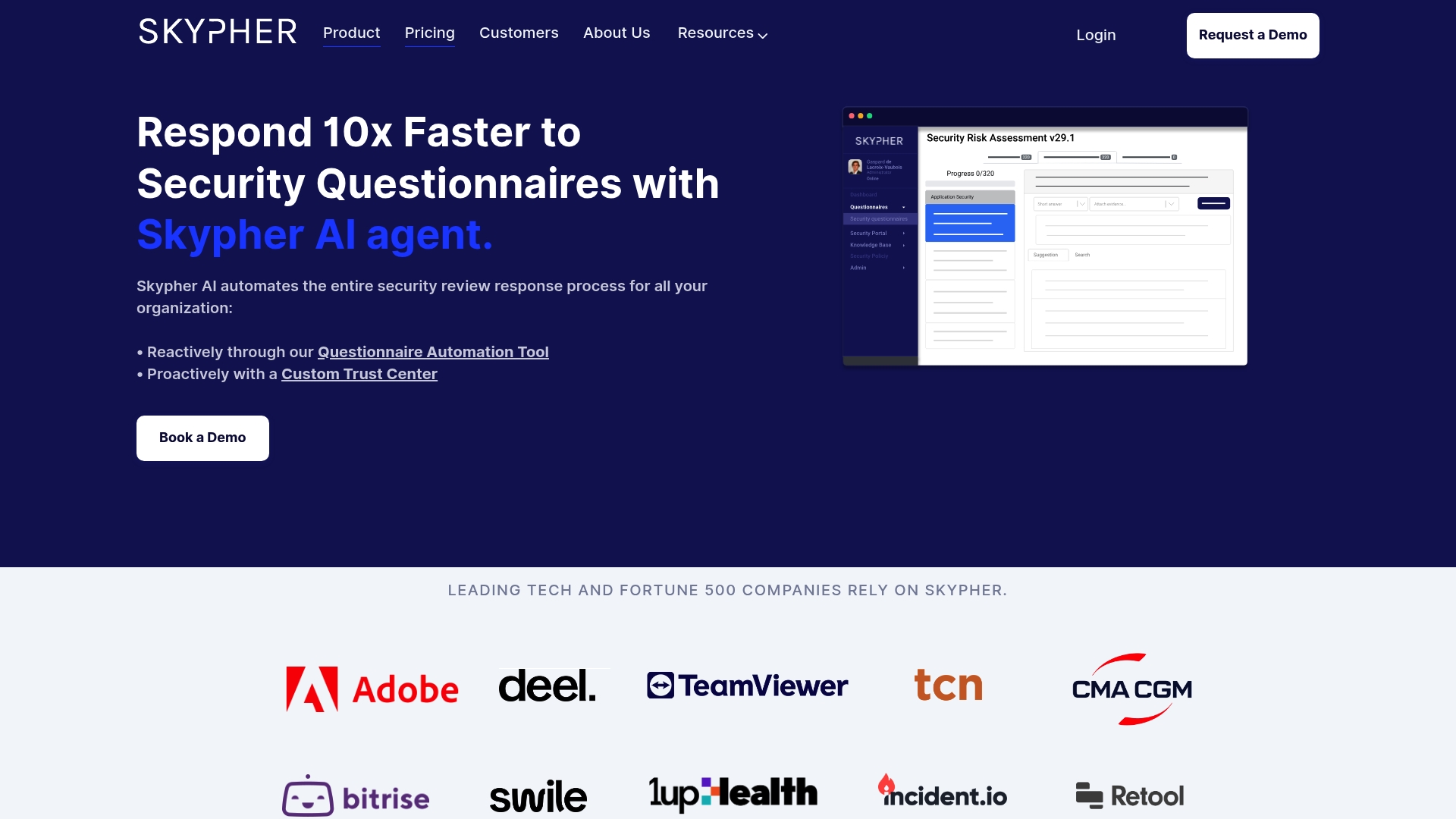
Unlock the power of our AI Questionnaire Automation Tool to streamline your security communications while saving time and resources:
- Speed up security reviews with our intuitive platform, enhancing collaboration across teams.
- Achieve accuracy with integrations across over 40 TPRM platforms, ensuring alignment with complex compliance standards.
- Create a customizable Trust Center that showcases your robust security posture, fostering trust with prospective clients.
Experience the future of security procurement with ease—visit Skypher now and discover how we can help you secure your organization faster and more efficiently than ever before!