
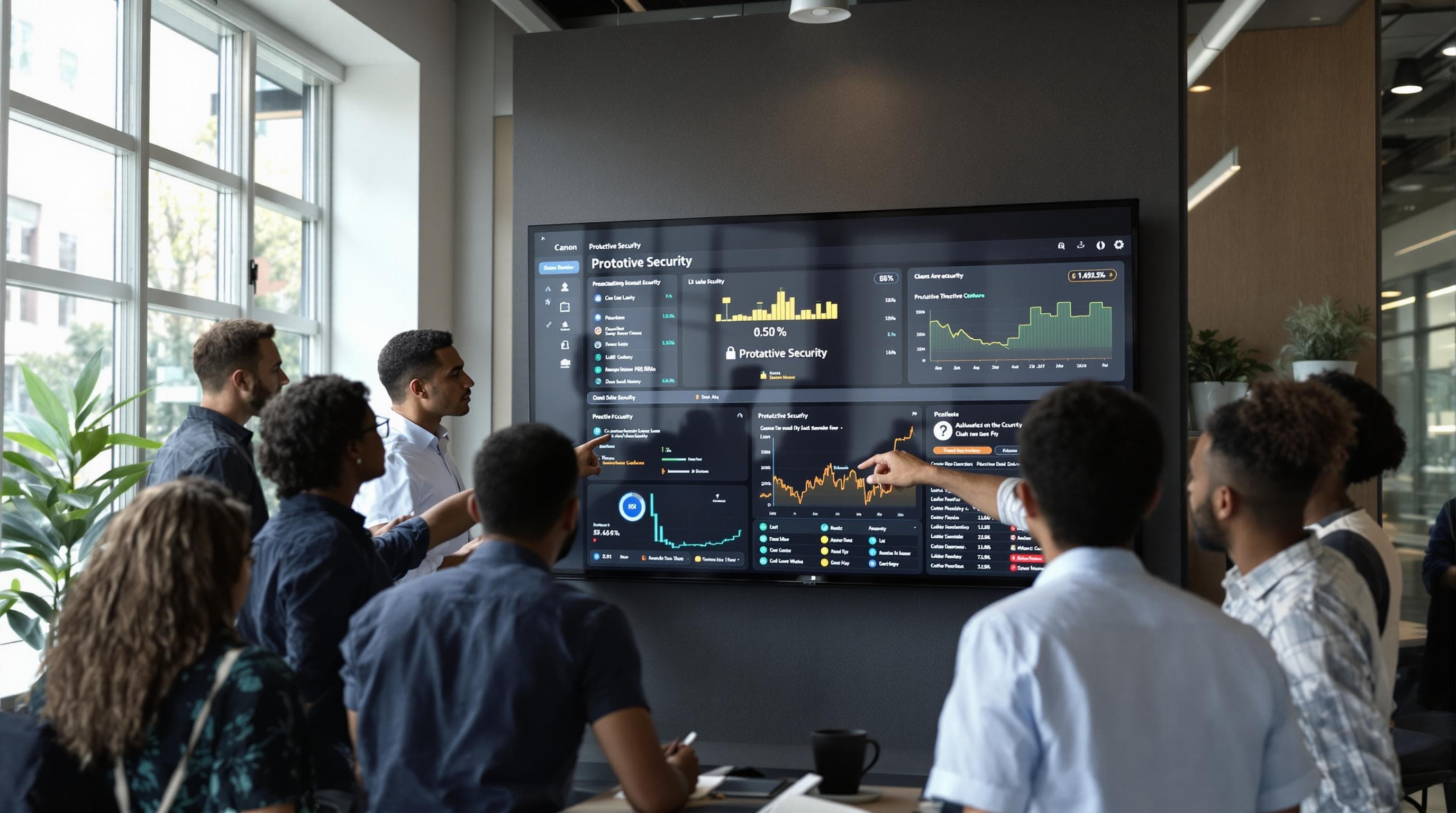
Cyber threats are evolving faster than most security teams can keep up. Over 80 percent of data breaches are the result of missed vulnerabilities or delayed responses, according to recent studies. Most people assume that installing top-tier software is enough. The real secret for 2025 is how proactive monitoring, intelligent prediction, and human awareness are now the foundation of truly effective digital security.
Table of Contents
- Understanding the Role of Monitoring in Security
- Key Tools and Technologies for Effective Monitoring
- Best Practices for Building a Secure Monitoring Plan
- Future Trends in Monitoring and Security for 2025
Quick Summary
| Takeaway | Explanation |
|---|---|
| Proactive Monitoring is Essential | Security monitoring must be proactive, effectively identifying and managing cybersecurity vulnerabilities through continuous observation, alert management, and rapid incident response. |
| Integrate Advanced Technologies | Utilizing artificial intelligence and machine learning enhances threat detection capabilities, moving from reactive to predictive security measures for proactive threat prevention. |
| Implement Comprehensive Protocols | Establishing clear monitoring protocols is crucial for maintaining robust security, including continuous monitoring, baseline establishment, and detailed logging of security events. |
| Adopt Zero Trust Architecture | Moving towards Zero Trust Architecture requires continuous verification and dynamic access control, significantly reducing potential attack surfaces in organizational networks. |
| Invest in Decentralized Security Models | Embracing decentralized security models enhances resilience against traditional vulnerabilities by distributing verification processes across multiple nodes, improving overall data integrity and security. |
Understanding the Role of Monitoring in Security
Monitoring plays a critical role in protecting digital assets and responding to potential security threats across modern technological ecosystems. As organizations increasingly rely on complex digital infrastructures, understanding the nuanced mechanisms of security monitoring becomes paramount for preventing, detecting, and mitigating potential risks.
The Strategic Framework of Security Monitoring
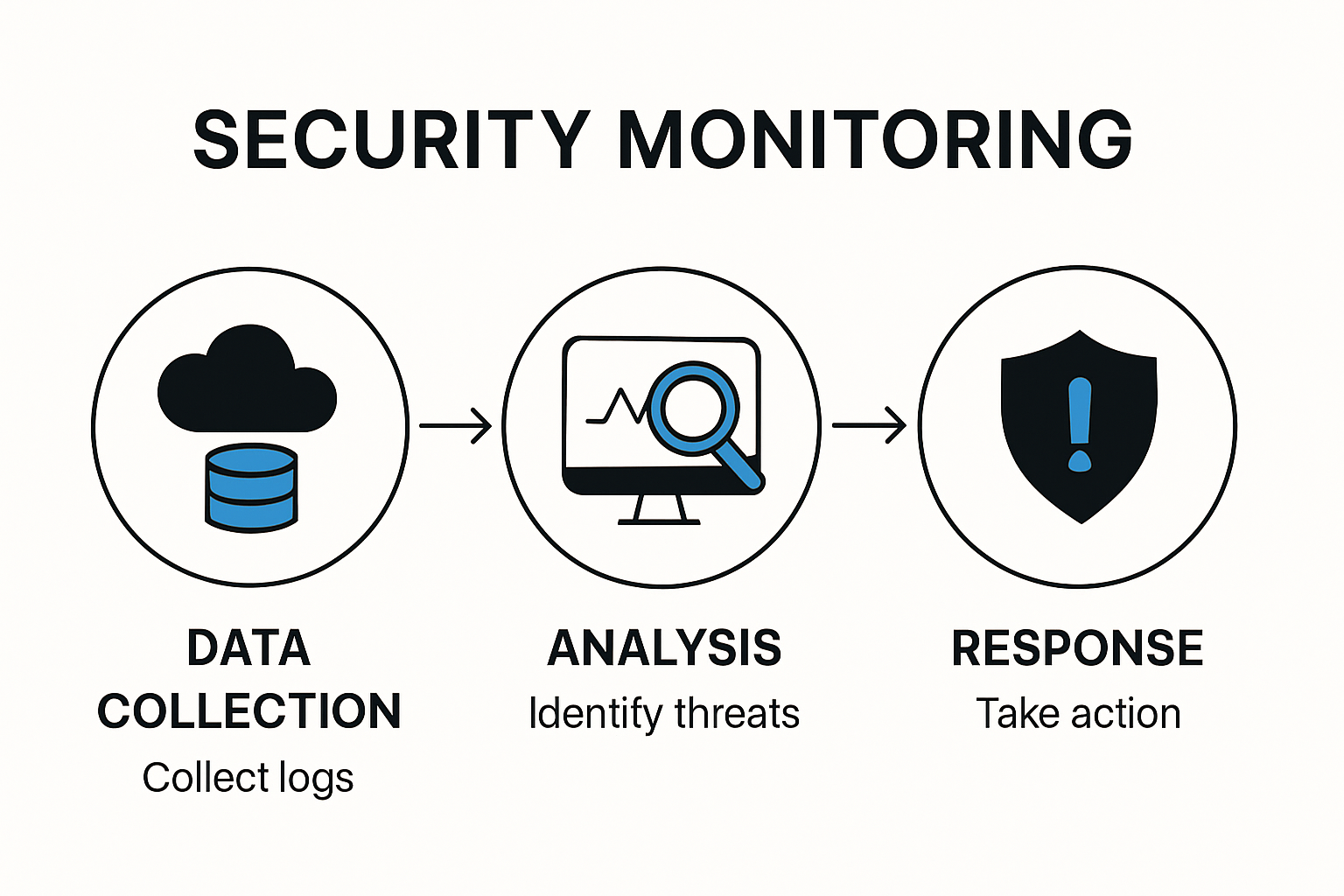
Security monitoring represents a proactive approach to identifying and managing potential cybersecurity vulnerabilities. According to the Scottish Government's cybersecurity guidelines, this process involves systematically collecting and analyzing security event data to detect and respond to potential threats. The strategic framework encompasses continuous observation, alert management, and rapid incident response.
Effective monitoring goes beyond simple data collection. It requires sophisticated techniques that enable organizations to understand complex threat patterns and potential attack vectors. The U.S. Government Accountability Office recommends near real-time risk management and ongoing system authorization as critical components of a robust monitoring strategy. This approach integrates security controls directly into the system development lifecycle, creating a dynamic and responsive defense mechanism.
Employee Behavior and Security Monitoring
Interestingly, security monitoring extends beyond technological systems and significantly influences human behavior. Research published in the Information & Computer Security journal reveals that comprehensive monitoring can positively impact employees' security awareness and compliance. By implementing transparent and well-communicated monitoring practices, organizations can encourage proactive security behaviors among team members.
The psychological aspect of monitoring creates a deterrent effect. When employees understand that security activities are being tracked and analyzed, they become more likely to adhere to established security protocols. This human element transforms monitoring from a purely technical function into a collaborative security strategy that involves every organizational member.
Advanced Monitoring Techniques
Modern security monitoring leverages advanced technologies like artificial intelligence and machine learning to enhance threat detection capabilities. These technologies enable predictive analysis, allowing security teams to identify potential vulnerabilities before they can be exploited. By analyzing historical data and recognizing unusual patterns, AI-driven monitoring systems can provide early warning signals of potential security breaches.
Key monitoring techniques include network traffic analysis, log monitoring, user behavior analytics, and endpoint detection. Each technique offers unique insights into potential security risks, creating a multi-layered defense strategy that adapts to evolving technological landscapes. The goal is not just to detect threats but to understand their origin, potential impact, and most effective mitigation strategies.
Ultimately, effective monitoring and security require a holistic approach that combines technological sophistication, strategic planning, and human awareness. Organizations must view monitoring not as a standalone activity but as an integral part of their broader cybersecurity ecosystem.
Key Tools and Technologies for Effective Monitoring
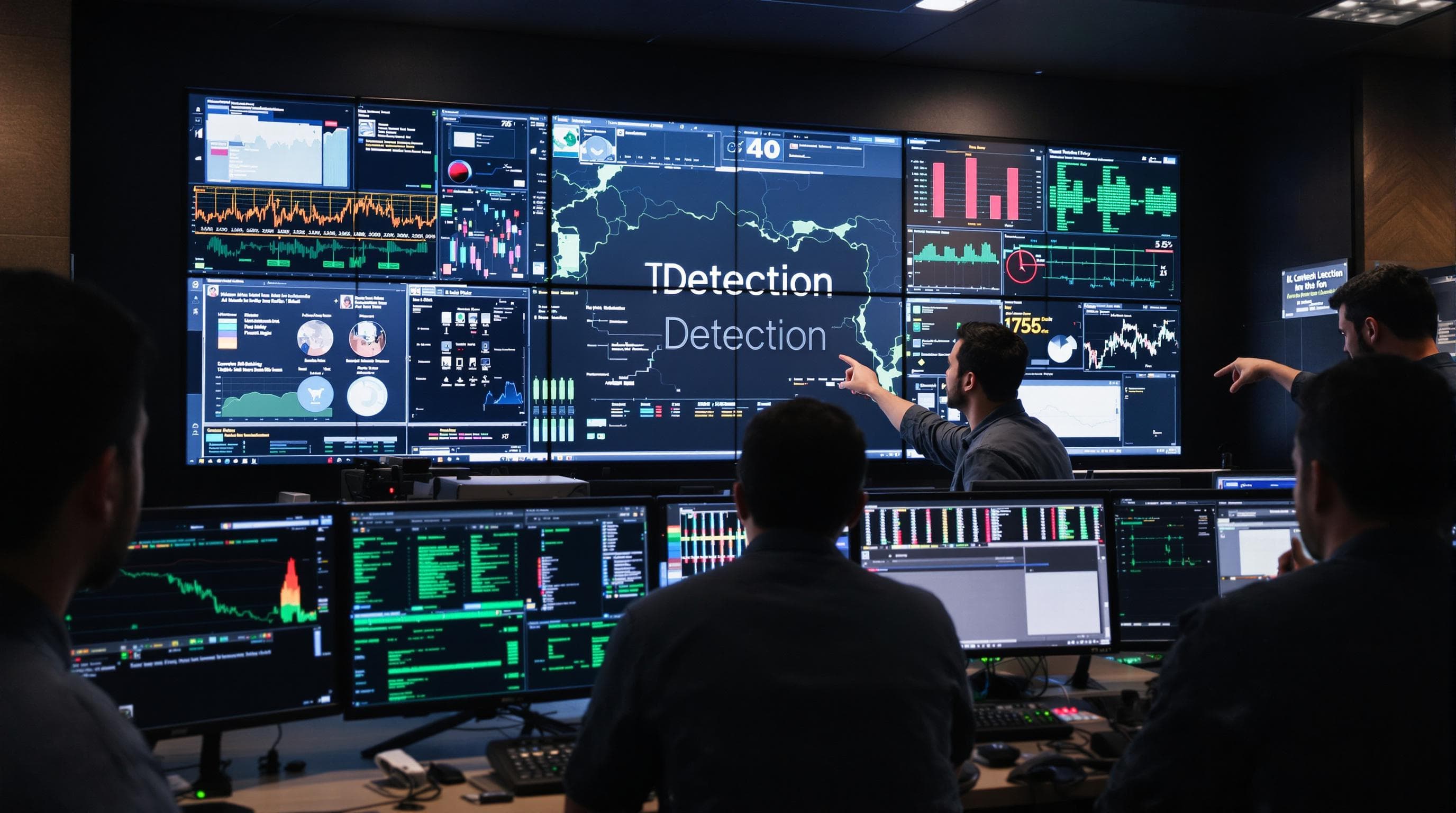
The digital security landscape demands sophisticated tools and technologies that can effectively monitor complex technological environments. As cyber threats continue to evolve, organizations require advanced monitoring solutions that provide comprehensive visibility, rapid threat detection, and actionable insights.
Security Information and Event Management Systems
Security Information and Event Management (SIEM) systems represent a cornerstone of modern monitoring strategies. According to OpenStax's information systems research, these systems aggregate and analyze data from multiple sources within an organization's IT environment. They provide a comprehensive overview of security alerts and events, enabling real-time detection and response to potential security incidents.
The Wikipedia entry on SIEM technologies highlights their critical role in security operations centers (SOCs). By combining security information management and security event management, SIEM tools enable real-time analysis of security alerts generated by applications and network hardware. This technology collects and aggregates data from various systems, supporting both threat detection and regulatory compliance requirements.
Vulnerability Assessment and Scanning Tools
Vulnerability assessment tools are essential for proactively identifying and evaluating security weaknesses within systems and applications. These sophisticated technologies conduct thorough scans to detect potential vulnerabilities, categorizing them based on severity and potential impact. According to cybersecurity engineering research, this prioritization allows cybersecurity professionals to focus on addressing the most critical vulnerabilities first, thus reducing organizational risk exposure.
Modern vulnerability scanning tools go beyond simple identification. They provide comprehensive reports that include detailed information about potential security gaps, recommended mitigation strategies, and potential attack vectors. By offering contextual insights, these tools transform raw data into actionable intelligence that security teams can use to strengthen their defensive postures.
Advanced Monitoring and Predictive Technologies
Emerging technologies are revolutionizing the monitoring landscape by introducing predictive and adaptive capabilities. Artificial intelligence and machine learning algorithms now enable monitoring systems to learn from historical data, recognize unusual patterns, and predict potential security incidents before they occur. These advanced technologies move beyond traditional reactive monitoring approaches, offering proactive threat prevention strategies.
Key advanced monitoring technologies include behavioral analytics, anomaly detection systems, and intelligent threat correlation engines. These tools can analyze user behaviors, network traffic patterns, and system interactions in real-time, identifying subtle indicators of potential security breaches. By leveraging complex algorithms and massive data processing capabilities, they provide security teams with unprecedented insights into potential risks.
The future of monitoring and security lies in integrated, intelligent systems that can adapt quickly to changing threat landscapes. Organizations must invest in tools that not only detect threats but also provide contextual understanding, predictive capabilities, and seamless integration across different technological platforms. Effective monitoring is no longer about collecting data it is about transforming that data into meaningful, actionable security intelligence.
Below is a summary table comparing the key monitoring technologies discussed, highlighting their purpose and main capabilities.
| Technology Type | Purpose | Main Capabilities |
|---|---|---|
| SIEM Systems | Aggregate & analyze security event data | Real-time alerting, compliance reporting, threat correlation |
| Vulnerability Assessment & Scanning Tools | Identify and prioritize security weaknesses | Automated scanning, risk prioritization, mitigation recommendations |
| Advanced Monitoring & Predictive Technologies | Predict and prevent potential security incidents | Behavioral analytics, anomaly detection, intelligent threat prediction |
Best Practices for Building a Secure Monitoring Plan
Developing a comprehensive and effective monitoring plan requires strategic thinking, careful preparation, and a holistic approach to cybersecurity. Organizations must move beyond simple reactive strategies and create robust frameworks that anticipate, detect, and respond to potential security threats with precision and efficiency.
Risk Assessment and Strategic Planning
A successful monitoring plan begins with thorough risk assessment. NIST Special Publication 800-53 recommends conducting comprehensive risk evaluations that identify potential vulnerabilities across technological infrastructure. This process involves mapping critical assets, understanding potential threat vectors, and prioritizing security resources based on potential impact and likelihood of occurrence.
Effective risk assessment requires organizations to adopt a proactive mindset. This means continuously analyzing the evolving threat landscape, understanding emerging technological risks, and developing adaptive strategies. By creating detailed risk profiles, security teams can develop targeted monitoring approaches that address specific organizational vulnerabilities.
Establishing Comprehensive Monitoring Protocols
Developing clear and detailed monitoring protocols is crucial for maintaining robust security. SANS Institute research emphasizes the importance of creating well-defined procedures for data collection, analysis, alerting, and incident response. These protocols should clearly outline responsibilities, communication channels, and escalation procedures for different types of security events.
Key elements of comprehensive monitoring protocols include:
- Continuous Monitoring: Implementing 24/7 surveillance of critical systems and network infrastructure
- Baseline Establishment: Creating performance and behavior baselines to easily identify anomalies
- Detailed Logging: Maintaining comprehensive logs with sufficient context for thorough investigation
The following table presents the key elements of effective monitoring protocols, with a summary of their roles in the monitoring plan.
| Monitoring Element | Role in Monitoring Plan |
|---|---|
| Continuous Monitoring | Provides 24/7 protection and rapid detection of threats |
| Baseline Establishment | Enables identification of anomalies through comparison |
| Detailed Logging | Supports thorough investigations and auditing |
| Clear Responsibilities | Ensures accountability and structured response |
| Defined Escalation Paths | Streamlines incident response and communication |
Technology Integration and Adaptive Strategies
Modern monitoring plans must embrace technological flexibility and integration. This means selecting tools and technologies that can communicate seamlessly across different platforms and provide comprehensive visibility. Machine learning and artificial intelligence technologies now enable more sophisticated monitoring approaches that can predict and prevent potential security incidents before they occur.
Adaptive monitoring strategies should focus on:
- Real-time Analysis: Implementing systems that provide immediate threat detection and response capabilities
- Cross Platform Compatibility: Ensuring monitoring tools work effectively across diverse technological environments
- Automated Response Mechanisms: Developing intelligent systems that can automatically mitigate identified risks
Successful monitoring is not about implementing the most expensive technologies but about creating intelligent, responsive, and adaptable security ecosystems. Organizations must view monitoring as a dynamic process that evolves alongside technological landscapes and emerging threat methodologies. By combining strategic planning, comprehensive protocols, and advanced technologies, businesses can develop monitoring plans that provide robust protection and enable confident digital operations.
Future Trends in Monitoring and Security for 2025
The cybersecurity landscape is rapidly transforming, with emerging technologies and sophisticated threat methodologies reshaping how organizations approach monitoring and security. As we approach 2025, critical innovations are set to revolutionize our understanding and implementation of digital protection strategies.
Zero Trust Architecture and Continuous Verification
NIST's Zero Trust Architecture guidelines represent a fundamental shift in security paradigms. This approach moves beyond traditional perimeter-based security models, emphasizing continuous verification and dynamic access controls. Zero Trust Architecture assumes no inherent trust, requiring authentication and authorization for every access request, regardless of its origin.
Key characteristics of Zero Trust Architecture include granular access controls, micro-segmentation, and continuous monitoring of user behaviors and system interactions. By implementing these principles, organizations can significantly reduce potential attack surfaces and create more resilient security environments. The model requires constant validation of user identities, device health, and network conditions before granting access to resources.
Artificial Intelligence and Predictive Security
Artificial intelligence is transforming monitoring capabilities by introducing unprecedented predictive and adaptive capabilities. Machine learning algorithms can now analyze massive datasets, identifying complex threat patterns that traditional security systems might overlook. These advanced technologies enable proactive threat detection, moving security strategies from reactive responses to anticipatory prevention.
Advanced AI monitoring technologies will likely focus on:
- Behavioral Prediction: Analyzing user and system behaviors to identify potential anomalies
- Automated Threat Hunting: Continuously scanning networks for potential vulnerabilities
- Intelligent Incident Response: Developing automated mitigation strategies for detected threats
Decentralized and Distributed Security Models
The future of monitoring and security will increasingly embrace decentralized approaches, leveraging blockchain and distributed ledger technologies. These models provide enhanced transparency, immutability, and resilience against traditional centralized system vulnerabilities. By distributing security verification across multiple nodes, organizations can create more robust and tamper-resistant monitoring infrastructures.
Decentralized security models offer several advantages, including reduced single points of failure, enhanced data integrity, and more sophisticated authentication mechanisms. As quantum computing and advanced cryptographic techniques continue to evolve, these distributed approaches will become increasingly sophisticated and reliable.
The monitoring and security landscape of 2025 will be characterized by intelligent, adaptive systems that seamlessly integrate advanced technologies. Organizations must prepare for a future where security is not a static defense but a dynamic, continuously evolving ecosystem. Successful strategies will require ongoing investment in technological innovation, continuous learning, and a proactive approach to understanding emerging threat landscapes.
Frequently Asked Questions
What are the essential strategies for monitoring and security in 2025?
Effective strategies include proactive monitoring, integrating advanced technologies like AI, implementing comprehensive protocols, adopting Zero Trust Architecture, and investing in decentralized security models.
How does artificial intelligence enhance security monitoring?
Artificial intelligence improves security monitoring by enabling predictive analysis, identifying unusual patterns, and allowing systems to anticipate potential security incidents before they occur.
What are Security Information and Event Management (SIEM) systems?
SIEM systems are tools that aggregate and analyze security event data from multiple sources, providing real-time detection and response to potential security incidents, crucial for modern cybersecurity strategies.
Why is employee behavior important in security monitoring?
Monitoring employee behavior is crucial as it can enhance security awareness and compliance, creating a collaborative security culture where team members are more likely to adhere to established protocols.
Take Control of Security Monitoring and Earn Trust in 2025
Organizations today face overwhelming risks from missed vulnerabilities and slow response times. The article made it clear that for 2025, proactive monitoring and seamless collaboration are critical. But for many teams, the process of responding to endless security questionnaires eats away at productivity and creates bottlenecks in closing deals. If you want to gain an edge by turning trust and transparency into accelerated growth, Skypher is ready to help you make that leap.
Skypher's AI Questionnaire Automation Tool helps eliminate manual errors and works around the clock so you never miss a question or deadline. Centralize your security reviews, improve accuracy, and instantly showcase your approach to Zero Trust and continuous verification using Skypher's custom Trust Center and real-time integrations. The faster your team responds, the sooner you can close deals and build client confidence. Visit Skypher now to automate your security workflow and stay ahead of tomorrow's threats.