

The NIST Cybersecurity Framework 2.0 just dropped, and it is making waves across every corner of B2B tech. Countless companies are scrambling to keep up with sweeping security demands, but most overlook the new 'Govern' function—this changes everything. Even small businesses can now tap into a blueprint once reserved for critical infrastructure, with CSF 2.0 offering guidance for organizations of literally any size or sector. That single shift means cybersecurity is no longer just an IT checklist. It is now the backbone of strategic growth and client trust.
Table of Contents
- Understanding NIST Cybersecurity Framework CSF
- Key Changes in CSF 2.0 and What They Mean
- Implementing CSF: Practical Steps for B2B Software Firms
- CSF Benefits for CISOs, GRC, and Sales Leaders
Quick Summary
| Takeaway | Explanation |
|---|---|
| Adopt the 'Govern' Function | Integrating governance enhances cybersecurity as a strategic priority across all levels of an organization. |
| Customize CSF Implementation | Tailor the NIST Cybersecurity Framework to fit your specific industry and organizational context for effective risk management. |
| Focus on Continuous Improvement | Establish ongoing processes for evaluating and adapting cybersecurity strategies, ensuring they evolve with emerging threats. |
| Utilize Risk Management Tools | Implement comprehensive risk assessments and prioritize mitigation efforts to address potential cybersecurity incidents effectively. |
| Leverage Framework for Sales | Use CSF insights to demonstrate strong security practices and build credibility with clients, differentiating your business in competitive markets. |
Understanding NIST Cybersecurity Framework CSF
The NIST Cybersecurity Framework (CSF) represents a comprehensive approach to managing and reducing cybersecurity risks for organizations across various sectors. Originally developed by the National Institute of Standards and Technology, the framework provides a strategic blueprint for implementing robust cybersecurity practices.
Core Purpose and Evolution
The NIST Cybersecurity Framework is designed as a flexible guide that helps organizations understand, assess, and improve their cybersecurity posture. According to NIST's official publication, the framework offers a common language and systematic methodology for addressing cybersecurity challenges. With the release of CSF 2.0 in February 2024, the framework introduced a significant enhancement by adding a new 'Govern' function, which emphasizes integrating cybersecurity directly into enterprise risk management strategies.
This evolution reflects the growing complexity of cybersecurity threats and the need for more holistic, proactive approaches to risk management. Organizations can now leverage a more comprehensive tool that not only addresses technical controls but also focuses on governance and strategic decision making.
Key Components and Structure
The NIST Cybersecurity Framework traditionally operates through five core functions that provide a strategic view of an organization's cybersecurity risk management: Identify, Protect, Detect, Respond, and Recover. Research from the NIST Cybersecurity Webinar Series highlights the newly added 'Govern' function as a critical addition that bridges leadership perspectives with technical implementation.
Each function serves a specific purpose in the cybersecurity lifecycle:
- Identify: Understanding organizational cybersecurity risks by analyzing systems, assets, and capabilities.
- Protect: Implementing safeguards to ensure critical infrastructure and data protection.
- Detect: Developing mechanisms to identify potential cybersecurity events and incidents.
- Respond: Creating appropriate action plans to manage and mitigate detected cybersecurity incidents.
- Recover: Establishing strategies for resilience and restoration after a cybersecurity event.
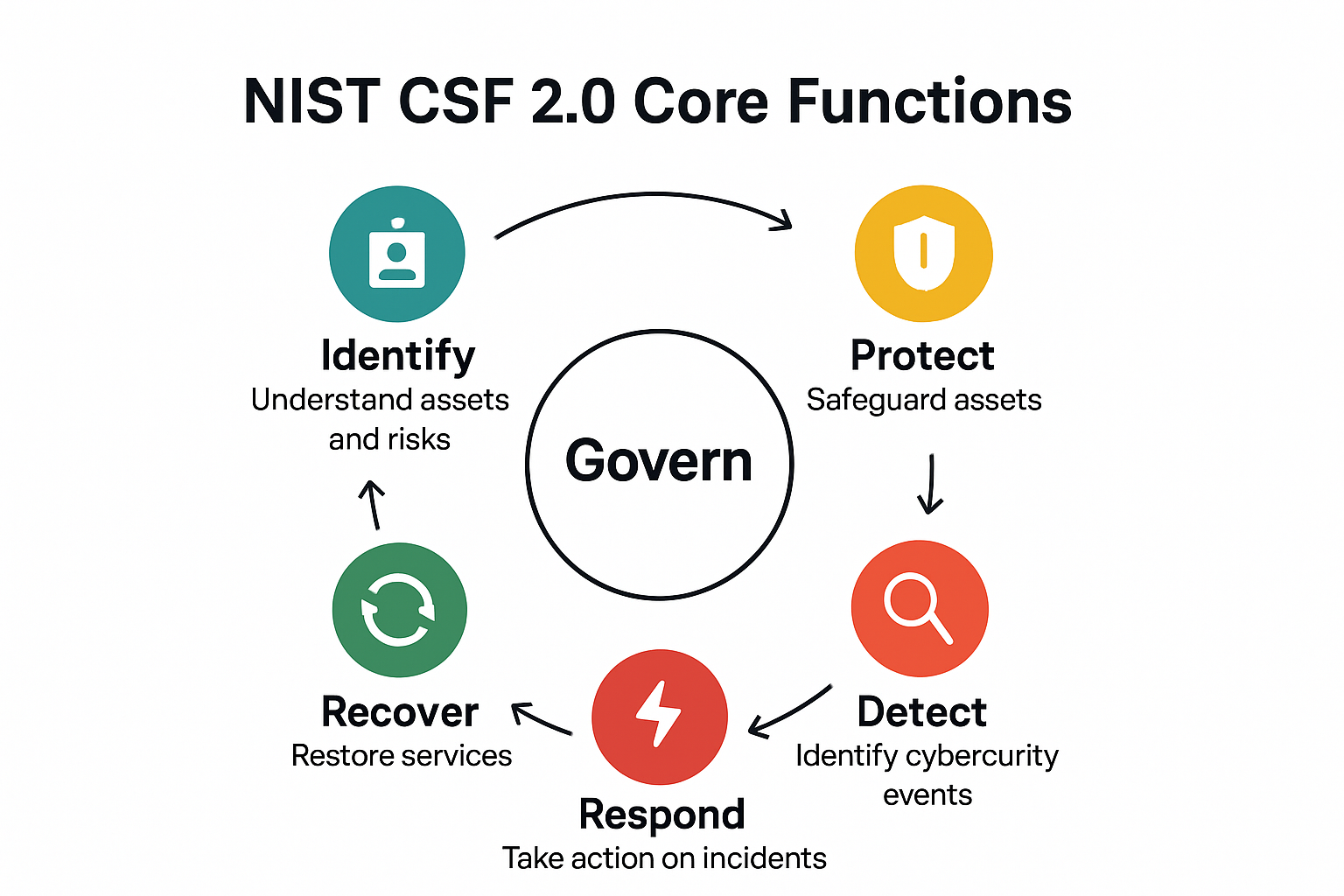
Below is a table summarizing the six core functions of the NIST Cybersecurity Framework 2.0, including their primary purposes as described in the article.
| Function | Purpose |
|---|---|
| Identify | Understand organizational cybersecurity risks by analyzing systems, assets, and capabilities. |
| Protect | Implement safeguards to ensure critical infrastructure and data protection. |
| Detect | Develop mechanisms to identify potential cybersecurity events and incidents. |
| Respond | Create action plans to manage and mitigate detected cybersecurity incidents. |
| Recover | Establish strategies for resilience and restoration after a cybersecurity event. |
| Govern | Integrate cybersecurity into enterprise risk management and ensure organizational alignment. |
Practical Implementation for B2B Companies
For B2B companies, adopting the NIST Cybersecurity Framework is not just about compliance but about building a resilient and adaptive security strategy. The framework provides practical resources like Quick Start Guides that help organizations of all sizes customize their approach to cybersecurity risk management.
By following the CSF guidelines, B2B companies can develop a more comprehensive understanding of their cybersecurity landscape, prioritize investments, and create a proactive security culture. Learn more about streamlining security assessments to complement your NIST CSF implementation strategy.
The framework's flexibility allows organizations to tailor its implementation to their specific industry, size, and risk profile, making it a versatile tool for cybersecurity governance and risk management.
Key Changes in CSF 2.0 and What They Mean
The release of NIST Cybersecurity Framework 2.0 marks a significant milestone in cybersecurity risk management, introducing transformative changes that reflect the rapidly evolving digital threat landscape. These updates represent a strategic response to the increasingly complex cybersecurity challenges faced by organizations across various sectors.
Introducing the 'Govern' Function
According to NIST's official publication, the most notable addition to CSF 2.0 is the new 'Govern' function. This critical enhancement elevates cybersecurity from a purely technical discipline to a strategic organizational priority. The 'Govern' function bridges the gap between technical teams and senior leadership, ensuring that cybersecurity becomes an integral part of enterprise risk management.
Research from Gartner highlights that this change emphasizes the need for senior leadership to actively engage in cybersecurity strategy. The function provides a framework for organizations to:
- Establish Cybersecurity Policies: Create comprehensive guidelines that align with organizational objectives.
- Define Risk Management Strategies: Develop clear approaches to identifying, assessing, and mitigating cybersecurity risks.
- Ensure Organizational Alignment: Integrate cybersecurity considerations into broader business decision making.
Expanded Scope and Accessibility
Unlike previous versions limited primarily to critical infrastructure, CSF 2.0 dramatically expands its applicability. As noted in NIST's August 2023 draft analysis, the framework now provides guidance for organizations of all sizes and across all sectors. This universal approach democratizes advanced cybersecurity practices, making robust risk management accessible to small businesses and large enterprises alike.
Key accessibility improvements include:
- Comprehensive guidance applicable to diverse organizational contexts
- Simplified implementation resources
- Flexible framework that can be customized to specific organizational needs
The following table summarizes the major changes introduced in NIST CSF 2.0 and their impacts as described in the article.
| Key Change | Description | Impact |
|---|---|---|
| Addition of 'Govern' Function | Elevates cybersecurity to a strategic priority and consolidates governance. | Ensures organizational alignment from leadership to technical teams. |
| Expanded Scope and Accessibility | Now applies to organizations of all sizes/sectors, not just critical infrastructure. | Democratizes advanced cybersecurity practices; benefits small and large companies alike. |
| Enhanced Risk Management Considerations | Increased emphasis on supply chain risk and privacy integration. | Encourages holistic risk assessments and robust third-party evaluations. |
Enhanced Risk Management Considerations
CSF 2.0 introduces more nuanced approaches to cybersecurity risk management. The updated framework places increased emphasis on supply chain risk management and privacy considerations. Organizations must now view cybersecurity through a more holistic lens, recognizing that risks extend beyond immediate technical environments.
Specifically, the updated framework encourages organizations to:
- Conduct comprehensive supply chain risk assessments
- Develop robust third-party vendor security evaluations
- Integrate privacy protections into cybersecurity strategies
Learn more about streamlining security assessments to complement your implementation of these advanced risk management strategies.
The evolution of NIST CSF 2.0 represents more than a technical update. It signals a fundamental shift in how organizations conceptualize, implement, and govern cybersecurity. By emphasizing strategic alignment, accessibility, and comprehensive risk management, the framework provides a forward-looking approach to navigating an increasingly complex digital threat landscape.
Implementing CSF: Practical Steps for B2B Software Firms
Implementing the NIST Cybersecurity Framework (CSF) requires a strategic and systematic approach, particularly for B2B software firms navigating complex technological ecosystems. The framework offers a structured methodology for managing and reducing cybersecurity risks while aligning security practices with broader business objectives.
Developing a Comprehensive Organizational Profile
According to NIST's Quick Start Guides, the first critical step in CSF implementation is developing a comprehensive organizational profile. This profile serves as a foundational assessment of an organization's current cybersecurity capabilities, existing risk management practices, and potential improvement areas.
B2B software firms should focus on creating a detailed profile that encompasses:
- Current cybersecurity infrastructure and technologies
- Existing risk management processes
- Specific industry and regulatory compliance requirements
- Unique technological dependencies and supply chain interactions
Research from NIST's small business cybersecurity resources emphasizes the importance of tailoring the framework to an organization's specific context. This approach ensures that cybersecurity strategies are not generic but precisely aligned with the firm's operational realities.
Implementing Risk Management Strategies
Risk management represents a crucial component of CSF implementation. B2B software firms must develop a systematic approach to identifying, assessing, and mitigating cybersecurity risks across their technological ecosystem. This process involves multiple strategic considerations:
- Conducting comprehensive risk assessments
- Prioritizing risks based on potential business impact
- Developing robust mitigation and response strategies
- Creating continuous monitoring mechanisms
Learn more about automating security assessment processes to streamline your risk management approach and enhance organizational efficiency.
Continuous Improvement and Governance
The NIST Cybersecurity Framework is not a one-time implementation but a continuous improvement process. B2B software firms must establish ongoing governance mechanisms that enable regular reassessment and adaptation of their cybersecurity strategies.
Key elements of continuous improvement include:
- Regular framework performance evaluations
- Periodic risk reassessments
- Updating cybersecurity policies and procedures
- Training and awareness programs for employees
- Integration of emerging technological and threat intelligence
According to NIST's comprehensive framework documentation, successful implementation requires a holistic approach that transcends technical controls. Organizations must foster a culture of cybersecurity awareness, ensuring that risk management becomes an integral part of strategic decision making.
By adopting a methodical, adaptive approach to the NIST Cybersecurity Framework, B2B software firms can transform cybersecurity from a compliance requirement into a strategic advantage. The framework provides a flexible blueprint that enables organizations to build resilient, responsive, and proactive security practices aligned with their unique business objectives.
CSF Benefits for CISOs, GRC, and Sales Leaders
The NIST Cybersecurity Framework (CSF) 2.0 offers transformative benefits for key organizational roles, providing a strategic approach to cybersecurity that transcends traditional technical implementations. By aligning security practices with business objectives, the framework creates significant value for CISOs, Governance, Risk, and Compliance (GRC) professionals, and Sales Leaders.
Strategic Advantages for CISOs and GRC Professionals
According to Gartner's analysis, the introduction of the 'Govern' function in CSF 2.0 represents a critical evolution for cybersecurity leadership. CISOs and GRC professionals gain a comprehensive tool for integrating cybersecurity into enterprise risk management, enabling more strategic decision-making and organizational alignment.
Key benefits for CISOs and GRC professionals include:
- Enhanced Risk Visibility: Comprehensive framework for identifying and assessing cybersecurity risks
- Standardized Governance: Clear guidelines for establishing cybersecurity policies and procedures
- Strategic Alignment: Mechanism to connect technical security measures with broader business objectives
- Continuous Improvement: Structured approach to evolving cybersecurity capabilities
According to NIST's official publication, the framework provides a common language that bridges technical teams and senior leadership, addressing a critical communication gap in many organizations.
Empowering Sales Leaders and Business Development
For Sales Leaders, the NIST Cybersecurity Framework offers a powerful mechanism for building trust and demonstrating organizational maturity. Research from NIST's comprehensive framework documentation highlights the framework's expanded scope, which now applies to organizations of all sizes and sectors.
Sales teams can leverage the CSF to:
- Demonstrate robust security practices to potential clients
- Differentiate the organization in competitive markets
- Provide transparent evidence of comprehensive risk management
- Build confidence in the organization's cybersecurity capabilities
Learn more about streamlining security assessment processes to enhance your sales team's ability to respond to complex security inquiries.
Cross-Functional Value and Organizational Alignment
The NIST Cybersecurity Framework 2.0 transcends traditional role-based benefits, creating a unified approach to cybersecurity that drives organizational effectiveness. By providing a common language and structured methodology, the framework enables:
- Improved communication across different organizational levels
- More effective resource allocation for cybersecurity initiatives
- Transparent and measurable security performance
- Adaptable risk management strategies
Unlike previous versions, CSF 2.0 emphasizes the interconnected nature of cybersecurity, recognizing that effective security is a collaborative effort requiring input from multiple organizational stakeholders.
For CISOs, GRC professionals, and Sales Leaders, the NIST Cybersecurity Framework represents more than a compliance tool. It is a strategic asset that enables organizations to transform cybersecurity from a technical necessity into a competitive advantage, driving business resilience and growth in an increasingly complex digital landscape.

Frequently Asked Questions
What is the NIST Cybersecurity Framework CSF 2.0?
The NIST Cybersecurity Framework CSF 2.0 is an updated framework that provides a comprehensive approach to managing and reducing cybersecurity risks, now including a new 'Govern' function that emphasizes the integration of cybersecurity into enterprise risk management for organizations of all sizes.
How does the 'Govern' function impact the implementation of cybersecurity strategies?
The 'Govern' function elevates cybersecurity to a strategic priority by ensuring that governance structures align cybersecurity practices with business objectives, encouraging senior leadership involvement in decision-making processes related to risk management.
What are the key components of the NIST Cybersecurity Framework 2.0?
The key components of CSF 2.0 include five core functions: Identify, Protect, Detect, Respond, and Recover, along with the new 'Govern' function which integrates cybersecurity into overall enterprise risk management for better alignment and effectiveness.
How can B2B companies effectively implement the NIST Cybersecurity Framework?
B2B companies can implement the NIST Cybersecurity Framework by developing a comprehensive organizational profile, conducting thorough risk assessments, customizing the framework to fit their unique context, and establishing ongoing processes for continuous improvement and governance.
Transform NIST CSF 2.0 Compliance Into a Sales and Trust Advantage
Are you feeling the pressure of the new 'Govern' function and wide-ranging requirements in NIST Cybersecurity Framework CSF 2.0? Many B2B organizations struggle to turn their cybersecurity improvements into real-world client confidence and sales momentum. Hours spent answering complex security questionnaires can hold your team back from higher-value tasks and slow your path to compliance, especially as risk management expectations and due diligence requests rise.
Skypher helps security and sales leaders connect their CSF 2.0 adoption directly to business growth. Our AI Questionnaire Automation Tool and real-time collaboration features speed up questionnaire completion, improve accuracy, and bring your hard-earned cybersecurity maturity to light for every prospect and partner. Do not let compliance become a bottleneck.
Make your security leadership and new risk governance strategies a clear advantage. Visit Skypher now and see how you can save time, strengthen trust, and support every step of your CSF 2.0 journey.