

PCI compliance certification sounds like a maze of rules and audits, but here’s something that will surprise you. A single data breach can cost a business over $9 million in damages and lost trust. You might think meeting PCI standards is just for big corporations, though the truth is even the smallest online shop faces the same risks and rules. Here’s why the details matter more than ever in 2025.
Table of Contents
- Understanding PCI Compliance Certification
- Why Businesses Need to Be PCI Compliance Certified
- How to Become PCI Compliance Certified in 2025
- Maintaining Your PCI Compliance Status
Quick Summary
| Takeaway | Explanation |
|---|---|
| PCI Compliance is Critical for Security | PCI compliance certification is essential for protecting sensitive financial data and preventing breaches, ensuring robust security measures are in place within organizations handling payment card information. |
| Financial Risks of Non-Compliance | Failing to maintain PCI compliance can lead to staggering costs, with potential remediation expenses exceeding $9 million, along with legal fees and reputational damages. |
| Ongoing Commitment to Compliance | Achieving and maintaining PCI compliance is not a one-time task but requires continuous assessments, employee training, and updates to security protocols to address evolving cyber threats. |
| Annual Assessments are Mandatory | To retain PCI compliance, businesses must conduct annual risk assessments and hardware/software reviews, ensuring all technologies align with PCI DSS standards and receive necessary updates. |
| Adaptation to New Standards in 2025 | Organizations must prepare for changes in PCI DSS 4.0 effective March 31, 2025, including mandatory multi-factor authentication and tailored security control approaches to enhance compliance efforts. |
Understanding PCI Compliance Certification
PCI compliance certification represents a critical security framework for organizations handling payment card information. At its core, this certification ensures that businesses implement robust security measures to protect sensitive financial data and prevent potential breaches.
The Fundamental Purpose of PCI Certification
Payment Card Industry (PCI) compliance certification is not just a bureaucratic checkbox. It is a comprehensive security standard designed to protect cardholder data across all transaction environments. Research from the PCI Security Standards Council reveals that organizations processing payment cards must adhere to a strict set of security requirements.
A 2020 academic study uncovered alarming insights into compliance challenges. Researchers found that 86% of e-commerce websites examined had at least one violation that should have rendered them non-compliant, underscoring the critical importance of rigorous PCI standards.
Key Components of PCI Compliance
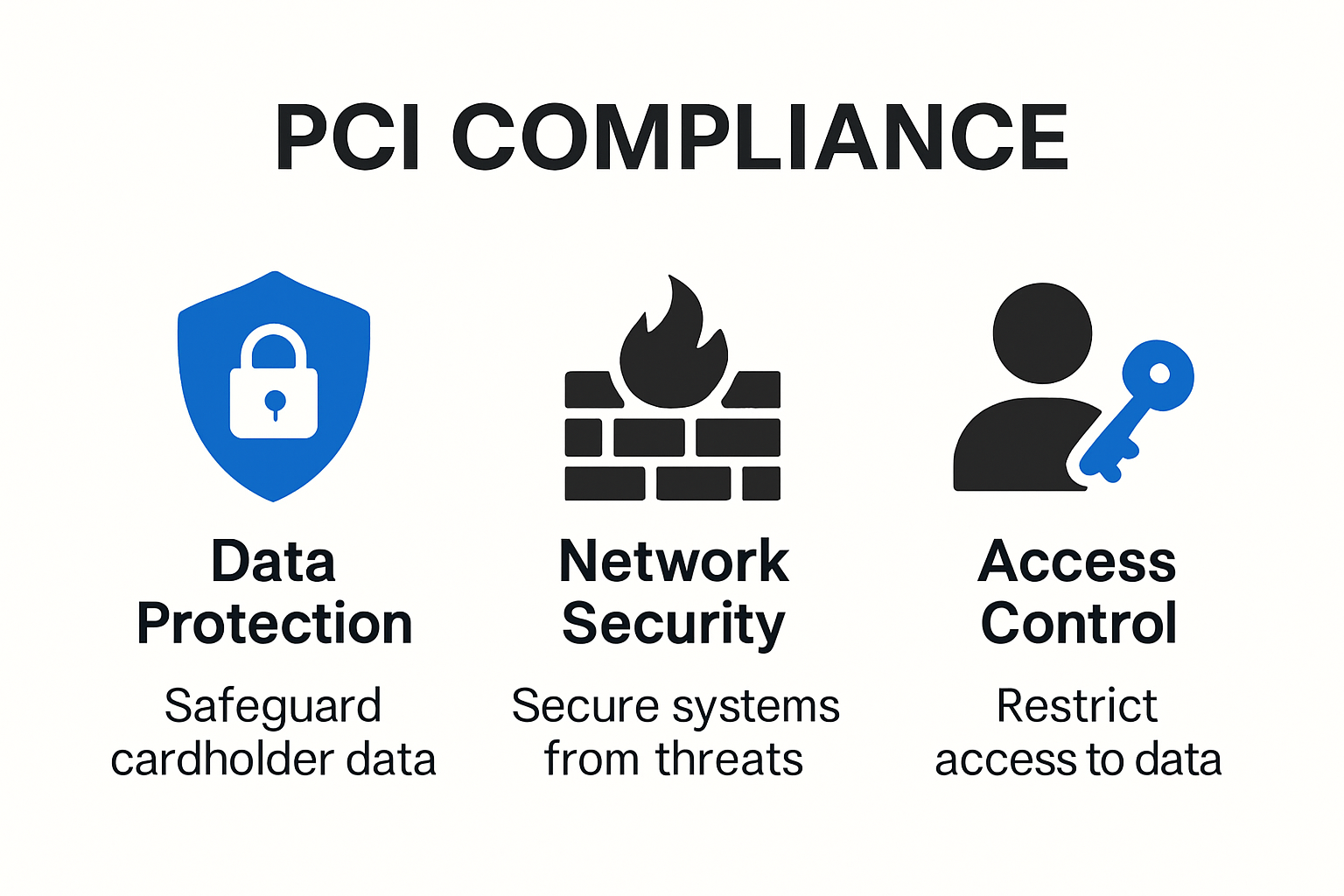
The certification process involves multiple layers of security assessment. Organizations must demonstrate their ability to:
- Data Protection: Implement encryption and secure storage mechanisms for cardholder information
- Network Security: Establish robust firewall configurations and intrusion detection systems
- Access Control: Restrict and monitor personnel access to sensitive payment systems
The University of Nebraska–Lincoln's PCI Compliance Team emphasizes the necessity of annual security training for all personnel involved in card processing. This ongoing education ensures that team members understand and consistently apply security protocols.
The PCI Security Standards Council offers a Professional (PCIP) qualification that provides individuals with comprehensive education on payment security standards. This certification demonstrates a professional's foundational understanding of protecting financial transactions.
Understanding PCI compliance certification goes beyond technical requirements. It represents a commitment to maintaining the highest standards of financial data protection, building trust with customers, and mitigating potential security risks in an increasingly digital transaction environment.
Why Businesses Need to Be PCI Compliance Certified
In the digital age, protecting customer financial data is not just a recommended practice but a critical business imperative. PCI compliance certification serves as a crucial shield against potential financial and reputational disasters that can devastate organizations.
Financial Risks of Non-Compliance

The financial consequences of failing to maintain PCI compliance can be staggering. According to Forbes research, remediation costs following a data breach can exceed $9 million in the United States. These expenses include not just immediate recovery efforts, but potential legal fees, regulatory penalties, and long-term brand rehabilitation.
Investopedia reports that in the first half of 2020, 36 billion records were exposed through data breaches, with 86% of these breaches being financially motivated. This statistic underscores the critical need for robust data protection strategies.
Reputation and Customer Trust
Beyond financial implications, PCI compliance directly impacts an organization's reputation. Experts suggest that customers are significantly more likely to transact with businesses they trust to protect their sensitive information. A single data breach can erode years of carefully built customer relationships.
The trust factor extends beyond immediate customer interactions. Potential business partners, investors, and stakeholders view PCI compliance as a fundamental indicator of an organization's commitment to security and professional standards.
Comprehensive Protection Strategy
PCI compliance certification is not just about avoiding penalties. It represents a comprehensive approach to cybersecurity that encompasses:
- Proactive Security Measures: Implementing robust encryption and data protection protocols
- Continuous Monitoring: Establishing systems to detect and respond to potential security threats
- Employee Training: Ensuring all team members understand and follow strict data protection guidelines
Businesses that view PCI compliance as a strategic investment rather than a regulatory burden position themselves as leaders in data protection. They demonstrate a commitment to maintaining the highest standards of financial data security, which can become a significant competitive advantage in an increasingly digital marketplace.
How to Become PCI Compliance Certified in 2025
Achieving PCI compliance certification requires a strategic and comprehensive approach that goes beyond simple technical implementation. As we move into 2025, businesses must navigate an increasingly complex cybersecurity landscape with precision and commitment.
Understanding Certification Requirements
The PCI Security Standards Council outlines specific steps organizations must take to become certified. These requirements vary depending on the volume of card transactions and the specific payment processing environment.
Businesses must first conduct a thorough self-assessment or engage a Qualified Security Assessor (QSA) to evaluate their current security infrastructure. According to Wikipedia, QSAs are individuals certified by the PCI Security Standards Council specifically to validate compliance, ensuring an objective and professional assessment.
Professional Certification and Training
Professional development plays a crucial role in achieving and maintaining PCI compliance. The PCI Security Standards Council offers the Payment Card Industry Professional (PCIP) qualification, which provides comprehensive training for individuals involved in security, compliance, and risk management.
Key steps for professionals seeking certification include:
- Comprehensive Training: Complete approved PCI DSS training programs
- Examination: Pass the official PCI Professional qualification exam
- Continuous Learning: Maintain certification through ongoing education and periodic recertification
Below is a summary table that outlines the main steps involved in becoming PCI compliance certified, helping readers quickly grasp the certification journey described above.
| Step | Description |
|---|---|
| Self-Assessment or QSA Evaluation | Conduct thorough review of current security infrastructure through self-assessment or hire a Qualified Security Assessor (QSA) |
| Comprehensive Training | Complete officially approved PCI DSS training programs for relevant personnel |
| Examination | Take and pass the PCI Professional qualification exam (for individuals) |
| Implementation | Apply security protocols and remediation steps required by PCI DSS |
| Documentation | Maintain records of security practices, controls, and updates |
| Ongoing Compliance | Regularly review, update, and recertify as needed to address evolving requirements |
Implementation and Ongoing Compliance
Certification is not a one-time event but a continuous process. Organizations must:
- Implement robust security protocols
- Conduct regular internal and external security assessments
- Maintain detailed documentation of security measures
- Train employees on current PCI DSS standards
- Continuously update security infrastructure to address emerging threats
The landscape of PCI compliance in 2025 demands a proactive and dynamic approach. Businesses that view compliance as an ongoing commitment rather than a periodic checkbox will be best positioned to protect their financial data and maintain customer trust.
Maintaining Your PCI Compliance Status
Maintaining PCI compliance is an ongoing process that requires consistent attention, proactive management, and adaptive strategies. As cybersecurity threats evolve, organizations must remain vigilant to protect cardholder data and maintain their certification status.
Annual Compliance Assessments
Research from Dionach highlights the critical importance of conducting annual risk assessments and comprehensive hardware and software reviews. Organizations must ensure that all technologies in use continue to receive security updates and support PCI DSS compliance standards.
Key components of these annual assessments include:
- Comprehensive security infrastructure evaluation
- Identifying potential vulnerabilities
- Documenting remediation plans
- Obtaining senior management approval for technology updates
Adapting to New Compliance Standards
LinkedIn professional insights reveal significant changes in PCI DSS 4.0, effective March 31, 2025. The new standards introduce more flexible and customized approaches to security controls.
Notable changes include:
- Multi-Factor Authentication: Mandatory implementation for all users accessing systems with cardholder data
- Customized Security Approach: Organizations can now tailor security controls to their unique environments
- Rigorous Documentation: Additional requirements for risk analysis and control testing
The following table summarizes the major changes in PCI DSS 4.0 coming into effect in 2025, helping to clarify evolving requirements for compliance maintenance.
| PCI DSS 4.0 Change (2025) | Brief Explanation |
|---|---|
| Mandatory Multi-Factor Authentication | All users accessing systems with cardholder data must use MFA |
| Customized Security Controls | Security controls can be tailored to organization's unique environment |
| Enhanced Documentation & Testing | More rigorous documentation required, including risk analysis & testing |
| Flexible Compliance Methods | Multiple approaches to achieve objectives, not just prescriptive controls |
Continuous Improvement and Training
Maintaining PCI compliance requires more than technical implementations. Organizations must foster a culture of security awareness and continuous learning. This involves:
- Regular employee training on latest security protocols
- Implementing robust internal communication channels
- Staying updated with emerging cybersecurity threats
- Conducting periodic security awareness programs
The landscape of payment card security is dynamic and complex. Businesses that view PCI compliance as an ongoing commitment rather than a static certification will be best positioned to protect sensitive financial data and maintain customer trust.
Successful maintenance of PCI compliance status demands a proactive, comprehensive approach that integrates technological solutions, rigorous assessments, and a strong organizational culture of security awareness.
Frequently Asked Questions
What is PCI compliance certification?
PCI compliance certification is a security standard that organizations must meet to protect cardholder data. It involves implementing various security measures and demonstrating a commitment to safeguarding sensitive financial information.
Why is PCI compliance important for businesses?
PCI compliance is crucial for businesses because it helps prevent data breaches that can be financially devastating—costing over $9 million on average. Additionally, it builds customer trust and protects the company's reputation.
How can a business achieve PCI compliance certification in 2025?
To achieve PCI compliance certification in 2025, a business must conduct a self-assessment or hire a Qualified Security Assessor (QSA), implement security protocols, train staff, and maintain documentation of compliance efforts.
What changes are coming in PCI DSS 4.0 in 2025?
PCI DSS 4.0, effective March 31, 2025, will introduce mandatory multi-factor authentication, a more customized approach to security controls, and enhanced documentation requirements, significantly impacting how organizations achieve compliance.
Make PCI Compliance Simpler and Safer with Skypher
Preparing for PCI compliance certification in 2025 can feel overwhelming. The article shows how missed requirements or documentation errors can lead to costly data breaches and lost trust. Many organizations know firsthand that manual processes and slow communication around security questionnaires make compliance even more stressful, especially as new PCI DSS 4.0 changes take effect. If your team struggles with time-consuming responses or worries about keeping up with stringent security reviews, you are not alone.
Skypher helps you shift from reactive compliance tasks to proactive confidence. Our AI Questionnaire Automation Tool makes it easy to complete security questionnaires with speed and accuracy. You can automate your responses, collaborate with your team in real time, and demonstrate your commitment to PCI requirements all while maintaining audit-ready records and saving hours of manual effort. Stay ahead of industry changes and show clients you take their data as seriously as they do. Visit https://skypher.co to see how you can streamline PCI compliance now and start building stronger trust with your customers.