

Salesforce has become synonymous with modern business operations—serving millions globally as the definitive Customer Relationship Management (CRM) platform. But here's the twist: while most see it merely as a tool for sales teams, it’s actually a powerhouse of innovation that can revolutionize any business function. From unleashing powerful automation to harnessing AI insights, Salesforce delivers more than just customer tracking. It empowers organizations to transform their workflows, enhance customer experiences, and drive growth like never before.
Understanding the Salesforce Overview
Salesforce is much more than just another business software—it's a comprehensive cloud-based platform designed to transform how companies connect with their customers. At its core, Salesforce is a Customer Relationship Management (CRM) solution that has evolved into a robust ecosystem of products and services, helping businesses of all sizes streamline operations and build stronger customer relationships.
What is Salesforce and Why It Matters
Launched in 1999, Salesforce pioneered the Software-as-a-Service (SaaS) model with a simple yet revolutionary purpose: to deliver CRM capabilities through the cloud without expensive hardware installations or complex software maintenance. The platform's fundamental purpose is to centralize customer data, automate sales processes, and provide actionable insights that drive business growth.
Salesforce is a unified platform where marketing, sales, commerce, service, and IT teams can share a single customer view. This integration eliminates silos that traditionally hamper customer experiences. What started as a user-friendly CRM has evolved into a comprehensive platform that now encompasses API-enabled integration capabilities and industry-specific solutions, supporting a massive $123 billion ecosystem according to Elements.cloud.
Key Features and Capabilities
The Salesforce platform offers several core features that define its value proposition:
- Sales Cloud: Helps teams manage leads, opportunities, and customer accounts while automating sales processes
- Service Cloud: Enables efficient customer service through case management, knowledge bases, and omnichannel support
- Marketing Cloud: Provides tools for email marketing, journey building, and customer segmentation
- Commerce Cloud: Powers digital commerce experiences across web, mobile, and social channels

What makes Salesforce particularly powerful is its flexibility. The platform can be customized extensively without coding through its point-and-click tools, while developers can use Apex (Salesforce's proprietary language) and Lightning components to create more complex functionality. This balance makes Salesforce accessible to business users while providing the depth technical teams require.
Benefits of Implementing Salesforce
The value of Salesforce extends beyond its features to tangible business outcomes. Companies implementing Salesforce typically experience a 27% increase in sales revenue, 32% increase in lead conversion, and 34% boost in customer satisfaction. These impressive figures reflect how the platform can transform operational efficiency and customer engagement.
For businesses, Salesforce delivers several compelling advantages. First, its cloud-based architecture eliminates the need for expensive infrastructure while ensuring accessibility from anywhere. Second, the platform's scalability means it can grow alongside your business without major reimplementation efforts. Third, Salesforce's regular updates (three per year) ensure you always have access to the latest capabilities without disruptive upgrade cycles.
Ultimately, whether you're a small business looking to organize customer information or an enterprise seeking digital transformation, understanding what Salesforce is and how it works provides a foundation for leveraging this powerful platform effectively. The Salesforce ecosystem continues to expand, incorporating advanced technologies like AI through Einstein and providing specialized industry solutions that address sector-specific challenges.
Key Takeaways
| Takeaway | Explanation |
|---|---|
| Comprehensive CRM Solution | Salesforce serves as a unified platform for managing customer relationships, integrating marketing, sales, service, and IT teams to enhance customer experiences through a single view. |
| Transformational Benefits | Companies using Salesforce typically see a 27% increase in sales revenue, 32% increase in lead conversion, and 34% boost in customer satisfaction, showcasing the platform's impact on operational efficiency. |
| Customization and Scalability | The platform's flexibility allows for extensive customization without coding skills, ensuring it can adapt to an organization's unique processes and scale alongside business growth. |
| AI-Powered Insights | Salesforce uses Einstein AI to provide predictive insights, helping businesses identify high-potential leads and recommend actions to enhance customer service. |
| Industry-Specific Solutions | Salesforce offers tailored versions of its platform for different sectors, including Financial Services, Health, and Manufacturing, which address unique industry challenges and regulatory requirements. |
Salesforce Overview: A Simple Guide to Key Features & Benefits
Salesforce stands as the world's leading customer relationship management (CRM) platform, but understanding exactly what Salesforce is and how it can benefit your business isn't always straightforward. This overview breaks down the essential features and benefits that make Salesforce a game-changer for businesses of all sizes.
Core Features That Power Business Growth
At its foundation, Salesforce delivers a comprehensive suite of tools designed to streamline customer interactions and business processes. The platform's modular architecture allows companies to start with basic functionality and expand as needed.
Sales Cloud forms the backbone of the Salesforce experience, enabling teams to manage the entire sales process from lead generation to closing deals. The intuitive interface provides real-time visibility into your sales pipeline, contact management, and opportunity tracking. What makes Sales Cloud particularly powerful is its ability to automate routine tasks like email follow-ups and appointment scheduling, freeing your team to focus on building relationships rather than administrative work.
Service Cloud transforms how companies deliver customer support. This module centralizes customer inquiries across all channels—phone, email, social media, chat—into a single interface. Support agents gain immediate access to complete customer histories, enabling personalized service experiences. The system can automatically route cases to the right department based on predefined rules, dramatically reducing resolution times.

Marketing Cloud brings sophisticated marketing automation within reach. From email campaigns and social media management to customer journey mapping, this feature set helps you create targeted, personalized marketing experiences at scale. The platform's analytics capabilities allow you to measure campaign effectiveness and optimize your marketing spend based on actual performance data.
Companies implementing Salesforce typically experience significant performance improvements across key metrics. According to research from SyncMatters, businesses switching to Salesforce see an average 25% increase in revenue, 25% boost in marketing ROI, and 35% improvement in customer satisfaction.
Benefits That Transform Business Operations
Salesforce delivers several transformative benefits that explain its widespread adoption across industries:
Cloud-Based Accessibility means your team can access critical business data from anywhere with an internet connection. This flexibility has become essential in today's hybrid work environments, allowing seamless collaboration regardless of physical location. The platform's mobile capabilities ensure your team stays productive even when away from their desks.
The 360-Degree Customer View that Salesforce provides is perhaps its most valuable benefit. By consolidating customer data from multiple touchpoints, the platform creates comprehensive profiles that reveal purchase history, service interactions, and preferences. This holistic view enables truly personalized customer experiences that drive loyalty and retention.
Salesforce's Customization Capabilities mean the platform adapts to your business processes rather than forcing you to change how you work. From simple field additions to complex automation workflows, you can tailor Salesforce to match your specific industry requirements without extensive coding knowledge. This flexibility ensures the system grows alongside your business.
Integration Ecosystem is another standout benefit. Salesforce connects seamlessly with thousands of third-party applications through its AppExchange marketplace. Whether you need to integrate with your accounting software, marketing tools, or industry-specific applications, pre-built connectors typically exist, eliminating the need for custom development work.
The platform's Artificial Intelligence capabilities, delivered through Einstein AI, provide predictive insights and recommendations that would otherwise require a dedicated data science team. From identifying the leads most likely to convert to suggesting the next best action in a customer service scenario, these AI-powered tools give businesses of all sizes enterprise-grade analytics capabilities.
Salesforce continues to evolve, regularly introducing new features that address emerging business challenges. Whether you're looking to streamline operations, improve customer experiences, or drive revenue growth, understanding this salesforce overview helps you make informed decisions about leveraging the platform for your specific business needs.
Exploring Salesforce Platform Functionality
The Salesforce platform extends far beyond basic CRM functionality, offering a comprehensive ecosystem of tools and capabilities designed to support virtually every business function. Understanding the full scope of what Salesforce can do helps organizations maximize their investment and leverage the platform's extensive capabilities.
The Power of the Salesforce Platform
At its foundation, Salesforce operates as a unified platform rather than a collection of disconnected applications. This architecture allows for seamless data flow between different modules while maintaining security and governance controls. The platform approach means that innovations in one area benefit the entire system, creating a constantly evolving ecosystem.
The Salesforce Lightning Platform serves as the development foundation that powers all Salesforce products. This platform provides both low-code and pro-code development options to extend functionality. With Lightning App Builder, business users can create custom applications through a drag-and-drop interface without writing code. Meanwhile, developers can use tools like Apex (Salesforce's proprietary programming language) and Lightning Web Components to build sophisticated custom solutions.
Data management capabilities represent another crucial aspect of the platform. Salesforce provides robust tools for data import, export, cleansing, and governance. The platform's schema builder allows administrators to create custom objects and fields, define relationships between objects, and establish validation rules—all without writing code. This flexibility enables businesses to model their unique processes within Salesforce rather than adapting to rigid software limitations.
Advanced Platform Capabilities
The Salesforce platform includes several advanced capabilities that differentiate it from other business solutions:
Automation Tools eliminate repetitive tasks and standardize processes. Flow Builder provides a visual interface for creating complex business processes without code. For example, you can automatically route leads to the appropriate sales representative based on geography, create tasks when opportunities reach certain stages, or send personalized emails when customers take specific actions. These automation capabilities significantly reduce manual work while ensuring consistent execution of business processes.
Analytics and Reporting capabilities transform raw data into actionable insights. Salesforce's native reporting tools allow users to create custom reports and dashboards that visualize key metrics and trends. For more sophisticated analytics needs, Tableau CRM (formerly Einstein Analytics) provides AI-powered data exploration and predictive capabilities. These tools help organizations identify patterns, forecast outcomes, and make data-driven decisions.
AppExchange Ecosystem extends platform functionality through pre-built applications and components. With over 5,000 solutions available, organizations can quickly implement specialized functionality for their industry or business function. These applications range from simple utilities to comprehensive industry solutions, all built to integrate seamlessly with the core Salesforce platform.
Industry-Specific Solutions
Salesforce has developed specialized versions of its platform tailored to specific industries, recognizing that different sectors have unique requirements and regulatory considerations. These industry clouds include:
- Financial Services Cloud for banking, insurance, and wealth management
- Health Cloud for healthcare providers and life sciences companies
- Manufacturing Cloud for manufacturing businesses
- Consumer Goods Cloud for retail and consumer product companies
Each industry cloud includes pre-built data models, process templates, and compliance tools relevant to that sector. This approach accelerates implementation while ensuring adherence to industry best practices and regulations.
Learning and Development Resources
Mastering the Salesforce platform is made accessible through Trailhead, Salesforce's free online learning platform. According to Cohezion, Trailhead offers "numerous easy-to-follow tutorials, gamified learning experiences, and integrates seamlessly with developer sandboxes for hands-on practice." This resource makes skill development accessible to users at all levels, from beginners to advanced developers.
The growing demand for Salesforce expertise has created significant career opportunities across various roles—administrators, developers, consultants, architects, and more. The platform's continued growth and evolution ensure that professionals with Salesforce skills remain highly marketable in the job market.
By thoroughly exploring Salesforce platform functionality, organizations can identify opportunities to streamline operations, enhance customer experiences, and drive digital transformation initiatives. The platform's combination of out-of-the-box solutions, customization capabilities, and integration options provides the flexibility to address virtually any business challenge while maintaining a unified approach to data management and user experience.
Real-World Salesforce Success Stories
While understanding what Salesforce is and its technical capabilities provides a solid foundation, examining how organizations have transformed their operations through the platform offers valuable perspective. These real-world examples demonstrate how Salesforce solutions address specific business challenges across different industries and company sizes.
Transforming Customer Service Operations
Publishing giant Wiley faced significant challenges managing customer service demands, particularly during peak periods when their support teams were overwhelmed. After implementing Salesforce's AI-powered service solutions, the company experienced a dramatic 40-70% reduction in customer service workload during high-volume periods, according to Merfantz. This transformation allowed their support staff to focus on complex customer issues while routine inquiries were handled automatically.
The company's success stemmed from carefully mapping customer journeys and identifying opportunities where automation could replace manual processes. By integrating their knowledge base with Salesforce Service Cloud and implementing AI-powered chatbots, Wiley created a tiered support system that routed inquiries based on complexity and customer needs. The result was not only operational efficiency but also improved customer satisfaction as response times decreased and resolution quality improved.
In the retail sector, a luxury brand leveraged Salesforce Commerce Cloud and Marketing Cloud to create seamless online shopping experiences. The retailer unified customer data across all touchpoints—website, mobile app, and in-store systems—to deliver personalized product recommendations and targeted promotions. This unified approach increased average order value by 23% and improved customer retention rates by 18% within the first year of implementation.
Revolutionizing Sales Processes
Adidas, the global sportswear manufacturer, transformed its B2B sales approach using Salesforce. The company faced challenges with inconsistent sales processes across regions and limited visibility into customer relationships. By implementing Sales Cloud, Adidas standardized their sales methodology worldwide and gained comprehensive insights into retailer relationships.
The platform enabled Adidas to track product performance across different retail channels and adjust inventory and marketing strategies accordingly. Sales representatives gained mobile access to customer data, order history, and inventory information, allowing them to conduct more productive retailer meetings. Within 18 months of implementation, Adidas reported a 20% increase in sales productivity and significantly improved forecast accuracy.
T-Mobile used Salesforce to unify customer data across more than 5,000 retail locations and their online channels. This integration allowed the telecommunications company to maintain consistent customer experiences regardless of how customers chose to engage. Service representatives gained immediate access to complete customer histories, including previous interactions, technical issues, and account details.
This comprehensive view enabled T-Mobile to increase first-call resolution rates by 17% and decrease average handling time by 15%. The improvements in customer service efficiency contributed to T-Mobile's dramatic reduction in customer churn, helping fuel their growth in a highly competitive market.
Nonprofit Innovation with Salesforce
Salesforce's impact extends beyond commercial enterprises to the nonprofit sector. The American Red Cross implemented Salesforce to coordinate disaster response efforts and volunteer management. The platform enabled the organization to quickly mobilize resources during emergencies, track volunteer credentials and availability, and manage donations more efficiently.
By centralizing these critical functions on the Salesforce platform, the American Red Cross improved response times during disasters and enhanced transparency for donors. The organization could provide real-time updates on how donations were being utilized and demonstrate the impact of contributed funds—building stronger donor relationships and trust.
Common threads run through these success stories: the ability to unify previously siloed data, automate routine processes, gain actionable insights through analytics, and deliver more personalized customer experiences. Organizations that achieve the greatest success with Salesforce typically approach implementation as a business transformation initiative rather than merely a technology deployment.
These examples demonstrate that regardless of industry or organizational size, Salesforce provides adaptable solutions that address specific business challenges. The platform's flexibility allows companies to start with their most pressing needs and gradually expand functionality as they build digital maturity—creating a roadmap for continuous improvement rather than a one-time implementation project.
Frequently Asked Questions
What is Salesforce?
Salesforce is a cloud-based Customer Relationship Management (CRM) platform that helps businesses manage customer relationships, streamline operations, and gain insights from customer data.
What are the key features of Salesforce?
Salesforce offers several core features including Sales Cloud for managing sales processes, Service Cloud for customer support, Marketing Cloud for marketing automation, and Commerce Cloud for digital commerce.
How can Salesforce benefit my business?
Implementing Salesforce can lead to significant improvements such as a 27% increase in sales revenue, a 32% boost in lead conversion, and a 34% enhancement in customer satisfaction, resulting in better operational efficiency and customer engagement.
Is Salesforce customizable?
Yes, Salesforce is highly customizable. Users can tailor the platform extensively through point-and-click tools, and developers can create complex functionalities using Salesforce’s proprietary programming language, Apex, and Lightning components.
Unlock Unmatched Efficiency with Skypher's Automation Tools!
Navigating the complexities of security questionnaires can be a daunting challenge for organizations—especially in the tech and finance sectors. Just like Salesforce optimizes workflows and enhances customer experiences, Skypher’s AI-Powered Questionnaire Automation Tool dramatically simplifies the response process by allowing you to tackle security evaluations faster and with pinpoint accuracy. Embrace a solution that not only automates but also streamlines communication and boosts team collaboration, essential elements highlighted in the Salesforce Overview.
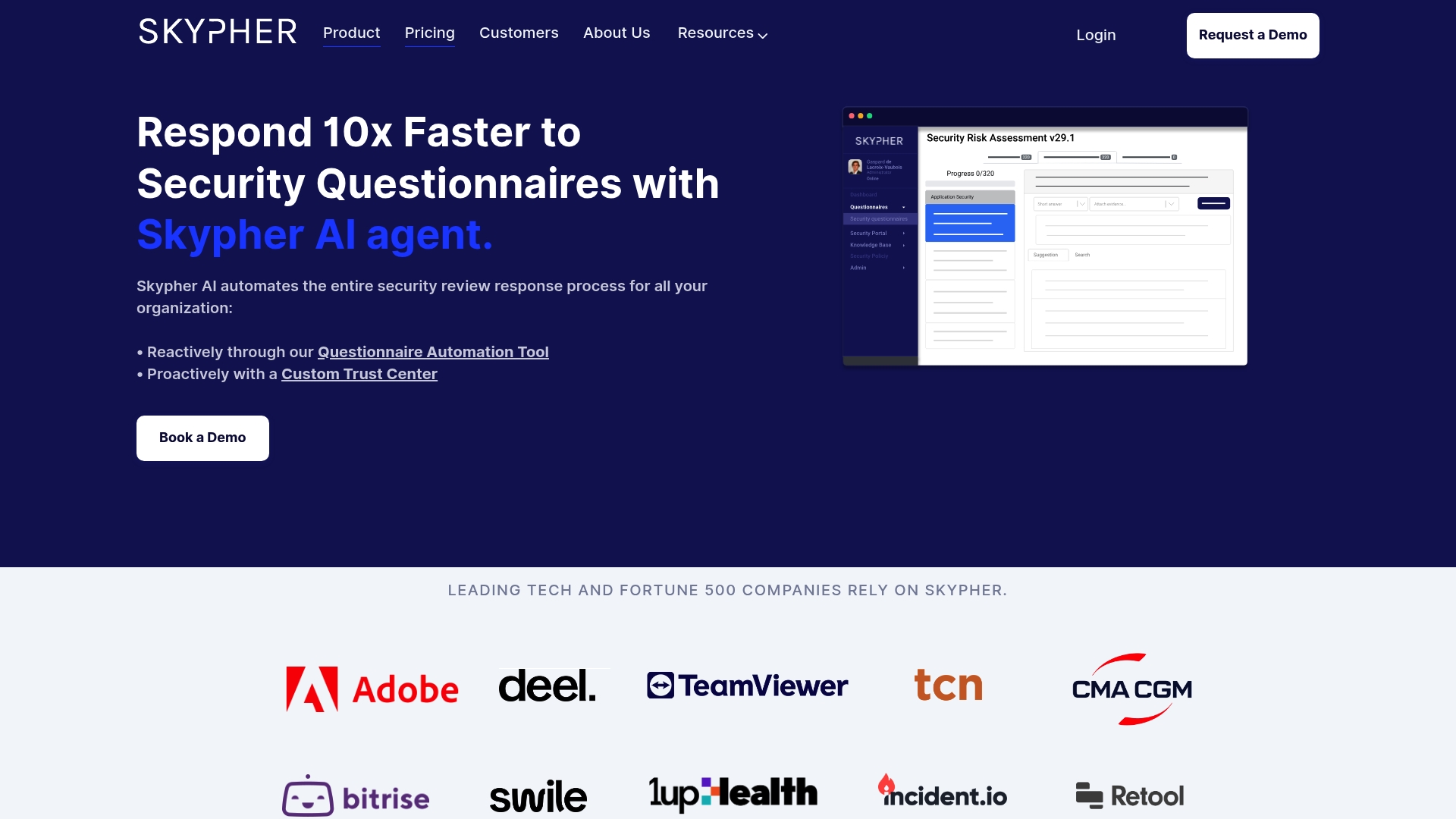
Experience a transformation in operational productivity with Skypher:
- Real-Time Collaboration: Keep your team aligned with seamless communication.
- Custom Trust Center: Tailor your security responses to reflect your unique brand.
- Integrations with 40+ Platforms: Effortlessly connect with popular risk management tools like Slack and ServiceNow to remain agile.
Why wait? Revolutionize your security questionnaire process today! Visit https://skypher.co and discover how our solutions can elevate your organization, ensuring you’re equipped to handle security with the speed and professionalism your clients expect. Don't just keep up—get ahead today!