

The acronym SAQ can mean different things depending on where you see it. In education, it often stands for Short Answer Question, a format gaining traction for its ability to evaluate student understanding effectively. But here's the kicker: while many believe SAQs come with ease, they actually demand critical thinking and articulation skills that can challenge even the brightest students. This unexpected twist positions SAQs as not just a grading tool, but as a method that fosters deeper learning and comprehension.
What Does SAQ Stand For?
SAQ is an acronym that represents different meanings across various fields and contexts. The interpretation of SAQ largely depends on the specific industry, academic discipline, or organizational setting in which it's used. Understanding what SAQ stands for is essential for proper communication within these specialized environments.
Common SAQ Meanings in Education
In educational settings, SAQ most frequently stands for Short Answer Question. Short Answer Questions are a popular assessment format that requires students to provide concise, focused responses to specific prompts. Unlike multiple-choice questions that test recognition, SAQs evaluate a student's ability to recall information and articulate it clearly in their own words.
Educators value SAQs because they strike a balance between the depth of essay questions and the efficiency of objective tests. When designing an SAQ test, instructors typically expect responses ranging from a few sentences to a paragraph. The SAQ format allows for more authentic assessment of student understanding while remaining manageable to grade in large classes.
The SAQ meaning in this context also extends to standardized testing, where Short Answer Questions serve as an important component of many high-stakes exams. Students preparing for these assessments often practice the SAQ format to develop their ability to provide precise, relevant answers within tight word limits.
SAQ in Business and Compliance
In the business world, particularly in payment card processing and data security, SAQ stands for Self-Assessment Questionnaire. This meaning of SAQ refers to validation tools that merchants and service providers use to demonstrate compliance with the Payment Card Industry Data Security Standard (PCI DSS).
The Self-Assessment Questionnaire version of SAQ helps organizations evaluate their security posture without requiring a full on-site assessment. Different types of SAQs exist based on how businesses handle payment card data. Completing the appropriate SAQ is often mandatory for merchants who want to accept credit card payments.
SAQ in Retail and Alcohol Distribution
In certain regions, particularly in Canada, SAQ is the abbreviation for Société des alcools du Québec (Quebec Alcohol Corporation). This is Quebec's provincial Crown corporation responsible for the trade of alcoholic beverages within the province. When people in this region refer to "the SAQ," they're typically talking about these government-run liquor stores.
Other SAQ Definitions
Beyond these common meanings, SAQ can also represent:
- Software Assurance Qualification in technology and development circles
- Statistical Analysis Questionnaire in research and data science
- Seldom Asked Questions as a humorous variation of FAQ (Frequently Asked Questions)
- Speed, Agility, and Quickness in sports training methodologies
When encountering the term SAQ in professional documentation, academic materials, or casual conversation, it's important to consider the context to determine the intended meaning. The definition can vary significantly across different fields, making context crucial for proper interpretation of what SAQ stands for in any given situation.
Key Takeaways
| Takeaway | Explanation |
|---|---|
| SAQs Enhance Critical Thinking | Short Answer Questions require students to articulate knowledge, promoting deeper understanding and retention compared to multiple-choice assessments. |
| SAQs Improve Efficiency in Business Compliance | Self-Assessment Questionnaires streamline compliance evaluations, reducing costs and time while allowing organizations to proactively address gaps. |
| Flexibility Across Fields | SAQs can be tailored for different disciplines such as education, business, and healthcare, serving varied assessment or compliance needs effectively. |
| Importance of Clear Design | Effective SAQs depend on well-defined prompts, clear expectations, and comprehensive rubrics, ensuring consistent evaluation in educational settings. |
| Data-Driven Improvement | Analyzing SAQ results can identify trends and areas for growth, facilitating informed decision-making in both educational and organizational contexts. |

History and Evolution of SAQ
The concept of SAQ (Short Answer Questions) has evolved significantly over the decades, transitioning from simple assessment tools to sophisticated educational instruments that serve various pedagogical purposes. Understanding this evolution provides valuable context for educators and students alike who engage with this format regularly.
Early Origins in Educational Assessment
The roots of Short Answer Questions can be traced back to the early 20th century when educational assessment began to become more standardized and scientific. Before multiple-choice questions gained widespread popularity, educators relied on open-ended questions that required students to produce rather than merely recognize information. These early SAQs were primarily used to test factual recall and basic understanding of concepts.
In the 1930s and 1940s, as educational testing became more systematic, SAQs began to take on a more defined structure. Educators recognized the value of questions that fell between the extensive effort required for essay questions and the limited cognitive demands of true/false or multiple-choice formats. This middle ground allowed for assessment of deeper understanding while maintaining reasonable grading efficiency.
Technological Influences on SAQ Development
The evolution of SAQ formats accelerated with technological advancements. The introduction of computers in educational assessment during the 1970s and 1980s initially favored multiple-choice questions due to the limitations of early automated scoring systems. However, as natural language processing capabilities improved in the 1990s and 2000s, automated scoring of short answer responses became increasingly feasible.
This technological progress enabled wider implementation of SAQs in large-scale assessments and standardized tests. The digital transformation of education has continued to shape how SAQs are administered, completed, and evaluated, making them more accessible and efficient for both educators and students.
SAQ in Modern Educational Frameworks
In contemporary education, SAQs have evolved beyond simple recall questions to become sophisticated tools that assess various levels of cognitive skills. Modern SAQ development has been influenced by educational taxonomies like Bloom's Revised Taxonomy, which categorizes thinking skills from remembering and understanding to analyzing and creating. This has expanded the scope of what SAQs can assess, moving beyond knowledge recall to evaluate application, analysis, and even evaluation skills.
The integration of SAQs into formative assessment strategies represents another significant development. Rather than serving solely as summative evaluation tools, SAQs now frequently function as learning activities that help students organize their thoughts and receive targeted feedback. This shift reflects broader pedagogical trends toward active learning and constructivist approaches to education.
Self-Assessment Questionnaires in Business Compliance
Parallel to educational developments, the concept of Self-Assessment Questionnaires (also abbreviated as SAQ) emerged in the business and compliance sectors. These gained particular prominence in the late 1990s and early 2000s as industries developed standardized frameworks for security, quality assurance, and regulatory compliance.
Notably, the Payment Card Industry Data Security Standard (PCI DSS), established in 2004, popularized the SAQ approach for merchants handling credit card transactions. This framework introduced various SAQ formats tailored to different business models and risk profiles, establishing a methodology that would later influence self-assessment practices across multiple industries.
Contemporary Applications and Future Directions
Today, both educational SAQs and business-oriented Self-Assessment Questionnaires continue to evolve in response to changing needs and technological capabilities. In education, the rise of artificial intelligence and machine learning has created new possibilities for automated scoring systems that can provide more nuanced feedback on short answer responses, potentially transforming how these questions are used in both classroom and online learning environments.
In the business sector, Self-Assessment Questionnaires have become increasingly sophisticated, often incorporating risk-based approaches and integration with other compliance frameworks. The growing emphasis on data privacy, cybersecurity, and environmental sustainability has expanded the application of SAQs into new domains, reflecting their versatility as tools for standardized evaluation across diverse contexts.
SAQ Uses Across Different Fields
The acronym SAQ finds application across numerous professional domains, with each field adapting the concept to serve specific purposes. This versatility demonstrates how a single framework can be tailored to meet diverse organizational and educational needs. Let's explore how SAQs function within various disciplines and industries.
Education and Academic Assessment
In educational contexts, Short Answer Questions (SAQs) serve as a fundamental assessment tool. Unlike multiple-choice questions that test recognition, SAQs require students to retrieve information from memory and articulate it concisely. This format evaluates both content knowledge and expressive ability, making it particularly valuable for subjects requiring conceptual understanding.
Educators appreciate SAQs for their ability to balance depth of assessment with grading efficiency. The format works effectively across disciplines—from humanities courses evaluating critical thinking to science classes testing technical comprehension. Many standardized tests incorporate SAQs as a middle ground between objective questions and full essays.
Recent advancements in educational technology have enhanced the utility of SAQs. According to research on automated evaluation tools, new frameworks like SAQUET (Scalable Automatic Question Usability Evaluation Toolkit) are improving how we assess question quality, achieving over 94% accuracy in identifying design flaws compared to human evaluators Automatic Question Evaluation. While this research focuses primarily on multiple-choice questions, similar principles are being applied to short answer formats, signaling a technological evolution in how SAQs are created and evaluated.
Business Compliance and Security
In the business sector, Self-Assessment Questionnaires (SAQs) play a crucial role in regulatory compliance, particularly in payment processing and data security. The Payment Card Industry Data Security Standard (PCI DSS) employs SAQs as essential tools for merchants to validate their compliance status. These structured questionnaires help businesses evaluate their security practices against industry standards without requiring full third-party audits.
Different types of SAQs exist based on how organizations handle payment data:
- SAQ A: For card-not-present merchants with fully outsourced payment processing
- SAQ B: For merchants using imprint machines or standalone terminals
- SAQ C: For merchants with payment systems connected to the internet
- SAQ D: For service providers and merchants not qualifying for other SAQ types
Beyond payment security, similar self-assessment frameworks have been adopted in other regulatory domains, including healthcare (HIPAA compliance), data privacy (GDPR readiness), and cybersecurity (NIST framework implementation). These applications demonstrate how the SAQ methodology provides a standardized approach to complex compliance requirements.
Healthcare and Medical Education
In healthcare settings, SAQs serve multiple functions. Medical education extensively uses Short Answer Questions to evaluate clinical knowledge and diagnostic reasoning. These questions typically present patient scenarios and require students to provide specific diagnostic conclusions or treatment recommendations.
Beyond education, Self-Assessment Questionnaires help healthcare facilities evaluate their adherence to quality standards and regulatory requirements. Hospitals and clinics use specialized SAQs to conduct internal audits of their processes, covering everything from infection control protocols to patient privacy practices.
Medical researchers also employ structured questionnaires (often referred to as SAQs) for data collection in clinical studies. These instruments gather standardized information from patients or healthcare providers, ensuring consistency in how symptoms, treatments, or outcomes are reported across study participants.
Software Quality Assurance
In the technology sector, particularly software development, SAQ commonly refers to Software Assurance Quality processes. These systematic approaches ensure that software products meet specified requirements and function reliably. SAQ methodologies in this context typically involve structured testing protocols, code reviews, and validation procedures.
Software quality assurance engineers use various forms of SAQs to verify compliance with development standards and identify potential vulnerabilities. These professionals must possess strong communication skills, critical thinking abilities, and technical knowledge to effectively implement quality assurance protocols across development teams.

The adaptability of SAQs across these diverse fields highlights their value as flexible frameworks that can be customized to meet specific assessment or compliance needs. Whether evaluating student knowledge, business security practices, healthcare protocols, or software quality, the SAQ approach provides a structured methodology that balances comprehensive evaluation with practical implementation.
Benefits of SAQ Usage
The implementation of SAQs across various fields offers substantial advantages that contribute to their widespread adoption. Whether utilized as Short Answer Questions in education or Self-Assessment Questionnaires in business, SAQs deliver benefits that enhance assessment accuracy, learning outcomes, and operational efficiency.
Enhanced Critical Thinking and Knowledge Application
One of the primary advantages of Short Answer Questions in educational settings is their ability to promote higher-order thinking skills. Unlike multiple-choice questions that primarily test recognition, SAQs require students to retrieve information from memory, analyze concepts, and articulate their understanding in their own words. This active recall process strengthens neural connections associated with the learned material, leading to better long-term retention.
SAQs effectively bridge the gap between simple recognition questions and complex essay writing. They challenge students to engage deeply with the subject matter while maintaining a focused scope that prevents cognitive overload. Research on interactive learning platforms shows that incorporating SAQs into educational presentations significantly improves student engagement and learning outcomes compared to passive learning approaches.
Reduced Guessing and More Authentic Assessment
In assessment contexts, SAQs substantially decrease the possibility of correct answers through random guessing. While multiple-choice questions offer a 20-25% chance of selecting the correct option by chance alone (in a typical 4-5 option format), SAQs require genuine knowledge production. This makes SAQs a more authentic and reliable indicator of student understanding.
The format also reveals misconceptions and knowledge gaps more effectively. When students must generate answers rather than recognize them, their responses often expose partial understandings or conceptual errors that might remain hidden in recognition-based assessments. This diagnostic value helps educators identify specific areas where additional instruction is needed.
Improved Efficiency in Business Compliance
In the business sector, Self-Assessment Questionnaires offer a streamlined approach to regulatory compliance. Rather than requiring costly third-party audits for every business process, SAQs provide a structured framework for organizations to evaluate their own practices against established standards. This creates several efficiency benefits:
- Reduced compliance costs through self-directed evaluation
- Faster assessment completion compared to full external audits
- Ability to identify and address compliance gaps before formal review
- Scalable implementation across organizations of different sizes
For payment card processing specifically, the PCI DSS self-assessment framework saves merchants significant time and resources while maintaining security standards. The tiered approach, with different SAQ versions based on business models, ensures that organizations complete only the evaluations relevant to their specific operations.
Flexibility and Adaptability Across Contexts
SAQs demonstrate remarkable adaptability across different fields and purposes. The format can be customized to assess various types of knowledge and skills:
- In science courses: testing factual recall and conceptual understanding
- In humanities: evaluating interpretive skills and critical analysis
- In professional training: assessing procedural knowledge and decision-making
- In compliance: verifying adherence to specific standards and protocols
This flexibility extends to implementation methods as well. SAQs can be delivered through traditional paper-based formats, digital learning platforms, or specialized compliance software. The digital transformation of SAQs has expanded their utility, enabling features like automated scoring, immediate feedback, and data analytics to track performance trends.
Balanced Cognitive Load and Time Management
SAQs strike an optimal balance in terms of cognitive demands and time requirements. For students, the format requires sufficient cognitive engagement to demonstrate understanding without the extensive time commitment of essay questions. This makes SAQs particularly valuable for comprehensive assessments that need to cover broad content areas within reasonable time constraints.
For educators, SAQs offer a middle ground in grading effort. They provide richer assessment data than multiple-choice questions while being significantly more efficient to evaluate than lengthy essays or reports. This balanced approach allows for more frequent assessment opportunities throughout a course, supporting continuous learning and feedback.
Data Collection and Organizational Improvement
Beyond individual assessment, SAQs generate valuable data that can drive organizational improvement. In educational institutions, patterns in SAQ responses help identify curriculum strengths and weaknesses. In business settings, aggregated SAQ results highlight compliance trends and risk areas across departments or locations.
This data-driven insight supports informed decision-making about resource allocation, training needs, and process improvements. The standardized nature of SAQs facilitates comparative analysis over time, allowing organizations to track progress and measure the effectiveness of implemented changes.
Tips for Implementing SAQ
Successful implementation of SAQ systems—whether as Short Answer Questions in education or Self-Assessment Questionnaires in business—requires thoughtful planning and execution. The following strategies can help organizations maximize the effectiveness of their SAQ implementations while avoiding common pitfalls.
Designing Effective Educational SAQs
For educators implementing Short Answer Questions in academic settings, design considerations significantly impact assessment quality. Start by clearly defining the specific knowledge or skills you aim to evaluate. Well-crafted SAQs should target precise learning objectives rather than testing general recall.
When writing SAQ prompts, use clear, unambiguous language that guides students toward the expected level of detail. Phrases like "briefly explain," "identify three factors," or "summarize the key points" help communicate response expectations. Consider including word count guidelines to further clarify the desired scope and depth.
Develop a comprehensive rubric or scoring guide before administering SAQs. This preparation ensures consistent evaluation across responses and streamlines the grading process. An effective rubric should identify key concepts that must appear in complete answers and establish criteria for partial credit when responses are incomplete.
Finally, test your questions with colleagues or a small sample group before full implementation. This validation step helps identify ambiguities in wording or unexpected interpretations that might confuse students.
Implementing Business Self-Assessment Questionnaires
For organizations implementing Self-Assessment Questionnaires for compliance or quality assurance, preparation is equally important. Begin by selecting the appropriate SAQ framework for your specific industry requirements. Many regulated industries have standardized SAQ templates (like PCI DSS for payment processing), while others may require customized approaches.
Before full deployment, conduct thorough staff training on both the content of the SAQ and the purpose behind the assessment. This education helps ensure accurate responses and builds organizational buy-in. Designate specific roles and responsibilities for SAQ completion, including subject matter experts who can address technical questions.
Establish a clear timeline with defined milestones for SAQ completion, documentation collection, and remediation planning. Building adequate time for these activities prevents rushed responses that might miss critical compliance gaps. Consider implementing a phased approach for complex organizations, starting with high-risk departments or processes.
Leverage technology solutions to streamline SAQ administration. Digital platforms can automate distribution, track completion status, store supporting documentation, and generate compliance reports. These tools enhance efficiency while creating an audit trail of assessment activities.
Creating a Culture of Honest Self-Assessment
The effectiveness of any SAQ implementation depends heavily on honest, accurate responses. In educational settings, communicate to students that SAQs are valuable learning tools, not just evaluation mechanisms. Emphasize that identifying knowledge gaps helps target further study and improves long-term mastery.
In business contexts, leadership must actively promote a culture where honest self-assessment is valued over artificial compliance. Research on security attitudes indicates that organizational culture significantly influences how employees engage with security measures and assessments behavioral factors in cybersecurity. Leaders should demonstrate that identifying and addressing gaps improves organizational resilience rather than assigning blame.
Consider implementing anonymous feedback mechanisms alongside formal SAQs to capture concerns that might not emerge through official channels. This approach can reveal systemic issues that individuals might hesitate to document in attributed responses.
Integrating SAQs into Broader Systems
To maximize value, integrate SAQ processes with existing organizational systems rather than treating them as isolated activities. In educational environments, align SAQ assessments with curriculum development and student feedback mechanisms. Use SAQ results to identify topics requiring additional instruction or alternative teaching approaches.
In business settings, connect SAQ findings with risk management frameworks, training programs, and continuous improvement initiatives. This integration ensures that identified gaps drive meaningful organizational change rather than existing solely as documented findings.
Consider implementing regular review cycles for your SAQ frameworks themselves. As organizational needs evolve and external requirements change, SAQ content should be periodically evaluated for relevance and effectiveness.
Analyzing and Acting on SAQ Results
Collecting SAQ data is only valuable if the information drives action. Establish systematic processes for analyzing responses to identify patterns, trends, and priority areas for improvement. In educational contexts, look beyond individual student performance to evaluate question effectiveness and curriculum alignment.
Develop clear protocols for addressing gaps identified through SAQs. This might include remediation plans for compliance issues, curriculum adjustments for educational programs, or process improvements for operational assessments. Assign specific ownership for follow-up actions with defined timelines and accountability measures.
Circle back to stakeholders with summaries of findings and planned actions. This transparency demonstrates the value of the SAQ process and encourages continued engagement. In educational settings, providing students with aggregated results helps them understand common misconceptions and validates the assessment purpose.
By thoughtfully implementing these strategies, organizations can transform SAQs from simple assessment tools into powerful drivers of continuous improvement across educational and business environments.
Frequently Asked Questions
What does SAQ stand for?
SAQ can stand for different things depending on the context. In education, it primarily refers to Short Answer Question, while in business it often means Self-Assessment Questionnaire.
How do Short Answer Questions (SAQs) differ from multiple-choice questions?
Unlike multiple-choice questions that test recognition, Short Answer Questions require students to produce their answers in their own words, promoting deeper understanding and critical thinking skills.
Why are Self-Assessment Questionnaires (SAQs) important in business?
Self-Assessment Questionnaires help organizations evaluate their compliance with standards like the Payment Card Industry Data Security Standard (PCI DSS) without needing full audits, thus saving time and costs.
How can educators design effective SAQs for assessments?
When designing SAQs, educators should create clear prompts that target specific learning objectives, provide a scoring rubric for consistent evaluation, and consider testing questions with peers before full implementation.
Transform Your Security Assessment Process with Skypher
Understanding the intricate nature of Short Answer Questions (SAQs), as discussed in our guide, is crucial for any organization striving for clarity and efficiency in assessments. However, we recognize that manually handling these assessments—whether they’re for regulatory compliance or internal quality checks—can often feel overwhelming and time-consuming. Are you often bogged down by lengthy security questionnaires that stifle productivity?
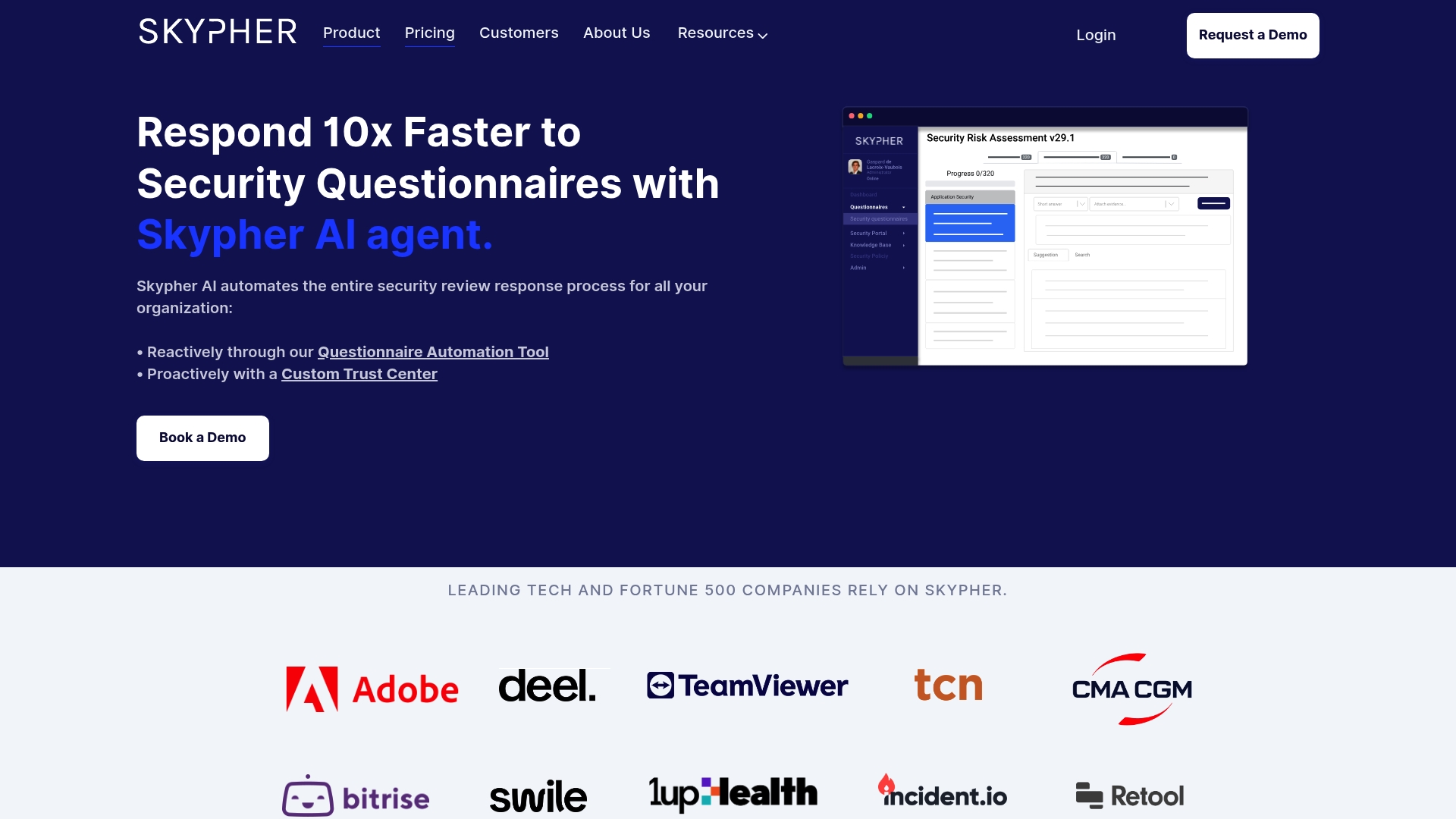
Meet Skypher, your ultimate ally in revolutionizing how you tackle security questionnaires. Our AI Questionnaire Automation Tool not only streamlines the response process but also enhances the clarity of your communication, ensuring that you meet compliance standards without the usual headaches. Why choose Skypher?
- Significantly reduce time spent on questionnaire completion
- Achieve higher accuracy with our intelligent automation
- Collaborate in real-time and integrate seamlessly with over 40+ risk management platforms
Don't let manual processes slow you down any longer. Act now! Join the ranks of businesses that trust Skypher to improve their security posture and operational efficiency. Visit https://skypher.co today and transform your questionnaire response processes for the better!