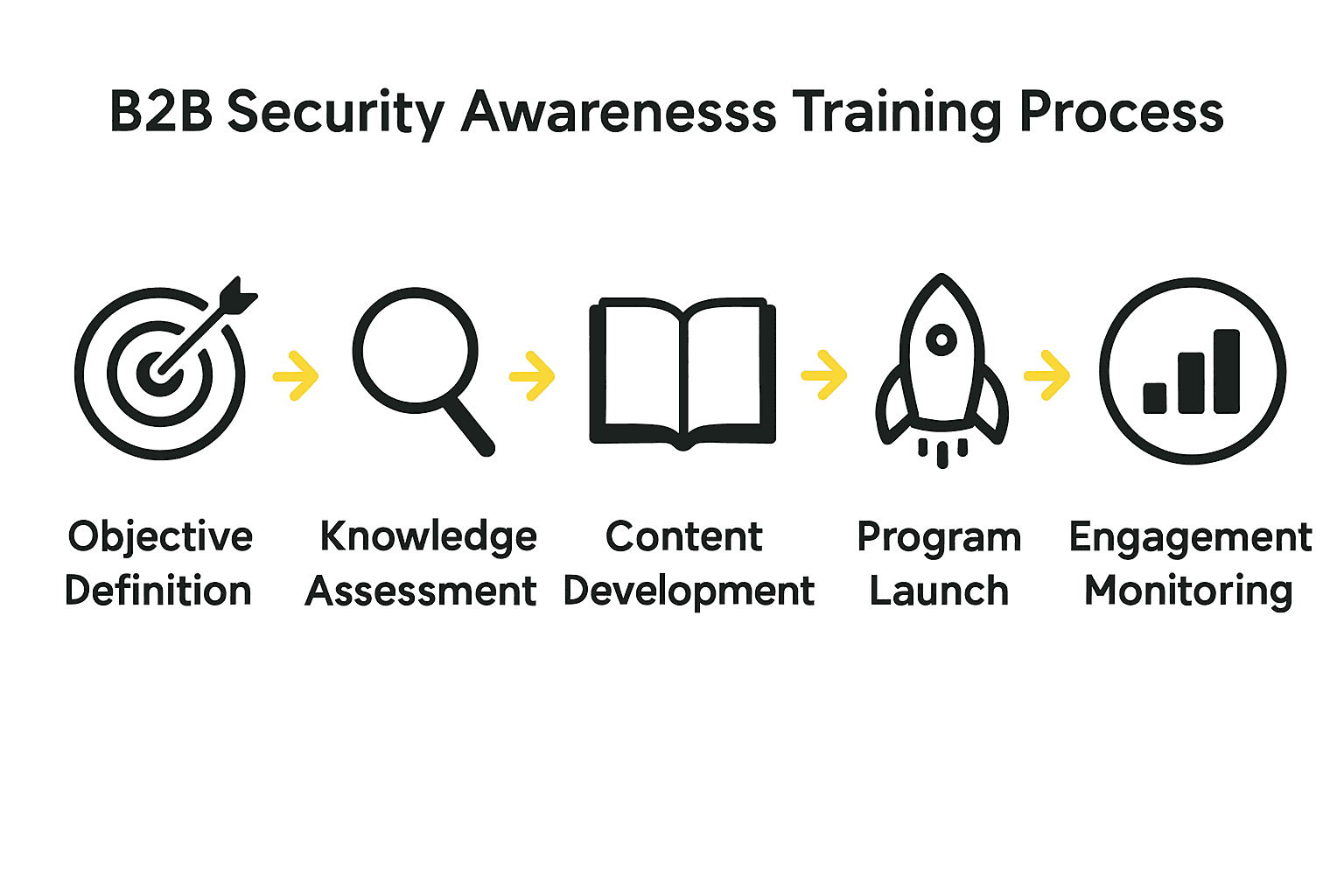
Did you know that over 80 percent of data breaches involve human error? This eye-opening figure highlights just how crucial effective security awareness training has become for every organization. When threats move faster and attack methods constantly evolve, businesses need a smarter way to turn employees into their strongest defense. You will discover proven methods to define, deliver, and measure security training that truly changes behavior.
Quick Summary
| Key Point | Explanation |
|---|---|
| 1. Define Specific Training Objectives | Clearly outline measurable goals to address unique security vulnerabilities in your organization. |
| 2. Assess Current Knowledge Gaps | Evaluate employee understanding through structured assessments and identify vulnerability patterns. |
| 3. Develop Engaging Training Materials | Create interactive content tailored to your team's unique security challenges for better engagement. |
| 4. Monitor Participation and Feedback | Track completion rates and employee feedback to measure program effectiveness and areas for improvement. |
| 5. Verify Impact with Testing | Use testing and analytics to measure behavioral changes and improvements in security posture after training. |
Table of Contents
- Step 1: Define Security Awareness Training Objectives
- Step 2: Assess Current Knowledge and Risk Areas
- Step 3: Develop Tailored Training Materials and Sessions
- Step 4: Launch Training Program Across Teams
- Step 5: Monitor Engagement and Gather Feedback
- Step 6: Verify Impact with Testing and Analytics
Step 1: Define Security Awareness Training Objectives
In this critical first step, you will map out precisely what your organization wants to achieve through security awareness training. Think of this as creating a strategic roadmap that transforms your team from potential security vulnerabilities into proactive cyber defenders.
Start by understanding your specific risk landscape. According to SecuriTribe, effective programs aim to reduce human risk factors by comprehensively educating staff on the latest phishing trends and cyberattack vectors. This means your objectives should go beyond generic compliance and focus on practical, actionable knowledge.
Begin by conducting an internal assessment of your organization's unique security challenges. Review past incident reports, analyze recent cybersecurity trends relevant to your industry, and identify the most common entry points for potential breaches. Are your biggest risks related to email phishing? Social engineering? Weak password practices? Each sector and company will have different priority areas.
Your training objectives should be specific and measurable. Instead of vague goals like "improve security awareness," craft precise targets such as:
Here's a summary of key objectives and recommended measurement metrics for successful security awareness training:
| Objective | Example Goal | Measurement Metric |
|---|---|---|
| Reduce Phishing Risk | 40% fewer phishing clicks | Phishing simulation click rate |
| Increase Incident Reporting | 60% increase in reports | Incident reporting frequency |
| Achieve Compliance | 100% training completion | Staff completion rate |
| Build Security Culture | Long-term behavior change | Employee survey results<br>Policy compliance |
• Reduce successful phishing click rates by 40% within six months • Increase employee reporting of suspicious activities by 60% • Ensure 100% staff completion of mandatory security modules
Pro Tip: Align your security awareness training objectives directly with broader organizational compliance requirements. For businesses handling sensitive data, this means creating objectives that specifically address frameworks like GDPR or HIPAA.
Remember that your objectives are not just about preventing incidents but building a resilient security culture. You want employees who understand the "why" behind security protocols, not just mechanically following rules.
As you finalize your objectives, prepare to transition into designing a comprehensive training curriculum that will bring these goals to life. The next step will involve translating these strategic objectives into practical, engaging learning experiences that resonate with your team.
Step 2: Assess Current Knowledge and Risk Areas
In this crucial stage, you will conduct a comprehensive evaluation of your organization's current cybersecurity knowledge baseline and identify potential vulnerabilities. Think of this step as performing a diagnostic scan that reveals exactly where your team stands in terms of security awareness and readiness.
According to SANS Institute, specialized knowledge assessment tools can help you systematically identify gaps in cybersecurity understanding and benchmark risk scores across core human risk areas. These tools are not just generic tests but precision instruments that enable you to create highly targeted training strategies.
Start by implementing a structured assessment approach. KnowBe4 recommends using a Security Awareness Proficiency Assessment that provides baseline measurements across multiple knowledge domains. This means you will want to design or select an assessment that covers key areas such as phishing recognition, password management, social engineering awareness, and incident reporting protocols.
Your assessment should include multiple evaluation methods:
• Online knowledge quizzes testing theoretical understanding • Simulated phishing email tests to measure practical response • Anonymous surveys exploring employee perceptions of security practices • Review of past security incident reports
Pro Tip: Ensure your assessment feels collaborative, not punitive. Frame it as a team improvement initiative rather than an individual performance evaluation.
Pay special attention to identifying patterns. Are there specific departments showing higher risk profiles? Do certain roles demonstrate consistent knowledge gaps? Understanding these nuanced insights will help you customize your training approach.

Read more about creating targeted security assessments for GRC professionals to refine your evaluation strategy.
As you complete this assessment, you will transition into the critical next phase of designing a tailored security awareness curriculum that addresses the specific knowledge and risk areas you have uncovered. The goal is not just to test but to transform your team's security mindset.
Step 3: Develop Tailored Training Materials and Sessions
Now you will transform your risk assessment insights into compelling learning experiences that actually change employee behavior. This step is about creating training materials that speak directly to your organization's unique security challenges and engage your team in meaningful ways.
According to SecuriTribe, the most effective security awareness programs leverage interactive delivery methods like micro-learning sessions and scenario-based simulations to improve knowledge retention and practical application. This means moving far beyond traditional slideshow presentations into dynamic learning experiences.
Start by segmenting your training content based on the knowledge gaps you identified during your assessment. Different departments or roles might require nuanced approaches. A technical team might need deeper technical cybersecurity content, while customer-facing staff might benefit from more social engineering focused materials.
Your training materials should include:
• Short video modules demonstrating real world attack scenarios • Interactive quizzes with immediate feedback • Role-specific case studies • Practical demonstration of security protocols • Quick reference guides for immediate application
Pro Tip: Make your training materials feel like a conversation, not a lecture. Use storytelling techniques that help employees emotionally connect with cybersecurity concepts.
Learn how GRC professionals can enhance security training strategies by incorporating engaging learning approaches.
Remember that your goal is not just information transfer but behavior change. Design scenarios that feel authentic and relevant to your employees daily work experiences. When training feels personal and practical, engagement and retention dramatically improve.
As you complete your training materials, you will be ready to move into the implementation phase where these carefully crafted learning experiences will be rolled out across your organization.
The next step involves strategic deployment and tracking of your security awareness program.Step 4: Launch Training Program Across Teams
This is the moment where your meticulously designed security awareness strategy transforms from planning to action. You will now roll out your training program strategically across different teams ensuring maximum engagement and minimal disruption to daily workflows.
According to Security Awareness Training, an effective continuous training approach involves interactive online modules of 10 to 15 minutes that focus on practical exercises. These short bursts of targeted learning prevent information overload and maintain employee interest.
As recommended by B2B Ecosystem, launching successfully requires setting clear success measures and tracking both participation and behavioral metrics. This means creating a structured rollout plan that considers each team's unique working style and learning preferences.
Begin by scheduling initial training sessions with leadership endorsement. Their visible support signals the program's organizational importance. Customize content delivery based on team roles create specialized modules for technical staff, customer service representatives, and management.
Your launch strategy should include:
• Phased implementation across departments • Flexible learning time slots • Multiple content format options • Clear communication about program objectives • Mechanism for ongoing feedback
Pro Tip: Design your launch communication to generate excitement. Frame security training as an empowerment opportunity rather than a compliance requirement.
Discover advanced strategies for GRC professionals implementing security training to maximize program effectiveness.
Implement monthly simulations and short quizzes to reinforce learning and maintain engagement. Track participation rates and knowledge improvement to demonstrate the program's tangible value.
As you complete the launch phase, prepare to transition into continuous monitoring and refinement of your security awareness program. The next step involves establishing robust measurement mechanisms to ensure ongoing improvement and adaptability.
Step 5: Monitor Engagement and Gather Feedback
You have launched your security awareness training program and now comes the critical phase of understanding its real impact. This step is about transforming raw data into actionable insights that will continuously improve your organization's security culture.
According to Proofpoint, key metrics for evaluating your program extend far beyond simple completion rates. You will want to track nuanced indicators like user reporting rates, vulnerability levels, and actual behavioral changes in response to potential security threats.
As recommended by B2B Ecosystem, collecting staff input requires a strategic approach. Design anonymous surveys that dive deep into program perceptions exploring dimensions like material relevance, content clarity, and staff confidence in applying learned skills.
Your monitoring strategy should capture:
• Participation and completion percentages • Simulated phishing test performance • Incident reporting frequency • Employee sentiment and perceived value • Knowledge retention rates
Pro Tip: Make feedback mechanisms feel conversational and low stakes. Employees are more likely to provide honest insights when they do not feel judged.
Learn how to streamline your security assessment processes to enhance data collection efficiency.
Consider implementing quarterly review sessions where you share aggregated insights with leadership. This demonstrates the tangible value of your security awareness initiative and maintains organizational commitment.
As you complete this monitoring phase, you will be ready to enter the refinement stage where you will use these insights to evolve and strengthen your security awareness program. The next step involves strategic adaptation based on the feedback and metrics you have gathered.
Step 6: Verify Impact with Testing and Analytics
In this critical phase, you will transform your security awareness program from a theoretical exercise into a measurable, data-driven strategy. Your goal is to validate the real world effectiveness of your training and demonstrate tangible security improvements across your organization.
According to Proofpoint, measuring effectiveness goes beyond simple completion rates. You need to track nuanced behavioral changes, benchmark against industry standards, and monitor comprehensive metrics that reveal genuine security posture improvements.
As recommended by B2B Ecosystem, establishing quantitative key performance indicators is crucial. These metrics will help you objectively assess your training program's impact and identify areas requiring further development.
Your verification strategy should include:
• Phishing simulation click-through rate reductions • Incident reporting accuracy and frequency • Policy compliance percentage • User vulnerability score improvements • Time to report potential security events
Pro Tip: Treat these metrics as conversation starters with leadership. Numbers tell a story about your organization's security culture.
Learn advanced techniques for streamlining security assessments that can enhance your testing approach.
Conduct periodic comprehensive assessments that simulate real world scenarios. These tests will reveal not just knowledge retention but actual behavioral adaptation. Remember that true security awareness is demonstrated through consistent, thoughtful actions.
As you complete this verification phase, you will be prepared to enter a continuous improvement cycle. The insights gathered will inform future training iterations and help you build a resilient security awareness program that evolves with emerging cyber threats.
Transform Security Awareness Into Action With Skypher
Building a strong security culture is not just about effective training. As your teams work to identify risks, improve knowledge, and build proactive habits, a crucial challenge still remains: translating this new awareness into real organizational change—especially when handling complex security questionnaires and third-party risk reviews. Many tech and finance teams find that manual responses slow down sales cycles, introduce human error, and put compliance at risk. Precision, speed, and collaboration become essential as your business grows.
Imagine empowering your security-aware teams with an AI-driven automation platform that simplifies every step of your security review process. Skypher takes your security maturity to the next level by turning team knowledge into fast, accurate, and seamless responses. With our questionnaire automation capabilities, real-time collaboration, and robust integration with tools like Slack and ServiceNow, you ensure every questionnaire is handled with confidence and consistency. See how our solutions can make your security awareness program truly actionable and position your company as a trusted partner in every deal.
Ready to put your training into practice? Visit Skypher now and close gaps between security learning and business success.
Frequently Asked Questions
How can I define security awareness training objectives for my B2B team?
To define security awareness training objectives, start by assessing your organization's specific risk landscape and identifying common security vulnerabilities. Set measurable goals, such as reducing phishing click rates by 40% within six months or increasing incident reporting by 60%.
What methods should I use to assess my team's current knowledge of cybersecurity?
You can assess your team's current cybersecurity knowledge by implementing structured evaluations such as online quizzes, simulated phishing tests, and anonymous surveys to gauge employee perceptions. Aim for a comprehensive understanding of knowledge gaps and risk areas to customize your training program effectively.
How do I develop tailored training materials for my B2B team?
To develop tailored training materials, segment your content based on the unique knowledge gaps identified earlier and consider the different roles within your team. Include engaging elements like short video modules and interactive quizzes to keep employees interested and improve knowledge retention.
What is the best way to launch a security awareness training program across multiple teams?
Launch your program gradually by scheduling initial training sessions and customizing content based on team roles. Use clear communication to highlight the program’s objectives and design it to be interactive, ensuring employees can engage without overwhelming their day-to-day responsibilities.
How can I monitor the effectiveness of my security awareness training program?
Monitor effectiveness by tracking metrics such as participation rates, phishing test performance, and incident report frequency. Collect anonymous feedback from employees to gauge program perception and make improvements based on this data continuously.
What metrics should I use to verify the impact of security awareness training?
To verify your training's impact, focus on metrics like reductions in phishing click rates, accuracy in incident reporting, and overall policy compliance percentages. Conduct regular assessments to measure behavioral adaptations, ensuring you adapt your training program to evolving security threats.