
Security ISO standards are now shaping how companies defend their information and build trust with their customers. Over 60 percent of organizations worldwide rely on these frameworks to manage cybersecurity risks and meet strict compliance demands. But many still believe ISO standards are only about technical checklists and paperwork. In reality, their true strength lies in creating a culture of security that adapts and grows with every new threat on the horizon.
Table of Contents
- Understanding Key Security ISO Standards
- Benefits of Implementing Security ISO Standards
- Steps to Achieve Security ISO Standards Compliance
- Latest Trends in Security ISO Standards for 2025
Quick Summary
| Takeaway | Explanation |
|---|---|
| Security ISO Standards Offer Structured Frameworks | Security ISO standards provide systematic methodologies for organizations to identify vulnerabilities and implement effective security measures, tailored to their specific contexts. |
| Comprehensive Risk Management is Key | Implementing security ISO standards enables organizations to proactively identify risks, develop mitigation strategies, and maintain consistent security protocols for better protection of assets. |
| Continuous Improvement is Essential for Compliance | Achieving ISO standards compliance is an ongoing process that requires regular audits, risk assessments, and adaptive security practices to stay ahead of emerging threats. |
| Integration of Advanced Technologies is a Trend | The future of security ISO standards will increasingly leverage AI and machine learning to enhance threat detection, predictive risk management, and behavioral analytics. |
| Holistic Approaches to Privacy and Security | Organizations must integrate privacy considerations with security frameworks, emphasizing privacy-by-design principles and transparent data handling protocols for comprehensive protection. |
Understanding Key Security ISO Standards
Security ISO standards serve as critical blueprints for organizations seeking robust cybersecurity frameworks. These internationally recognized guidelines provide comprehensive strategies for managing information security risks and protecting sensitive digital assets.
What Are Security ISO Standards?
Security ISO standards represent systematic approaches to managing information security risks developed by the International Organization for Standardization (ISO). These standards offer organizations structured methodologies for identifying vulnerabilities, implementing protective measures, and maintaining consistent security protocols.
According to the National Institute of Standards and Technology, these standards provide comprehensive frameworks that help organizations develop strategic approaches to cybersecurity management. Unlike generic recommendations, these standards offer precise, actionable guidelines tailored to different organizational contexts.
Key ISO Standards in Information Security
Several critical ISO standards form the backbone of information security management. The most prominent among these are:
- ISO/IEC 27001: Focuses on establishing information security management systems (ISMS)
- ISO/IEC 27002: Provides practical security control recommendations
- ISO/IEC 27005: Addresses information security risk management techniques
Research from the journal Electronics highlights that these standards are not merely theoretical constructs but practical tools for cybersecurity professionals. They offer structured approaches to identifying, assessing, and mitigating potential security threats across various technological environments.
Implementation and Compliance Strategies
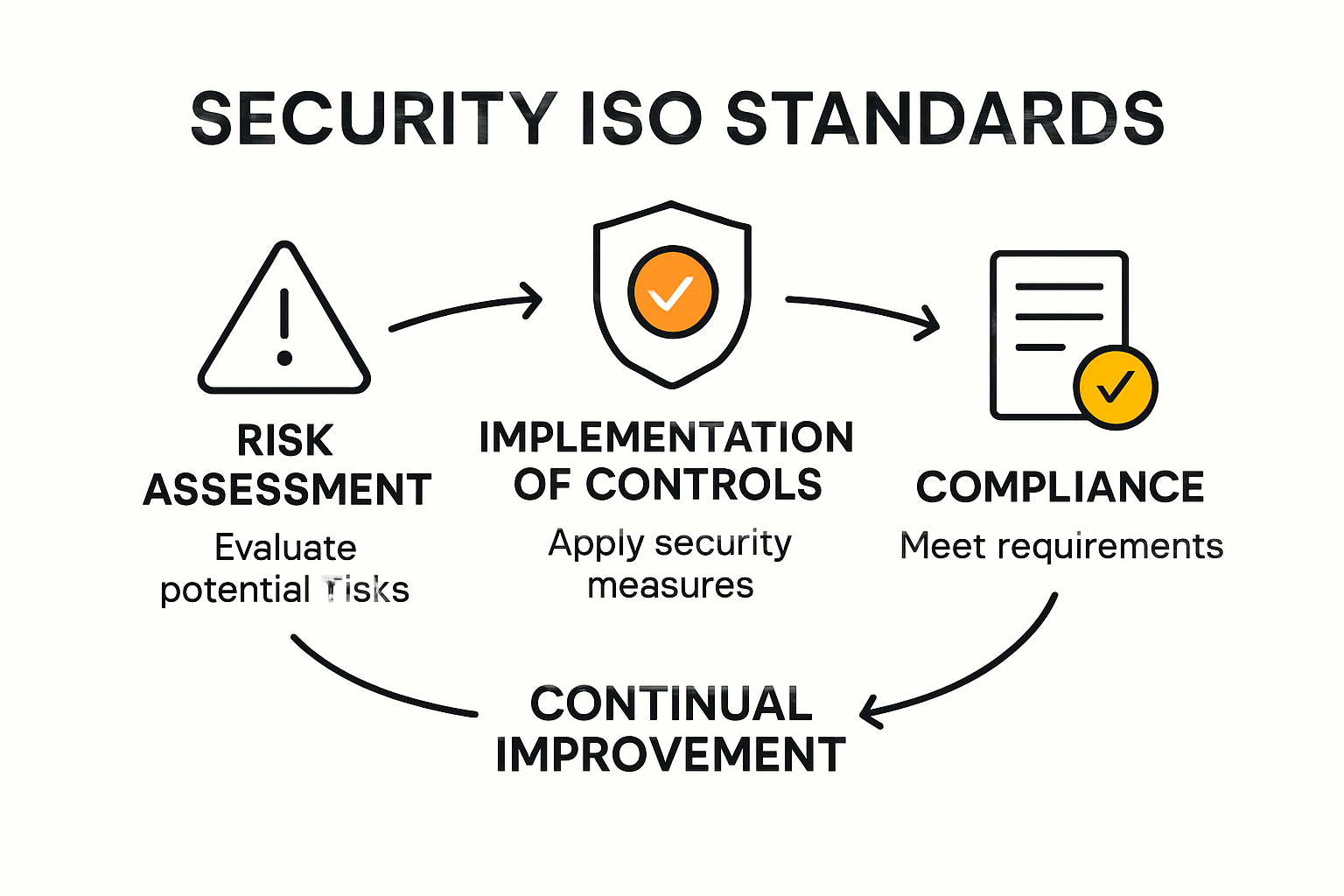
Successful implementation of security ISO standards requires a strategic and systematic approach. Organizations must first conduct comprehensive risk assessments, then develop tailored security protocols aligned with specific ISO guidelines. This process involves multiple critical steps:
- Conduct a thorough organizational security assessment
- Identify potential vulnerabilities and risk areas
- Develop targeted mitigation strategies
- Implement robust security controls
- Continuously monitor and update security frameworks
The Computer Security Resource Center emphasizes that effective standard implementation goes beyond mere compliance. It requires a holistic approach that integrates technological solutions, human expertise, and ongoing organizational learning.
By adopting these rigorous ISO standards, organizations can create resilient security ecosystems that adapt to evolving digital threats while maintaining comprehensive protection for their most valuable digital assets.
To help readers compare the main security ISO standards discussed, the following table summarizes their key focus areas and purposes:
| Standard | Key Focus | Purpose |
|---|---|---|
| ISO/IEC 27001 | Information Security Management System (ISMS) | Establish a comprehensive framework for managing information security risk and processes |
| ISO/IEC 27002 | Security Controls | Provide best practice recommendations for information security controls |
| ISO/IEC 27005 | Risk Management | Guide organizations in identifying, assessing, and mitigating information security risks |
Benefits of Implementing Security ISO Standards
Implementing security ISO standards transforms organizational cybersecurity from a reactive approach to a proactive strategic framework. These internationally recognized guidelines offer comprehensive advantages that extend far beyond basic compliance requirements.
Enhanced Organizational Risk Management
Security ISO standards provide a systematic methodology for identifying, assessing, and mitigating potential security risks. According to IT Governance, implementing an Information Security Management System (ISMS) creates a centralized framework that enables organizations to comprehensively manage information security challenges.
Organizations adopting these standards experience significant improvements in their risk management capabilities. By establishing structured processes and clear protocols, companies can:
- Proactively Identify Vulnerabilities: Systematically map potential security weaknesses
- Develop Strategic Mitigation Strategies: Create targeted approaches for addressing identified risks
- Implement Consistent Security Controls: Establish uniform protection mechanisms across different organizational domains

Regulatory Compliance and Customer Trust
Compliance with security ISO standards demonstrates an organization's commitment to robust data protection. Cyber Matters highlights that maintaining ISO compliance significantly enhances an organization's data protection measures, leading to fewer security incidents and improved operational efficiency.
The benefits extend beyond internal improvements. Organizations gain critical advantages in customer perception and market positioning:
- Increased Customer Confidence: Visible commitment to rigorous security standards
- Competitive Differentiation: Demonstrate superior security practices compared to non-compliant competitors
- Reduced Legal and Financial Risks: Minimize potential breaches and associated penalties
To provide a concise view of the main benefits of implementing security ISO standards, here's a summary table:
| Benefit | Description |
|---|---|
| Enhanced Risk Management | Systematic identification, assessment, and mitigation of risks |
| Regulatory Compliance | Meets global and industry security requirements |
| Increased Customer Trust | Demonstrates commitment to data protection and security |
| Competitive Market Advantage | Differentiates the organization from non-compliant competitors |
| Continuous Improvement and Adaptation | Fosters a proactive, security-aware organizational culture |
Continuous Improvement and Organizational Culture
ISO security standards are not static documents but dynamic frameworks that promote continuous improvement. Security Boulevard emphasizes that ISO 27001 compliance creates a systematic approach to threat management, fostering an environment of ongoing security awareness and adaptation.
Implementation of these standards catalyzes significant cultural transformations within organizations:
- Develop a security-conscious workforce
- Establish clear communication protocols
- Create accountability mechanisms
- Promote proactive risk management thinking
By embracing security ISO standards, organizations do more than protect their digital assets. They build resilient, adaptive systems that can respond effectively to the complex and ever-evolving cybersecurity landscape, ensuring long-term sustainability and protection.
Steps to Achieve Security ISO Standards Compliance
Achieving security ISO standards compliance requires a systematic and strategic approach that transforms organizational cybersecurity practices. Organizations must navigate a complex process that demands comprehensive planning, rigorous implementation, and continuous improvement.
Initial Preparation and Assessment
The first critical phase of achieving security ISO standards compliance involves comprehensive preparation and organizational assessment. According to Security Boulevard, organizations must start by clearly defining their security objectives and determining the specific scope of their compliance efforts.
Key initial steps include:
- Conduct Comprehensive Risk Assessment: Identify potential vulnerabilities across technological and operational domains
- Define Clear Security Boundaries: Determine which systems, processes, and data require protection
- Establish Baseline Security Metrics: Create benchmarks for measuring current security performance
This foundational stage requires organizations to take a holistic view of their existing security infrastructure, understanding current strengths and potential weaknesses before developing targeted improvement strategies.
Developing and Implementing Security Controls
Stitchflow highlights the critical importance of establishing a robust Information Security Management System (ISMS) as a central component of ISO standards compliance. This involves creating a comprehensive framework of policies, procedures, and technical controls designed to protect organizational assets.
Effective implementation requires organizations to:
- Document existing security policies
- Identify gaps in current security practices
- Develop targeted control mechanisms
- Create clear implementation roadmaps
- Establish monitoring and reporting protocols
Successful control implementation goes beyond mere technical solutions. It demands a cultural transformation that embeds security consciousness throughout the organization.
Continuous Verification and Improvement
Compliance with security ISO standards is not a one-time achievement but an ongoing process of verification, assessment, and continuous improvement. Organizations must develop robust mechanisms for:
- Regular internal audits
- Periodic risk reassessments
- Continuous monitoring of security controls
- Rapid adaptation to emerging technological threats
The most successful organizations treat ISO standards compliance as a dynamic journey rather than a static destination. They create flexible frameworks that can quickly evolve in response to changing technological landscapes and emerging security challenges.
By following these structured steps, organizations can transform their approach to information security, moving from reactive protection to proactive risk management. The journey towards ISO standards compliance becomes a strategic opportunity to build more resilient, secure, and technologically sophisticated organizational ecosystems.
To clarify the ISO compliance process, the following table summarizes the core steps and their primary objectives:
| Step | Main Objective |
|---|---|
| Initial Preparation and Assessment | Define security objectives, risk assessment, and set scope |
| Developing and Implementing Controls | Establish security policies, close gaps, implement controls |
| Continuous Verification and Improvement | Audit, monitor, reassess, and adapt to new threats |
Latest Trends in Security ISO Standards for 2025
The cybersecurity landscape is rapidly evolving, and security ISO standards are transforming to address emerging technological challenges and sophisticated threat environments. As we approach 2025, organizations must understand the critical shifts that will define information security management strategies.
Integration of Advanced Technologies
The National Institute of Standards and Technology highlights the increasing convergence of advanced technologies within security frameworks. Artificial intelligence and machine learning are becoming central to developing more adaptive and predictive security controls.
Key technological integration trends include:
- Automated Threat Detection: AI-powered systems that identify and respond to potential security risks in real-time
- Predictive Risk Management: Machine learning algorithms that anticipate potential vulnerabilities before they emerge
- Enhanced Behavioral Analytics: Advanced systems that can detect anomalous user behaviors across complex digital environments
These technological advancements represent a significant shift from reactive to proactive security management, enabling organizations to stay ahead of increasingly sophisticated cyber threats.
Expanded Supply Chain and Cloud Security Requirements
International Organization for Standardization reports significant updates focusing on comprehensive supply chain and cloud security protocols. Organizations must now consider security risks that extend beyond their immediate technological infrastructure.
Emerging focus areas include:
- Comprehensive vendor risk assessment methodologies
- Detailed cloud service security evaluations
- Enhanced third-party security verification processes
- Stringent data protection requirements for distributed computing environments
This expanded approach recognizes that modern cybersecurity cannot be confined to organizational boundaries but must account for complex interconnected technological ecosystems.
Privacy and Compliance Integration
The future of security ISO standards demonstrates a profound integration of privacy considerations within broader security frameworks. Organizations will need to develop more holistic approaches that simultaneously address security and privacy requirements.
Critical developments in this area involve:
- Implementing privacy-by-design principles
- Creating transparent data handling protocols
- Developing granular consent management systems
- Establishing robust individual data rights mechanisms
By embracing these emerging trends, organizations can develop more resilient, adaptive security strategies that not only protect against current threats but anticipate future technological challenges. The security ISO standards of 2025 will demand a more comprehensive, technologically sophisticated approach to information protection.
Frequently Asked Questions
What are Security ISO Standards?
Security ISO standards are systematic frameworks developed by the International Organization for Standardization (ISO) to manage information security risks effectively. They provide organizations with structured methodologies for identifying vulnerabilities and implementing security measures tailored to their unique contexts.
Why is implementing Security ISO Standards important for organizations?
Implementing Security ISO Standards is crucial as they enhance organizational risk management, ensure regulatory compliance, and build customer trust. These standards provide comprehensive frameworks that help organizations proactively identify and mitigate risks, ultimately safeguarding sensitive information and assets.
How can organizations achieve compliance with Security ISO Standards?
To achieve compliance with Security ISO Standards, organizations should follow a structured approach including initial preparation and assessment, developing and implementing security controls, and establishing continuous verification and improvement protocols. This process ensures a proactive stance towards managing cybersecurity risks.
What are the latest trends in Security ISO Standards for 2025?
The key trends in Security ISO Standards for 2025 include the integration of advanced technologies like AI and machine learning, expanded supply chain and cloud security requirements, and a stronger focus on integrating privacy within security frameworks. These trends emphasize a more comprehensive and proactive approach to information security.
Transform ISO Compliance Challenges Into Seamless Success With Skypher
Achieving and maintaining security ISO standards can feel overwhelming. Many companies struggle with repetitive questionnaire responses, complex integrations, and the pressure to prove compliance quickly to demanding customers. If navigating regulatory hurdles and keeping up with evolving frameworks like ISO 27001 leaves your team stretched thin or causes delays in sales and partnerships, know that you are not alone.
Skypher is here to help you turn best-practice frameworks into lived security culture without drowning in manual questionnaires. Our Questionnaire Automation Tool leverages AI to make security reviews faster, more accurate, and less stressful for your entire organization. Explore how seamless integrations and real-time collaboration support ongoing ISO compliance efforts and free up your experts to focus on what matters most. Visit Skypher now and see how you can stay ahead of 2025’s compliance landscape while building trust with every stakeholder.