
Answering security questionnaires and proving compliance can drain valuable time and energy from any team. Some tools claim to make this process smarter by using artificial intelligence and centralizing critical information, but the details can vary in surprising ways. What really makes the difference between a drawn out review and a smooth, efficient experience? The answer depends on the approach each solution takes to automation, collaboration, and managing sensitive data. Uncover which features matter most and how modern platforms are shaping the way companies handle security reviews today.
Table of Contents
Skypher
At a Glance
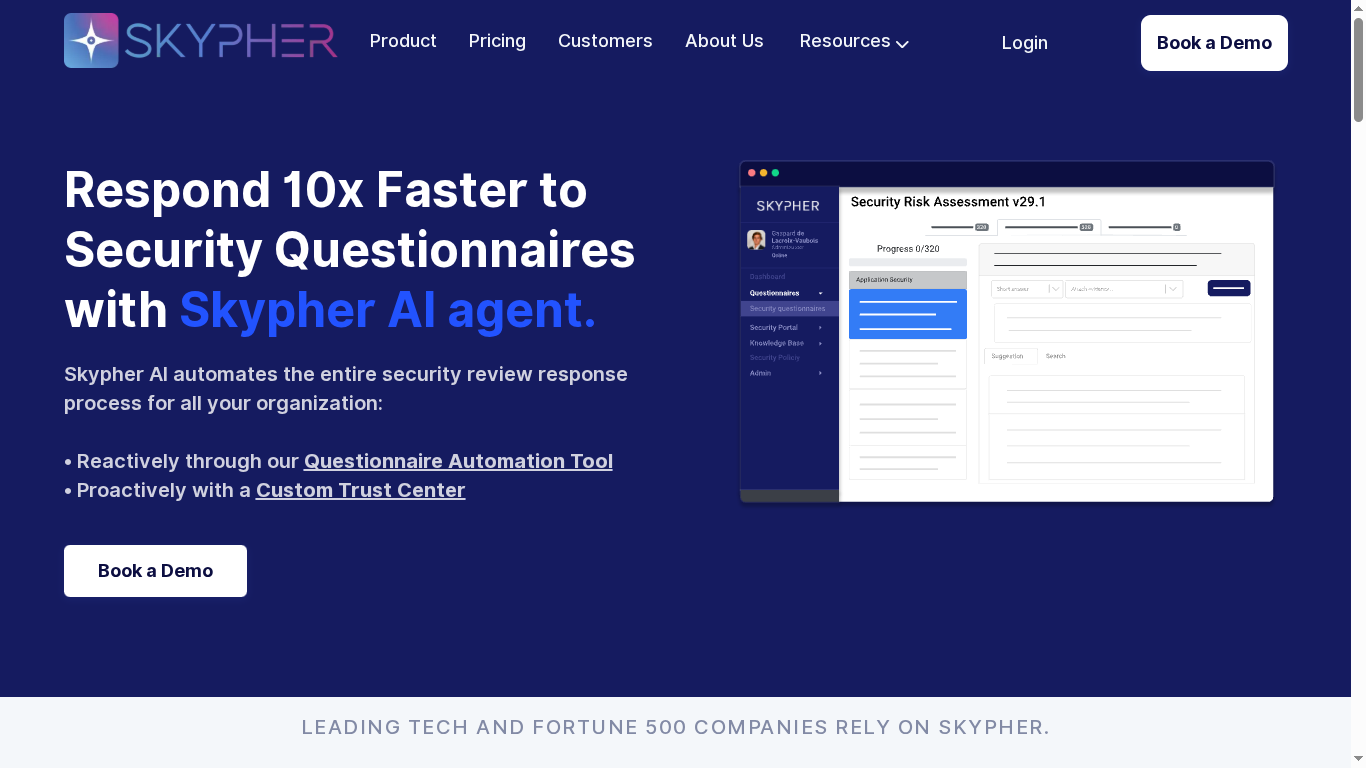
Skypher is an AI-powered security questionnaire automation platform built to accelerate and simplify responses to complex security questionnaires. It promises up to 10x faster completion by automating the heavy lifting, centralizing security content, and aligning security, sales, and solutions teams. The bottom line: if your organization spends days or weeks on questionnaire back-and-forths, Skypher is designed to cut that time dramatically and improve customer trust during negotiations.
Core Features
Skypher’s core capabilities focus on automation, centralization, and sales enablement. The platform uses AI to automate security questionnaire responses so teams can complete complex reviews autonomously. It consolidates and manages security content—knowledge bases, documents, and external sources—within a single platform, making information findable and reusable. Importantly, Skypher explicitly targets the cross-functional workflow between security, sales, and solutions teams to speed sales cycles and strengthen client relationships during security reviews and contract negotiations.
Pros
- Dramatically faster questionnaire turnaround: Skypher’s AI automation is designed to reduce response time up to 10x, letting teams move from days to hours or even minutes on repetitive reviews.
- Reduced manual effort through automation: The platform automates the security review process, which lowers manual work and minimizes human error during repetitive answers.
- Centralized security content management: All security data—knowledge base articles, documents, and external sources—are stored and connected in one place for consistent, auditable responses.
- Improves client trust and sales momentum: By speeding security reviews and clarifying responses, Skypher helps sales teams keep deal timelines intact and communicates competence to customers.
- Collaboration with granular access controls: The product supports collaboration across teams while enabling control over who can view or edit sensitive security content.
Who It's For
Skypher is ideal for security, sales, and solutions engineering teams within medium to large organizations—especially in tech and finance—who regularly face long, complex security questionnaires and must demonstrate cybersecurity posture to customers. If you manage compliance requests, run POCs, or negotiate contracts where security confidence influences buying decisions, Skypher is built for your workflow.
Unique Value Proposition
Skypher’s unique value lies in combining enterprise-grade content centralization with AI-driven automation targeted specifically at the questionnaire problem. That combination means your teams stop reinventing answers for every RFI and instead rely on a single trusted source of truth that can autonomously produce consistent responses at scale. The ripple effects are clear: fewer bottlenecks, faster POCs and contract cycles, and measurable improvements in customer trust during negotiations. Design-wise, Skypher expects integration with your existing security data systems and relies on AI accuracy—intentional choices that favor enterprise control and continuous improvement over one-size-fits-all shortcuts.
Real World Use Case
A solutions engineering team uses Skypher to cut questionnaire turnaround from days to hours, improving response accuracy and freeing engineers to focus on technical demos rather than repetitive paperwork. The result: faster deal progression and a higher win rate in competitive procurement processes.
Pricing
Quote-based — Flexible pricing with custom quotes available after consultation.
Website: https://skypher.co
SafeBase by Drata
At a Glance
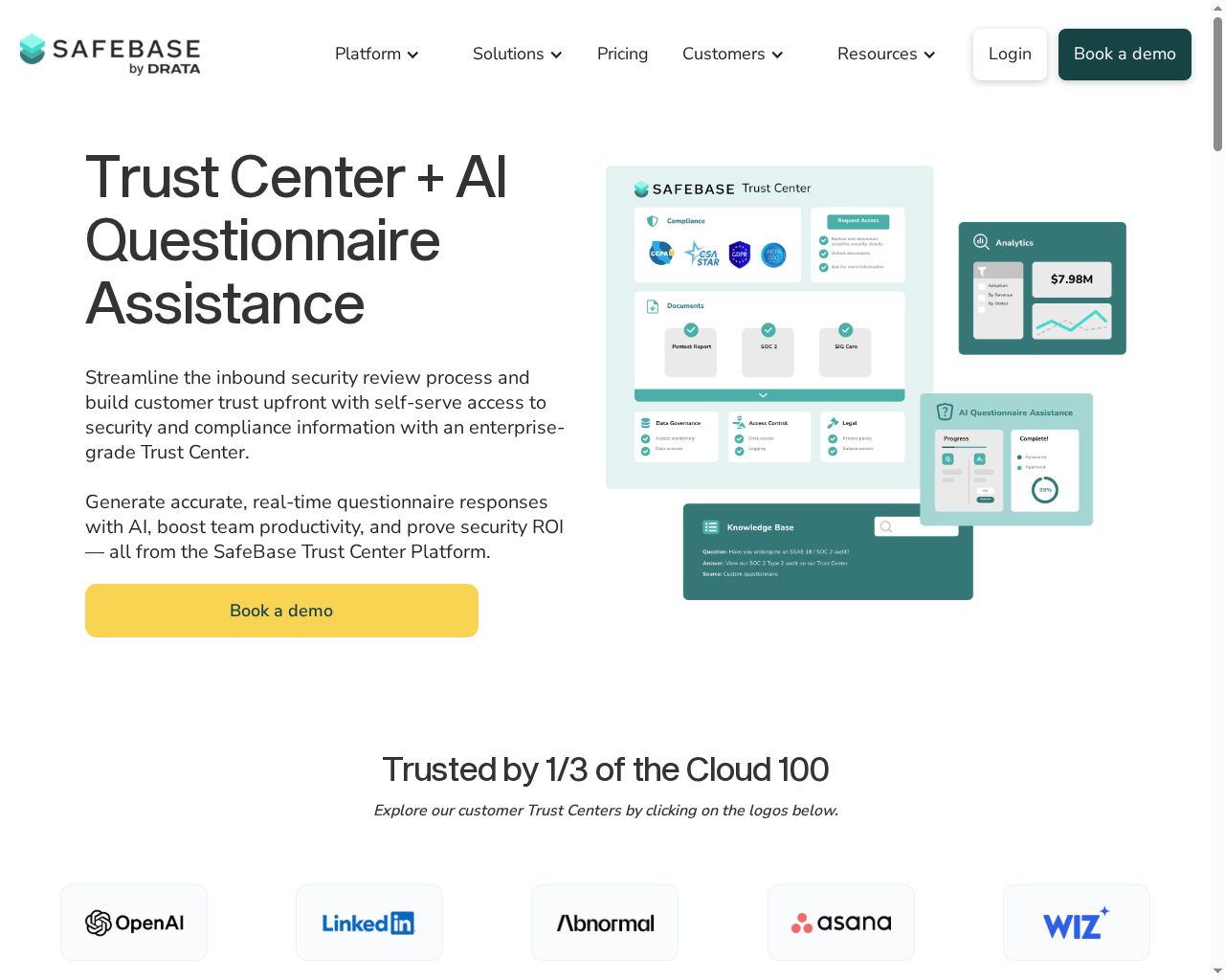
SafeBase by Drata is a trust center platform built to streamline inbound security reviews and accelerate questionnaire responses with AI assistance. It combines self-serve security portals, branded trust centers, and analytics to help security teams demonstrate ROI and reduce repetitive work. For mid-to-large organizations that field frequent security inquiries, SafeBase is a practical option that shifts many manual touchpoints to a searchable, customer-facing experience.
Core Features
SafeBase offers self-serve access to security and compliance information, AI-assisted questionnaire responses for faster and more accurate answers, and branded trust centers with customizable URLs to present your security posture professionally. It integrates with common workflow and CRM tools—Slack, Teams, Jira, Salesforce—and exposes analytics dashboards that track security-related revenue and buyer engagement metrics. Those capabilities make it a combined communications and automation platform for inbound security workflows.
Pros
- Automates questionnaire responses, saving time and effort: The AI assistance and self-serve portal significantly reduce manual answering and repetitive work.
- Builds customer trust with a scalable trust center: Branded, customizable portals let you present policies, reports, and certificates without one-off exports.
- Integrates with popular workflow and CRM tools: Native connections to Slack, Teams, Jira, and Salesforce let teams embed security signals into existing processes.
- Provides detailed analytics to measure security impact: Dashboards focused on buyer engagement and security-related revenue help quantify security team contributions.
- Offers flexible plans for different organization sizes: Available options range from a free Start plan to enterprise-tier offerings that scale with needs.
Cons
- Complexity and feature breadth may be overwhelming for small teams or simple use cases: The platform’s capabilities assume a level of process maturity that smaller teams might not need.
- Pricing details are not fully transparent on the site: Because enterprise pricing requires direct contact, budget planning can be slower and may demand sales conversations.
- Could be costly for smaller organizations depending on scale: The combination of advanced features and enterprise integration can make the platform less economical for very small teams.
Who It's For
SafeBase is best suited for mid to large enterprises—particularly SaaS and technology companies—with recurring inbound security requests and a need to centralize compliance artifacts. Security, GRC, and sales teams that want to speed RFP responses, reduce manual toil, and present a professional, branded security portal will extract the most value.
Unique Value Proposition
SafeBase differentiates by combining an external-facing trust center with AI-assisted questionnaire automation and analytics focused on buyer engagement and revenue impact. That blend turns security documentation from static assets into measurable business assets.
Real World Use Case
A SaaS company uses SafeBase to give customers a self-serve portal listing policies, compliance certificates, and security reports, while AI-assisted workflows reduce questionnaire turnaround from hours to minutes—freeing security engineers to focus on remediation and product security.
Pricing
Free tier available for basic needs; enterprise options are quote-based and require contacting SafeBase for specific pricing.
Website: https://safebase.io
Whistic
At a Glance
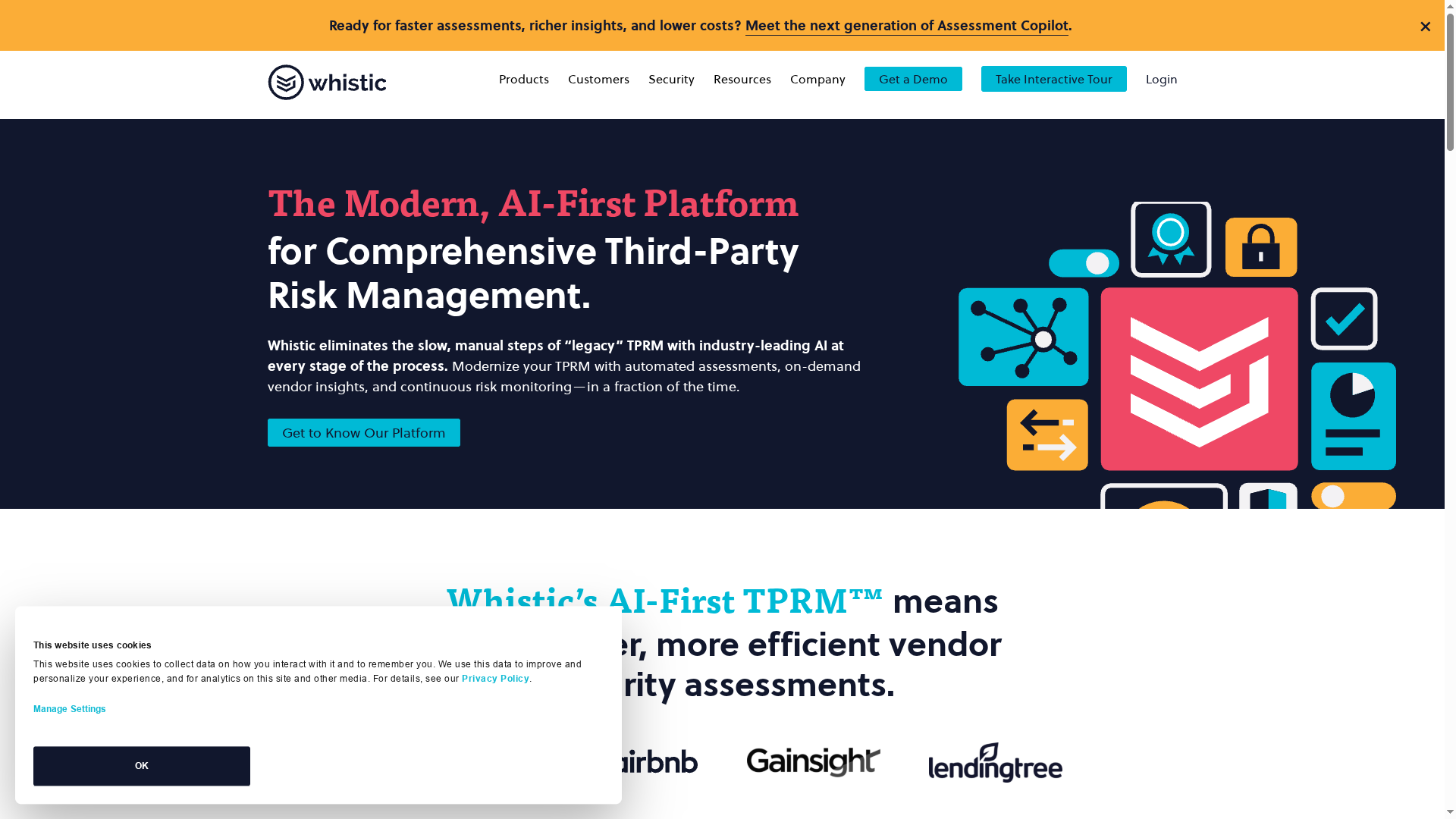
Whistic is an AI-first third-party risk management (TPRM) platform that eliminates many manual steps in vendor assessments and continuous monitoring. It bundles automated assessments, on-demand vendor insights, and ongoing risk tracking into a single workflow to accelerate decision-making. If you need to move from spreadsheet-driven reviews to an AI-enabled process that summarizes evidence and shortens cycles, Whistic delivers measurable speed and clarity.
Core Features
Whistic’s core capabilities focus on automation and continuous visibility across the vendor lifecycle. The platform uses AI to automate assessments and questionnaire responses, surface on-demand vendor insights from trust centers and audit reports, and maintain continuous risk monitoring. It supports access to 50+ questionnaires and frameworks and provides a unified space for vendor onboarding, assessment, and ongoing risk management. In short: automated intake, AI-powered summarization, and persistent monitoring all in one place.
Pros
- Speeds assessment cycles dramatically: Whistic can reduce weeks or months of manual work down to minutes by automating assessment steps and summaries.
- Automates report summarization: The platform automatically generates responses and condensed summaries for artifacts like SOC 2 reports, saving analyst hours.
- Customizable, comprehensive workflows: It offers tools and workflows that teams can tailor to their governance and compliance needs, improving repeatability.
- Easier security posture sharing: Teams can publish and share vendor security posture information more consistently, reducing back-and-forth during procurement.
- Deep AI integration: AI is embedded throughout the assessment lifecycle, enhancing efficiency and making the process more innovative and data-driven.
Cons
- Customized pricing model: Pricing is quote-based and requires contacting Whistic for details, which can slow procurement planning.
- Initial setup required: Organizations may need time and technical effort to configure the platform and integrate AI tools and data sources effectively.
- Advanced features add complexity or cost: Some advanced customizations and AI licenses appear to add cost or implementation complexity for larger deployments.
Who It's For
Whistic is best for medium to large enterprises and teams—infosec, risk, compliance, procurement—facing high volumes of vendor assessments or complex regulatory demands. If your organization needs to scale third-party security reviews without sacrificing rigor, Whistic is tailored to those operational needs and governance controls.
Unique Value Proposition
Whistic’s unique value is its AI-first approach combined with a unified TPRM workflow: onboarding, assessment, and continuous monitoring in a single platform. This reduces manual evidence wrangling, speeds decision cycles, and turns disparate vendor signals into actionable risk insights.
Real World Use Case
A financial services firm used Whistic to summarize SOC 2 reports in minutes, dramatically cutting manual review time and increasing assessment throughput. The result: faster vendor decisions, reduced analyst workload, and improved ongoing risk posture management.
Pricing
Quote-based; customized pricing with potential packages such as Whistic Core, Assess, and Trust Center Pro, plus options for additional assessments and AI licenses. Contact Whistic for detailed quotes.
Website: https://whistic.com
SafeBase by Drata
At a Glance
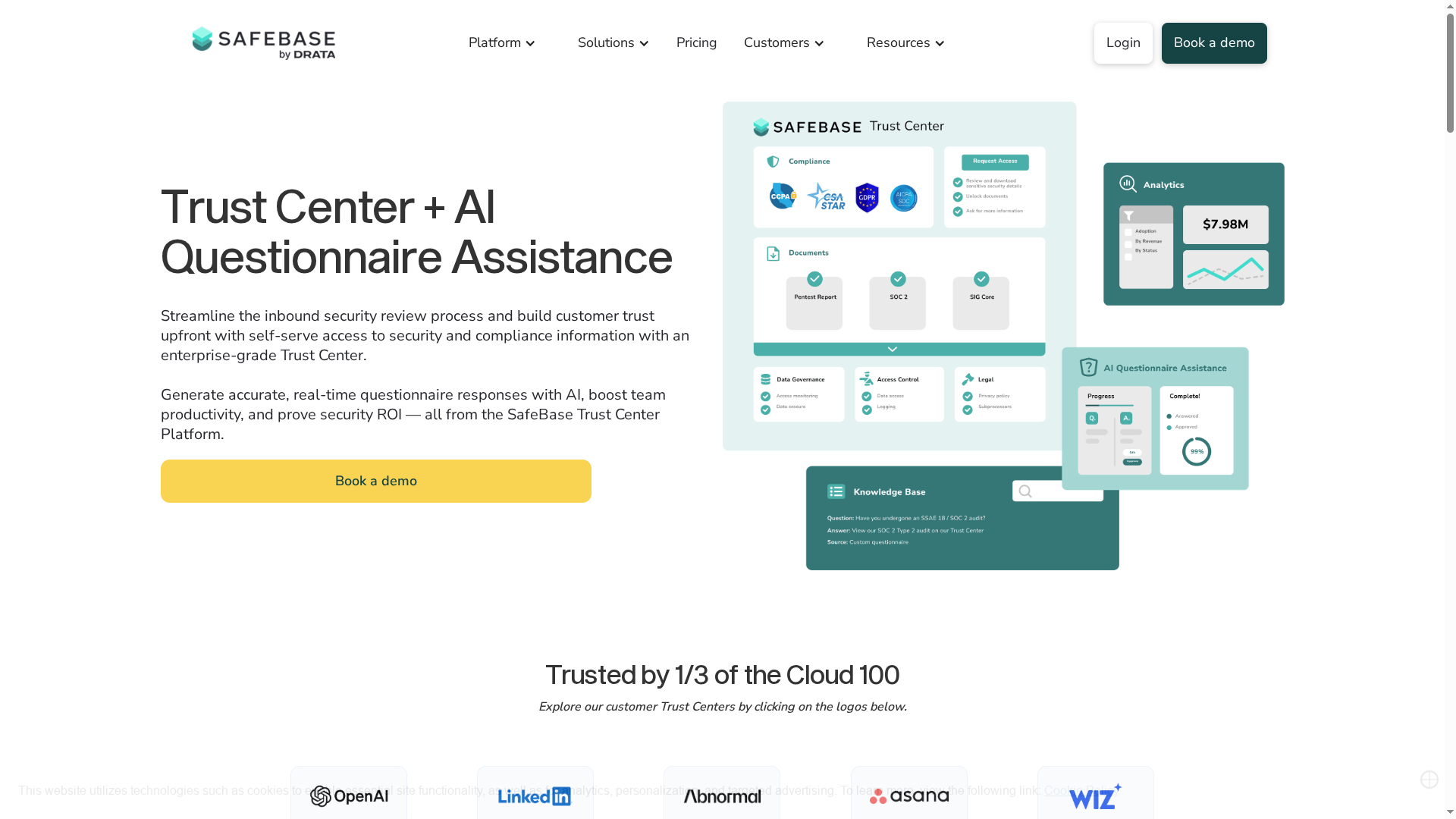
SafeBase by Drata is a trust center platform that streamlines inbound security reviews by combining branded portals, AI-powered questionnaire assistance, and analytics that quantify security-enabled revenue. If your team is drowning in repetitive questionnaires and manual document requests, SafeBase promises dramatic time savings—claims indicate reductions of 80% or more—while giving prospects a polished, self-serve view of your security posture. It’s powerful, but not plug-and-play for every organization.
Core Features
SafeBase focuses on three interlocking capabilities: branded trust centers for hosting security reports, documents, and policies; AI-driven assistance to rapidly generate accurate questionnaire responses; and analytics dashboards that surface engagement and security ROI. The platform also supports granular self-serve access via custom rules and permission profiles and integrates with common workflow and CRM tools like Slack, Teams, Jira, Salesforce, HubSpot, DocuSign, and Ironclad. These pieces are designed to automate repetitive tasks and keep security information in the flow of sales and support workflows.
Pros
- Dramatically reduces response time: Customers report SafeBase can cut time spent on security questionnaires by 80% or more, which materially speeds sales cycles.
- Built-in AI for faster accuracy: The platform’s AI assistance generates real-time responses that reduce manual effort and elevator the baseline accuracy of answers.
- Customizable, branded trust centers: You can present a polished, self-serve portal with your branding and granular access controls to build buyer confidence.
- Strong workflow integrations: Native connections to Slack, Teams, Jira, Salesforce, HubSpot, DocuSign, Ironclad, and others keep security data synchronized with the systems your teams already use.
- Analytics tied to business outcomes: Dashboards that show security-enabled revenue and engagement help justify investment and demonstrate ROI to stakeholders.
Cons
- Pricing structure can be complex: The detailed pricing model spans multiple tiers and add-ons, which can make straightforward cost comparisons difficult.
- Advanced features may be costly: Enterprise-grade capabilities and deeper customization can drive up total cost, potentially creating budget friction.
- Onboarding and platform complexity: The breadth of features and integrations often requires onboarding and training, which means you’ll need allocated resources to achieve full value.
Who It's For
SafeBase is best for mid-sized to large SaaS and cloud companies that need to automate security and trust programs at scale. If your sales or legal teams regularly handle lengthy security reviews and you have the resources to manage integrations and customization, this platform gives you a centralized, professional way to reduce friction and speed deals.
Unique Value Proposition
SafeBase bundles a customer-facing trust portal with AI-driven questionnaire automation and business-oriented analytics, turning security documentation from an operational burden into a sales enablement asset. In short: it’s security plus storytelling—showing what you’ve done and proving why it matters.
Real World Use Case
A SaaS vendor deploys SafeBase to publish its security reports and policies in a branded portal, uses AI to auto-fill vendor questionnaires, and connects the portal to Salesforce so sales teams can link prospect engagement to deal velocity—reducing manual review time and shortening POC timelines.
Pricing
Multiple plans including Foundation (free starter), Advanced, and Enterprise, with customization options; specific pricing details require contacting sales.
Website: https://safebase.io
OneTrust
At a Glance
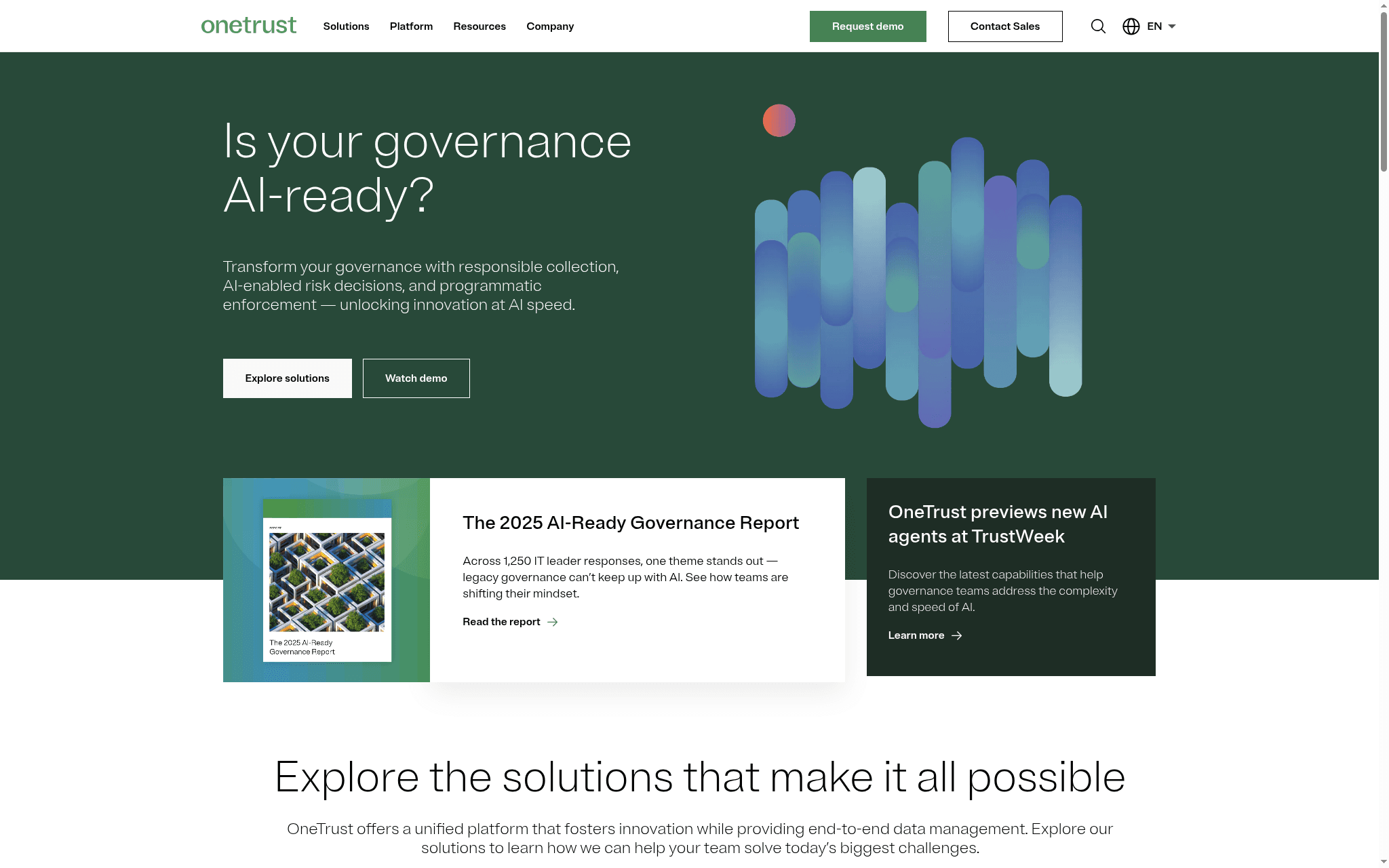
OneTrust provides a unified governance platform designed to manage AI, privacy, third-party risk, and data use at enterprise scale. It emphasizes responsible AI lifecycle oversight and automated privacy workflows to reduce manual compliance effort. For large organizations with complex compliance requirements, OneTrust centralizes controls and policy enforcement across multiple domains. It’s powerful — but not lightweight.
Core Features
OneTrust’s core capabilities include AI governance and lifecycle management, consent and preference management, data use governance with real-time policy enforcement, privacy automation for compliance and operational efficiency, and end-to-end third-party management from onboarding to continuous monitoring and risk assessment. These modules are designed to work together so governance, consent, and third-party signals feed one centralized control plane. Integration and scalability are implied — the platform targets enterprises that need cross-domain coordination rather than a single-point solution.
Pros
- Comprehensive platform covering multiple governance domains: OneTrust combines AI governance, privacy, consent, and third-party risk in a single product suite so teams avoid fragmented point solutions.
- Strong focus on AI and privacy compliance: The platform is built to support AI lifecycle oversight and privacy automation, which helps organizations meet evolving regulatory expectations.
- Extensive customer base including Fortune 100 companies: OneTrust’s adoption by large enterprises indicates its ability to operate at scale and handle complex organizational needs.
- Recognized industry leadership and innovation: The platform’s positioning across multiple governance areas signals ongoing product investment and domain expertise.
- Scalable solutions tailored to organizational needs: Module-based licensing and configurable controls allow deployments to expand as compliance programs mature.
Cons
- Complexity for smaller organizations may require dedicated resources: The breadth of features increases implementation and operational overhead, which can overwhelm lean teams.
- Pricing details are usage-based and may vary significantly: Costs depend on users, data profiles, inventories, and modules selected, which makes budgeting less predictable.
- The platform's extensive features could require training to maximize benefits: Organizations should plan for training and change management to realize the platform’s full value.
Who It's For
OneTrust is aimed squarely at large organizations and enterprises that manage extensive data assets, operate across multiple jurisdictions, and require integrated governance across AI, privacy, and third-party risk. If your compliance program spans several domains and you need centralized policy enforcement, OneTrust is a fit. If you’re a small team seeking a lightweight tool, expect a steep ramp.
Unique Value Proposition
OneTrust’s unique value is its cross-domain unification: AI governance, privacy automation, consent management, and third-party risk live within one platform so policies and signals can be enforced consistently. That consolidated approach reduces gaps between teams and helps enterprises govern data use and AI responsibly at scale.
Real World Use Case
A Fortune 100 company uses OneTrust to automate privacy compliance, manage customer consent, and govern AI deployments across business units and regions, enabling consistent regulatory adherence and operational control across complex environments.
Pricing
Based on usage, such as number of users, data profiles, inventory, or modules selected; specific pricing available upon request.
Website: https://onetrust.com
Drata
At a Glance
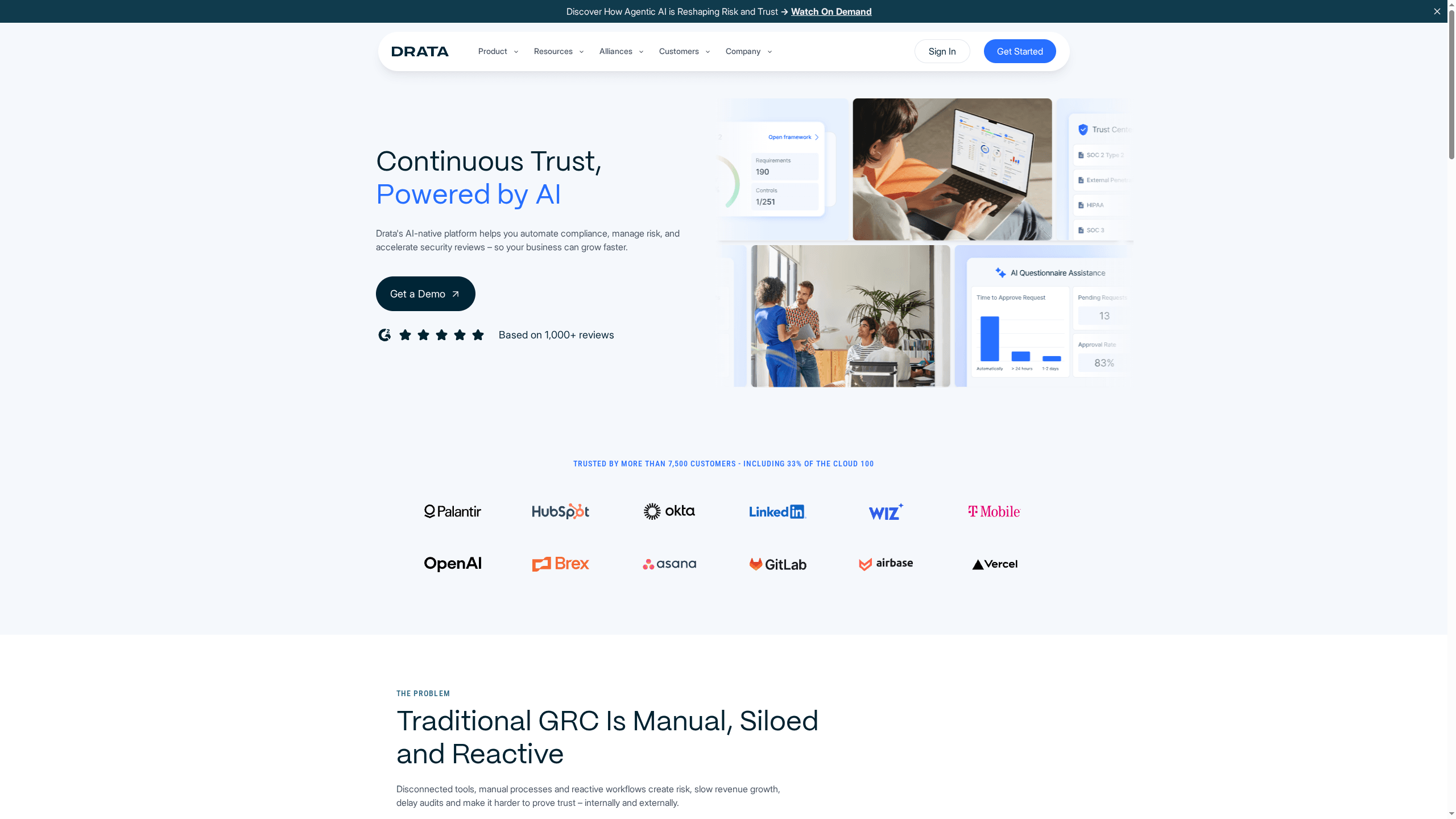
Drata is an AI-native governance, risk, and compliance (GRC) platform built to automate compliance workflows and accelerate security reviews for faster business growth. Trusted by over 7,500 customers, it promises real-time visibility into risk and continuous audit readiness. If you need to replace manual, siloed processes with a centralized, automated approach, Drata is clearly designed for that purpose. It’s strong on automation and monitoring—but the provided materials leave some operational details unaddressed.
Core Features
Drata’s core capabilities center on AI-driven trust management and automation. The platform offers automated governance and compliance workflows, integrated risk management with real-time tracking, and continuous control monitoring that collects evidence and maps controls automatically. It also claims AI-driven questionnaire answering and live posture monitoring to speed security reviews and assurance. In short: the product packages monitoring, evidence collection, and response automation into a single platform intended to reduce manual lift and shorten audit cycles.
Pros
- Automates manual, siloed compliance processes, which reduces repetitive tasks and frees teams to focus on higher-value risk decisions.
- Provides real-time visibility into risk and compliance posture, enabling faster identification and remediation of gaps.
- Enables customization of workflows and controls, so organizations can adapt the platform to their unique frameworks and processes.
- Supports a unified platform that connects with any system, including on-premises systems, helping bridge cloud and legacy environments.
- Speeds up security reviews and audit readiness by automating evidence collection and response generation, reducing time-to-complete for questionnaires and audits.
Cons
- The source content does not list explicit product limitations or technical constraints, which makes it hard to evaluate potential trade-offs or operational edge cases.
- Pricing is not specified in the provided information, so total cost of ownership, tiers, and licensing details are unclear.
- Public-facing use cases and case detail in the provided content are concise, leaving gaps if you need deep, industry-specific examples or measurable ROI data.
- The provided material emphasizes broad capabilities but lacks granular deployment or integration caveats, making pre-sales evaluation more dependent on direct vendor discussions.
Who It's For
Drata is aimed at organizations that want to modernize and automate GRC: compliance teams, CISOs, risk managers, and business executives in mid-to-large enterprises. If your company must scale compliance across multiple frameworks, accelerate security reviews for sales or partnerships, or unify evidence collection across cloud and on-prem environments, Drata fits that mandate.
Unique Value Proposition
Drata’s unique value proposition lies in combining AI-native automation with continuous monitoring and evidence collection to turn compliance from a periodic, manual burden into a continuous business enabler. The platform is positioned as a single source of truth for trust and audit readiness that reduces friction between security, compliance, and revenue teams.
Real World Use Case
A rapidly growing tech startup uses Drata to automate compliance across multiple frameworks, reduce audit preparation time, and continuously monitor its security posture so it can close deals faster and demonstrate trust to customers and partners.
Pricing
Not specified in the provided content.
Website: https://drata.com
Security and Compliance Tools Comparison
This table provides a comprehensive comparison of five leading security and compliance tools, highlighting their core features, advantages, disadvantages, pricing models, and ideal user profiles.
| Product | Core Features | Pros | Cons | Pricing |
|---|---|---|---|---|
| Skypher | AI-driven automation; centralizes security content | Up to 10x faster response; reduces manual work; centralizes content; improves client trust; supports team collaboration | Pricing requires consultation | Quote-based |
| SafeBase | Trust center platform; AI-assisted responses; customizable portals | Automates responses; builds customer trust; integrates with workflows; provides analytics | Complexity for small teams; opaque pricing | Free tier; enterprise available |
| Whistic | AI-driven TPRM; automated assessments | Speeds assessments; automates summaries; customizable workflows; improves security sharing; deep AI integration | Customized pricing model; initial setup required | Quote-based |
| OneTrust | AI governance; privacy automation; third-party risk management | Comprehensive platform; supports AI and privacy compliance; extensive customer base; recognized industry leader; scalable solutions | Complex for smaller teams; usage-based pricing | Usage-based |
| Drata | AI-native GRC platform; automates compliance workflows | Automates manual processes; real-time risk visibility; customizable workflows; connects with any system; accelerates audit readiness | No explicit limitations listed; unspecified pricing | Not specified |
Accelerate Your Security Questionnaire Workflow with Skypher
Managing complex security questionnaires is a significant challenge for many medium to large organizations in tech and finance. The article highlights common pain points such as slow turnaround times, repetitive manual efforts, and fractured collaboration among security, sales, and solutions teams. These delays not only slow sales cycles but also risk weakening client trust during crucial negotiations.
Skypher addresses these exact hurdles with its AI-driven Questionnaire Automation Tool. Our proprietary AI models excel at handling every questionnaire format efficiently, enabling your team to answer hundreds of questions in under a minute. By centralizing your security content and offering real-time collaboration through integrations with Slack, MS Teams, and more, Skypher empowers your teams to work faster and smarter. With over 30 API integrations with top platforms like OneTrust and ServiceNow, your security information flows seamlessly, eliminating bottlenecks and improving accuracy.
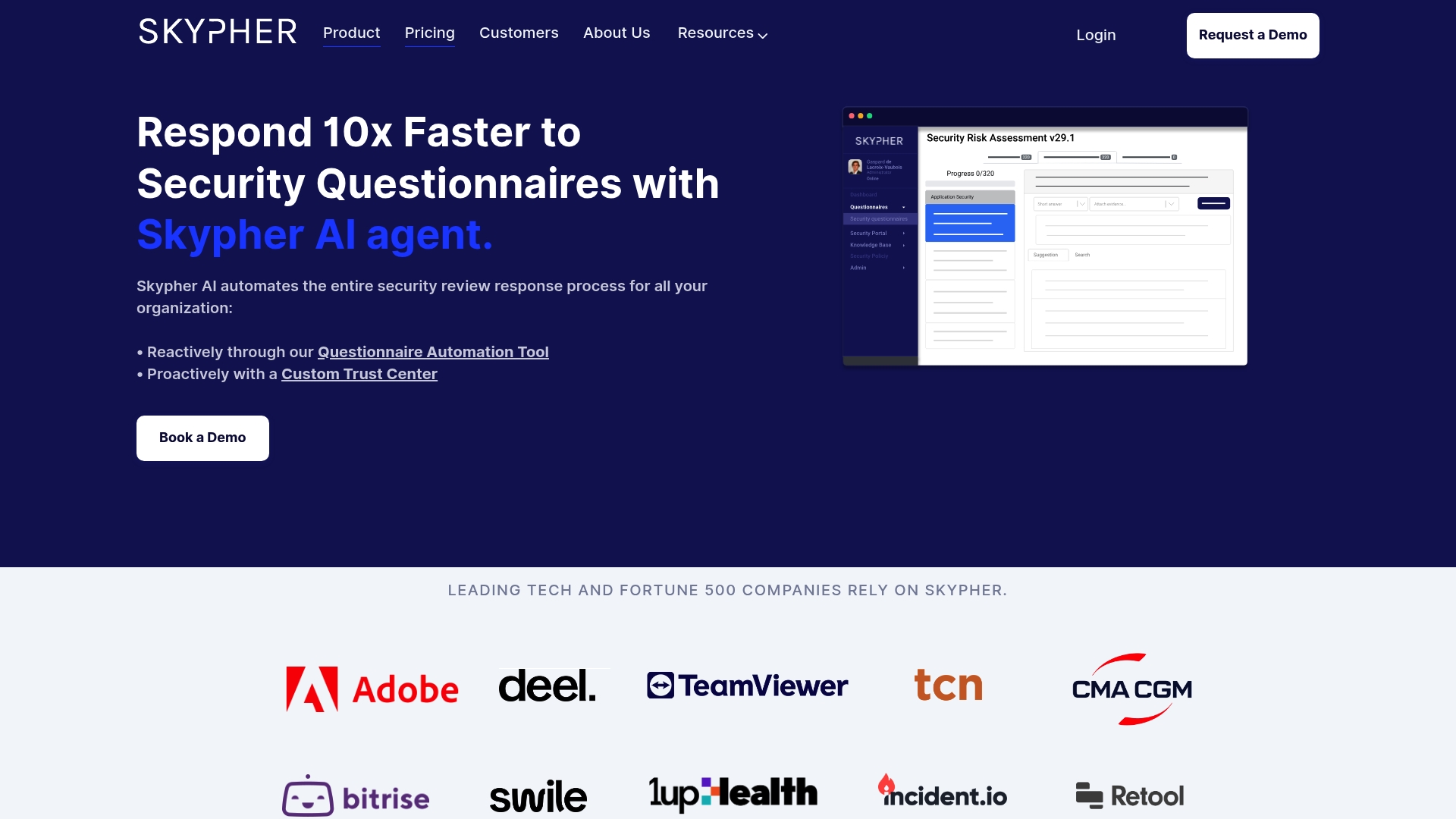
Ready to reduce your questionnaire turnaround from days to hours and build stronger client relationships? Discover how Skypher’s Custom Trust Center and enterprise-grade support can turbocharge your security reviews today. Visit Skypher and start transforming the way your organization handles security questionnaires now.
Frequently Asked Questions
What is the main purpose of security questionnaire software?
Security questionnaire software is designed to automate and streamline the process of responding to complex security evaluations. Use this software to speed up response times and improve accuracy, allowing your team to focus on other important tasks.
How can I determine which security questionnaire software fits my organization’s needs?
Evaluate your organization's specific requirements, such as team size, frequency of security inquiries, and compliance needs. Create a checklist of essential features and compare software options based on these criteria to make an informed decision.
What benefits can I expect from using AI-powered security questionnaire tools?
AI-powered tools typically offer faster response generation, improved accuracy, and reduced manual effort. Implementing these tools can cut response times from days to just hours, enhancing your team’s efficiency and client satisfaction.
How do I implement security questionnaire software in my existing workflow?
Start by assessing your current process for handling security questionnaires and identifying integration points where the software can boost efficiency. Once you have mapped this out, follow the vendor’s implementation guidance to seamlessly incorporate the software into your team's practices.
What features should I look for in security questionnaire software?
Key features to consider include automation capabilities, centralized content management, collaboration tools, and analytics for performance tracking. Ensure the software can handle complex security requirements specific to your industry while facilitating team collaboration.
How can security questionnaire software enhance my company's client relations during contract negotiations?
Using security questionnaire software helps provide consistent and timely responses to client inquiries, which builds trust and demonstrates organizational competence. Aim to reduce your response turnaround time, potentially improving deal velocity by up to 80% compared to manual processes.
Recommended
- The ever growing number of security questionnaires and what you and your company can do to face it
- 7 Effective Security Questions Examples for Your Business
- The different formats & mistakes made when writing or answering security questionnaires
- The Case for Security Questionnaire Automation
- Best Business Security Cameras – Expert Comparison 2025 - 247 CCTV Security Ltd
- Baby Monitor Comparison Workflow: Step-by-Step Guide | Baby Monitors for Parents